-

Bachelor's

-

Masters
-

MBA
-

Doctorate
-

Micro Credit
-

Explore all Courses
-
Postgraduate Certifications

-
Postgraduate Diploma
-
Undergraduate Diploma
-
Diploma



What is Marketing Management? A Complete Guide to Its Importance, Process & Career Scope

Author: aishwarya sancheti
|7
MINS READ
| 0
| 312
Created On: 30 April, 2026
Share




Table of Contents (TOC):
- Key Takeaways
- What is Marketing Management?
- Why Does Marketing Management Matter to Companies?
- Importance of Marketing Management
- Scope of Marketing Management
- Functions of Marketing Management
- What Are the 4 Ps of Marketing?
- What Are the 7 Ps of Marketing?
- Features of Marketing Management
- Process of Marketing Management
- Characteristics of Marketing Management
- Successful Careers in Marketing Management
- Future Trends in Marketing Management
- How to Build Skills in Marketing Management
- Conclusion
- FAQs
You see it every day but rarely notice it.
The ad that feels perfectly timed, the brand that “gets you,” or the product you didn’t plan to buy but somehow needed, none of this happens by accident. It’s the result of marketing management done right. So, what is marketing management, really? And why does it matter more today than ever before?
Key Takeaways
- Marketing management focuses on planning, executing, and optimizing strategies to meet customer needs and drive business growth.
- It plays a crucial role in helping businesses stand out, build brand value, and achieve long-term success.
- The marketing mix (4 Ps and 7 Ps) forms the foundation of effective marketing strategies.
- Core functions include research, planning, product development, pricing, promotion, and performance analysis.
- The scope of marketing management has expanded with digital transformation, including SEO, social media, and data-driven strategies.
- Career opportunities in marketing management are diverse, high-demand, and globally rewarding.
- Emerging trends like AI, personalization, short-form video, and sustainability are shaping the future of marketing.
- Building practical skills through structured learning can give you a strong competitive edge in this field.
What is Marketing Management?
Marketing management is the process of planning, executing, and optimizing strategies that help businesses identify customer needs, deliver value, and drive growth.
In simpler terms, it’s how companies:
- Understand what people want
- Create products or services around those needs
- Promote them effectively
- Build long-term relationships
It’s not just about selling, it’s about making sure the right message reaches the right person at the right time.
Why Does the Management of Marketing Matter to Companies?
Because today, attention is limited and competition is unlimited. Customers are exposed to thousands of messages daily. Without structured marketing management, even the best products can go unnoticed.
This is why companies invest heavily in marketing strategy:
- To stand out in crowded markets
- To build trust and brand recall
- To improve customer acquisition and retention
- To align marketing efforts with business goals
Think about brands like Apple or Zomato. Their success isn’t driven by a single factor but by a complete marketing ecosystem - how they design their products, price them strategically, distribute them seamlessly, and communicate consistently. Every element works together, from brand positioning to customer experience, creating a cohesive and powerful market presence.
Importance of Marketing Management
The importance of marketing management goes far beyond promotions. It directly impacts how a business grows, competes, and survives. Companies using data-driven marketing are 6x more likely to be profitable year-over-year.
Also, today’s consumers expect relevance - 80% are more likely to buy from brands that offer personalized experiences, making data-driven marketing a necessity rather than a choice.
So when done right, it helps businesses:
- Identify the right target audience
- Build strong and consistent brand identity
- Optimize marketing spend for better ROI
- Create meaningful customer experiences
- Adapt quickly to changing trends
Without it, marketing becomes guesswork. With it, marketing becomes a predictable growth engine.
Scope of Marketing Management
The scope of marketing management has expanded significantly in the digital era.
Today, it includes:
- Market research and consumer behavior
- Product development and innovation
- Branding and positioning
- Digital marketing (SEO, social media, paid ads)
- Content marketing and storytelling
- Customer experience and retention strategies
With AI, automation, and data analytics shaping decisions, marketing is no longer just creative but they are now deeply strategic .
Functions of Marketing Management
Marketing management works through a set of key functions that ensure everything runs smoothly:
- Market Research: Understanding customer needs and market trends
- Planning: Developing marketing strategies and campaigns
- Product Management: Designing offerings that meet demand
- Pricing: Setting competitive and value-based pricing
- Promotion: Communicating through ads, content, and channels
- Distribution: Making products accessible to customers
- Performance Analysis: Measuring results and improving strategies
Each function plays a role in creating a seamless customer journey.
What Are the 4 Ps of Marketing?
At the heart of marketing lies the marketing mix, commonly known as the 4 Ps of marketing:
- Product - What you offer
- Price - What customers pay
- Place - Where they find it
- Promotion - How you communicate it
Every successful marketing strategy is built around getting these four elements right.
Now What Are the 7 Ps of Marketing?
As businesses evolved, the model expanded into the 7 Ps of marketing, especially for service-based industries:
- Product
- Price
- Place
- Promotion
- People
- Process
- Physical Evidence
This extended marketing mix in marketing management ensures a more complete and customer-focused approach.
Features of Marketing Management
What makes marketing management effective?
- It is customer-centric
- It is data-driven and measurable
- It is dynamic and adaptable
- It integrates with overall business strategy
- It focuses on long-term growth and relationships
These features help businesses stay relevant in constantly changing markets.
Process of Marketing Management
Marketing management follows a continuous cycle:
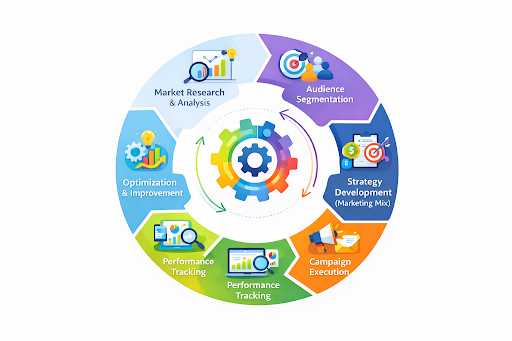
It’s not a one-time effort but evolves with customer behavior and market trends.
Real-World Example: Ever noticed how Netflix recommends shows you actually enjoy? Or how Amazon suggests products you didn’t even search for? That’s marketing management powered by data, personalization, and smart strategy.
To think it's random but it is actually designed to enhance your experience and influence decisions.
What Are the Main Characteristics of Marketing Management?
- Focus on customer needs and satisfaction
- Balance between creativity and analytics
- Continuous innovation and adaptation
- Integration of online and offline strategies
- Strong alignment with business objectives
Successful Careers in Marketing Management
With businesses going digital-first, marketing roles are in high demand. Some of the most popular careers in marketing management include:
These roles require both creative thinking and strategic execution, making marketing one of the most dynamic career paths today.
Also Read: Difference Between Sales and Marketing: Roles, Skills, Careers & Salaries
Future Trends in Marketing Management
Marketing is evolving rapidly, driven by technology, data, and changing consumer expectations. Here are some of the most impactful trends shaping the future:
- Predictive Empathy: Marketing is moving beyond data to understanding customer intent and emotions before they are even expressed, making strategies more proactive and personalized.
- Marketing for the Agentic Web: With AI agents influencing decisions, brands must focus on credibility, transparency, and verifiable information to stay relevant in search and recommendations.
- The Human Premium: As AI-generated content rises, authentic, human-led experiences and real stories are becoming more valuable and engaging.
- Community-Led Growth: Brands are shifting from traditional funnels to building strong communities, where loyal customers and advocates drive growth organically.
- AI-Driven Marketing & Automation: Businesses are leveraging AI tools to streamline campaigns, improve targeting, and enhance efficiency.
- Hyper-Personalization Using Data: Tailored content and experiences are becoming the norm, increasing engagement and customer satisfaction.
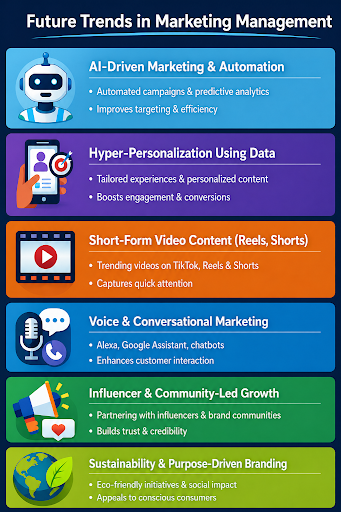
Businesses that adapt to these trends gain a competitive edge.
Also Read: Why SEO is Essential for Product Marketing in the AI Era
How to Build Skills in Marketing Management
If you’re looking to enter or grow in this field, structured learning can make a huge difference. Programs like
- DBA in Marketing Management - strategic leadership skills or an MBA in Marketing Management to build a strong foundation in business and marketing expertise.
- Basics of Marketing Management,
- Mastering Marketing Management, or
- An Executive Diploma in Marketing Management helps you understand real-world applications.
You can also explore specialized learning through
- Mastering Marketing Mix or Essentials of Marketing Strategy & Competitive Analysis to deepen your expertise.
All these free UniAthena programs are 100% online, offering flexible learning and dedicated personal tutor support, helping you gain a competitive edge with industry-relevant, career-focused marketing skills.
Conclusion
Marketing management goes beyond a business function, it drives how brands connect, compete, and command attention in a crowded marketplace. In an era where attention is limited and choices are overwhelming, businesses that master marketing management don’t just keep up, they set the pace and shape the market.
And when you master it, you’re not just learning marketing, you’re building the strategic thinking and perspective that power real business success.
FAQs
Q1. What is marketing management in simple words?
A: Marketing management is the process of planning and executing strategies to promote products, attract customers, and grow a business.
Q2. Why is marketing management important?
A: It helps businesses reach the right audience, build brand value, and generate consistent growth.
Q3. What are the 7 Ps of marketing?
A: Product, Price, Place, Promotion, People, Process, and Physical Evidence.
Q4. What are the functions of marketing management?
A: Key functions include research, planning, product development, pricing, promotion, distribution, and performance analysis.
Q5. What is the scope of marketing management?
A: It covers everything from market research and branding to digital marketing and customer experience.
Explore Related Courses












COMMENTS(0)
Explore Related Courses
Our Popular Insights
Careers are shifting faster than ever, and staying relevant takes more than experience. Explore UniAthena’s most-read blogs for sharp insights, emerging skills, and practical pathways that help you move forward with clarity and confidence in a changing professional world.


How to Switch Career to Data Analytics?
Read More
6
mins read





How to Switch Career to Data Analytics?
Read more
6
mins read

Get in Touch

It’s Time to Start
Join NowMost Popular Online Specialization
- Master of International Business Administration
- Master of Business Administration
- MBA in General Management- FastTrack
- Master in Innovation and Entrepreneurship
- MBA-Family Business Management
- Master in Procurement and Contract Management
- Extended Diploma in Business Analytics (SCQF Level 11)
- Diploma in Supply Chain and Logistics Management (SCQF Level 11)
- Strategic Human Resource Management Practitioner
- Master in Data Science
- Master in Engineering Management
Trending Online
- Integrated Doctorate of Business Administration
- Postgraduate Certificate in Finance for Next Generation Managers
- Master of Business Administration- General Management (Fast Track)
- Postgraduate Certificate in Socio-Economic and Legal Framework
- Postgraduate Certificate in Business Sustainability
- Certified Manager
- Supply Chain Management Practitioner
- MBA - AI in Business
- MBA - Accounting & Finance
- Master in Supply Chain and Logistics Management
Top Universities Online Certificates
- Postgraduate Certificate in International Marketing Management
- Postgraduate Certificate In International Human Resource Management
- Postgraduate Certificate in Strategic Management
- Postgraduate Certificate in Procurement & Contracts Management
- Postgraduate Certificate in Business Analytics
- Postgraduate Certificate in Strategic Supply Chain & Logistics Management
- Postgraduate Certificate in Human Resource and Leadership
- Project Management Practitioner
- Postgraduate Certificate in Supply Chain Design & Implementation
- Postgraduate Certificate in Management Accounting and Finance
Accredited Online Degree Program
- MBA - Digital Transformation
- MBA - Family Business Management
- MBA - Marketing Management
- MBA in Quality Management
- MBA - Business Intelligence & Data Analytics
- MBA in Operations & Project Management
- MBA in Energy Management
- MBA In Construction & Safety Management
- Master in Organisational Leadership
- Master in Public Health
- Master in Construction Management
- Bachelor of Arts in Business Administration


 Install Now


UniAthena is an Ed-Tech, offering flexible, affordable learning solutions, including Free-Learning Upskilling Courses and Academic Programs in partnerships with accredited and globally renowned universities and professional qualification bodies.


Do you have any questions ?
Feel free to send us your questions or request a free consultation
Send a message
UK
Athena Global Education
Magdalen Centre,
Robert Robinson Avenue,
Oxford, OX4 4GA, UK
Phone : 01865 784299
MIDDLE EAST
Athena Global Education FZE
Block L-03, First Floor,
P O Box 519265, Sharjah Publishing City,
Free Zone, Sharjah, UAE
Phone : +971 55 879 5492
INDIA
Uniathena Private Limited
9A,Midas Tower
Phase 1
Hinjewadi Rajiv Gandhi Infotech Park
Pune-411057
Phone: +91 9145665544
All Copyrights Reserved @ Athena Global Education 2021-2026