-

Bachelor's

-

Masters
-

MBA
-

Doctorate
-

Micro Credit
-

Explore all Courses
-
Postgraduate Certifications

-
Postgraduate Diploma
-
Undergraduate Diploma
-
Diploma



What Am I Good At? A Guide to the Art of Self-Discovery

Author: munazzah ali
|6
MINS READ
| 0
| 191
Created On: 21 May, 2026
Share




Table of Contents (TOC):
- Introduction
- Key Takeaways
- The Question That Follows Us Quietly
- The Things You Dismiss May Be Your Strength
- Not Every Talent Looks Like Talent
- Discovery Begins With Attention
- A Simple Self-Discovery Exercise
- Conclusion
- FAQs
Introduction
You are not always asked “What am I good at?” directly. Most of the time it is a question that softly lingers in daily life. You watch another person grow in their career, feel out of place in a job that seemed perfect before, or wonder why some people do things so easily, and you find yourself puzzled.
That is often where self-discovery begins. Not through sudden clarity, but through small moments of curiosity and thought.
The path of self-discovery is rarely about finding one perfect answer overnight. Rather, it is a matter of learning to find your hidden skills, acknowledge your self-potential, and gradually transform natural abilities into valuable career skills.
Key Takeaways:
- Hidden talents are usually disclosed in habitual practices and instinctive actions.
- You will find it easier when you do not compare your progress with others.
- Self-discovery is an art that demands introspection, experimentation, and exploration.
- Learning new skills can assist in changing hidden talents into long-term career opportunities.
The Question That Follows Us Quietly
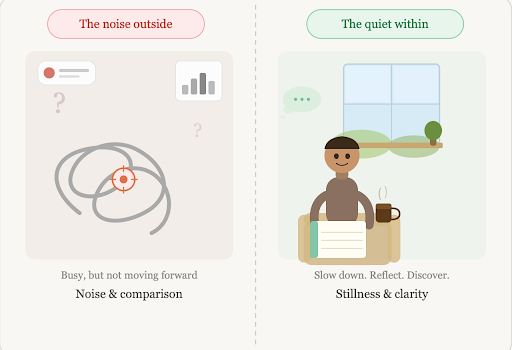
Self-discovery is not as simple as finding one hidden answer about yourself. To most, this struggle starts way before one is even aware of knowing what they are good at.
Comparison Has Changed the Way We See Ourselves
Constant comparison is one of the greatest challenges on the way to self-discovery. Social media tends to give the impression that success is easy and fast, thus making one doubt their potential in themselves, even when they are on the right path.
We Mistake Talent for Perfection
Most individuals believe that talents should be exceptional from the beginning. In practice, hidden talents are usually small interests or natural abilities, which are refined by regularity and practice.
Academic and Career Stress Causes Confusion
Individuals are often told to pursue what is considered safe achievement as opposed to doing what interests them. In the long run, such pressure disconnects people from discovering themselves in accurate ways.
Small Skills Often Go Unnoticed
Listening skills, the ability to communicate ideas in simple terms, organization skills, and composure during stress are not necessarily noticeable at first. But these silent talents can prove useful professional skills later in life.
Fear of Being “Not Enough”
There are times when the struggle is not practical, but emotional. Individuals will not want to explore new areas of strength due to the fear of failure, judgement or the lack of awareness that they are not as good as they had imagined.
The Things You Dismiss May Be Your Strength
Hidden talents rarely appear dramatically. More often, they reveal themselves quietly through routines, conversations, interests, and behaviors that feel natural to you.
People Naturally Seek Your Help
Among the easiest methods to understand your talents is by observing what people always ask you to help them with.
Some are approached to give advice, others to organize, solve problems, be creative, or to offer emotional support. Such recurring experiences are often accidental. They often reveal strengths that feel so natural to you that you stop recognizing them as valuable skills.
Some Work Feels Energizing Instead of Exhausting
Pay attention to the tasks that engage you and do not make you exhausted. Even though each job demands some form of effort, some types of work do not leave you mentally exhausted but emotionally tired.
The things that make you feel energized tend to tell more than the things that you just do well.
You Lose Track of Time While Doing Certain Things
The meaningful strengths are usually brought to light by moments of deep focus rather than by external achievements. You like to write, teach, solve problems, create, research, or plan, but you find yourself having lost all sense of time: time-lapsing activities can be valuable hints in the art of self-discovery.
Not Every Talent Looks Like Talent
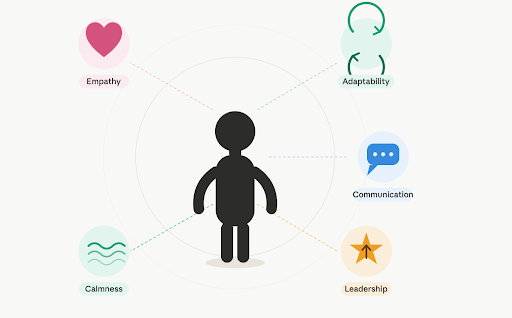
The most valuable strengths are sometimes the simplest to consider since they are not necessarily dramatic or measurable.
Emotional Intelligence
Being aware of one's feelings, communicating with caution, and managing conflict are vital skills in the workplace.
Leadership Without Authority
Some have the ability to lead, guide, and encourage others without holding any formal titles.
Creativity Exists in Everyday Forms
Creativity may be evident in problem-solving, communication, planning, or finding improved methods of working.
Flexibility Is a Contemporary Superpower
Learning to be flexible, adaptable in times of uncertainty, and learning fast has become more important.
Calmness Under Pressure
Being able to stay calm in the challenging moments indicates emotional strength.
Also Read: Can AI Help You Decide Your Future Career and Education Path?
Discovery Begins With Attention
Understanding yourself rarely happens through overthinking. Most hidden talents reveal themselves when you experiment, observe patterns, and allow yourself to discover. Sometimes clarity comes after the first step, not before it.
1. Step Into Unfamiliar Experiences
Not all the hidden talents reveal themselves in comfortable conditions. They can sometimes be there when you push yourself with something new - a new project, a creative hobby, a speech, mentoring, or even a new type of work environment.
2. Begin to Pay Attention to Your Patterns
Reflection is one of the easiest methods of starting to figure out yourself. Journaling instances of confidence, excitement, curiosity, frustration, or achieving something, and over time, you can see behavioral patterns that you might otherwise overlook.
These little observations tend to provide answers to deeper questions, such as:
- What to do to identify my strengths and weaknesses?
- What type of work is meaningful to me?
- What is it that naturally attracts my attention?
3. Real-World Experiences Create Faster Clarity
Volunteering, internships, side projects, as well as freelance work or collaborative experiences, tend to teach individuals more about themselves than theory ever could.
The natural communication style, adaptability, leadership skills, creativity, and problem-solving style are put into practical use in real settings.
4. Learn Without the Pressure of Perfection
Many people avoid exploring interests because they fear being inexperienced or “not good enough” immediately. But the art of self-discovery is developed best where curiosity is free to exist without pressure.
Individuals can explore new strengths over time by taking courses, workshops, certifications, and self-paced learning.
With more professionals redefining conventional career trajectories, platforms such as UniAthena are helping learners to develop professional competencies in a flexible manner, as they explore their long-term interests and career options in a natural way.
Also Read: From Lazy to Productive: Simple Changes That Work
A Simple Self-Discovery Exercise
Sometimes self-discovery becomes easier when you stop searching for one big answer and start observing smaller truths about yourself.
Take five minutes and think about the following:
- What do people always like about me?
- Which activity does seem more comfortable to me than it appears to others?
- What is a skill or interest that I have and would enjoy even without rewards or praise?
As you will see, the responses already have hints regarding your hidden abilities, passions, and strengths in the long run.
Conclusion — You Don’t Need Every Answer Today
Understanding what self-discovery is not to have life all planned out. It is the art of listening to your abilities, interests, and patterns within yourself.
Strengths rarely appear all at once. Other times, they are formed silently out of experience, curiosity, contemplation, and experiment.
And perhaps that is why the question itself matters so much. Asking “What am I good at?” is often the first sign that growth has already begun.
Also Read: Low-Stress Jobs That Pay Well
FAQs
Q1. What is self-discovery?
A: Self-discovery is the process of knowing your strengths, interests, values, and potential by reflecting on experiences and personal development.
Q2. How do I discover my hidden talents?
A: The unveiling of hidden talents can be displayed in the activities that are natural, fun, or refreshing. You can recognize them by trying new things, seeing patterns, and getting feedback.
Q3. Why is self-discovery important for career growth?
A: Self-discovery will assist you in determining the best skills, interests, and work environments to work in, and make career choices more meaningful and in line with your strengths.
Q4. How can I turn my passion into a career?
A: Begin by developing applied skills in the area of your interests by taking courses, projects, working as an intern, or freelancing. With time, the experiences may be used to change passion into professional opportunities.
Explore Related Courses




.jpg)

.jpg)




COMMENTS(0)
Explore Related Courses
Our Popular Insights
Careers are shifting faster than ever, and staying relevant takes more than experience. Explore UniAthena’s most-read blogs for sharp insights, emerging skills, and practical pathways that help you move forward with clarity and confidence in a changing professional world.


How to Switch Career to Data Analytics?
Read More
6
mins read




How to Switch Career to Data Analytics?
Read more
6
mins read

Get in Touch

It’s Time to Start
Join NowMost Popular Online Specialization
- Master of International Business Administration
- Master of Business Administration
- MBA in General Management- FastTrack
- Master in Innovation and Entrepreneurship
- MBA-Family Business Management
- Master in Procurement and Contract Management
- Extended Diploma in Business Analytics (SCQF Level 11)
- Diploma in Supply Chain and Logistics Management (SCQF Level 11)
- Strategic Human Resource Management Practitioner
- Master in Data Science
- Master in Engineering Management
Trending Online
- Integrated Doctorate of Business Administration
- Postgraduate Certificate in Finance for Next Generation Managers
- Master of Business Administration- General Management (Fast Track)
- Postgraduate Certificate in Socio-Economic and Legal Framework
- Postgraduate Certificate in Business Sustainability
- Certified Manager
- Supply Chain Management Practitioner
- MBA - AI in Business
- MBA - Accounting & Finance
- Master in Supply Chain and Logistics Management
Top Universities Online Certificates
- Postgraduate Certificate in International Marketing Management
- Postgraduate Certificate In International Human Resource Management
- Postgraduate Certificate in Strategic Management
- Postgraduate Certificate in Procurement & Contracts Management
- Postgraduate Certificate in Business Analytics
- Postgraduate Certificate in Strategic Supply Chain & Logistics Management
- Postgraduate Certificate in Human Resource and Leadership
- Project Management Practitioner
- Postgraduate Certificate in Supply Chain Design & Implementation
- Postgraduate Certificate in Management Accounting and Finance
Accredited Online Degree Program
- MBA - Digital Transformation
- MBA - Family Business Management
- MBA - Marketing Management
- MBA in Quality Management
- MBA - Business Intelligence & Data Analytics
- MBA in Operations & Project Management
- MBA in Energy Management
- MBA In Construction & Safety Management
- Master in Organisational Leadership
- Master in Public Health
- Master in Construction Management
- Bachelor of Arts in Business Administration


 Install Now


UniAthena is an Ed-Tech, offering flexible, affordable learning solutions, including Free-Learning Upskilling Courses and Academic Programs in partnerships with accredited and globally renowned universities and professional qualification bodies.


Do you have any questions ?
Feel free to send us your questions or request a free consultation
Send a message
UK
Athena Global Education
Magdalen Centre,
Robert Robinson Avenue,
Oxford, OX4 4GA, UK
Phone : 01865 784299
MIDDLE EAST
Athena Global Education FZE
Block L-03, First Floor,
P O Box 519265, Sharjah Publishing City,
Free Zone, Sharjah, UAE
Phone : +971 55 879 5492
INDIA
Uniathena Private Limited
9A,Midas Tower
Phase 1
Hinjewadi Rajiv Gandhi Infotech Park
Pune-411057
Phone: +91 9145665544
All Copyrights Reserved @ Athena Global Education 2021-2026