-

Bachelor's

-

Masters
-

MBA
-

Doctorate
-

Micro Credit
-

Explore all Courses
-
Postgraduate Certifications

-
Postgraduate Diploma
-
Undergraduate Diploma
-
Diploma



How to Improve Problem-Solving Skills?

Author: maharajan p
|7
MINS READ
| 0
| 218
Created On: 12 February, 2026
Share




Table of Contents (TOC):
- Introduction
- Key Takeaways
- What Are Problem-Solving Skills?
- Who Uses Problem-Solving Skills?
- The 4 Key Problem-Solving Skills
- How to Build Problem-Solving Skills
- Conclusion
- FAQs
Introduction
When you start a new job, you'll face situations without clear instructions. A task might be unclear, a client might request something unusual, or you may need to decide quickly under pressure.
Problem-solving skills help you navigate these moments confidently. They show employers you can handle challenges independently and add real value. In this article, you will learn what problem-solving skills are, how they appear in real job scenarios, and how to improve problem-solving skills to perform effectively from day one.
Key Takeaways:
- Problem-solving skills describe how a person identifies issues, evaluates options, and decides what to do next using structured problem-solving techniques.
- Employers assess problem-solving to understand how candidates handle situations without clear instructions.
- Building these skills early helps new joiners handle responsibilities independently from the start.
What Are Problem-Solving Skills?
Problem-solving skills are the ability to identify an issue, break it down, evaluate options, and arrive at a workable solution.
For someone entering a new role, this means showing that you can think clearly when the situation is unfamiliar. You may not know the answer immediately, but you know how to approach the problem.
Employers use this skill to evaluate how you handle tasks, not just whether you can complete them. They look for candidates who can understand the problem, ask the right questions, analyze relevant information, and make decisions based on logic rather than assumptions.
For job seekers, problem-solving skills appear in three clear situations:
- How do you explain past experiences
- how you respond to interview scenarios
- how you approach tests, case questions, or assessments
In each case, recruiters are not looking for perfect answers. They are looking for structured thinking.
This is why problem-solving skills carry so much weight in hiring. They help recruiters predict how you will handle real job situations, even before you are hired.
Who Uses Problem-Solving Skills?
Problem-solving skills are not limited to a specific job title. They are required in any role where work is not purely repetitive or rule-based.
While some jobs test this skill more formally, the truth is that almost every role relies on problem-solving in some form. The difference is how visible the skill is during hiring.
For example:
- Customer Service Rep: An aggrieved customer wants a refund for a non-refundable item → you find a solution that keeps the customer happy without breaking policy.
- Marketing Coordinator: Campaign performance drops suddenly → analyzes data, identifies the issue (ad fatigue), adjusts creative.
- Software Developer: Code breaks in production → debugs systematically, finds root cause, implements fix.
In each case, the person is not following a fixed script. They are identifying a problem, analyzing possible causes, and deciding what to do next. The thing is very clear: no matter what job you're applying for, you'll need to solve problems. The question is: can you prove you're good at it?
The 4 Key Problem-Solving Skills
Here are the four key problem-solving skills employers look for in prospective candidates.
1. Research & Information Gathering
Every solution starts with understanding the facts. Without accurate information, even confident decisions are based on assumptions.
Imagine you’re interviewing for a marketing role and the interviewer says, “Our website traffic dropped 30 % last quarter.” A strong problem solver doesn’t shrug or wait for the next question. They prepare before the next round by:
- Reviewing the company’s website and recent content changes
- Checking analytics trends using public tools
- Forming a data-informed hypothesis (“You redesigned your blog in Q2 — this might have impacted SEO.”)
2. Active Listening
According to the WEF, active listening is a core component of problem-solving skills that employers value highly, especially when assessing real-world judgment and client handling.
Here is how it looks in practice. In a retail scenario, a customer says, “This product did not work for me.”
- A weak response is to immediately offer a refund.
- A stronger approach is to ask clarifying questions such as: “What were you trying to achieve?” and “What happened when you used it?”
In many cases, the customer was using the product incorrectly, particularly in e-commerce contexts. By asking the right questions, the issue is resolved without escalating the complaint. The customer keeps the product and leaves satisfied.
This is the difference active listening makes. Instead of reacting to what you hear first, you uncover the real problem underneath and respond to that.
3. Communication
Communication sits above many other problem-solving skills. When done well, it brings clarity to a situation and reduces confusion quickly.
In a team setting, strong communication becomes most visible during critical moments. For example, imagine you are a junior team member, and you notice a major error in a project that is about to launch. Staying quiet to avoid trouble only allows the issue to grow.
A stronger approach is to alert the team lead privately, explain the issue clearly, and share the potential impact. This gives the team a chance to fix the problem before it escalates.
This is the real power of communication. It is not about speaking fluent English or sounding confident. It is about raising the right concerns at the right time, with clarity and purpose.
Also Read: What is Business Communication & Why It Matters for Success?
4. Decision Making
Decision-making becomes visible when deadlines are tight. Many new joiners struggle at this stage. When they are required to choose an approach or speak up, they hesitate or panic.
But in real work situations, a decision still has to be made. Strong problem solvers stay calm under pressure. They assess what is possible within the time available, choose a reasonable option, and move forward. Even an imperfect decision is often better than no decision at all.
This is what employers look for. Not impulsive action, but the ability to think clearly, decide, and act when time is limited.
Also Read: What is Critical Thinking and How to Develop it?
How to Build Problem-Solving Skills
Problem-solving skills are not something you either have or don't have. They are built through repeated practice in real situations. The good news is that you can start building them right now, even before you land your next job.
Here are four practical ways to strengthen each core problem-solving skill:
1. Building Fact-Based Understanding Before Acting
Before making any decision, spend 15 minutes gathering facts. When you face a problem at work or in daily life, resist guessing. Ask yourself: "What information do I need?" Then find it from multiple sources. Cross-check what you find and look for patterns.
2. Strengthening Interpretation Before Responding
In conversations, pause before responding. Repeat what you heard to confirm understanding, then ask clarifying questions like "Can you say more about that?" or "What outcome are you hoping for?" Practice this daily, with colleagues, friends, or family.
3. Structuring Ideas for Effective Workplace Discussions
Before speaking up about a problem, structure your point: What is the issue? Why is it happening? What is your suggested solution? Practice pairing every problem you identify with a proposed fix. This trains you to think ahead, not just point out issues.
4. Building Confidence in Choosing the Right Action
Start making small decisions quickly without overthinking. For bigger decisions, write down your options with pros and cons, then choose based on logic. After deciding, reflect: Did it work? What would you do differently? This reflection loop is how you improve.
The Fastest Way to Build These Skills
While you can practice these skills on your own, structured learning accelerates the process. Courses that teach problem-solving techniques, decision-making models, and analytical thinking can give you tools that would otherwise take years to develop through trial and error.
If you want to build these skills faster and with more confidence, consider enrolling in courses offered by UniAthena:
- Essentials of Design Thinking: Introduces a structured way to define unclear problems, test assumptions early, and refine solutions based on feedback.
- Basics of Creativity and Problem Solving: Builds the habit of exploring multiple solution paths before evaluating and selecting the most workable option.
- Essentials of Problem Solving & Knowledge Representation in AI: Covers how complex problems are broken down, represented formally, and solved using logical models.
Also Read: Which Soft Skills Employers Will Value Most
Conclusion
In simple terms, problem-solving skills are actions, not traits. They show how you gather information, analyze options, communicate clearly, and make decisions when answers are not given. Employers look for these behaviors to predict how you will perform on the job.
These skills can be learned and improved through practice. By actively building problem-solving abilities, you increase your confidence, handle unfamiliar situations better, and improve your chances of getting hired.
FAQs
Q1. What do employers actually mean by problem-solving skills?
A: Employers mean the ability to identify issues, gather relevant information, evaluate options logically, and decide what to do next without relying on detailed instructions.
Q2. Are problem-solving skills only important for senior roles?
A: No. Employers assess problem-solving most closely in entry-level and early-career roles to judge how candidates handle unfamiliar situations independently.
Q3. How do recruiters test problem-solving skills during hiring?
A: They assess how candidates explain past experiences, respond to scenario-based questions, and approach case studies or assessments that require structured thinking.
Q4. Why is structured thinking more important than the final answer?
A: Because employers want to understand how you approach uncertainty. Clear reasoning shows reliability, even if the solution is not perfect.
Explore Related Courses







.jpg)



COMMENTS(0)
Explore Related Courses
Our Popular Insights
Careers are shifting faster than ever, and staying relevant takes more than experience. Explore UniAthena’s most-read blogs for sharp insights, emerging skills, and practical pathways that help you move forward with clarity and confidence in a changing professional world.

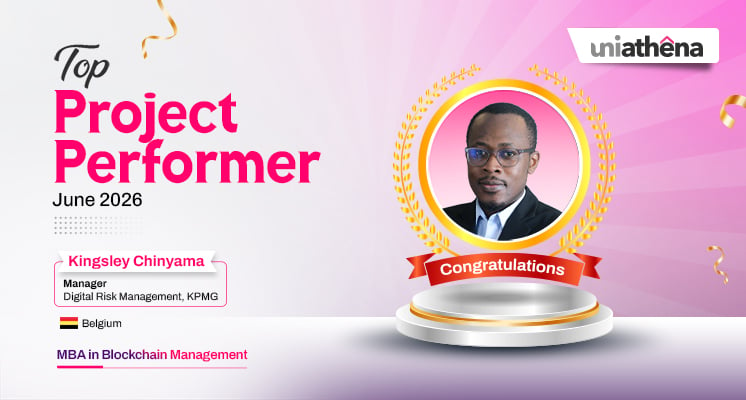
🌟 Top Project Performer – June 2026 🌟
Read More
1
mins read


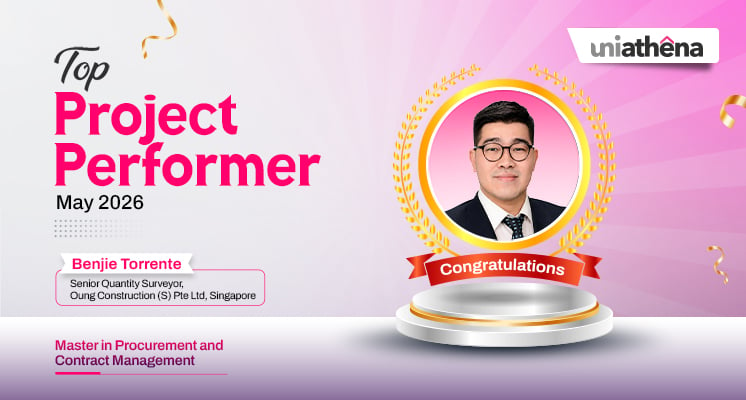
🌟 Top Project Performer – May 2026 🌟
Read More
1
mins read

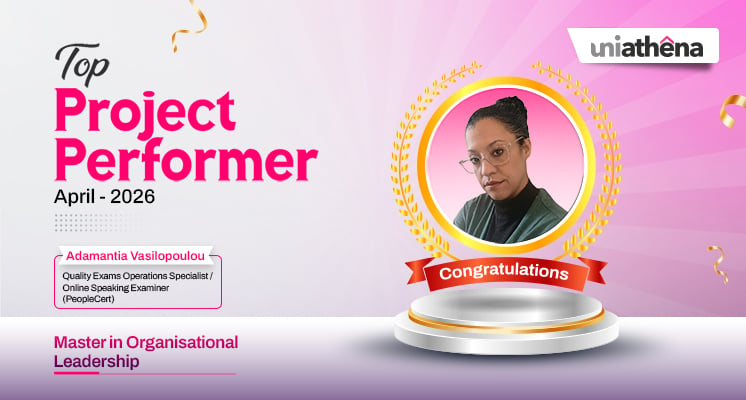
🌟 Top Project Performer – April 2026 🌟
Read More
1
mins read

🌟 Top Project Performer – June 2026 🌟
Read more
1
mins read
🌟 Top Project Performer – May 2026 🌟
Read more
1
mins read

🌟 Top Project Performer – April 2026 🌟
Read more
1
mins read
Get in Touch

It’s Time to Start
Join NowMost Popular Online Specialization
- Master of International Business Administration
- Master of Business Administration
- MBA in General Management- FastTrack
- Master in Innovation and Entrepreneurship
- MBA-Family Business Management
- Master in Procurement and Contract Management
- Extended Diploma in Business Analytics (SCQF Level 11)
- Diploma in Supply Chain and Logistics Management (SCQF Level 11)
- Strategic Human Resource Management Practitioner
- Master in Data Science
- Master in Engineering Management
Trending Online
- Integrated Doctorate of Business Administration
- Postgraduate Certificate in Finance for Next Generation Managers
- Master of Business Administration- General Management (Fast Track)
- Postgraduate Certificate in Socio-Economic and Legal Framework
- Postgraduate Certificate in Business Sustainability
- Certified Manager
- Supply Chain Management Practitioner
- MBA - AI in Business
- MBA - Accounting & Finance
- Master in Supply Chain and Logistics Management
Top Universities Online Certificates
- Postgraduate Certificate in International Marketing Management
- Postgraduate Certificate In International Human Resource Management
- Postgraduate Certificate in Strategic Management
- Postgraduate Certificate in Procurement & Contracts Management
- Postgraduate Certificate in Business Analytics
- Postgraduate Certificate in Strategic Supply Chain & Logistics Management
- Postgraduate Certificate in Human Resource and Leadership
- Project Management Practitioner
- Postgraduate Certificate in Supply Chain Design & Implementation
- Postgraduate Certificate in Management Accounting and Finance
Accredited Online Degree Program
- MBA - Digital Transformation
- MBA - Family Business Management
- MBA - Marketing Management
- MBA in Quality Management
- MBA - Business Intelligence & Data Analytics
- MBA in Operations & Project Management
- MBA in Energy Management
- MBA In Construction & Safety Management
- Master in Organisational Leadership
- Master in Public Health
- Master in Construction Management
- Bachelor of Arts in Business Administration


 Install Now


UniAthena is an Ed-Tech, offering flexible, affordable learning solutions, including Free-Learning Upskilling Courses and Academic Programs in partnerships with accredited and globally renowned universities and professional qualification bodies.


Do you have any questions ?
Feel free to send us your questions or request a free consultation
Send a message
UK
Athena Global Education
Magdalen Centre,
Robert Robinson Avenue,
Oxford, OX4 4GA, UK
Phone : 01865 784299
MIDDLE EAST
Athena Global Education FZE
Block L-03, First Floor,
P O Box 519265, Sharjah Publishing City,
Free Zone, Sharjah, UAE
Phone : +971 55 879 5492
INDIA
Uniathena Private Limited
9A,Midas Tower
Phase 1
Hinjewadi Rajiv Gandhi Infotech Park
Pune-411057
Phone: +91 9145665544
All Copyrights Reserved @ Athena Global Education 2021-2026