-

Bachelor's

-

Masters
-

MBA
-

Doctorate
-

Micro Credit
-

Explore all Courses
-
Postgraduate Certifications

-
Postgraduate Diploma
-
Undergraduate Diploma
-
Diploma



How to Become an AI Strategist: Salary, Skills & a Roadmap for Non-Techies

Author: maharajan p
|8
MINS READ
| 0
| 10
Created On: 11 July, 2026
Share




Table of Contents (TOC) :
- Introduction
- Key Takeaways
- What Is an AI Strategist?
- AI Strategist vs AI Engineer vs Data Scientist
- Key Skills Required to Become an AI Strategist
- How Much Does an AI Strategist Earn?
- Is AI Strategy a Career Option Only for Programmers?
- Step-by-Step Roadmap to Become an AI Strategist as a Non-Tech Professional
- Start Your AI Strategy Learning Journey with UniAthena
- FAQs
Introduction
AI seems to be everywhere these days.
According to the World Economic Forum, 86% of employers expect AI and information-processing technologies to transform their businesses by 2030.
From global tech leaders like Google and Microsoft to newly launched startups, organizations are racing to find ways to use AI in their products, services, and daily operations. They're all trying to answer the same question: How do we use AI in a way that actually creates value?
That's exactly why demand is growing for AI strategists.
So, who are these professionals, what do they do, and more importantly, can you become one? Let's find out.
Key Takeaways:
- AI strategists help organizations identify, evaluate, and implement AI initiatives that support real business objectives.
- The role focuses more on business decision-making and AI adoption than programming or model development.
- Non-technical professionals can enter AI strategy by building AI, analytics, business, and governance knowledge.
- Growing AI adoption across industries is increasing demand for professionals who can connect AI with business value.
What Is an AI Strategist?
An AI strategist is a professional who helps organizations identify where and how artificial intelligence can create business value. Instead of building AI models or writing code, they focus on connecting AI capabilities with real business goals.
Think of them as the bridge between business teams and technical teams. They help answer questions such as:
- Which processes can be improved with AI?
- What problems are worth solving?
- Which AI tools fit the organization's needs?
- And how can AI be adopted responsibly and effectively?
Their responsibilities often include:
- Identifying opportunities to use AI across the business
- Evaluating AI tools, platforms, and solutions
- Creating AI adoption and implementation plans
- Aligning AI projects with business objectives
- Monitoring risks, ethics, compliance, and governance considerations
- Helping teams understand and adapt to AI-driven changes
As more organizations explore AI, the demand for professionals who can translate business needs into practical AI strategies continues to grow.
AI Strategist vs AI Engineer vs Data Scientist
Isn't an AI strategist basically a data scientist?
Or maybe an AI engineer with a different title?
It's a fair question. After all, all three roles work around AI. But their responsibilities are quite different.
The easiest way to think about it is this: while AI engineers build AI systems and data scientists analyze data to generate insights, AI strategists focus on identifying where AI can create value for the business and how it should be implemented.
For example, imagine a retail company wants to use AI to improve customer service.
- The AI strategist determines whether an AI chatbot is the right solution and how it fits the company's goals.
- The data scientist analyzes customer interaction data to understand common support issues.
- The AI engineer develops and deploys the chatbot using the appropriate AI technologies.
In other words, AI strategists spend less time building AI systems and more time deciding why, where, and when those systems should be used.
Key Skills Required to Become an AI Strategist
The good news is that becoming an AI strategist isn't about mastering every programming language or building complex machine-learning models. The role sits at the intersection of business, technology, and decision-making, which means a mix of strategic and practical skills matters most.
Some of the key skills AI strategists rely on include:
- AI Fundamentals: Understanding how AI technologies work, their capabilities, and their limitations.
- Business Strategy: Identifying opportunities where AI can support business goals and improve outcomes.
- Problem-Solving: Assessing challenges and determining whether AI is the right solution.
- Data Literacy: Interpreting data, metrics, and insights to support decision-making.
- Critical Thinking: Evaluating AI initiatives, risks, and potential business impact.
- Communication Skills: Explaining technical concepts to non-technical stakeholders and vice versa.
- Project Management: Coordinating AI initiatives across teams and departments.
- AI Governance and Ethics: Understanding responsible AI use, compliance requirements, and potential risks.
- Change Management: Helping teams adapt to new AI-driven processes and workflows.
- Technology Evaluation: Assessing AI tools, platforms, and vendors based on business needs.
How Much Does an AI Strategist Earn?
One of the reasons AI strategy is attracting attention is the earning potential. However, it's important to note that salaries vary widely based on factors such as location, industry, years of experience, company size, and the scope of responsibility.
For example, an AI strategist working with enterprise AI transformation initiatives may earn significantly more than someone supporting smaller AI adoption projects.
The table below provides a snapshot of average annual salaries reported by major salary platforms:
These figures should be viewed as benchmarks rather than fixed salary expectations. Entry-level professionals moving into AI strategy may start below these averages, while experienced consultants, product leaders, or AI transformation specialists can earn substantially more.
Is AI Strategy a Career Option Only for Programmers?
Not necessarily.
In fact, one of the biggest misconceptions about AI strategy is that you need to be a software developer or machine-learning engineer to enter the field. While technical knowledge can certainly help, the role itself is often more focused on business decision-making than software development.
Think about the questions an AI strategist deals with every day:
- Which business problems should be solved with AI?
- Where can AI create the most value?
- Which AI tools are worth investing in?
- What risks, costs, and implementation challenges should be considered?
- How can teams adapt to AI-driven workflows?
These are business and strategy questions as much as they are technology questions.
That's why professionals from backgrounds such as business management, consulting, marketing, operations, project management, product management, and analytics often transition into AI strategy roles. Their ability to understand business goals, manage stakeholders, and evaluate opportunities can be just as valuable as technical expertise.
So if you're a non-technical professional wondering whether AI strategy is a realistic career path, the answer is yes.
Also Read: What Is an AI Product Manager? Role, Skills & Salary
Step-by-Step Roadmap to Become an AI Strategist as a Non-Tech Professional
The transition into AI strategy is usually less about learning to code and more about understanding how AI can solve business problems. If you're coming from a non-technical background, these five steps can help you build a strong foundation.
1. Learn AI Fundamentals: Build a practical understanding of concepts such as machine learning, generative AI, automation, and large language models. Focus on what AI can do and where its limitations lie.
2. Study AI Use Cases in Business: Explore how organizations use AI across functions like marketing, operations, customer service, finance, and HR. This helps you understand where AI creates value.
3. Get Familiar with AI Tools and Platforms: Spend time exploring popular AI solutions and enterprise platforms. Understanding their capabilities will help you evaluate potential applications and opportunities.
4. Develop Data and Analytical Skills: Learn how to interpret data, evaluate performance metrics, and identify trends. These skills are essential for assessing AI initiatives and measuring impact.
5. Understand AI Governance and Ethics: Gain knowledge of AI risks, privacy, compliance, bias, and responsible AI practices. Organizations increasingly need professionals who can balance innovation with accountability.
Start Your AI Strategy Learning Journey with UniAthena
Breaking into AI strategy doesn't happen by learning a single tool or following a one-size-fits-all path. It requires building a combination of AI knowledge, business understanding, analytical thinking, and decision-making skills.
That's where structured learning can help.
At UniAthena, you'll find a range of short courses designed to help professionals build the knowledge and skills that support AI-related career growth. Here are some short courses worth exploring:
- Diploma in Artificial Intelligence: Learn the core concepts, applications, and decision-making frameworks that power modern AI systems.
- Essentials of Data Analytics: Understand how organizations use data, analytics, and insights to support business decisions.
- Mastering AI: Fundamentals, Strategies & Representation: Explore how AI systems solve problems, process knowledge, and operate in real-world environments.
- Basics of Business Analytics: Learn how to analyze business data and identify patterns that support strategic decision-making.
Looking for something more comprehensive than a short course?
If you're aiming for deeper business and AI expertise, UniAthena also offers MBA programs focused on generative AI and artificial intelligence in business transformation. Here are the programs you can explore:
- MBA in Generative AI (Artificial Intelligence): Designed for professionals leading AI initiatives, the program combines business management, AI strategy, and digital innovation with advanced topics such as generative AI, large language models (LLMs), and transformer architectures, helping learners bridge business and AI technologies.
- MBA in Artificial Intelligence in Business: Designed for professionals driving AI-powered business transformation, the program combines strategic management, finance, and AI with practical skills in Python, data analysis, visualization, and machine learning, helping learners apply AI to business strategy and decision-making.
Before deciding which program is right for you, compare the course structure, certifications, admission requirements, duration, and expected outcomes to see which best aligns with your career goals.
Also Read: What Jobs Will AI Replace & Which Careers Are Safe?
FAQs
Q1. What does an AI strategist do?
A: An AI strategist identifies AI opportunities, aligns them with business goals, and guides AI adoption initiatives.
Q2. Do I need coding skills to become an AI strategist?
A: No. Basic AI knowledge helps, but the role focuses more on strategy than software development.
Q3. Can non-technical professionals become AI strategists?
A: Yes. Many AI strategists come from business, consulting, operations, marketing, and project management backgrounds.
Q4. What skills are most important for AI strategists?
A: AI fundamentals, business strategy, analytical thinking, communication, data literacy, and AI governance knowledge.
Q5. Is AI strategy a good career choice in 2026?
A: As AI adoption grows, organizations increasingly need professionals who can guide AI-related decisions.
Our Popular Courses

$14000


Doctoral Degree in Business Administration
Universidad Catolica De Murcia (UCAM), Spain
Duration:
2 - 3 Years
$17500*
Integrated Doctorate of Business Administration
Guglielmo Marconi University, Italy
Universidad Catolica De Murcia (UCAM), Spain
Duration:
2.5 - 3.5 Years
$5600*
Master of Business Administration
Guglielmo Marconi University, Italy
Duration:
12 - 24 Months
$5600*
MBA in Operations & Project Management
Guglielmo Marconi University, Italy
Duration:
12 - 24 Months
$5600*
Master in Supply Chain and Logistics Management
Guglielmo Marconi University, Italy
Duration:
12 - 24 Months
$5950*
Master in Data Sciences
Guglielmo Marconi University, Italy
Duration:
12 - 24 Months
$5600*
Master in Engineering Management
Guglielmo Marconi University, Italy
Duration:
12 - 24 Months
$5600*
Master in Procurement and Contract Management
Guglielmo Marconi University, Italy
Duration:
12 - 24 Months
$5600*
Master in Public Health
Guglielmo Marconi University, Italy
Duration:
12 - 24 MonthsOur Popular Courses
COMMENTS(0)
Our Popular Courses
$14000
Doctoral Degree in Business Administration
Universidad Catolica De Murcia (UCAM), Spain
Duration:
2 - 3 Years
$17500*
Integrated Doctorate of Business Administration
Guglielmo Marconi University, Italy
Universidad Catolica De Murcia (UCAM), Spain
Duration:
2.5 - 3.5 Years
$5600*
Master of Business Administration
Guglielmo Marconi University, Italy
Duration:
12 - 24 Months
$5600*
MBA in Operations & Project Management
Guglielmo Marconi University, Italy
Duration:
12 - 24 Months
$5600*
Master in Supply Chain and Logistics Management
Guglielmo Marconi University, Italy
Duration:
12 - 24 Months
$5950*
Master in Data Sciences
Guglielmo Marconi University, Italy
Duration:
12 - 24 Months
$5600*
Master in Engineering Management
Guglielmo Marconi University, Italy
Duration:
12 - 24 Months
$5600*
Master in Procurement and Contract Management
Guglielmo Marconi University, Italy
Duration:
12 - 24 Months
$5600*
Master in Public Health
Guglielmo Marconi University, Italy
Duration:
12 - 24 MonthsOur Popular Courses
Our Popular Insights
Careers are shifting faster than ever, and staying relevant takes more than experience. Explore UniAthena’s most-read blogs for sharp insights, emerging skills, and practical pathways that help you move forward with clarity and confidence in a changing professional world.


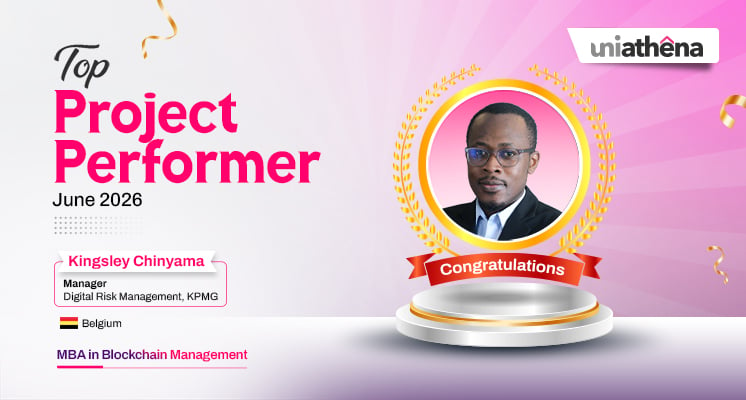
🌟 Top Project Performer – June 2026 🌟
Read More
1
mins read



🌟 Top Project Performer – May 2026 🌟
Read More
1
mins read

Best AI Tools for Content Creation
Read More
9
mins read
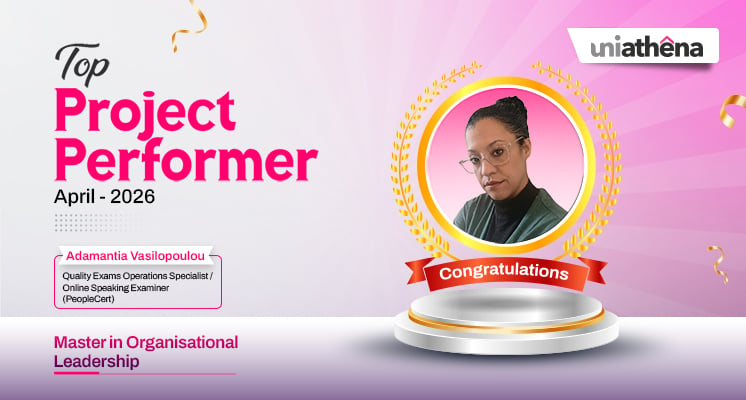
🌟 Top Project Performer – April 2026 🌟
Read More
1
mins read
🌟 Top Project Performer – June 2026 🌟
Read more
1
mins read
🌟 Top Project Performer – May 2026 🌟
Read more
1
mins read
Best AI Tools for Content Creation
Read more
9
mins read
🌟 Top Project Performer – April 2026 🌟
Read more
1
mins read
Get in Touch

It’s Time to Start
Join NowMost Popular Online Specialization
- Master of International Business Administration
- Master of Business Administration
- MBA in General Management- FastTrack
- Master in Innovation and Entrepreneurship
- MBA-Family Business Management
- Master in Procurement and Contract Management
- Extended Diploma in Business Analytics (SCQF Level 11)
- Diploma in Supply Chain and Logistics Management (SCQF Level 11)
- Strategic Human Resource Management Practitioner
- Master in Data Science
- Master in Engineering Management
Trending Online
- Integrated Doctorate of Business Administration
- Postgraduate Certificate in Finance for Next Generation Managers
- Master of Business Administration- General Management (Fast Track)
- Postgraduate Certificate in Socio-Economic and Legal Framework
- Postgraduate Certificate in Business Sustainability
- Certified Manager
- Supply Chain Management Practitioner
- MBA - AI in Business
- MBA - Accounting & Finance
- Master in Supply Chain and Logistics Management
Top Universities Online Certificates
- Postgraduate Certificate in International Marketing Management
- Postgraduate Certificate In International Human Resource Management
- Postgraduate Certificate in Strategic Management
- Postgraduate Certificate in Procurement & Contracts Management
- Postgraduate Certificate in Business Analytics
- Postgraduate Certificate in Strategic Supply Chain & Logistics Management
- Postgraduate Certificate in Human Resource and Leadership
- Project Management Practitioner
- Postgraduate Certificate in Supply Chain Design & Implementation
- Postgraduate Certificate in Management Accounting and Finance
Accredited Online Degree Program
- MBA - Digital Transformation
- MBA - Family Business Management
- MBA - Marketing Management
- MBA in Quality Management
- MBA - Business Intelligence & Data Analytics
- MBA in Operations & Project Management
- MBA in Energy Management
- MBA In Construction & Safety Management
- Master in Organisational Leadership
- Master in Public Health
- Master in Construction Management
- Bachelor of Arts in Business Administration


 Install Now


UniAthena is an Ed-Tech, offering flexible, affordable learning solutions, including Free-Learning Upskilling Courses and Academic Programs in partnerships with accredited and globally renowned universities and professional qualification bodies.


Do you have any questions ?
Feel free to send us your questions or request a free consultation
Send a message
UK
Athena Global Education
Magdalen Centre,
Robert Robinson Avenue,
Oxford, OX4 4GA, UK
Phone : 01865 784299
MIDDLE EAST
Athena Global Education FZE
Block L-03, First Floor,
P O Box 519265, Sharjah Publishing City,
Free Zone, Sharjah, UAE
Phone : +971 55 879 5492
INDIA
Uniathena Private Limited
9A,Midas Tower
Phase 1
Hinjewadi Rajiv Gandhi Infotech Park
Pune-411057
Phone: +91 9145665544
All Copyrights Reserved @ Athena Global Education 2021-2026