-

Bachelor's

-

Masters
-

MBA
-

Doctorate
-

Micro Credit
-

Explore all Courses
-
Postgraduate Certifications

-
Postgraduate Diploma
-
Undergraduate Diploma
-
Diploma



What Jobs Will AI Replace & Which Careers Are Safe?
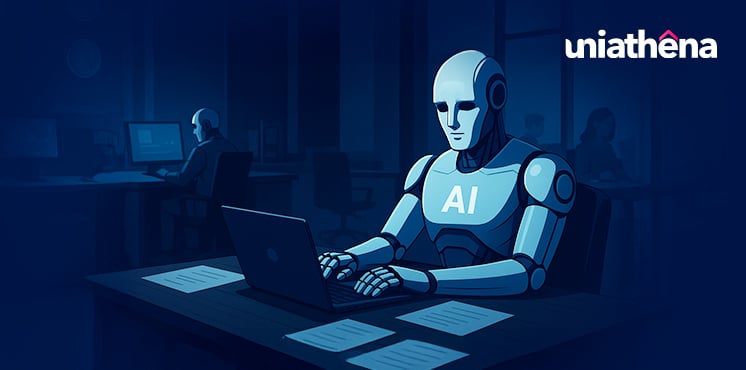
Author: aishwarya sancheti
|6
MINS READ
| 0
| 6,707
Created On: 12 December, 2025
Share




Table of Contents (TOC):
- Introduction
- Key Takeaways
- Understanding the AI - Workforce Landscape
- Jobs Most Likely to Be Replaced by AI
- Jobs That AI Will Not Replace
- Skills Needed to Stay Relevant in the Age of AI
- New Careers Powered by AI
- Building AI-Resilient Skillsets Through Learning
- Conclusion
- FAQs
Introduction
AI is coming for jobs - but not all jobs.
Artificial Intelligence is reshaping work faster than any technological shift in human history. Studies estimate that up to 300 million full-time jobs could be affected by AI worldwide, and nearly 14% of the global workforce may need to switch careers in the coming years. While the impact varies across industries, experts agree on one thing: the future of work will not look like the present.
The acceleration of AI automation, rapid adoption of AI-powered business systems, and the increasing push for cost efficiency are fast-tracking the replacement of job functions that are routine, predictable, or rule-based. Yet, this doesn’t mean a future without humans. Even as some roles shrink, new AI-proof careers are emerging, and jobs that depend on human judgement, creativity, and empathy are becoming more valuable than ever.
This blog explores which jobs will be replaced by AI, what jobs AI won’t replace, and the skills and learning pathways that can keep professionals future-ready.
Key Takeaways:
- AI may affect up to 300 million jobs globally, especially roles that are repetitive and rule-based.
- Human-centered careers requiring creativity, empathy, and judgment remain AI-resistant.
- The safest careers blend human strengths with AI fluency, not avoidance of technology.
- Upskilling with AI literacy is becoming essential across all industries.
- Foundational AI programs (like Basics of AI, Diploma in AI) help professionals stay competitive and future-ready.
Understanding the AI - Workforce Landscape
AI automation is not just about machines but about intelligent computing capable of analysing, predicting, learning and decision-making at scale. This is transforming the nature of work.
Roles become vulnerable when they involve:
- Highly repetitive workflows
- Standardised rule-based decision-making
- Predictable physical movement
- Low contextual or interpersonal demand
Roles become resilient when they involve:
- Empathy, mentorship and relationship building
- Creativity, originality and conceptual thinking
- High-stakes or ethical judgement
- Adaptability to unpredictable environments
This contrast frames the divide between jobs AI will replace and jobs that will be safe from AI and automation.
Jobs Most Likely to Be Replaced by AI
AI is disrupting industries at scale, especially where work is repetitive or data-heavy. Studies indicate that 30-40% of routine tasks can already be automated, putting certain job categories at higher risk.
Roles Most Vulnerable to AI
- Repetitive desk jobs: data entry, payroll processing, clerical support, compliance checks
- Script-based customer service: telecallers, chat support, retail cashiers
- Routine operational roles: assembly-line workers, packagers, inventory checkers
These positions involve predictable workflows, making them easy for AI and automation tools to handle with greater speed and accuracy.
Creative-Tech Roles Facing Partial Replacement
- Template-based graphic design
- Entry-level coding
- Basic content writing
AI can now generate designs, produce drafts, and write functional code snippets—reducing the need for beginner-level roles.
Industries Under Rapid Transformation
- Transportation: autonomous vehicles
- Logistics: warehouse robots
- Manufacturing: robotic assembly and predictive maintenance
While these jobs won’t vanish overnight, they will be reshaped. Workers will need to upskill, adapt, and learn how to collaborate with AI to stay competitive.
Jobs That AI Will Not Replace
Despite its capabilities, AI cannot replicate empathy, ethical reasoning, or human intuition, making several professions naturally AI-resistant.
Human-Centric Careers That Stay Safe
- Teachers, psychologists, counselors
- Doctors, nurses, and specialized healthcare professionals
- Social workers, lawyers, leaders, entrepreneurs
- Researchers, innovators, and strategic thinkers
These roles require emotional depth, creativity, ethical judgment, and cultural understanding, areas where AI falls short.
Hands-On Skill-Based Jobs That Resist Automation
- Electricians, plumbers, carpenters
- Mechanics, construction specialists
- Chefs and culinary experts
- Aviation and technical maintenance professionals
These careers rely on physical dexterity, adaptability, and real-time decision-making—skills that robots still struggle to master.
The Bottom Line: Jobs that blend human strengths + smart use of AI will thrive, not just survive. The safest careers are those rooted in creativity, compassion, innovation, and skilled craftsmanship.
Skills Needed to Stay Relevant in the Age of AI
Those who thrive in the AI era will combine technical capability with human-centric strengths.
Technical Skills:
- Understanding AI and machine learning principles
- Working productively with AI tools and systems
- Data-driven decision-making
- Digital and analytical literacy
Soft Skills:
- Problem-solving and creative thinking
- Emotional intelligence and communication
- Adaptability and continuous learning
- Ethical judgement and leadership
A professional becomes AI-proof not by avoiding AI but by mastering what AI cannot do.
New Careers Powered by AI
AI isn't just replacing jobs in fact it's sparking fresh ones that fuse your skills with smart tech.
Here's how you can jump in.
AI Content Specialist:
Guide AI to craft brand-perfect content. You'll tweak prompts, refine results, and boost engagement with data-smart stories.
AI Ethics Analyst:
Keep AI fair and safe. You'll audit systems, shape policies, and build trust in every decision.
Prompt Engineer:
Master prompts for spot-on AI outputs. Test and perfect them to supercharge marketing, research, or support.
Workflow Automation Designer:
Streamline your team's processes. Spot bottlenecks, link AI tools, and slash costs while keeping things human.
AI CX Manager:
Elevate customer journeys with AI chats and insights. Personalize support at scale—make every interaction count.
Building AI-Resilient Skillsets Through Learning
To meet the evolving demands of the workplace, many individuals are strengthening their understanding of AI.
Some structured learning tracks that align with shifting job requirements include:
- Basics of Artificial Intelligence - Introductory foundations of AI systems and terminology.
- Basics of Agents & Environments in AI - Structure of intelligent agents and decision environments.
- Mastering AI: Fundamentals, Strategies & Representation - Evolution of AI models and their practical functioning.
- Essentials of AI Learning Frameworks & Advanced Models - Understanding reinforcement learning, neural models and deep systems.
- Diploma in Artificial Intelligence - Broader exploration of AI workflows, applications and governance.
These learning pathways support both kinds of professionals:
- Those in high-risk job roles looking to transition or upskill, and
- Those in AI-resistant careers who want to integrate AI fluency into their expertise.
Conclusion
This blog has unpacked the reality behind jobs AI will replace, jobs AI will take over, and jobs safe from AI. While millions of workers will experience role transformation, the future of work remains full of opportunity.
The workforce of tomorrow will succeed by:
- Understanding how AI affects jobs
- Building capabilities that complement not compete with AI
- Strengthening both technical and human-centric skills
- Maintaining agility through lifelong learning
AI is not here to remove humans from work; it is here to redefine what human work will mean.
FAQs
Q1. Will AI replace jobs completely?
A: AI will replace certain tasks, not entire professions. Jobs built on repetitive, predictable, and rule-based tasks are at the highest risk, but roles requiring creativity, empathy, critical thinking, and human judgment are expected to remain largely safe.
Q2. Which jobs are most likely to be replaced by AI?
A: Data entry roles, telemarketing,Point-of-sale operations, routine administration, assembly-line operations, and basic content or design tasks face the greatest automation risk due to their repetitive nature.
Q3. What jobs are safe from AI and automation?
A: Careers that depend on human-centric strengths such as teachers, psychologists, doctors, lawyers, social workers, leaders, and skilled technicians like electricians and chefs are considered AI-resistant.
Q4. How can professionals stay employable in an AI-driven future?
A: By developing hybrid skillsets that combine:
- Technical fluency (AI basics, data literacy, digital tools)
- Human strengths (creativity, communication, empathy, leadership)
- Lifelong learning and adaptability are now essential to career growth.
Q5. Do I need to learn about AI even if my job is safe?
A: Yes. Understanding how AI works helps professionals in all fields make better decisions, streamline tasks, and stay competitive. Foundational AI learning including the Basics of Artificial Intelligence, Essentials of AI Learning Frameworks, and related programs supports long-term career resilience.
Explore Related Courses










COMMENTS(0)
Explore Related Courses
Our Popular Insights
Careers are shifting faster than ever, and staying relevant takes more than experience. Explore UniAthena’s most-read blogs for sharp insights, emerging skills, and practical pathways that help you move forward with clarity and confidence in a changing professional world.









Get in Touch

It’s Time to Start
Join NowMost Popular Online Specialization
- Master of International Business Administration
- Master of Business Administration
- MBA in General Management- FastTrack
- Master in Innovation and Entrepreneurship
- MBA-Family Business Management
- Master in Procurement and Contract Management
- Extended Diploma in Business Analytics (SCQF Level 11)
- Diploma in Supply Chain and Logistics Management (SCQF Level 11)
- Strategic Human Resource Management Practitioner
- Master in Data Science
- Master in Engineering Management
Trending Online
- Integrated Doctorate of Business Administration
- Postgraduate Certificate in Finance for Next Generation Managers
- Master of Business Administration- General Management (Fast Track)
- Postgraduate Certificate in Socio-Economic and Legal Framework
- Postgraduate Certificate in Business Sustainability
- Certified Manager
- Supply Chain Management Practitioner
- MBA - AI in Business
- MBA - Accounting & Finance
- Master in Supply Chain and Logistics Management
Top Universities Online Certificates
- Postgraduate Certificate in International Marketing Management
- Postgraduate Certificate In International Human Resource Management
- Postgraduate Certificate in Strategic Management
- Postgraduate Certificate in Procurement & Contracts Management
- Postgraduate Certificate in Business Analytics
- Postgraduate Certificate in Strategic Supply Chain & Logistics Management
- Postgraduate Certificate in Human Resource and Leadership
- Project Management Practitioner
- Postgraduate Certificate in Supply Chain Design & Implementation
- Postgraduate Certificate in Management Accounting and Finance
Accredited Online Degree Program
- MBA - Digital Transformation
- MBA - Family Business Management
- MBA - Marketing Management
- MBA in Quality Management
- MBA - Business Intelligence & Data Analytics
- MBA in Operations & Project Management
- MBA in Energy Management
- MBA In Construction & Safety Management
- Master in Organisational Leadership
- Master in Public Health
- Master in Construction Management
- Bachelor of Arts in Business Administration


 Install Now


UniAthena is an Ed-Tech, offering flexible, affordable learning solutions, including Free-Learning Upskilling Courses and Academic Programs in partnerships with accredited and globally renowned universities and professional qualification bodies.


Do you have any questions ?
Feel free to send us your questions or request a free consultation
Send a message
UK
Athena Global Education
Magdalen Centre,
Robert Robinson Avenue,
Oxford, OX4 4GA, UK
Phone : 01865 784299
MIDDLE EAST
Athena Global Education FZE
Block L-03, First Floor,
P O Box 519265, Sharjah Publishing City,
Free Zone, Sharjah, UAE
Phone : +971 55 879 5492
INDIA
Uniathena Private Limited
9A,Midas Tower
Phase 1
Hinjewadi Rajiv Gandhi Infotech Park
Pune-411057
Phone: +91 9145665544
All Copyrights Reserved @ Athena Global Education 2021-2026