-

Bachelor's

-

Masters
-

MBA
-

Doctorate
-

Micro Credit
-

Explore all Courses
-
Postgraduate Certifications

-
Postgraduate Diploma
-
Undergraduate Diploma
-
Diploma



Importance of Goal Setting for Students

Author: munazzah ali
|7
MINS READ
| 0
| 129
Created On: 18 May, 2026
Share




Table of Contents (TOC):
- Introduction
- Key Takeaways
- What Goal Setting Really Means
- What Students Should Actually Focus On When Setting Goals
- Why Students Feel Stuck Without Clear Goals
- The Real Benefits of Goal Setting for Students
- The 3 Types of Goals Every Student Needs
- How to Set Goals That Actually Work (SMART Approach Made Simple)
- Turning Goals into Action
- Overcoming the Most Common Goal-Setting Challenges
- Where Structured Learning Makes a Difference
- Conclusion
- FAQs
Introduction
You sit down to study—books open, notes prepared, you are highly motivated.
This time you will be productive.
After ten minutes, you're on task. Then a tab switch. A notification. A scroll.
And here, in a minute, an hour is lost. You are now fatigued, and you have not really progressed.
Sound familiar?
It is not laziness. It is not even discipline. It is not having a goal.
Because you do not know exactly what you are working towards, your attention is lost — and your work is scattered. This is why goal setting is not just a recommendation, but a necessity for students.
Hard work is often a circle without clear goals. Even the little steps begin to count with them.
Because in the long run, it is not effort— it’s clarity.
Key Takeaways:
- Goal setting turns hard work into achievement.
- It minimises procrastination by setting priorities.
- Focus, confidence, and consistency are developed.
- Clear goals link study and success over the long term.
- Mini-successes boost confidence and minimise stress.
What Goal Setting Really Means
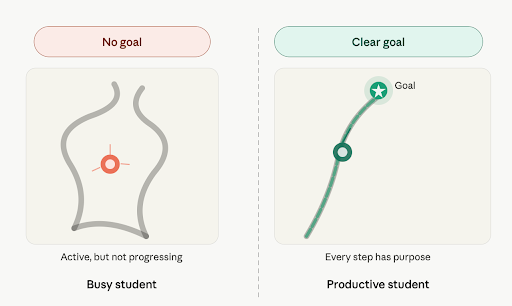
Consider using Google Maps without a destination. You might see roads, traffic, and movement, but it doesn't lead you to your destination. That’s what it's like studying without goals. You're moving, but not making any progress.
Now flip that. As soon as you reach your destination, each turn and each step makes sense. That is what goal setting for students does: it provides meaning for the work.
What Students Should Actually Focus On When Setting Goals
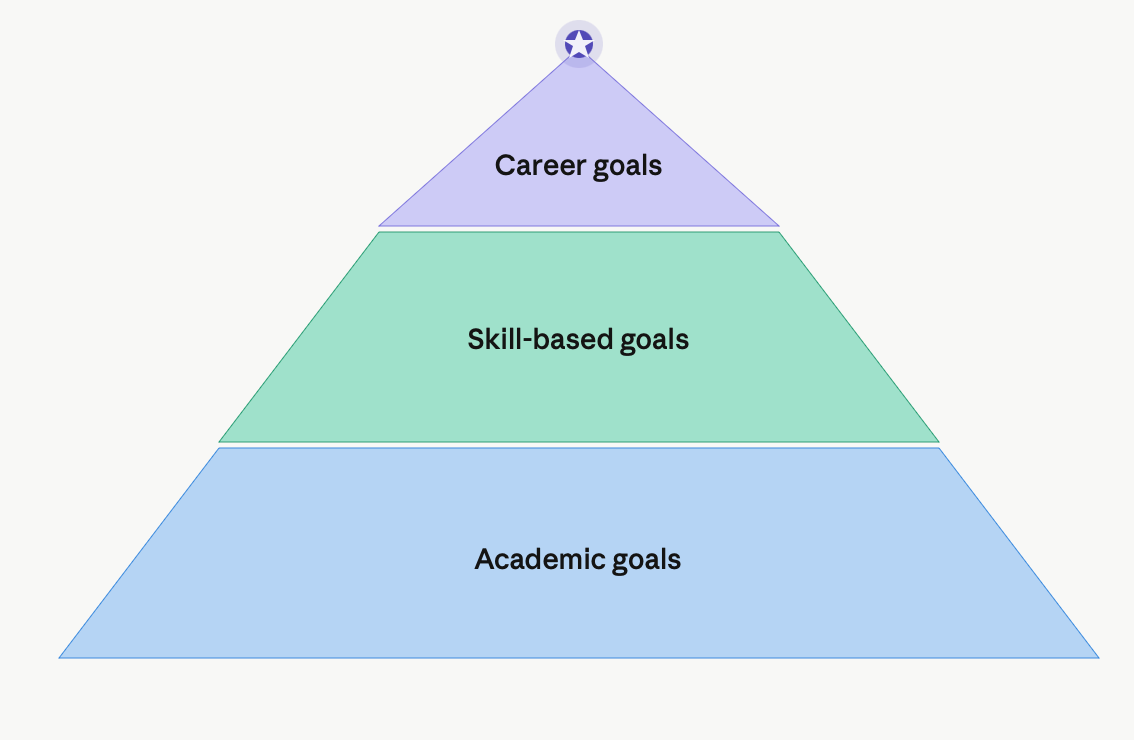
1. Academic Goals: Turning Study Time into Results
The trick to progress is to get specific: which subject, by how much, and by when– because particularity transforms aimless study into goal-oriented productivity.
2. Skill-Based Goals: Building What Classrooms Don’t Always Teach
Grades may open doors, but skills keep them open. Communication skills, critical thinking, tech skills, these things don't come naturally; you have to plan for them, learn them, and develop them.
3. Career Goals: Giving Direction to Everyday Effort
Studying without a bigger purpose feels like running without a finish line. But when students have career goals – like getting experience or creating a portfolio, each small action they take is part of a larger, more meaningful purpose.
Why Students Feel Stuck Without Clear Goals
Studying Hard—But Not Moving
You do the work, reading, writing, and editing, but nothing shifts. When there's no clear goal, work becomes a circle, and after a while, it becomes tedious rather than fun.
“I’ll Do It Later” Slowly Takes Over
When there is no target, everything becomes equally important, and nothing is achieved. A small act of procrastination snowballs into a habit of delay.
The Comparison Trap
When there are no personal goals, it's easy to compare with others. But instead of motivating you, it creates pressure—and it puts the emphasis on someone else's journey rather than your own.
The Real Benefits of Goal Setting for Students
Clear Direction for Decision Making
With goals, the question "Where do I begin?" is replaced by a clear focus. Students no longer procrastinate or get distracted by switching tasks– they have a clear route to follow, and each task flows from the one before it.
Concentration That Cuts Through Distraction
Distractions don't disappear, but they lose their hold. When you have a goal, you automatically know what to pay attention to and what to ignore, which helps you stay focused.
Self-Sustaining Motivation
Motivation stops being something you chase and starts becoming something you build. Each milestone, each chapter, each goal achieved is a step, making it easier to build the habit.
Confidence That Grows with Progress
As each goal is reached, you learn: I can do this. As that evidence adds up, it becomes a substitute for replacing self-doubt with a stronger sense of belief and control.
Direction That Connects to the Future
Studying no longer feels like a checklist to complete. It feels purposeful–every effort tied to a bigger picture, where today’s work clearly connects to tomorrow’s ambitions.
The 3 Types of Goals Every Student Needs
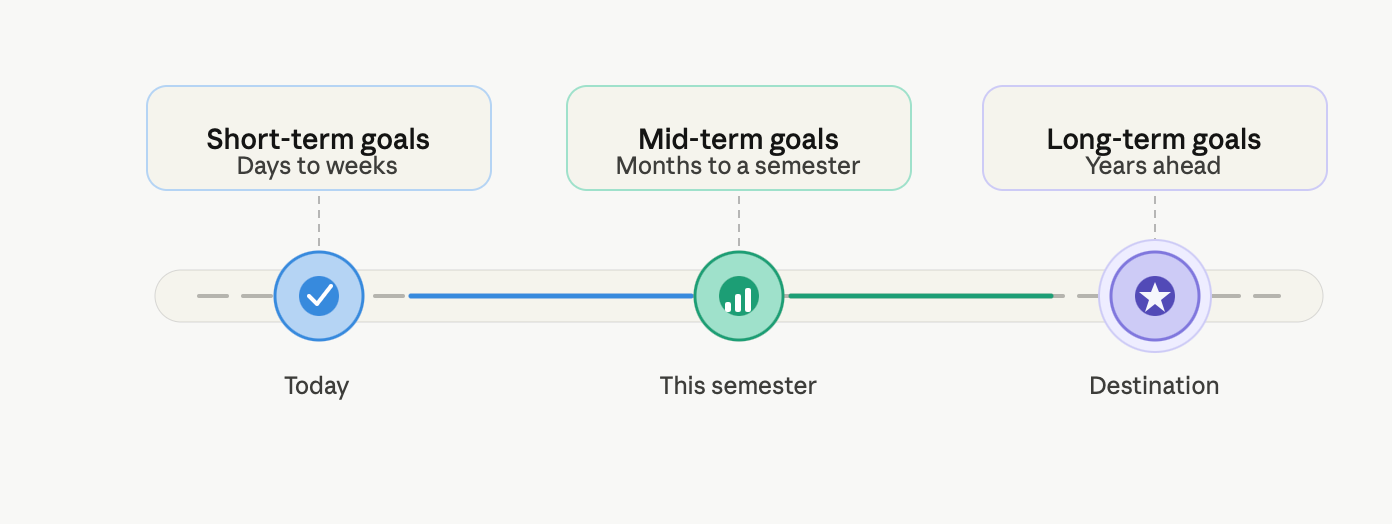
1. Short-Term Goals: Winning the Day
These are the promises you make to yourself: getting an assignment done, editing a chapter, staying on schedule. They might seem insignificant, but they give you direction and establish a routine. And over time, the small victories become a habit.
2. Mid-Term Goals: Measuring Real Progress
Whether it's raising your semester grade or achieving a new skill level, mid-term goals allow you to take a look in the mirror and ask: Am I making progress? They provide context, allowing you to make changes, improvements, and stay focused.
3. Long-Term Goals: Setting the Big Picture
These are the goals that provide a sense of purpose— career goals, further education, or the job you aspire to have. They address the question: What's the point of all this hard work? With a clear long-term vision, every day task becomes meaningful and relevant.
How to Set Goals That Actually Work (SMART Approach Made Simple)
Students don't fail because they are lazy; they fail because their goals are not specific. This is what the SMART approach looks like:
- Specific: From "I want to study chemistry" to "I want to study chapter 3 of organic chemistry".
- Measurable: Specify how you'll know if you're making progress: solve 15 problems rather than "do more practice," so you can see and measure your improvement.
- Achievable: Make your goals manageable and stay consistent, rather than overdoing it and burning out.
- Relevant: Set goals that are meaningful to you, to ensure you are not just going through the motions.
- Time-Bound: Include a deadline to create urgency– without a time constraint, good intentions are often not translated into action.
Also Read: Is Social Media Affecting Students' Focus?
Turning Goals into Action
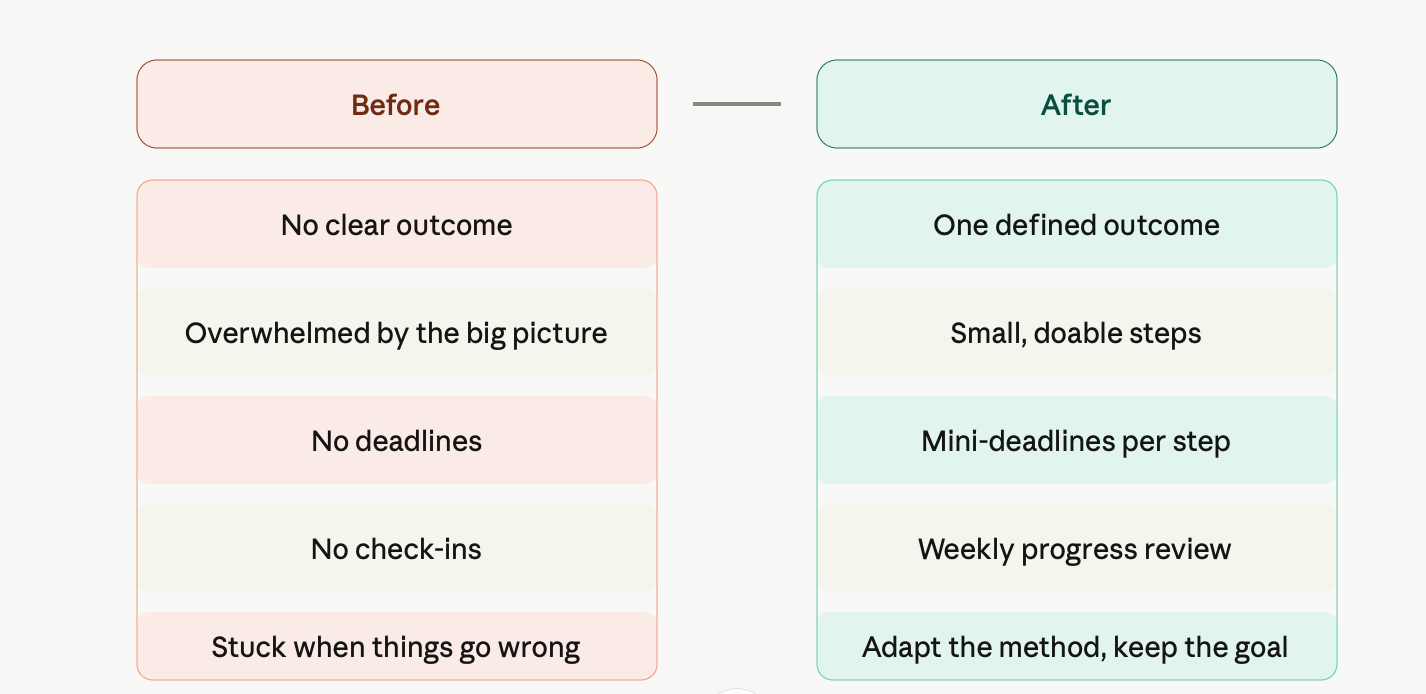
- Focus on one specific result: Don't try to achieve several outcomes; concentrate on one. Starting with clarity will help focus your efforts and avoid confusion.
- Divide it into manageable steps: Large tasks can seem daunting, but smaller steps make it more achievable and less intimidating.
- Mini-deadlines: Build in mini-deadlines to maintain momentum and avoid procrastination.
- Assess weekly: Weekly reviews can help you identify what's working and what isn't, and keep you motivated.
- Be adaptable in your strategy: If it's not working, change how you do it, not what you do. Flexibility allows you to keep progressing.
- Focus on removing distractions: Set up a space that promotes concentration, so you can dedicate time to the important things.
- Focus on progress, not perfection: Recognise achievements, no matter how small. This motivates and makes progress fun.
Also Read: How to Use Technology for Better Study Habits and Focus
Overcoming the Most Common Goal-Setting Challenges
1. Setting Goals That Are Too Big
While having big dreams can be motivating, they can also be paralysing. Small beginnings don't mean small goals; they're the key to being consistent and scaling up.
2. Losing Consistency Midway
Motivation feels strong at first, but it doesn't last. To continue, you need a system, such as weekly check-ups, that keeps you on track even when motivation weakens.
3. Not Tracking Progress
What you can't see, you can't feel. Seeing results gives you momentum; when you see progress, you want to do more.
Where Structured Learning Makes a Difference
While many students understand the value of goal setting, they don't always follow through. This is where structured learning goes beyond the books and makes a difference. It not only adds to the student's knowledge but also develops the mindset to remain consistent, disciplined, and reflective.
Courses such as
- Basics of Motivation and Leadership,
- Mastering Management Processes & Dynamics, and
- Mastering Practical Psychology
from UniAthena exposes students to the foundational concepts of motivation, planning, and psychology. Through these studies, students learn lessons that help them make better choices, stay focused, and develop a more disciplined approach in the long run.
Also Read: Time Management Tips for Students
Conclusion
The significance of goal setting for students is not about creating more stress for already stretched students, but about eliminating confusion.
With this, everything else becomes clear. Attention is focused, effort is meaningful, and progress becomes visible. The trick is not to do it all at once. It's to start simply and intentionally.
Set that one goal today. Because sometimes, just that one action can turn things around.
FAQs
Q1. Why is it important for students to set goals?
Setting goals provides a focus. Rather than just studying, you have a specific focus, which makes studying more effective and efficient.
Q2. How do I begin goal-setting as a student?
Keep it simple, choose a single goal, be specific, and set a timeframe. Then make it manageable by breaking it into smaller tasks.
Q3. What if I get demotivated to achieve my goals?
That’s normal. Rather than just relying on motivation, make a habit or plan, such as checking in with yourself every week, to keep going when you feel demotivated.
Q4. How do I know if my goals are working?
Regularly monitor your progress. If you are improving, that's a good sign. If not, try something different.
Explore Related Courses











COMMENTS(0)
Explore Related Courses
Our Popular Insights
Careers are shifting faster than ever, and staying relevant takes more than experience. Explore UniAthena’s most-read blogs for sharp insights, emerging skills, and practical pathways that help you move forward with clarity and confidence in a changing professional world.


How to Switch Career to Data Analytics?
Read More
6
mins read





How to Switch Career to Data Analytics?
Read more
6
mins read

Get in Touch

It’s Time to Start
Join NowMost Popular Online Specialization
- Master of International Business Administration
- Master of Business Administration
- MBA in General Management- FastTrack
- Master in Innovation and Entrepreneurship
- MBA-Family Business Management
- Master in Procurement and Contract Management
- Extended Diploma in Business Analytics (SCQF Level 11)
- Diploma in Supply Chain and Logistics Management (SCQF Level 11)
- Strategic Human Resource Management Practitioner
- Master in Data Science
- Master in Engineering Management
Trending Online
- Integrated Doctorate of Business Administration
- Postgraduate Certificate in Finance for Next Generation Managers
- Master of Business Administration- General Management (Fast Track)
- Postgraduate Certificate in Socio-Economic and Legal Framework
- Postgraduate Certificate in Business Sustainability
- Certified Manager
- Supply Chain Management Practitioner
- MBA - AI in Business
- MBA - Accounting & Finance
- Master in Supply Chain and Logistics Management
Top Universities Online Certificates
- Postgraduate Certificate in International Marketing Management
- Postgraduate Certificate In International Human Resource Management
- Postgraduate Certificate in Strategic Management
- Postgraduate Certificate in Procurement & Contracts Management
- Postgraduate Certificate in Business Analytics
- Postgraduate Certificate in Strategic Supply Chain & Logistics Management
- Postgraduate Certificate in Human Resource and Leadership
- Project Management Practitioner
- Postgraduate Certificate in Supply Chain Design & Implementation
- Postgraduate Certificate in Management Accounting and Finance
Accredited Online Degree Program
- MBA - Digital Transformation
- MBA - Family Business Management
- MBA - Marketing Management
- MBA in Quality Management
- MBA - Business Intelligence & Data Analytics
- MBA in Operations & Project Management
- MBA in Energy Management
- MBA In Construction & Safety Management
- Master in Organisational Leadership
- Master in Public Health
- Master in Construction Management
- Bachelor of Arts in Business Administration


 Install Now


UniAthena is an Ed-Tech, offering flexible, affordable learning solutions, including Free-Learning Upskilling Courses and Academic Programs in partnerships with accredited and globally renowned universities and professional qualification bodies.


Do you have any questions ?
Feel free to send us your questions or request a free consultation
Send a message
UK
Athena Global Education
Magdalen Centre,
Robert Robinson Avenue,
Oxford, OX4 4GA, UK
Phone : 01865 784299
MIDDLE EAST
Athena Global Education FZE
Block L-03, First Floor,
P O Box 519265, Sharjah Publishing City,
Free Zone, Sharjah, UAE
Phone : +971 55 879 5492
INDIA
Uniathena Private Limited
9A,Midas Tower
Phase 1
Hinjewadi Rajiv Gandhi Infotech Park
Pune-411057
Phone: +91 9145665544
All Copyrights Reserved @ Athena Global Education 2021-2026