-

Bachelor's

-

Masters
-

MBA
-

Doctorate
-

Micro Credit
-

Explore all Courses
-
Postgraduate Certifications

-
Postgraduate Diploma
-
Undergraduate Diploma
-
Diploma



How to Use Technology for Better Study Habits and Focus

Author: maharajan p
|8
MINS READ
| 0
| 121
Created On: 25 April, 2026
Share




Table of Contents (TOC):
- Introduction
- Key Takeaways
- How AI Is Changing the Way Students Learn
- 6 Smart Ways to Use Technology to Build Better Study Habits
- Improve Your Learning with Short Programs from UniAthena
- Final Take
- FAQs
Introduction
Ever spent an hour studying and realised you barely got through two pages? You're not alone. And honestly, it's not as simple as just "trying harder," especially when the subject keeps getting more complex. So before you blame yourself, consider this: the problem might not be your effort at all. It might be that you're still using outdated ways of learning in a world driven by technology and AI.
Today's students have access to tools that can break down complex topics, sharpen focus, and make every study session actually count. And right at the centre of all of it is AI.
When used the right way, it helps you genuinely understand what you're reading, stay consistent without burning out, and stop hitting that wall where everything just feels stuck.
Key Takeaways:
- Use AI and digital tools with a clear system to improve focus and avoid unnecessary distractions during study sessions, especially with evolving digital technologies in education.
- Replace passive reading with active recall methods to improve understanding, retention, and long-term memory of key concepts.
- Apply spaced repetition techniques to review information at the right time and reduce repetitive, inefficient studying.
- Create personalized study plans using AI technology for education to stay organized, manage time better, and focus on weak areas.
- Use short, focused learning programs to build practical skills quickly and apply them for academic and career growth.
How AI Is Changing the Way Students Learn
AI isn’t just a study aid anymore. It’s changing how students approach learning from the ground up. Instead of passively reading and re-reading, students now have tools that help them understand, practice, and apply concepts in real time.
- Better Performance: Students using AI tools can achieve up to 54% higher test scores compared to traditional methods. This is largely because AI supports active learning—explaining concepts in different ways, generating practice questions, and helping you test your understanding instead of just reading.
- Faster Learning: Around 46% of students say they complete tasks faster with AI support. When you’re not stuck searching for explanations or switching between multiple resources, you can move through topics with more clarity and less frustration.
- More Personalized Learning: AI-driven learning improves outcomes by up to 30%. Instead of following a fixed pace, you can break down difficult topics, revisit weak areas, and learn in a way that actually matches your level.
Beyond these shifts, AI is also making learning more interactive. You can turn notes into quizzes, simplify complex ideas instantly, and stay engaged without relying on passive methods that don’t always work. Over time, this leads to better focus, stronger retention, and more consistent study habits.
6 Smart Ways to Use Technology to Build Better Study Habits
1. Turn Passive Reading into Active Recall with AI
Active recall helps you remember and understand what you study. AI makes it easier to apply this method without spending extra time creating materials.
Here’s how you can use it:
- Generate Questions From Your Notes: After finishing a topic, ask AI to create 5–10 questions. Answer them without looking at your notes.
- Use AI Instant Feedback: Paste your answers and ask AI to correct them or explain what you missed.
- Convert Notes Into Flashcards: Ask AI to turn key points into Q&A flashcards. Review them later to reinforce memory.
- Summarize From Memory, Then Verify: Write a short summary of the topic from memory. Then use AI to compare it with the actual content and identify missing points.
The goal is simple: stop re-reading and start retrieving. When you test yourself regularly, you’ll understand faster and remember longer.
2. Use Spaced Repetition Apps to Remember More in Less Time
Think about this scenario: you study a chapter today, feel confident, and move on. A few days later, you open it again and realise you’ve forgotten most of it—so you start from scratch. This cycle keeps repeating, even though you’ve already put in the time.
Instead, use a spaced repetition app like Anki, Quizlet, or RemNote. These tools schedule your revision automatically and show you topics right when you’re about to forget them. Focus more on questions you get wrong and less on what you already know. This way, you reduce unnecessary revision and improve retention with shorter, consistent sessions.
3. Eliminate Distractions Using Focus Tech (Beat Attention Residue)
Distractions break your focus and make it harder to return to the same task with full attention. Use tools like Forest, Freedom, or Cold Turkey to block social media, websites, or apps during study time. Set a fixed study window: start with 25–50 minutes and keep all distractions blocked during that period.
Keep your phone away or in focus mode to avoid quick checks that break concentration. By reducing interruptions, you stay on one task longer, which helps you understand better and complete your study sessions more efficiently.
4. Use AI to Create Personalized Study Plans
Planning what to study is where most students lose time. Instead of guessing, you can use AI tools like ChatGPT, Claude, or planners like Notion AI and MyStudyLife to create a structured plan based on your goals and schedule. These tools can analyze your subjects, deadlines, and available time to generate a balanced study plan automatically.
Here’s how you can apply this:
- Define Your Goal And Timeline: Tell AI what you’re preparing for (exam, subject, deadline) and how many hours you can study daily.
- Break Subjects Into Daily Tasks: Ask AI to divide your syllabus into small, manageable tasks instead of vague study blocks.
- Auto-Adjust Your Schedule: If you miss a day or fall behind, update your input. AI can restructure your plan without starting over.
- Balance Multiple Subjects: Use AI planners to distribute time based on difficulty and priority, so nothing gets ignored.
5. Track Your Progress to Stay Consistent
Tracking your progress helps you stay consistent. When you can see how much you’ve completed, it becomes easier to keep going and finish what you started.
Here’s how you can apply this:
- Set Clear, Trackable Goals: Define what you want to complete each day or week. Keep it specific: topics, chapters, or practice sets.
- Use Simple Tracking Tools: Maintain a checklist, spreadsheet, or app to mark completed tasks. Seeing progress builds momentum.
- Break Goals Into Smaller Milestones: Divide larger targets into smaller steps so you can track progress more frequently.
- Review Your Progress Regularly: At the end of the day or week, check what you’ve completed and adjust your plan if needed.
Tracking makes your effort visible. When you see progress clearly, it becomes easier to stay consistent and follow through on your study routine.
6. Replace Social Media Loops with Learning Loops
Social media apps are designed to keep you hooked through constant scrolling and quick rewards. You can use the same pattern to support your learning instead. Replace short scrolling sessions with quick learning loops.
Here’s how you can use it:
- Long-Form Content Like A TED Talk or A Podcast. These formats don’t rely on fast cuts or constant stimulation, so they help you stay attentive for longer and gradually improve your focus.
- Use Short Programs To Build Skills Quickly. Instead of spending months on one course, you can take a 3–5 hour program to understand the fundamentals, see real-world applications, and start applying them from your own perspective. This works well when you want to upskill or move to the next level without long delays.
- Add Quick Quiz Sessions to Reinforce What You Learn. Tools like Quizlet help you test your understanding in short bursts, making your learning more active and engaging.
These small shifts turn passive scrolling into structured learning, helping you stay consistent without feeling overwhelmed.
Improve Your Learning with Short Programs from UniAthena
As discussed earlier, focused learning through short programs can sharpen your skills faster than traditional learning methods. If you’re ready to put this into practice, UniAthena is a strong option to consider.
UniAthena offers over 700+ short courses across domains such as AI, cybersecurity, finance, data analytics, supply chain, marketing, and healthcare. These programs are designed to help you build foundational knowledge quickly and apply it in real-world scenarios.
Here are some of the courses and what they offer:
Browse UniAthena’s full library of 700+ programs. Find what fits your goals and start building one focused session at a time. Explore all short programs here.
Final Take
Now you know why staying focused while studying feels difficult. The issue isn’t effort—it’s how you’re using technology. When used without a system, it distracts you. When used with the right methods, it becomes your biggest advantage.
If you want to study with better focus, start doing this:
- Turn your notes into questions and test yourself regularly
- Use spaced repetition tools to review at the right time
- Create a simple, personalized study plan using AI
- Block distractions and study in focused time blocks
- Track your progress to stay consistent
And if you want to go beyond exams and build skills for your career, start using short, focused programs to learn fundamentals quickly and apply them in real-world scenarios.
FAQs
Q1. How can technology improve study habits?
A: Technology helps structure study sessions, reduce distractions, and enable active learning through tools like AI, flashcards, and planners.
Q2. How does AI help students study better?
A: AI provides instant explanations, personalized plans, and practice questions, helping students understand faster and stay consistent with learning.
Q3. What is active recall, and why is it important?
A: Active recall means testing yourself on topics, which improves memory retention and understanding more effectively than passive reading.
Q4. How does spaced repetition help in studying?
A: It schedules reviews at optimal intervals, helping you retain information longer without repeatedly studying the same material.
Q5. Which tools can help reduce distractions while studying?
A: Apps like Forest, Freedom, and Cold Turkey block distractions and help you stay focused during dedicated study sessions.
Explore Related Courses












.jpg)


COMMENTS(0)
Explore Related Courses
Our Popular Insights
Careers are shifting faster than ever, and staying relevant takes more than experience. Explore UniAthena’s most-read blogs for sharp insights, emerging skills, and practical pathways that help you move forward with clarity and confidence in a changing professional world.


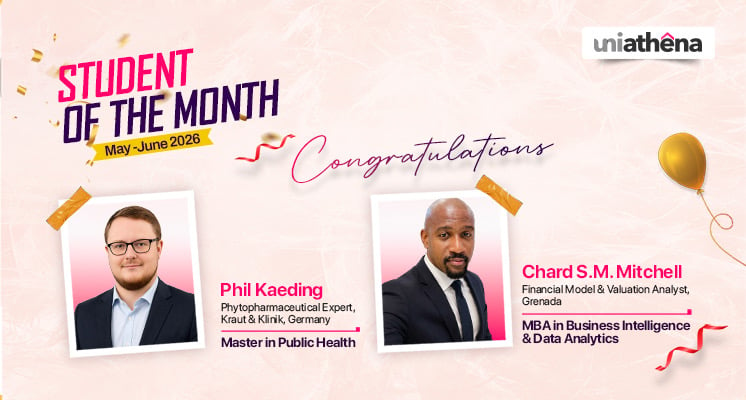
🌟 Students of the Month | May – June 2026 🌟
Read More
1
mins read

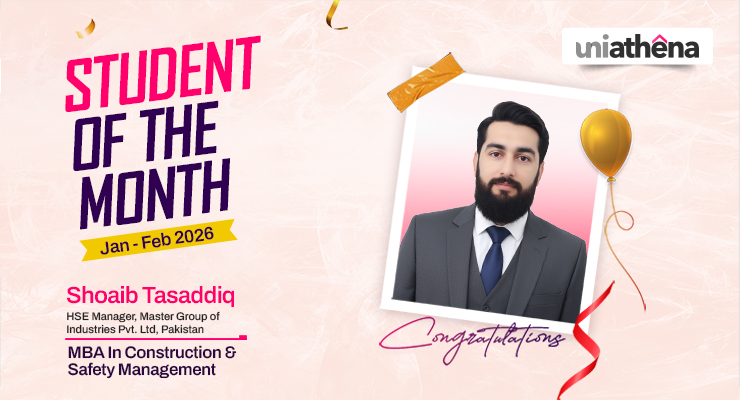



🌟 Students of the Month | May – June 2026 🌟
Read more
1
mins read
Get in Touch

It’s Time to Start
Join NowMost Popular Online Specialization
- Master of International Business Administration
- Master of Business Administration
- MBA in General Management- FastTrack
- Master in Innovation and Entrepreneurship
- MBA-Family Business Management
- Master in Procurement and Contract Management
- Extended Diploma in Business Analytics (SCQF Level 11)
- Diploma in Supply Chain and Logistics Management (SCQF Level 11)
- Strategic Human Resource Management Practitioner
- Master in Data Science
- Master in Engineering Management
Trending Online
- Integrated Doctorate of Business Administration
- Postgraduate Certificate in Finance for Next Generation Managers
- Master of Business Administration- General Management (Fast Track)
- Postgraduate Certificate in Socio-Economic and Legal Framework
- Postgraduate Certificate in Business Sustainability
- Certified Manager
- Supply Chain Management Practitioner
- MBA - AI in Business
- MBA - Accounting & Finance
- Master in Supply Chain and Logistics Management
Top Universities Online Certificates
- Postgraduate Certificate in International Marketing Management
- Postgraduate Certificate In International Human Resource Management
- Postgraduate Certificate in Strategic Management
- Postgraduate Certificate in Procurement & Contracts Management
- Postgraduate Certificate in Business Analytics
- Postgraduate Certificate in Strategic Supply Chain & Logistics Management
- Postgraduate Certificate in Human Resource and Leadership
- Project Management Practitioner
- Postgraduate Certificate in Supply Chain Design & Implementation
- Postgraduate Certificate in Management Accounting and Finance
Accredited Online Degree Program
- MBA - Digital Transformation
- MBA - Family Business Management
- MBA - Marketing Management
- MBA in Quality Management
- MBA - Business Intelligence & Data Analytics
- MBA in Operations & Project Management
- MBA in Energy Management
- MBA In Construction & Safety Management
- Master in Organisational Leadership
- Master in Public Health
- Master in Construction Management
- Bachelor of Arts in Business Administration


 Install Now


UniAthena is an Ed-Tech, offering flexible, affordable learning solutions, including Free-Learning Upskilling Courses and Academic Programs in partnerships with accredited and globally renowned universities and professional qualification bodies.


Do you have any questions ?
Feel free to send us your questions or request a free consultation
Send a message
UK
Athena Global Education
Magdalen Centre,
Robert Robinson Avenue,
Oxford, OX4 4GA, UK
Phone : 01865 784299
MIDDLE EAST
Athena Global Education FZE
Block L-03, First Floor,
P O Box 519265, Sharjah Publishing City,
Free Zone, Sharjah, UAE
Phone : +971 55 879 5492
INDIA
Uniathena Private Limited
9A,Midas Tower
Phase 1
Hinjewadi Rajiv Gandhi Infotech Park
Pune-411057
Phone: +91 9145665544
All Copyrights Reserved @ Athena Global Education 2021-2026