-

Bachelor's

-

Masters
-

MBA
-

Doctorate
-

Micro Credit
-

Explore all Courses
-
Postgraduate Certifications

-
Postgraduate Diploma
-
Undergraduate Diploma
-
Diploma



Why Continuous Learning Matters—and How to Make It a Habit

Author: urvi malusare
|6
MINS READ
| 0
| 9
Created On: 17 July, 2026
Share




Table of Content (TOC):
- Key Takeaways
- Importance of Continuous Learning
- How To Make Continuous Learning a Habit?
- Career Advancement Courses at UniAthen4
- FAQs
85% of young professionals in India are prioritizing weekly upskilling.
This trend of continuous learning among young people can be traced across borders. In fact, employees across the UK, the US, France, and many more countries believe their employers must provide opportunities for upskilling in the latest tech and digital skills.
Lifelong learning might seem like a trend started by millennials and Gen Z employees on the surface, but it has always been around. Professional development is part of every individual's career journey, and making a habit of learning and development will benefit your future.
Key Takeaways:
- Skill development can be in the form of learning a new technical skill for the job or improving your soft skills to become a better team player.
- Having a learning mindset not only improves your job performance and security, but it also raises your earning potential.
- The more projects you complete and certificates you gain, the more confidence you will have to face any challenge in the workplace. You will also be able to negotiate a better salary package for yourself with these proven skills.
- Learning new skills doesn’t always come naturally. You need to build a habit of it. Here are some ways to make continuous learning a habit: 15-minute learning sessions, attach learning to an existing habit, change your social media algorithm, have an end goal, build a knowledge bank, learn in your free time, and give yourself clear learning goals.
Importance of Continuous Learning
If you are wondering why skill development and continuous learning matter, here is why:
1. Creates Opportunities for Career Development
Organizations care more about what skills you have rather than your years of experience. If you show strong technical and leadership skills, you will have more opportunities to qualify for leadership roles.
So, having a learning mindset, not only will you prioritize your learning on the job, but you will also keep learning skills and tools in your own time.
2. Increases Job Security
When organizations adapt to changing business priorities, employees with current, in-demand skills are often better positioned to remain competitive. So to ensure that your job security isn’t under threat, it is important that you are always learning new skills and keeping up with the changing job market.
3. Increases Earning Potential
The more value you bring to the company, the better you will be paid. Your personal development can be used to negotiate a better salary with your current employer. Additionally, gaining professional certifications or degrees qualifies you for higher-paying roles.
4. Boosts Confidence
Constant upskilling results in your becoming more confident in your abilities. This is especially great for those struggling with imposter syndrome. You will be able to prove to yourself that you are capable of the job you are hired to do when you have successfully completed projects to show and certifications to back your claim.
5. Helps You Perform Better
It is no surprise that a continuous learning mindset will improve your work performance. You will learn to respond to challenges with a more positive attitude. Having a learning mindset will give you the assurance that there is nothing that cannot be learned.
How To Make Continuous Learning a Habit?
Continuous learning doesn’t always come naturally. Just like any other lifestyle habit, you need to put in effort to adapt it to your daily life.
Here is how you can make lifelong learning a habit:
1. Apply the Micro-Learning Principle
Don’t create a two-hour block to study. That’s not productive, nor is it realistic for working professionals. Instead, focus on micro-learning.
Commit to just 15 minutes a day. Read three pages of an industry book, listen to 15 minutes of an educational podcast, or complete one short video module of an online certification.
2. Practice Habit Stacking
You already have a routine. Instead of changing the entire structure of your day to fit in professional development, anchor the habit of learning to an existing habit.
Let’s say you have a habit of having a cup of coffee every morning, instead of scrolling mindlessly through your social media during this time, scroll through an educational newsletter.
3. Curate Your Digital Ecosystem
Speaking of social media, it can also be a learning platform if you make it so. You will just need to reshape your algorithm and replace random content with educational content.
Intentionally unfollow accounts that drain your time and replace them with high-value industry voices.
4. Learn with an Immediate Output in Mind
If you just learn for the sake of it, you are rarely going to retain any information you read. Have an output in mind that all your learning and development is going towards.
For example, if you are learning a new digital marketing strategy, write a mock ad template and start using your skills in your job.
5. Keep a Centralized Knowledge Bank
Just like how we create idea banks, you should curate a knowledge bank. This is where you will add informative articles, new frameworks, processes, and anything else you come across in your downtime to learn later.
Create an Excel sheet where you can add learning links to all resources you collect. Review these periodically and change whatever is not working.
6. Swap Free Time for Learning Time
As mentioned above, you don’t need to dedicate hours to learning. Instead, find pockets of free time in your schedule where you can sneak in 15 minutes of career development.
This doesn’t always have to be your scrolling time. This could be a time when you are technically performing a task that keeps your hand busy but your mind free—like sitting in traffic, doing the dishes, or walking your dog. You could listen to educational podcasts instead of music.
7. Treat Your Learning Like a Corporate Project
You know how every corporate project has clear goals. That’s exactly what you need for your skill development mission.
If you just say, ‘I want to learn AI,’ it's not going to happen. Instead, map out exactly what you want to learn in AI, why you want to learn it, what you don’t want to learn, and how long it should take you to learn it.
Also Read: Does Age Matter in Education? The Short Answer: No
Career Advancement Courses at UniAthena
UniAthena supports your continuous learning goals by providing you with over 800+ free short courses.
Here are some free courses you can take in your own time and upskill yourself:
- Diploma in Research Skills
- Essentials of Change Management
- Mastering Change & Innovations
- Essentials of Innovation Management and Leadership
- Executive Diploma in Business Communication
No habit can be formed in a day or even a week. It takes time to form and sustain any habit, and lifelong learning is the same. Adapt these habits into your daily schedule, and over time, you will learn to utilize your downtime for upskilling.
Also Read: High Demand Skills for the Next 10 Years
FAQs
Q1. What is the 70-20-10 rule for learning?
A: According to the 70-20-10 rule of learning and development, you must focus on 70% challenging experiences and assignments, 20% developmental relationships, and 10% coursework and training.
Q2. How to develop a habit of learning?
A: Attach the idea of learning to an existing habit, and instead of spending hours learning a topic, just give yourself 15 minutes to learn the subject. This learning can be in the form of online lessons from a course, listening to a podcast, or reading a newsletter.
Q3. What do you mean by continuous learning?
A: Continuous learning is a necessary part of career development. It refers to the idea that learning does not stop when you finish formal education. Those who value continuous learning keep gaining knowledge on the job, taking lessons, and upskilling themselves throughout their lives.
Our Popular Courses

$14000


Doctoral Degree in Business Administration
Universidad Catolica De Murcia (UCAM), Spain
Duration:
2 - 3 Years
$17,500*
Integrated Doctorate of Business Administration
Guglielmo Marconi University, Italy
Universidad Catolica De Murcia (UCAM), Spain
Duration:
2.5 - 3.5 Years
$5,600*
Master of Business Administration
Guglielmo Marconi University, Italy
Duration:
12 - 24 Months
$5,600*
MBA in Operations & Project Management
Guglielmo Marconi University, Italy
Duration:
12 - 24 Months
$5,600*
Master in Supply Chain and Logistics Management
Guglielmo Marconi University, Italy
Duration:
12 - 24 Months
$5,950*
Master in Data Sciences
Guglielmo Marconi University, Italy
Duration:
12 - 24 Months
$5,600*
Master in Engineering Management
Guglielmo Marconi University, Italy
Duration:
12 - 24 Months
$5,600*
Master in Procurement and Contract Management
Guglielmo Marconi University, Italy
Duration:
12 - 24 Months
$5,600*
Master in Public Health
Guglielmo Marconi University, Italy
Duration:
12 - 24 MonthsOur Popular Courses
COMMENTS(0)
Our Popular Courses
$14000
Doctoral Degree in Business Administration
Universidad Catolica De Murcia (UCAM), Spain
Duration:
2 - 3 Years
$17,500*
Integrated Doctorate of Business Administration
Guglielmo Marconi University, Italy
Universidad Catolica De Murcia (UCAM), Spain
Duration:
2.5 - 3.5 Years
$5,600*
Master of Business Administration
Guglielmo Marconi University, Italy
Duration:
12 - 24 Months
$5,600*
MBA in Operations & Project Management
Guglielmo Marconi University, Italy
Duration:
12 - 24 Months
$5,600*
Master in Supply Chain and Logistics Management
Guglielmo Marconi University, Italy
Duration:
12 - 24 Months
$5,950*
Master in Data Sciences
Guglielmo Marconi University, Italy
Duration:
12 - 24 Months
$5,600*
Master in Engineering Management
Guglielmo Marconi University, Italy
Duration:
12 - 24 Months
$5,600*
Master in Procurement and Contract Management
Guglielmo Marconi University, Italy
Duration:
12 - 24 Months
$5,600*
Master in Public Health
Guglielmo Marconi University, Italy
Duration:
12 - 24 MonthsOur Popular Courses
Our Popular Insights
Careers are shifting faster than ever, and staying relevant takes more than experience. Explore UniAthena’s most-read blogs for sharp insights, emerging skills, and practical pathways that help you move forward with clarity and confidence in a changing professional world.
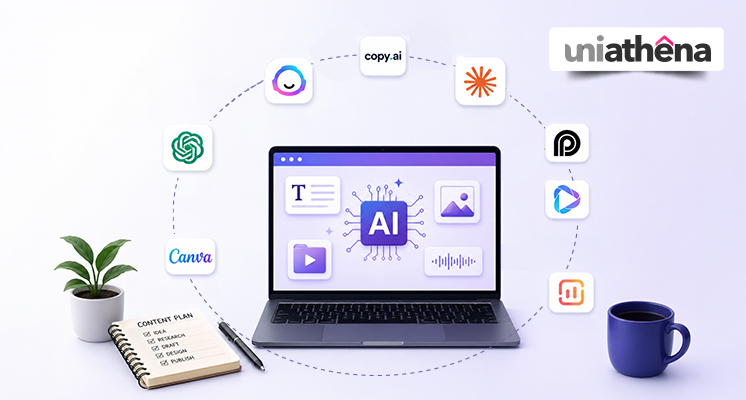
Best AI Tools for Content Creation
Read More
9
mins read


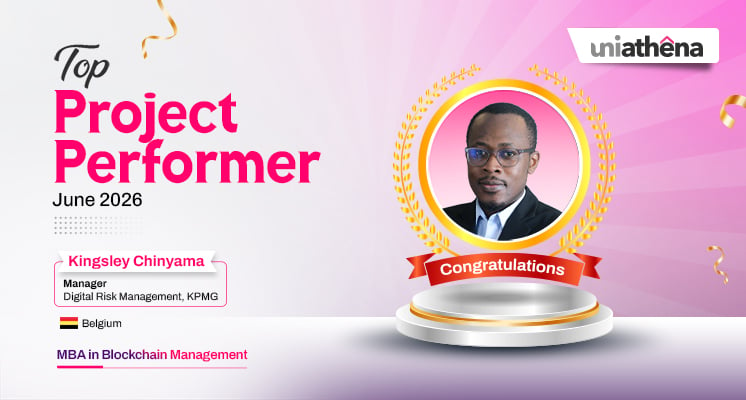
🌟 Top Project Performer – June 2026 🌟
Read More
1
mins read


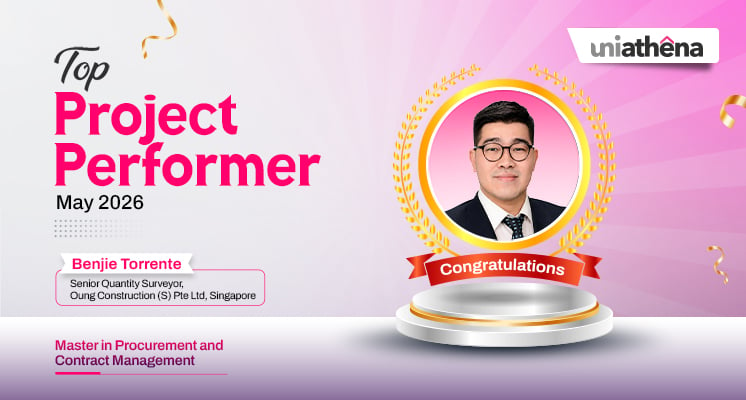
🌟 Top Project Performer – May 2026 🌟
Read More
1
mins read

Best AI Tools for Content Creation
Read more
9
mins read

🌟 Top Project Performer – June 2026 🌟
Read more
1
mins read
🌟 Top Project Performer – May 2026 🌟
Read more
1
mins read
Get in Touch

It’s Time to Start
Join NowMost Popular Online Specialization
- Master of International Business Administration
- Master of Business Administration
- MBA in General Management- FastTrack
- Master in Innovation and Entrepreneurship
- MBA-Family Business Management
- Master in Procurement and Contract Management
- Extended Diploma in Business Analytics (SCQF Level 11)
- Diploma in Supply Chain and Logistics Management (SCQF Level 11)
- Strategic Human Resource Management Practitioner
- Master in Data Science
- Master in Engineering Management
Trending Online
- Integrated Doctorate of Business Administration
- Postgraduate Certificate in Finance for Next Generation Managers
- Master of Business Administration- General Management (Fast Track)
- Postgraduate Certificate in Socio-Economic and Legal Framework
- Postgraduate Certificate in Business Sustainability
- Certified Manager
- Supply Chain Management Practitioner
- MBA - AI in Business
- MBA - Accounting & Finance
- Master in Supply Chain and Logistics Management
Top Universities Online Certificates
- Postgraduate Certificate in International Marketing Management
- Postgraduate Certificate In International Human Resource Management
- Postgraduate Certificate in Strategic Management
- Postgraduate Certificate in Procurement & Contracts Management
- Postgraduate Certificate in Business Analytics
- Postgraduate Certificate in Strategic Supply Chain & Logistics Management
- Postgraduate Certificate in Human Resource and Leadership
- Project Management Practitioner
- Postgraduate Certificate in Supply Chain Design & Implementation
- Postgraduate Certificate in Management Accounting and Finance
Accredited Online Degree Program
- MBA - Digital Transformation
- MBA - Family Business Management
- MBA - Marketing Management
- MBA in Quality Management
- MBA - Business Intelligence & Data Analytics
- MBA in Operations & Project Management
- MBA in Energy Management
- MBA In Construction & Safety Management
- Master in Organisational Leadership
- Master in Public Health
- Master in Construction Management
- Bachelor of Arts in Business Administration


 Install Now


UniAthena is an Ed-Tech, offering flexible, affordable learning solutions, including Free-Learning Upskilling Courses and Academic Programs in partnerships with accredited and globally renowned universities and professional qualification bodies.


Do you have any questions ?
Feel free to send us your questions or request a free consultation
Send a message
UK
Athena Global Education
Magdalen Centre,
Robert Robinson Avenue,
Oxford, OX4 4GA, UK
Phone : 01865 784299
MIDDLE EAST
Athena Global Education FZE
Block L-03, First Floor,
P O Box 519265, Sharjah Publishing City,
Free Zone, Sharjah, UAE
Phone : +971 55 879 5492
INDIA
Uniathena Private Limited
9A,Midas Tower
Phase 1
Hinjewadi Rajiv Gandhi Infotech Park
Pune-411057
Phone: +91 9145665544
All Copyrights Reserved @ Athena Global Education 2021-2026