-

Bachelor's

-

Masters
-

MBA
-

Doctorate
-

Micro Credit
-

Explore all Courses
-
Postgraduate Certifications

-
Postgraduate Diploma
-
Undergraduate Diploma
-
Diploma



What is Performance Marketing & How Does it Work?
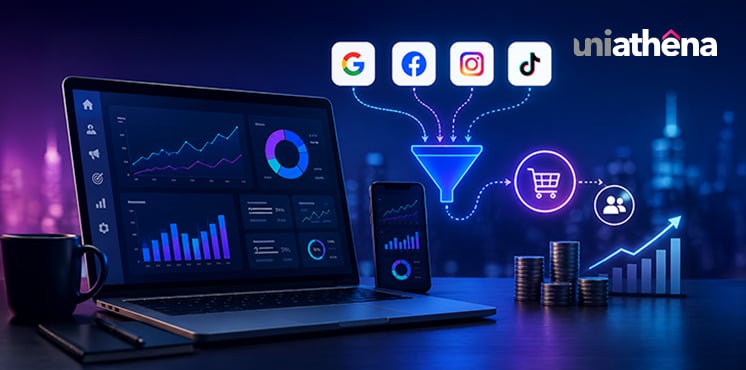
Author: maharajan p
|8
MINS READ
| 0
| 5
Created On: 16 July, 2026
Share




Table of Contents (TOC):
- Introduction
- Key Takeaways
- What Is Performance Marketing?
- How Does Performance Marketing Work?
- What Does a Performance Marketer Do?
- Performance Marketing vs Traditional Marketing
- Common Performance Marketing Channels
- Examples of Performance Marketing
- How to Get Started in Performance Marketing
- FAQs
Introduction
Ever clicked on an Instagram ad and wondered how it ended up in your feed?
Or searched for something on Google and found sponsored results waiting for you at the top?
Those ads don't get there by chance.
Behind them are businesses spending money to get your attention. But here's the interesting part: many of them aren't paying simply because you saw the ad. They're paying because they expect something to happen after you see it.
A click. A sign-up. A download. A purchase.
That's the idea behind performance marketing.
Key Takeaways:
- Performance marketing is built around measurable actions such as clicks, leads, sales, app installs, and phone calls, rather than just ad visibility.
- Businesses invest in campaigns where payment is linked to results, helping ensure marketing spend is directly tied to outcomes.
- Every campaign is tracked and analyzed in real time, allowing marketers to optimize ads based on what actually performs.
- It helps improve budget efficiency by identifying which channels, audiences, and campaigns generate the most conversions.
What Is Performance Marketing?
Performance marketing is a type of digital marketing where advertising activities are measured against specific business outcomes.
Instead of focusing only on visibility or reach, performance marketing focuses on actions that can be tracked and measured. These actions may happen at different stages of the customer journey, from clicking an ad to completing a purchase.
Depending on the campaign objective, advertisers may track:
- Ad clicks
- Leads and form submissions
- Newsletter sign-ups
- App installs
- Phone calls
- Product purchases
For example, if a company runs a campaign to generate leads, it can track how many leads were generated, how much each lead cost, and which channel produced the best results. This makes it easier to evaluate performance and optimize spending over time.
How Does Performance Marketing Work?
Performance marketing works by connecting advertising spend to measurable business outcomes.
A business starts by defining a goal, such as generating leads, increasing sales, driving app installs, or encouraging users to sign up for a service. It then creates campaigns on digital channels such as search engines, social media platforms, affiliate networks, or display advertising networks.
When users interact with these campaigns, tracking technologies record their actions. This allows marketers to see which ads, keywords, audiences, and channels are contributing to the desired outcome.
The process typically involves four key participants:
- Advertisers: Businesses promoting their products or services.
- Publishers or Affiliates: Websites, creators, or partners that help distribute advertisements.
- Advertising Platforms: Channels such as search engines and social media networks that deliver ads to audiences.
- Customers: Users who interact with the advertisement and complete the desired action.
Once a campaign is running, performance data is continuously collected and analyzed. Marketers monitor metrics such as click-through rates, conversion rates, cost per lead, cost per acquisition, and return on ad spend to evaluate campaign effectiveness.
Campaigns that generate results efficiently often receive additional budget, while underperforming ads may be adjusted, paused, or replaced. This ongoing optimization is a key characteristic of performance marketing, as decisions are driven by measurable outcomes rather than assumptions.
In simple terms, performance marketing follows a cycle of launch, track, measure, and optimize, allowing businesses to allocate marketing budgets based on actual performance.
What Does a Performance Marketer Do?
A performance marketer is responsible for planning, launching, measuring, and optimizing campaigns that drive specific business results.
Unlike marketers who focus primarily on brand awareness, performance marketers are typically evaluated based on measurable outcomes such as leads, sales, app installs, or customer acquisitions.
Their day-to-day responsibilities often include:
- Researching target audiences and customer behavior
- Choosing the right advertising channels and platforms
- Conducting keyword and competitor research
- Creating and launching advertising campaigns
- Managing campaign budgets
- Tracking metrics such as clicks, conversions, CPA, and ROAS
- Running A/B tests to improve performance
- Adjusting campaigns based on real-time data
For example, if an online retailer launches a Google Ads campaign, a performance marketer may monitor which keywords generate sales, identify ads that are underperforming, and reallocate budget toward campaigns that deliver better results.
Performance Marketing vs Traditional Marketing
Performance marketing and traditional marketing both aim to help businesses reach customers, but they differ in how success is measured and how advertising budgets are spent.
Traditional marketing often focuses on visibility and brand exposure through channels such as television, radio, print media, and billboards. Performance marketing, on the other hand, focuses on measurable actions and outcomes, allowing marketers to track the direct impact of their campaigns.
Neither approach is inherently better than the other.
Traditional marketing is often used to build brand awareness and reach large audiences, while performance marketing is commonly used when businesses want measurable results and greater visibility into their return on investment.
Common Performance Marketing Channels
Performance marketing is not limited to a single platform or advertising method. Businesses can run performance-based campaigns across multiple digital channels, depending on their goals, audience, and budget.
While each channel works differently, they all share a common objective: driving measurable actions such as clicks, leads, sales, or sign-ups.
- Search Engine Marketing (SEM): Paid ads that appear on search engine results pages when users search for specific keywords. Often used to capture high-intent traffic.
- Social Media Advertising: Paid campaigns on social platforms that use audience targeting to reach users based on interests, behaviors, demographics, and other characteristics.
- Affiliate Marketing: A model where partners promote a product or service and earn a commission when they generate a lead, sale, or other agreed-upon result.
- Display Advertising: Visual ads, such as banners and images, shown across websites and apps to attract attention and drive traffic or conversions.
- Influencer Marketing: Partnerships with creators where compensation may be tied to measurable outcomes such as clicks, sign-ups, or sales.
- Native Advertising: Ads that match the format and style of the platform they appear on, making them feel more like part of the content experience.
Also Read: How to Become an Influencer
Examples of Performance Marketing
Performance marketing is all around us. Many of the digital ads and affiliate programs people interact with every day operate on a pay-for-results model.
1. The Google Search Ad That Charges Per Click
Search for "running shoes" on Google, and you'll likely see sponsored results at the top of the page.
Those advertisers don't pay Google simply because their ad appeared in the search results. In most cases, they pay when someone clicks the ad and visits their website.
Whether the advertiser is Nike, Adidas, or a local retailer, the payment is tied to a measurable action—the CLICK.
2. The Uber App Install Campaign
Companies such as Uber frequently run app-install campaigns across social media platforms and mobile ad networks.
The objective is straightforward: encourage users to download the app. In these campaigns, success is measured by installs, not impressions.
The advertiser can see exactly how many downloads were generated and how much each install cost.
3. The Shopify Affiliate Program
Shopify works with affiliates who recommend its e-commerce platform to entrepreneurs and businesses
A creator might publish content about starting an online store and refer readers to Shopify using a unique affiliate link. When a referred user signs up and meets the program requirements, the affiliate receives a commission.
The payment is connected to a measurable business outcome rather than audience reach.
Also Read: The Evolution of Iconic Marketing Campaigns and Their Relevance in the Digital Age
How to Get Started in Performance Marketing
If you’re trying to understand performance marketing from scratch, the easiest way is to start with the basics and slowly build practical exposure. You don’t need everything at once, just a clear learning path.
- Start by understanding how digital marketing works and how audiences are targeted online
- Learn the basic difference between organic traffic and paid advertising
- Get familiar with key performance metrics like clicks, conversions, CPA, and ROAS
- Understand how ads run on platforms like Google, Meta, and affiliate networks
- Practice reading simple campaign reports and performance dashboards
- Observe real ads on Instagram and Google and try to identify the objective behind them
Once you understand the basics, the next step is structured learning through focused short courses. This helps you connect concepts like SEO, SEM, and social media marketing in a more practical way.
To start your learning journey, here are some short courses from UniAthena you can explore:
- Basics of Social Media Marketing: Learn how brands use platforms like Instagram, Facebook, and LinkedIn to reach audiences, build engagement, and run targeted promotional campaigns.
- Diploma in Digital Marketing: Learn how to plan and run digital marketing campaigns using SEO, social media, content marketing, email marketing, analytics, and AI tools.
- Diploma in Digital Marketing - SEO & SEM: Understand how search engines work and how businesses improve visibility through keyword optimization, content strategy, and on-page and off-page SEO techniques.
- Mastering Search Engine Marketing (SEM): Learn how paid search advertising works, including keyword bidding, ad placement, and how businesses drive traffic through Google Ads-style campaigns.
- Basics of Market Segmentation: Learn how to identify the right customer groups and create marketing strategies that match their needs.
You can explore these courses to build a strong foundation in performance-driven marketing skills.
At UniAthena, you’ll also find a range of marketing programs that cover different areas of digital marketing, from strategy to execution. If you’re serious about learning digital marketing in depth, it’s worth checking out our short courses to see what fits your learning path.
Also Read: What is Marketing Management? A Complete Guide to Its Importance, Process & Career Scope
FAQs
Q1. What is performance marketing?
A: Performance marketing is digital advertising where businesses pay only for measurable actions like clicks or sales.
Q2. How does performance marketing work?
A: It works by tracking user actions from ads and charging only when defined results are achieved.
Q3. What are common performance marketing metrics?
A: Key metrics include CPC, CPA, CPL, conversion rate, and return on ad spend.
Q4. Which channels are used in performance marketing?
A: Common channels include Google Ads, social media ads, affiliate marketing, display ads, and influencer campaigns.
Q5. Is SEO part of performance marketing?
A: SEO is not direct performance marketing, but it supports performance campaigns by improving organic visibility.
Our Popular Courses

$14,000


Doctoral Degree in Business Administration
Universidad Catolica De Murcia (UCAM), Spain
Duration:
2 - 3 Years
$17,500*
Integrated Doctorate of Business Administration
Guglielmo Marconi University, Italy
Universidad Catolica De Murcia (UCAM), Spain
Duration:
2.5 - 3.5 Years
$5,600*
Master of Business Administration
Guglielmo Marconi University, Italy
Duration:
12 - 24 Months
$5,600*
MBA in Operations & Project Management
Guglielmo Marconi University, Italy
Duration:
12 - 24 Months
$5,600*
Master in Supply Chain and Logistics Management
Guglielmo Marconi University, Italy
Duration:
12 - 24 Months
$5,950*
Master in Data Sciences
Guglielmo Marconi University, Italy
Duration:
12 - 24 Months
$5,600*
Master in Engineering Management
Guglielmo Marconi University, Italy
Duration:
12 - 24 Months
$5,600*
Master in Procurement and Contract Management
Guglielmo Marconi University, Italy
Duration:
12 - 24 Months
$5,600*
Master in Public Health
Guglielmo Marconi University, Italy
Duration:
12 - 24 MonthsOur Popular Courses
COMMENTS(0)
Our Popular Courses
$14,000
Doctoral Degree in Business Administration
Universidad Catolica De Murcia (UCAM), Spain
Duration:
2 - 3 Years
$17,500*
Integrated Doctorate of Business Administration
Guglielmo Marconi University, Italy
Universidad Catolica De Murcia (UCAM), Spain
Duration:
2.5 - 3.5 Years
$5,600*
Master of Business Administration
Guglielmo Marconi University, Italy
Duration:
12 - 24 Months
$5,600*
MBA in Operations & Project Management
Guglielmo Marconi University, Italy
Duration:
12 - 24 Months
$5,600*
Master in Supply Chain and Logistics Management
Guglielmo Marconi University, Italy
Duration:
12 - 24 Months
$5,950*
Master in Data Sciences
Guglielmo Marconi University, Italy
Duration:
12 - 24 Months
$5,600*
Master in Engineering Management
Guglielmo Marconi University, Italy
Duration:
12 - 24 Months
$5,600*
Master in Procurement and Contract Management
Guglielmo Marconi University, Italy
Duration:
12 - 24 Months
$5,600*
Master in Public Health
Guglielmo Marconi University, Italy
Duration:
12 - 24 MonthsOur Popular Courses
Our Popular Insights
Careers are shifting faster than ever, and staying relevant takes more than experience. Explore UniAthena’s most-read blogs for sharp insights, emerging skills, and practical pathways that help you move forward with clarity and confidence in a changing professional world.


🌟 Top Project Performer – June 2026 🌟
Read More
1
mins read

Best AI Tools for Content Creation
Read More
9
mins read
🌟 Top Project Performer – May 2026 🌟
Read More
1
mins read

How to Start Freelancing With No Experience
Read More
8
mins read

🌟 Top Project Performer – April 2026 🌟
Read More
1
mins read
🌟 Top Project Performer – June 2026 🌟
Read more
1
mins read
Best AI Tools for Content Creation
Read more
9
mins read
🌟 Top Project Performer – May 2026 🌟
Read more
1
mins read
How to Start Freelancing With No Experience
Read more
8
mins read
🌟 Top Project Performer – April 2026 🌟
Read more
1
mins read
Get in Touch

It’s Time to Start
Join NowMost Popular Online Specialization
- Master of International Business Administration
- Master of Business Administration
- MBA in General Management- FastTrack
- Master in Innovation and Entrepreneurship
- MBA-Family Business Management
- Master in Procurement and Contract Management
- Extended Diploma in Business Analytics (SCQF Level 11)
- Diploma in Supply Chain and Logistics Management (SCQF Level 11)
- Strategic Human Resource Management Practitioner
- Master in Data Science
- Master in Engineering Management
Trending Online
- Integrated Doctorate of Business Administration
- Postgraduate Certificate in Finance for Next Generation Managers
- Master of Business Administration- General Management (Fast Track)
- Postgraduate Certificate in Socio-Economic and Legal Framework
- Postgraduate Certificate in Business Sustainability
- Certified Manager
- Supply Chain Management Practitioner
- MBA - AI in Business
- MBA - Accounting & Finance
- Master in Supply Chain and Logistics Management
Top Universities Online Certificates
- Postgraduate Certificate in International Marketing Management
- Postgraduate Certificate In International Human Resource Management
- Postgraduate Certificate in Strategic Management
- Postgraduate Certificate in Procurement & Contracts Management
- Postgraduate Certificate in Business Analytics
- Postgraduate Certificate in Strategic Supply Chain & Logistics Management
- Postgraduate Certificate in Human Resource and Leadership
- Project Management Practitioner
- Postgraduate Certificate in Supply Chain Design & Implementation
- Postgraduate Certificate in Management Accounting and Finance
Accredited Online Degree Program
- MBA - Digital Transformation
- MBA - Family Business Management
- MBA - Marketing Management
- MBA in Quality Management
- MBA - Business Intelligence & Data Analytics
- MBA in Operations & Project Management
- MBA in Energy Management
- MBA In Construction & Safety Management
- Master in Organisational Leadership
- Master in Public Health
- Master in Construction Management
- Bachelor of Arts in Business Administration


 Install Now


UniAthena is an Ed-Tech, offering flexible, affordable learning solutions, including Free-Learning Upskilling Courses and Academic Programs in partnerships with accredited and globally renowned universities and professional qualification bodies.


Do you have any questions ?
Feel free to send us your questions or request a free consultation
Send a message
UK
Athena Global Education
Magdalen Centre,
Robert Robinson Avenue,
Oxford, OX4 4GA, UK
Phone : 01865 784299
MIDDLE EAST
Athena Global Education FZE
Block L-03, First Floor,
P O Box 519265, Sharjah Publishing City,
Free Zone, Sharjah, UAE
Phone : +971 55 879 5492
INDIA
Uniathena Private Limited
9A,Midas Tower
Phase 1
Hinjewadi Rajiv Gandhi Infotech Park
Pune-411057
Phone: +91 9145665544
All Copyrights Reserved @ Athena Global Education 2021-2026