-

Bachelor's

-

Masters
-

MBA
-

Doctorate
-

Micro Credit
-

Explore all Courses
-
Postgraduate Certifications

-
Postgraduate Diploma
-
Undergraduate Diploma
-
Diploma



Does Age Matter in Education? The Short Answer: No

Author: maharajan p
|8
MINS READ
| 0
| 14
Created On: 08 July, 2026
Share




Table of Contents (TOC):
- Introduction
- Key Takeaways
- Why Many People Feel They Are “Too Late” to Learn
- Learning Priorities Change With Age
- How Modern Technology Has Changed Education Forever
- Learn at Your Own Pace With UniAthena
- FAQs
Introduction
Warren Buffett still spends most of his day reading, learning, and exploring new ideas.
Leonardo da Vinci filled notebooks with observations, experiments, and sketches throughout his life, constantly trying to understand how the world worked. And Henry Ford once said:
“Anyone who stops learning is old, whether at twenty or eighty. Anyone who keeps learning stays young.”
Honestly, when you look at people like this, one thing becomes very clear: learning was never meant to belong to a specific age group.
Yet many people quietly believe the opposite.
Key Takeaways:
- Age does not define learning ability; a strong learning mindset, curiosity, and consistency often matter more than age itself.
- Learning priorities naturally shift over time, with adult learning often focusing on practical skills, career growth, and real-world application.
- Modern technology removes barriers, making education flexible, self-paced, and accessible from anywhere at any stage of life.
- Starting small with short, focused courses can build confidence and make lifelong learning easier to maintain over the long term.
Why Many People Feel They Are “Too Late” to Learn
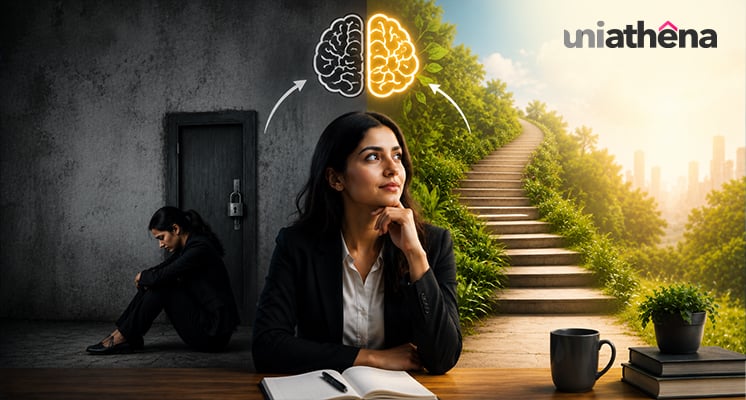
At some point in life, many people quietly start believing that learning has an expiration date.
Not because someone directly told them to stop learning. But because life slowly creates that feeling.
You look around and see younger students graduating early, professionals already settled into careers, and social media full of “30 under 30” success stories. After a while, it becomes easy to think:
“Maybe I missed my time.”
And honestly, that feeling is more common than people admit.
Sometimes, the pressure comes from society itself. We are taught to follow a fixed timeline:
- Study when you are young
- Build a career in your twenties
- Settle down afterward
So when someone decides to learn something new later in life, it can feel like they are somehow “behind,” even when they are not.
- For many adults, responsibilities also get in the way. Jobs, bills, family commitments, and daily routines leave very little mental space for learning. After a long day, opening a course or studying a new skill can feel exhausting, even if the interest is still there.
- Technology adds another layer to it. Some people feel overwhelmed by online platforms, AI tools, digital classrooms, and constantly changing technologies. They assume younger generations naturally understand everything faster, while they are already too far behind to catch up.
- Then comes comparison. A 40-year-old hesitates to join a class filled with younger learners. A working professional delays learning because they think everyone else is already ahead. Even older adults sometimes avoid learning opportunities simply because they fear embarrassment or judgment.
Learning does not belong to a certain age group.
Take Shigemi Hirata, for example. Born on a farm in Hiroshima, Japan, in 1919, he later served in the Japanese navy during World War II before spending years working at a hospital in Takamatsu after the war. Higher education was never really part of his early life.
But decades later, driven by his interest in traditional Japanese pottery, he enrolled in a distance-learning ceramic arts course at the age of 85. It took him 11 years to complete the program, and at 96, he finally earned his Bachelor of Arts degree from Kyoto University of Art and Design, eventually being recognized by Guinness World Records as the world’s oldest graduate.
If someone can return to education and complete a degree at 96, then being “too late” at 30, 40, 50, or even 70 starts sounding a lot less believable.
Learning Priorities Change With Age
One of the biggest mistakes people make is assuming everyone should learn the same way throughout life.
But that is rarely true.
The way a teenager learns, the way a working professional learns, and the way an older adult approaches education can look completely different. Not because one group is smarter than the other, but because priorities, responsibilities, energy levels, and goals naturally change with age.
Instead of comparing learning styles across generations, it makes more sense to understand what each stage of life can focus on most effectively.
How Modern Technology Has Changed Education Forever
For a long time, education followed a fixed structure.
You had to be physically present in a classroom, follow a strict schedule, learn at the same pace as everyone else, and often put large parts of your life on hold to study seriously.
That model worked for decades.
But modern technology has changed almost everything about the way people learn today.
Learning is no longer tied to one building, one age group, or one stage of life. It has become far more flexible, personalized, and accessible than ever before.
1. Learning Is No Longer Limited to Traditional Classrooms
Earlier, learning opportunities were heavily dependent on location.
If a university, course, or skill program was unavailable in your city, your options were limited. But today, someone can learn coding from their bedroom, attend lectures from global universities online, or complete certifications without ever stepping into a physical classroom.
- A working professional can study after office hours.
- A parent can learn during free time at home.
- Even retirees can explore subjects they never had the chance to study earlier in life.
Modern education has become less about “where you are” and more about “whether you are willing to learn.”
2. Microlearning Allows You to Learn on the Go
One of the biggest reasons people avoid learning is the assumption that education always requires huge time commitments.
But technology has introduced something much more practical: microlearning.
Instead of spending several hours inside a classroom every day, learners can now consume short, focused lessons through mobile apps, online platforms, recorded videos, podcasts, and interactive modules.
That means learning can happen:
- During a commute
- Between meetings
- During lunch breaks
- While traveling
- or Even in small 15-minute sessions each day
For busy adults especially, this changes everything.
Learning no longer has to compete with life. It can fit into life.
3. AI and Digital Tools Make Learning More Personalized
Traditional classrooms often force everyone to learn at the same speed.
But modern AI-powered learning tools are changing that experience.
Today, learners can:
- Get instant explanations for difficult concepts
- Translate lessons into different languages
- Practice skills interactively
- Receive personalized recommendations
- Revisit recorded sessions anytime they want
Someone struggling with a topic no longer has to wait for the next classroom session to ask questions. In many cases, answers are available immediately through digital learning platforms and AI tools.
This makes learning feel less intimidating, especially for people returning to education after many years.
4. Modern Education Fits Around Real Life
This may be the biggest shift of all.
Flexible schedules, self-paced learning, online certifications, and remote access to courses make it possible for people to continue learning without quitting jobs, relocating cities, or stepping away from family responsibilities.
That is why learning no longer belongs only to students in their early twenties.
- A person can restart education at 35.
- Switch careers at 45.
- Learn digital skills at 60.
- Or pursue a lifelong passion after retirement.
Modern education has made learning far more adaptable than ever before and that is exactly why age matters much less today than it did in the past.
Also Read: Learn These Tech Skills 100% Online—No Classroom Required
Learn at Your Own Pace With UniAthena
Not everyone has the time (or energy) to commit to long academic programs and honestly, that’s exactly where modern learning has shifted.
With UniAthena, you get self-paced online programs designed to fit into your routine, not the other way around. You can start when you’re free, pause when life gets busy, and continue exactly where you left off.
And if you’re not ready for long-term learning yet, that’s completely fine too.
You can begin with short courses simple, focused programs that help you pick up practical skills in just a few hours to a few weeks. Just learning that adapts to you.
Here’s a quick look at what you can explore:
If you can’t find the exact skill you’re looking for, or you just want to explore more options, go through the full range of short courses on UniAthena. You’ll likely find something that fits your pace, your interest, and your current stage in life.
Also Read: Career Change at 40: Why Starting a New Career at 40 Is Not Late But Smart
FAQs
Q1. Does age really matter in education?
A: No, age doesn’t matter; learning ability depends more on mindset and consistent effort.
Q2. Is it too late to start learning new skills?
A: It’s never too late; people successfully learn and switch skills even in their 50s and beyond.
Q3. Why do adults hesitate to learn new things?
A: Time constraints, responsibilities, and fear of judgment often make adults delay starting new learning journeys.
Q4. How is learning different for adults compared to students?
A: Adults focus on practical, career-related skills, while students explore and build foundational knowledge broadly.
Q5. Can older people effectively use modern learning platforms?
A: Yes, modern platforms are designed to be simple, flexible, and accessible for all age groups.
Our Popular Courses

$14000


Doctoral Degree in Business Administration
Universidad Catolica De Murcia (UCAM), Spain
Duration:
2 - 3 Years
$17500*
Integrated Doctorate of Business Administration
Guglielmo Marconi University, Italy
Universidad Catolica De Murcia (UCAM), Spain
Duration:
2.5 - 3.5 Years
$5600*
Master of Business Administration
Guglielmo Marconi University, Italy
Duration:
12 - 24 Months
$5600*
MBA in Operations & Project Management
Guglielmo Marconi University, Italy
Duration:
12 - 24 Months
$5600*
Master in Supply Chain and Logistics Management
Guglielmo Marconi University, Italy
Duration:
12 - 24 Months
$5950*
Master in Data Sciences
Guglielmo Marconi University, Italy
Duration:
12 - 24 Months
$5600*
Master in Engineering Management
Guglielmo Marconi University, Italy
Duration:
12 - 24 Months
$5600*
Master in Procurement and Contract Management
Guglielmo Marconi University, Italy
Duration:
12 - 24 Months
$5600*
Master in Public Health
Guglielmo Marconi University, Italy
Duration:
12 - 24 MonthsOur Popular Courses
COMMENTS(0)
Our Popular Courses
$14000
Doctoral Degree in Business Administration
Universidad Catolica De Murcia (UCAM), Spain
Duration:
2 - 3 Years
$17500*
Integrated Doctorate of Business Administration
Guglielmo Marconi University, Italy
Universidad Catolica De Murcia (UCAM), Spain
Duration:
2.5 - 3.5 Years
$5600*
Master of Business Administration
Guglielmo Marconi University, Italy
Duration:
12 - 24 Months
$5600*
MBA in Operations & Project Management
Guglielmo Marconi University, Italy
Duration:
12 - 24 Months
$5600*
Master in Supply Chain and Logistics Management
Guglielmo Marconi University, Italy
Duration:
12 - 24 Months
$5950*
Master in Data Sciences
Guglielmo Marconi University, Italy
Duration:
12 - 24 Months
$5600*
Master in Engineering Management
Guglielmo Marconi University, Italy
Duration:
12 - 24 Months
$5600*
Master in Procurement and Contract Management
Guglielmo Marconi University, Italy
Duration:
12 - 24 Months
$5600*
Master in Public Health
Guglielmo Marconi University, Italy
Duration:
12 - 24 MonthsOur Popular Courses
Our Popular Insights
Careers are shifting faster than ever, and staying relevant takes more than experience. Explore UniAthena’s most-read blogs for sharp insights, emerging skills, and practical pathways that help you move forward with clarity and confidence in a changing professional world.

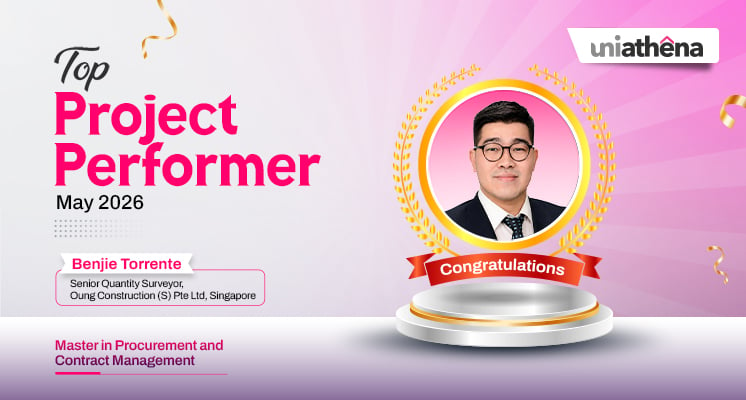
🌟 Top Project Performer – May 2026 🌟
Read More
1
mins read

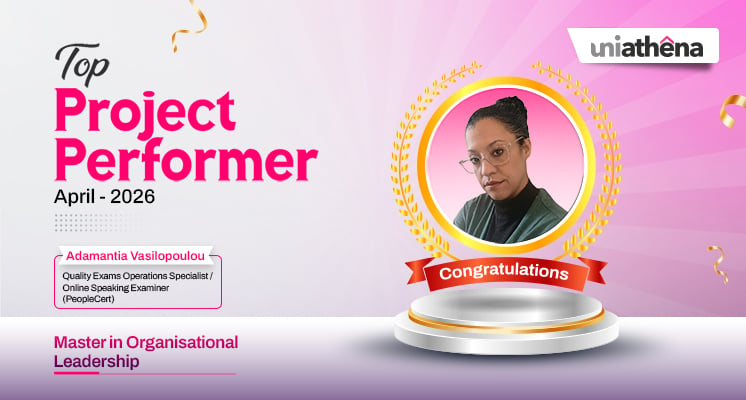
🌟 Top Project Performer – April 2026 🌟
Read More
1
mins read

Top 10 Online Courses for Housewives
Read More
10
mins read
🌟 Top Project Performer – May 2026 🌟
Read more
1
mins read
🌟 Top Project Performer – April 2026 🌟
Read more
1
mins read
Top 10 Online Courses for Housewives
Read more
10
mins read
Get in Touch

It’s Time to Start
Join NowMost Popular Online Specialization
- Master of International Business Administration
- Master of Business Administration
- MBA in General Management- FastTrack
- Master in Innovation and Entrepreneurship
- MBA-Family Business Management
- Master in Procurement and Contract Management
- Extended Diploma in Business Analytics (SCQF Level 11)
- Diploma in Supply Chain and Logistics Management (SCQF Level 11)
- Strategic Human Resource Management Practitioner
- Master in Data Science
- Master in Engineering Management
Trending Online
- Integrated Doctorate of Business Administration
- Postgraduate Certificate in Finance for Next Generation Managers
- Master of Business Administration- General Management (Fast Track)
- Postgraduate Certificate in Socio-Economic and Legal Framework
- Postgraduate Certificate in Business Sustainability
- Certified Manager
- Supply Chain Management Practitioner
- MBA - AI in Business
- MBA - Accounting & Finance
- Master in Supply Chain and Logistics Management
Top Universities Online Certificates
- Postgraduate Certificate in International Marketing Management
- Postgraduate Certificate In International Human Resource Management
- Postgraduate Certificate in Strategic Management
- Postgraduate Certificate in Procurement & Contracts Management
- Postgraduate Certificate in Business Analytics
- Postgraduate Certificate in Strategic Supply Chain & Logistics Management
- Postgraduate Certificate in Human Resource and Leadership
- Project Management Practitioner
- Postgraduate Certificate in Supply Chain Design & Implementation
- Postgraduate Certificate in Management Accounting and Finance
Accredited Online Degree Program
- MBA - Digital Transformation
- MBA - Family Business Management
- MBA - Marketing Management
- MBA in Quality Management
- MBA - Business Intelligence & Data Analytics
- MBA in Operations & Project Management
- MBA in Energy Management
- MBA In Construction & Safety Management
- Master in Organisational Leadership
- Master in Public Health
- Master in Construction Management
- Bachelor of Arts in Business Administration


 Install Now


UniAthena is an Ed-Tech, offering flexible, affordable learning solutions, including Free-Learning Upskilling Courses and Academic Programs in partnerships with accredited and globally renowned universities and professional qualification bodies.


Do you have any questions ?
Feel free to send us your questions or request a free consultation
Send a message
UK
Athena Global Education
Magdalen Centre,
Robert Robinson Avenue,
Oxford, OX4 4GA, UK
Phone : 01865 784299
MIDDLE EAST
Athena Global Education FZE
Block L-03, First Floor,
P O Box 519265, Sharjah Publishing City,
Free Zone, Sharjah, UAE
Phone : +971 55 879 5492
INDIA
Uniathena Private Limited
9A,Midas Tower
Phase 1
Hinjewadi Rajiv Gandhi Infotech Park
Pune-411057
Phone: +91 9145665544
All Copyrights Reserved @ Athena Global Education 2021-2026