-

Bachelor's

-

Masters
-

MBA
-

Doctorate
-

Micro Credit
-

Explore all Courses
-
Postgraduate Certifications

-
Postgraduate Diploma
-
Undergraduate Diploma
-
Diploma



Top Microlearning Trends in 2026

Author: maharajan p
|7
MINS READ
| 0
| 683
Created On: 05 May, 2026
Share




Table of Contents (TOC):
- Introduction
- Key Takeaways
- How Microlearning Helps People Learn Skills Faster
- Top Microlearning Trends in 2026
- Start Learning Faster with Short, Focused Courses
- FAQs
Introduction
In the past decade, the way people learn new skills has changed dramatically. Long training programs and multi-hour courses are slowly giving way to shorter, targeted learning experiences.
Microlearning started as simple bite-sized lessons, but the approach has evolved quickly. Some ideas faded out after early experimentation, while others matured into widely adopted learning methods used by companies, universities, and digital learning platforms.
As we move into 2026, several microlearning trends are shaping how people acquire skills faster, retain knowledge longer, and apply what they learn immediately.
Key Takeaways:
- Microlearning in education is helping learners move faster by reducing cognitive overload and focusing on one concept at a time.
- Adaptive AI ensures you spend more time on weak areas and skip what you already know, making learning paths more efficient.
- Scenario-based formats in micro learning courses improve how quickly you can apply skills in real-world situations.
- Gamification and micro-nudges help you stay consistent, which is critical for skill development.
- The real advantage of microlearning is not shorter content, but smarter, more targeted learning experiences.
How Microlearning Helps People Learn Skills Faster
Microlearning works because it aligns surprisingly well with what learning science already knows about how people absorb information. Instead of overwhelming learners with long sessions, it uses shorter learning cycles that are easier for the brain to process, practice, and remember.
Here are a few reasons why this approach can speed up skill development.
- According to cognitive load theory, our working memory can only handle a limited amount of information at once. When too many ideas are presented together, learning slows down. Microlearning avoids this by focusing on one concept at a time, which makes it easier for learners to absorb and understand.
- Ever heard of the Testing Effect? It is the idea that actively recalling information improves long-term retention more effectively than repeatedly reviewing the material. Microlearning platforms often include short quizzes that apply this principle.
- Feedback is one of the strongest drivers of learning outcomes. Microlearning platforms often provide instant responses through quizzes or interactive scenarios, helping learners adjust quickly.
Top Microlearning Trends in 2026
If you want to build skills faster, it helps to understand where microlearning is heading. The way lessons are designed, delivered, and practiced is changing rapidly. Interesting microlearning trends to watch out for:
1. AI‑Powered Adaptive Microlearning (Personalized Pacing and Content)
AI-powered adaptive microlearning is reshaping how people pick up new skills and it's genuinely exciting.
Here's how it works: instead of marching everyone through the same content at the same pace, these platforms watch how you perform in each short lesson and instantly adjust what comes next.
- Nail a concept? You move on.
- Struggle with something? The system serves up a quick 2–3 minute remediation before progressing. No wasted time revisiting things you already know.
A 2026 study highlights that generative AI can dynamically adjust content in real-time based on individual performance, meaning your learning path is essentially built for you, as you go. The result? Higher engagement, faster skill-building, and a learning experience that actually fits your life.
Try it Yourself: Look for apps or LMS platforms that offer adaptive paths or AI-driven recommendations.
2. Scenario‑Based Micro‑Simulations
Merely reading or watching a quick fact isn’t enough to master many skills. Instead, companies are increasingly embedding micro‑simulations, very short interactive scenarios, into training. These put you in a decision-making situation (e.g. a branch in a customer call or equipment repair) and give instant feedback.
Learner Tip: Seek out (or create) tiny interactive cases for your skill. For instance, if you’re learning a programming API, use a platform that gives 2‑minute decision games (“What code do you write next?”).
3. Gamification + Micro‑Nudge Systems (Habit Building Practice)
Game elements (points, levels, badges, streaks) and thoughtful nudges (reminders, scheduled push alerts) are now integral to modern microlearning apps. They turn learning into a daily habit rather than an “empty funnel.”
In practice, microlearning courses with gamified quizzes and storylines see much higher completion and retention than static lessons. For example, a 2025 nursing education study found 93% course completion after adding mobile quizzes with game-like badges and a clinical simulation. That study noted gamification “boosted motivation and reduced drop-out rates”.
Learner Tip: Treat your learning as a game: join an app that rewards consistent progress (e.g. earning a skill badge after 5 streak days) and enable smart reminders. The compulsion to “keep the streak” means you revisit and review material more frequently, which dramatically speeds up mastery (through spaced practice).
4. Just‑In‑Time Learning (Flow‑of‑Work Microlearning)
Putting learning at the point of need supercharges relevance and speed. Companies increasingly embed microlearning links or cards right into workflows (CRM tools, Slack/Teams apps, job aids), so that employees can look up a 60-second how-to GUIDE, exactly when they need it.
Recent L&D analysis predicts that “daily work will include microlearning (or even Nanolearning), short bursts of instruction to help people make progress in small bites”. Learners report being more engaged when training is personalized and “solves specific problems” on the spot.
Learner Tip: Harness this by using just-in-time resources: e.g., if you struggle with a task, pause for a micro-lesson or quick tip video on that exact task. Many platforms now push a one-minute “skill nudge” at the right workflow moment. This embeds practice into action, so you apply new skills immediately rather than forgetting them later.
Also Read: The Rise of Self-Paced Learning: Why Gen Z and Millennials Love It
5. Multi‑Modal and Social Microlearning (Videos, Audios, Peer-Shared Contents)
Modern learners access a variety of media and expect microlearning to match. Platforms now serve micro-episodes as not only text but very short videos, podcasts, infographics, and even AR demos.
Research notes that microlearning has diversified to include “short videos, topic specific short courses, interactive simulations, podcasts, and gamified elements”. Similarly, social and UGC (user-generated) microlearning is growing: experts create short how-to clips for colleagues, and peers rate or comment on them.
Learner Tip: Embrace diverse formats: watch 1‑2 minute tutorial clips, listen to a quick podcast, or even record your own tip for peers. The mix of media keeps you interested, and community-shared bites often address the real, current problems, helping you learn solutions faster.
Also Read: Why Free Learning is the Best Way to Learn New Skills?
Start Learning Faster with Short, Focused Courses
If you’re looking to put these ideas into practice, the next step is choosing learning programs that are already designed around these principles.
Platforms like UniAthena offer short, structured courses that align well with how modern microlearning works. Instead of long, time-consuming programs, you can move through focused lessons, build skills step by step, and apply what you learn immediately.
You can also explore our other short courses to start building relevant skills before committing to longer programs.
Also Read: Top 10 Most Demanding Courses To Study In 2026
FAQs
Q1. What is microlearning?
A: Microlearning is a method of learning that delivers content in short, focused lessons designed to be consumed quickly and applied immediately.
Q2. How does microlearning help people learn faster?
A: It reduces cognitive overload, encourages frequent practice, and allows immediate application, making it easier to understand and retain concepts.
Q3. Is microlearning better than traditional learning methods?
A: For skill-based learning, yes. It is more effective for retention and application, especially when combined with practice and feedback.
Q4. What are the most important microlearning trends in 2026?
A: AI-driven adaptive learning, scenario-based simulations, gamified learning, just-in-time learning, and high-impact microcontent formats.
Q5. Can microlearning be used for complex skills?
A: Yes, when combined with simulations and spaced practice, it can break complex skills into manageable steps.
Sources:
- https://onlinelibrary.wiley.com/doi/10.1207/s15516709cog1202_4
- https://journals.sagepub.com/doi/abs/10.1111/j.1467-9280.2006.01693.x
- https://pmc.ncbi.nlm.nih.gov/articles/PMC12289222/#:~:text=This%20study%20confirms%20the%20effectiveness,lifelong%20learning%20in%20health%20care
- https://learning.linkedin.com/resources/workplace-learning-report-2024#:~:text=Increasingly%2C%20daily%20work%20will%20include,futures%20without%20dropping%20a%20ball
- https://www.frontiersin.org/journals/education/articles/10.3389/feduc.2026.1766032/full
Our Popular Courses

$14000


Doctoral Degree in Business Administration
Universidad Catolica De Murcia (UCAM), Spain
Duration:
2 - 3 Years
$17,500*
Integrated Doctorate of Business Administration
Guglielmo Marconi University, Italy
Universidad Catolica De Murcia (UCAM), Spain
Duration:
2.5 - 3.5 Years
$5,600*
Master of Business Administration
Guglielmo Marconi University, Italy
Duration:
12 - 24 Months
$5,600*
MBA in Operations & Project Management
Guglielmo Marconi University, Italy
Duration:
12 - 24 Months
$5,600*
Master in Supply Chain and Logistics Management
Guglielmo Marconi University, Italy
Duration:
12 - 24 Months
$5,950*
Master in Data Sciences
Guglielmo Marconi University, Italy
Duration:
12 - 24 Months
$5,600*
Master in Engineering Management
Guglielmo Marconi University, Italy
Duration:
12 - 24 Months
$5,600*
Master in Procurement and Contract Management
Guglielmo Marconi University, Italy
Duration:
12 - 24 Months
$5,600*
Master in Public Health
Guglielmo Marconi University, Italy
Duration:
12 - 24 MonthsOur Popular Courses
COMMENTS(0)
Our Popular Courses
$14000
Doctoral Degree in Business Administration
Universidad Catolica De Murcia (UCAM), Spain
Duration:
2 - 3 Years
$17,500*
Integrated Doctorate of Business Administration
Guglielmo Marconi University, Italy
Universidad Catolica De Murcia (UCAM), Spain
Duration:
2.5 - 3.5 Years
$5,600*
Master of Business Administration
Guglielmo Marconi University, Italy
Duration:
12 - 24 Months
$5,600*
MBA in Operations & Project Management
Guglielmo Marconi University, Italy
Duration:
12 - 24 Months
$5,600*
Master in Supply Chain and Logistics Management
Guglielmo Marconi University, Italy
Duration:
12 - 24 Months
$5,950*
Master in Data Sciences
Guglielmo Marconi University, Italy
Duration:
12 - 24 Months
$5,600*
Master in Engineering Management
Guglielmo Marconi University, Italy
Duration:
12 - 24 Months
$5,600*
Master in Procurement and Contract Management
Guglielmo Marconi University, Italy
Duration:
12 - 24 Months
$5,600*
Master in Public Health
Guglielmo Marconi University, Italy
Duration:
12 - 24 MonthsOur Popular Courses
Our Popular Insights
Careers are shifting faster than ever, and staying relevant takes more than experience. Explore UniAthena’s most-read blogs for sharp insights, emerging skills, and practical pathways that help you move forward with clarity and confidence in a changing professional world.


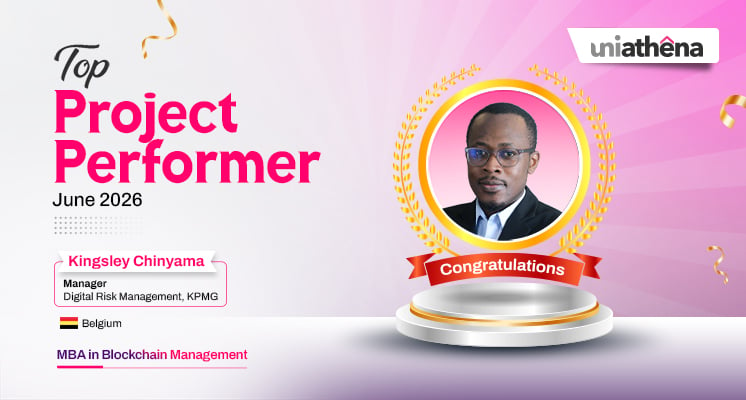
🌟 Top Project Performer – June 2026 🌟
Read More
1
mins read


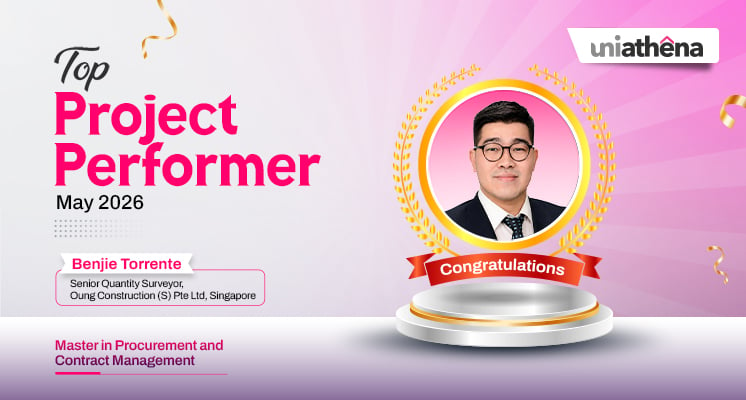
🌟 Top Project Performer – May 2026 🌟
Read More
1
mins read
Best AI Tools for Content Creation
Read More
9
mins read

How to Start Freelancing With No Experience
Read More
8
mins read
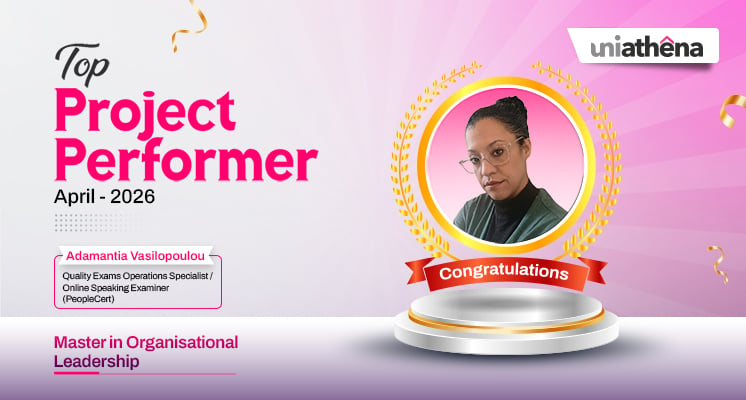
🌟 Top Project Performer – April 2026 🌟
Read More
1
mins read
🌟 Top Project Performer – June 2026 🌟
Read more
1
mins read
🌟 Top Project Performer – May 2026 🌟
Read more
1
mins read
Best AI Tools for Content Creation
Read more
9
mins read
How to Start Freelancing With No Experience
Read more
8
mins read
🌟 Top Project Performer – April 2026 🌟
Read more
1
mins read
Get in Touch

It’s Time to Start
Join NowMost Popular Online Specialization
- Master of International Business Administration
- Master of Business Administration
- MBA in General Management- FastTrack
- Master in Innovation and Entrepreneurship
- MBA-Family Business Management
- Master in Procurement and Contract Management
- Extended Diploma in Business Analytics (SCQF Level 11)
- Diploma in Supply Chain and Logistics Management (SCQF Level 11)
- Strategic Human Resource Management Practitioner
- Master in Data Science
- Master in Engineering Management
Trending Online
- Integrated Doctorate of Business Administration
- Postgraduate Certificate in Finance for Next Generation Managers
- Master of Business Administration- General Management (Fast Track)
- Postgraduate Certificate in Socio-Economic and Legal Framework
- Postgraduate Certificate in Business Sustainability
- Certified Manager
- Supply Chain Management Practitioner
- MBA - AI in Business
- MBA - Accounting & Finance
- Master in Supply Chain and Logistics Management
Top Universities Online Certificates
- Postgraduate Certificate in International Marketing Management
- Postgraduate Certificate In International Human Resource Management
- Postgraduate Certificate in Strategic Management
- Postgraduate Certificate in Procurement & Contracts Management
- Postgraduate Certificate in Business Analytics
- Postgraduate Certificate in Strategic Supply Chain & Logistics Management
- Postgraduate Certificate in Human Resource and Leadership
- Project Management Practitioner
- Postgraduate Certificate in Supply Chain Design & Implementation
- Postgraduate Certificate in Management Accounting and Finance
Accredited Online Degree Program
- MBA - Digital Transformation
- MBA - Family Business Management
- MBA - Marketing Management
- MBA in Quality Management
- MBA - Business Intelligence & Data Analytics
- MBA in Operations & Project Management
- MBA in Energy Management
- MBA In Construction & Safety Management
- Master in Organisational Leadership
- Master in Public Health
- Master in Construction Management
- Bachelor of Arts in Business Administration


 Install Now


UniAthena is an Ed-Tech, offering flexible, affordable learning solutions, including Free-Learning Upskilling Courses and Academic Programs in partnerships with accredited and globally renowned universities and professional qualification bodies.


Do you have any questions ?
Feel free to send us your questions or request a free consultation
Send a message
UK
Athena Global Education
Magdalen Centre,
Robert Robinson Avenue,
Oxford, OX4 4GA, UK
Phone : 01865 784299
MIDDLE EAST
Athena Global Education FZE
Block L-03, First Floor,
P O Box 519265, Sharjah Publishing City,
Free Zone, Sharjah, UAE
Phone : +971 55 879 5492
INDIA
Uniathena Private Limited
9A,Midas Tower
Phase 1
Hinjewadi Rajiv Gandhi Infotech Park
Pune-411057
Phone: +91 9145665544
All Copyrights Reserved @ Athena Global Education 2021-2026