-

Bachelor's

-

Masters
-

MBA
-

Doctorate
-

Micro Credit
-

Explore all Courses
-
Postgraduate Certifications

-
Postgraduate Diploma
-
Undergraduate Diploma
-
Diploma



Learn These Tech Skills 100% Online—No Classroom Required

Author: munazzah ali
|6
MINS READ
| 2
| 382
Created On: 10 March, 2026
Share




Table Of Contents (TOC):
- Introduction
- Key Takeaways
- Understanding Technology Skills Beyond Tools
- Why Technology Skills Have Become Career Essentials
- The Most In-Demand Tech Skills—and Why They Matter
- Where UniAthena Fits into the Journey
- Conclusion
- FAQs
Introduction
A decade ago, career growth followed a predictable path. Today, it follows technology skills. The focus of hiring becomes more and more dependent on the ability of professionals to use technology skills rather than on the place of study or the years of study. This change is not theoretical; it is already transforming the way work is being done in various industries.
What makes this moment different is access. The same capabilities that drive AI tools, data platforms, and cloud systems can now be learned entirely online, often through flexible, self-paced, and even free learning models.
With organizations now focusing on flexibility and problem-solving, knowledge of which technology competencies are important and how to develop them without a classroom is now a strategic career step and not an optional upgrade.
Key Takeaways:
- Technology skills are applied skills that assist professionals in solving problems with the help of digital tools.
- Many essential technical skills can be learned through free tech courses online.
- Some of the most demanding skills today are AI, data, programming, and cybersecurity.
- Online learning makes it easier to start with the easiest tech skills to learn and grow steadily.
- Structured programmes are used to translate learning into real career impact.
Understanding Technology Skills Beyond Tools
Technology skills not only entail familiarity with software or applications. They indicate the ability of the person to effectively utilize technology, analyze information, automate work, enhance efficiency, and make smarter decisions. These competencies are a combination of technical knowledge and critical thinking.
For example, to learn SQL is not to write queries, it is to extract meaningful information out of data. Likewise, AI knowledge is not about writing code but using intelligent tools in a responsible manner at work. That’s why modern essential technical skills focus on application, not memorization.
Having access to free technical courses and structured learning tracks, professionals can develop solid technology skills in addition to their jobs.
Why Technology Skills Have Become Career Essentials
Technology skills are no longer limited to IT teams. Marketing is based on analytics, HR uses automation tools, finance is based on data modelling, and operations teams are based on cloud-based systems. This change makes tech literacy a shared requirement.
Key reasons these skills matter are:
- Career Adaptability: The roles change gradually, yet professionals who use technologies change at a quicker pace.
- Enhanced Efficiency: Digital technologies minimize paperwork and mistakes.
- Improved Employability: Employers are attracted to job-ready tech skills.
For most professionals, free online courses in tech are a risk-free start to exploring new career paths, before going further and specializing.
The Most In-Demand Tech Skills—and Why They Matter
Smart Automation and Artificial Intelligence
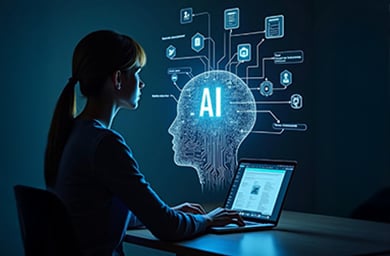
AI is no longer niche. Professionals who are aware of the AI tools can automate repetitive tasks, analyze content more quickly, and enhance the quality of decisions. These are skills that make people productive in all industries, not only in tech jobs.
Data Science and Data Analytics
Data skills help in transforming facts into perceptions. The simplest understanding of data analysis allows professionals to monitor performance and detect trends, as well as justify strategic decisions, and it is among the most demanded technologies nowadays.
Programming and Problem-Solving Skills
Programming languages like Python build structured thinking and problem-solving ability. Python is generally considered to be one of the simplest technological understandings to learn and is implemented in data and automation as well as in the building of applications.
Cloud Computing and DevOps Basics
The cloud platforms facilitate the current digital infrastructure. Learning the dynamics of the scaling, integrating, and functioning of systems online can help professionals to work more effectively with technical teams and handle online projects.
Awareness and Risk Management of Cybersecurity
Cybersecurity skills are needed as the use of digital dependence increases. The awareness of how to safeguard data, identify threats, and keep up to best practices is beneficial to all functions and not only security roles.
Where UniAthena Fits into the Journey
Once learners identify the technology skills they want to develop, structured programs help bridge the gap between learning and real-world application. It is here that outcome-driven learning is useful.
The online programs offered at UniAthena are designed in such a way that they can help learners shift from basic understanding to confident use—without adding classroom constraints.
1. Master ChatGPT
This course gives an overview of OpenAI and its product ecosystem, following the history of ChatGPT and its application in the real world. The course is aimed at introducing prompt design and advanced prompt methods to enhance communication and performance. The best part? You can complete this free to learn short course in just 1 week of learning.
2. Basics of Python
This course is meant to be easy to follow, and it aims to give beginners a sense of confidence in programming. Students begin with Python syntax and structure, proceed to variables and data structures, and logical thinking with conditional statements and loops.
You can complete this course in 4-6 hours of learning with a chance of getting a CIQ, UK certification.
3. Basics of Data Science
This course focuses on the principles of data analytics and how unprocessed data can be converted into valuable business information. Students are exposed to the methods of cleaning data, whether it is structured or unstructured, as well as analytical tools that can assist learners in determining patterns, trends, and insights used in decision-making.
It is designed to be completed in 4-6 hours of learning with a chance of getting a CIQ, UK certification.
4. Executive Diploma in Blockchain Technology
This course explores blockchain as a distributed digital ledger and the reasons why it is treasured for its security, transparency, and accuracy. Students acquire background information about blockchain infrastructure, its operation, and stability, which will make them see its increased applicability in various sectors.
The self-paced learning format of this course allows you to complete it in just 2-3 weeks of learning.
Conclusion
Technology skills are not an option anymore; they are a necessity in a career. With access to free tech courses online and organized learning systems, professionals will be able to develop the relevant abilities without classes and strict timeframes. The opportunity is clear: learn continuously, apply strategically, and stay future-ready in a digital-first world.
FAQ’s
Q1. Which technology competencies are the most beneficial to career development now?
A: Artificial intelligence, data analytics, programming, cloud platform, and cybersecurity are generally sought-after skills in industries. These skills help professionals to become more efficient, help in making better decisions, and adjust to digital workplaces.
Q2. Is it possible to acquire technology skills without a technical background?
A: Numerous technology skills are designed to be used by beginners and are practically oriented. Python, data analytics, and AI tools introductory courses enable non-technical learners to gain confidence over time.
Q3. How do online tech courses support real workplace applications?
A: Online courses focus on practical learning, real-life examples, and problem-solving situations. This helps learners put into practice the newly acquired skills within the work-based context.
Q4. How long does it take to build foundational technology skills?
A: The basic skills can be achieved in several weeks with the help of self-paced learning.
Explore Related Courses











.jpg)


Explore Related Courses
Our Popular Insights
Careers are shifting faster than ever, and staying relevant takes more than experience. Explore UniAthena’s most-read blogs for sharp insights, emerging skills, and practical pathways that help you move forward with clarity and confidence in a changing professional world.


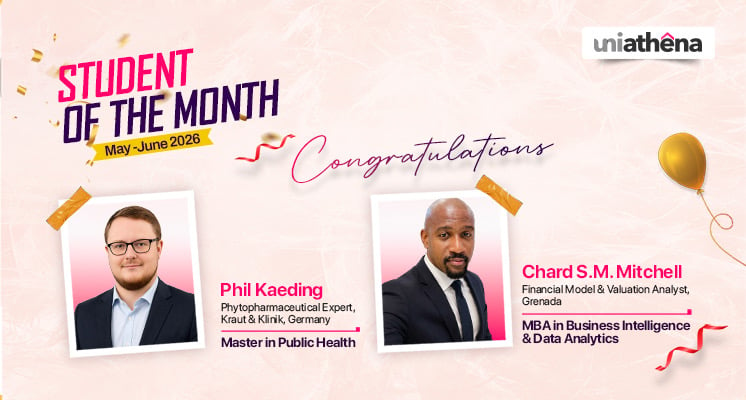
🌟 Students of the Month | May – June 2026 🌟
Read More
1
mins read





🌟 Students of the Month | May – June 2026 🌟
Read more
1
mins read
Get in Touch

It’s Time to Start
Join NowMost Popular Online Specialization
- Master of International Business Administration
- Master of Business Administration
- MBA in General Management- FastTrack
- Master in Innovation and Entrepreneurship
- MBA-Family Business Management
- Master in Procurement and Contract Management
- Extended Diploma in Business Analytics (SCQF Level 11)
- Diploma in Supply Chain and Logistics Management (SCQF Level 11)
- Strategic Human Resource Management Practitioner
- Master in Data Science
- Master in Engineering Management
Trending Online
- Integrated Doctorate of Business Administration
- Postgraduate Certificate in Finance for Next Generation Managers
- Master of Business Administration- General Management (Fast Track)
- Postgraduate Certificate in Socio-Economic and Legal Framework
- Postgraduate Certificate in Business Sustainability
- Certified Manager
- Supply Chain Management Practitioner
- MBA - AI in Business
- MBA - Accounting & Finance
- Master in Supply Chain and Logistics Management
Top Universities Online Certificates
- Postgraduate Certificate in International Marketing Management
- Postgraduate Certificate In International Human Resource Management
- Postgraduate Certificate in Strategic Management
- Postgraduate Certificate in Procurement & Contracts Management
- Postgraduate Certificate in Business Analytics
- Postgraduate Certificate in Strategic Supply Chain & Logistics Management
- Postgraduate Certificate in Human Resource and Leadership
- Project Management Practitioner
- Postgraduate Certificate in Supply Chain Design & Implementation
- Postgraduate Certificate in Management Accounting and Finance
Accredited Online Degree Program
- MBA - Digital Transformation
- MBA - Family Business Management
- MBA - Marketing Management
- MBA in Quality Management
- MBA - Business Intelligence & Data Analytics
- MBA in Operations & Project Management
- MBA in Energy Management
- MBA In Construction & Safety Management
- Master in Organisational Leadership
- Master in Public Health
- Master in Construction Management
- Bachelor of Arts in Business Administration


 Install Now


UniAthena is an Ed-Tech, offering flexible, affordable learning solutions, including Free-Learning Upskilling Courses and Academic Programs in partnerships with accredited and globally renowned universities and professional qualification bodies.


Do you have any questions ?
Feel free to send us your questions or request a free consultation
Send a message
UK
Athena Global Education
Magdalen Centre,
Robert Robinson Avenue,
Oxford, OX4 4GA, UK
Phone : 01865 784299
MIDDLE EAST
Athena Global Education FZE
Block L-03, First Floor,
P O Box 519265, Sharjah Publishing City,
Free Zone, Sharjah, UAE
Phone : +971 55 879 5492
INDIA
Uniathena Private Limited
9A,Midas Tower
Phase 1
Hinjewadi Rajiv Gandhi Infotech Park
Pune-411057
Phone: +91 9145665544
All Copyrights Reserved @ Athena Global Education 2021-2026