-

Bachelor's

-

Masters
-

MBA
-

Doctorate
-

Micro Credit
-

Explore all Courses
-
Postgraduate Certifications

-
Postgraduate Diploma
-
Undergraduate Diploma
-
Diploma



What Is Entrepreneurship?

Author: maharajan p
|9
MINS READ
| 0
| 302
Created On: 04 April, 2026
Share




Table of Contents (TOC):
- Introduction
- Key Takeaways
- Entrepreneurship Definition – Who Is an Entrepreneur?
- Types of Entrepreneurs
- Characteristics of an Entrepreneur (Check Yourself)
- How to Become an Entrepreneur
- Final Takeaway
- FAQs
Introduction
Think of Airbnb’s founders. While many people rent apartments or run hotels, they spotted a gap in the market and created a solution that changed how people book accommodations worldwide.
That’s what sets true entrepreneurs apart: they identify real problems, test practical solutions, and build something that delivers measurable value.
In this article, you’ll learn how entrepreneurship unfolds as a structured process and how you can start applying it to your own ideas.
Key Takeaways:
1. Entrepreneurship is the process of identifying a real problem, building a solution, and turning it into a sustainable business.
2. Strong entrepreneurship skills include opportunity recognition, decision-making under uncertainty, financial awareness, and the ability to take full responsibility for outcomes.
3. Entrepreneurs take different forms, including startup founders, social innovators, intrapreneurs, and independent solopreneurs, but each creates differentiated value in their own way.
4. If you’re wondering how to become an entrepreneur, the path typically begins with validating a real market need, building core business capabilities, and launching with paying customers before thinking about scale.
Entrepreneurship Definition – Who Is an Entrepreneur?
Entrepreneurship refers to creating a business—whether a service, product, or process—that solves a real problem people are facing. It is different from simply running an existing business model. Instead of copying what already exists, entrepreneurship focuses on introducing new ideas or better ways of doing things.
An entrepreneur is someone who:
- Spots a problem people are willing to pay to solve
- Builds a product or service around that problem
- Tests the idea with real customers, not assumptions
An entrepreneur can run a small local business or a growing startup. Size does not define entrepreneurship. Action does.
Types of Entrepreneurs
Entrepreneurs are not a single type of person. They show up in different ways, depending on the problem they choose to solve and how far they want to take it.
Startup Entrepreneurs
These are founders who build businesses designed to grow fast and reach large markets. They usually start with a problem that affects many people and use technology or systems to solve it at scale. Mukesh Bansal is a clear example. He co-founded Myntra and later Cure.fit. In both cases, the goal was not to stay small but to build platforms that could serve millions of users.
Social Entrepreneurs
Social entrepreneurs focus on problems that affect communities or society, but they still think about sustainability. They do not rely only on donations. They build models that can support themselves over time.
Jeroo Billimoria fits this category well. Through initiatives like Childline India Foundation and Child and Youth Finance International, her work focused on children’s safety and financial inclusion, while building structured organizations to support that mission.
Serial Entrepreneurs
Some people build one company and stop. Serial entrepreneurs do not. They start, build, exit, and start again. Experience from earlier ventures shapes their next ones. Elon Musk is a well-known global example. He has been involved in multiple companies across different industries, applying the same problem-solving mindset each time.
Intrapreneurs
Not all entrepreneurs start their own companies. Some work inside large organizations and lead new products or business lines. They use company resources but take ownership like a founder. Many innovation teams inside large tech or manufacturing firms operate this way, launching new products that feel like startups within an existing company.
Solopreneurs
Solopreneurs build businesses on their own, especially in the early stages. They handle product, sales, and operations themselves. Independent consultants, freelancers, and creators who sell services or digital products fall into this category. They may stay solo or grow into a small team later.
Characteristics of an Entrepreneur (Check Yourself)
Entrepreneurs learn many skills along the way. Marketing. Finance. Operations. Technology. Those can be developed later.
What comes first is character.
Entrepreneurship is a risky path. There is no fixed salary. No guaranteed outcome. No clear roadmap. If you believe you have the gut for it, start by checking whether you carry these core traits.
Use this as a reality check.
You do not wait for instructions. When something needs to be done, you step in and own the outcome.
You can choose a direction even when data is incomplete. You accept that waiting too long is also a decision.
Ambiguity does not stop you from acting. You may feel anxious, but you still move forward.
You care more about whether someone actually needs a solution than whether the idea sounds impressive.
When something does not work, you adjust. You do not quit just because the first version failed.
If most of these feel true, you have the character base. Skills can be learned. Tools can be taught. This foundation decides whether entrepreneurship is realistic for you.
Also Read: Small Business Ideas for Beginners and Aspiring Entrepreneurs
How to Become an Entrepreneur
Entrepreneurship is not a random leap. It is also not a linear path where you complete a course and immediately step into a defined role.
If you genuinely want to become an entrepreneur, you identify a real problem that people are currently facing. Then you design a solution that is practical, viable, and differentiated. You test that solution with real users. You gather feedback. You refine. Only after validation do you move toward formal launch.
But launch is not the finish line. Sustainable entrepreneurship requires financial planning, resource management, and scalable systems. Below, you will see how this journey unfolds and what competencies are required at every step.
Think of it in five practical phases.
Stage 1: Identifying a Real Problem (Opportunity Recognition)
Every entrepreneurial journey begins with problem identification.
An idea is a possibility. A validated problem is something people are actively trying to solve and often paying for. Many founders build around ideas they find interesting. Strong entrepreneurs start with observable demand. They ask:
- What specific problem exists?
- Who is experiencing it?
- How are they solving it today?
- Are they dissatisfied with current options?
- Are they spending money on alternatives?
Opportunity recognition requires analytical thinking. You study the market before building for it. This includes basic industry research, competitor review, and understanding customer behavior. You look for gaps, areas where needs are underserved, inefficiently addressed, or ignored entirely.
Customer pain-point analysis is central here. Conversations, surveys, and behavioral patterns provide insight into whether a problem is urgent or optional. Urgent problems drive demand. Optional problems rarely do.
Stage 2: Solution Design & Innovation
Once a real problem is identified, the next step is designing a solution that works in practice, not just in theory.
The first task is translation. A clearly defined problem must be converted into a functional solution. What exactly will you offer? A product, a service, a platform, a process improvement? The solution should directly address the identified pain point without unnecessary features.
Feasibility is equally important. A solution may sound promising but fail under technical or financial constraints. Entrepreneurs must evaluate:
- Can this be built with available technology or resources?
- What will it cost to develop and deliver?
- Does the expected price cover costs while leaving room for margin?
- Can it operate consistently at scale?
Value proposition clarity comes next. Why should customers choose this solution over existing alternatives? The difference must be concrete: better efficiency, lower cost, improved quality, convenience, or access.
Product conceptualization and early-stage planning help bring structure to the idea. This includes defining core features, outlining delivery models, estimating resources, and setting measurable objectives.
Stage 3: Testing & Validation (Market Proof)
Before scaling, a solution must be tested in real market conditions. Validation protects entrepreneurs from investing in untested assumptions.
- An MVP (Minimum Viable Product) is the simplest functional version of the solution used to test core demand.
- Customer interviews help assess problem relevance, solution fit, and willingness to pay. Pilot testing with a limited user group reveals operational gaps, pricing response, and usability issues.
- Feedback loops and iteration cycles refine the solution based on measurable insights.
Only after consistent validation signals should broader launch and expansion follow.
Note: Understanding what to measure and how to interpret early feedback is critical at this stage. Structured learning in MVP design and the Build–Measure–Learn cycle strengthens an entrepreneur’s ability to test ideas systematically rather than rely on intuition.
Stage 4: Fundraising & Scalability (Resource Mobilization)
After validation, focus shifts to capital and growth. Entrepreneurs must assess capital requirements, understand unit economics, and define cost structures to ensure expansion is financially sustainable.
Funding may come through bootstrapping, angel investors, or venture capital, depending on scale and strategy. Scaling requires financial literacy, strategic planning, and operational discipline. Growth should follow a defined model, not momentum alone.
Stage 5: Launch & Growth Execution
Launch is not the beginning of entrepreneurship; it is the result of structured preparation.
At this stage, the business is formally established through appropriate legal structuring and basic regulatory compliance. Market entry strategies are executed, customer acquisition begins, and operations move from testing to consistent delivery.
Growth does not stop at launch. Continuous improvement, driven by performance data, customer feedback, and operational review ensures the business remains competitive and sustainable over time.
If you want to handle these stages with confidence, not just execute tasks but make sound decisions under pressure, you need a strong foundation in innovation thinking and product strategy.
Programs like Essentials of Innovation and Entrepreneurship help you sharpen critical evaluation skills and understand how demand is created. Mastering Product Concept and Product Decisions strengthens your ability to manage product life cycles, branding, and long-term strategic positioning.
You can also explore other programs based on your interests.
- Diploma in Social Entrepreneurship - helps you understand how to identify social opportunities, build sustainable ventures, and measure the impact of your business on communities.
- Executive Diploma in Innovation & Entrepreneurship - focuses on developing the mindset and tools to evaluate business ideas, apply innovation strategies, and build sustainable, impactful organizations.
Choose the program that aligns with your goals and the kind of impact you want your business to create.
Also Read: How to Start an E-commerce Business from Scratch
Final Takeaway
Entrepreneurship is the process of identifying a real problem, building a solution, and turning it into a sustainable business.
If you want to become an entrepreneur, first, validate your idea with real people. Second, build the skills required to manage finance, customers, and product decisions. Third, formalize your business and start acquiring paying customers.
Do not rely on motivation alone. Work with proof, preparation, and consistent execution.
FAQs
Q1. What is entrepreneurship?
A: Entrepreneurship means spotting a real problem, building a solution, and turning it into a business that customers pay for.
Q2. Who is an entrepreneur?
A: An entrepreneur identifies opportunities, takes initiative, builds solutions, and accepts the risk of making it work.
Q3. What are the advantages of entrepreneurship?
A: You gain independence, control your decisions, and create income based on the value you build. You also create long-term impact.
Q4. What are the challenges of entrepreneurship?
A: You face uncertainty, financial risk, rejection, and slow growth. No one guarantees income or success.
Q5. How do I become an entrepreneur?
A: Validate your idea with real customers. Learn core business skills. Launch small, get paying customers, and improve based on feedback.
Explore Related Courses










COMMENTS(0)
Explore Related Courses
Our Popular Insights
Careers are shifting faster than ever, and staying relevant takes more than experience. Explore UniAthena’s most-read blogs for sharp insights, emerging skills, and practical pathways that help you move forward with clarity and confidence in a changing professional world.
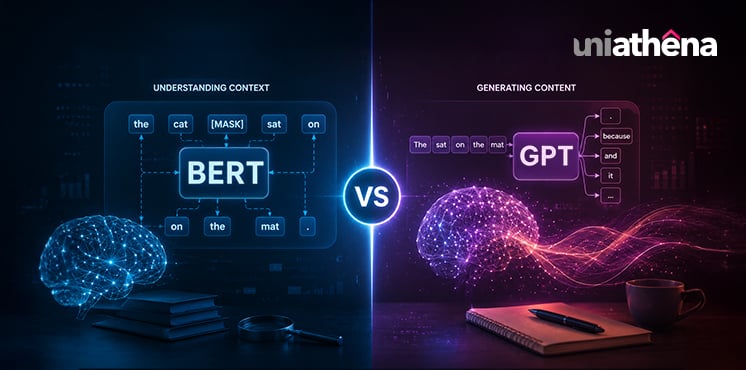

What is Business Development?
Read More
6
mins read
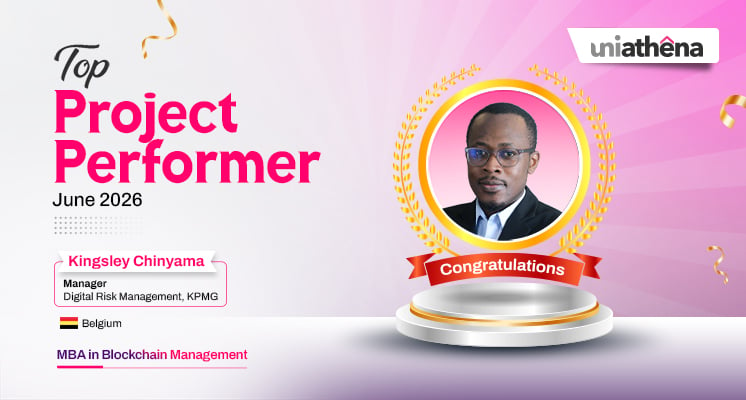
🌟 Top Project Performer – June 2026 🌟
Read More
1
mins read

What is the Role of AI in Education?
Read More
4
mins read


🌟 Top Project Performer – May 2026 🌟
Read More
1
mins read

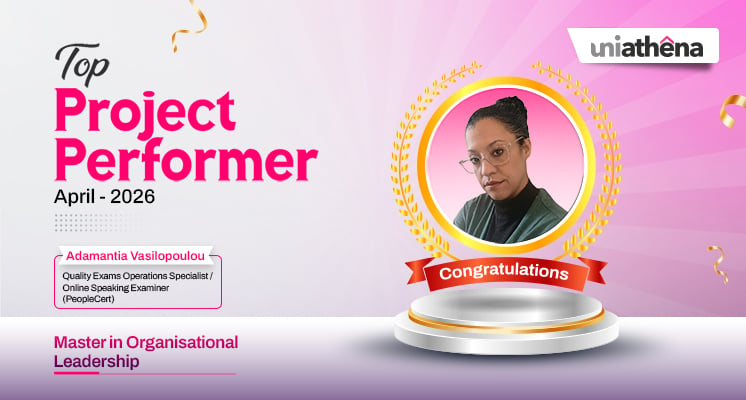
🌟 Top Project Performer – April 2026 🌟
Read More
1
mins read
What is Business Development?
Read more
6
mins read
🌟 Top Project Performer – June 2026 🌟
Read more
1
mins read
What is the Role of AI in Education?
Read more
4
mins read
🌟 Top Project Performer – May 2026 🌟
Read more
1
mins read

🌟 Top Project Performer – April 2026 🌟
Read more
1
mins read
Get in Touch

It’s Time to Start
Join NowMost Popular Online Specialization
- Master of International Business Administration
- Master of Business Administration
- MBA in General Management- FastTrack
- Master in Innovation and Entrepreneurship
- MBA-Family Business Management
- Master in Procurement and Contract Management
- Extended Diploma in Business Analytics (SCQF Level 11)
- Diploma in Supply Chain and Logistics Management (SCQF Level 11)
- Strategic Human Resource Management Practitioner
- Master in Data Science
- Master in Engineering Management
Trending Online
- Integrated Doctorate of Business Administration
- Postgraduate Certificate in Finance for Next Generation Managers
- Master of Business Administration- General Management (Fast Track)
- Postgraduate Certificate in Socio-Economic and Legal Framework
- Postgraduate Certificate in Business Sustainability
- Certified Manager
- Supply Chain Management Practitioner
- MBA - AI in Business
- MBA - Accounting & Finance
- Master in Supply Chain and Logistics Management
Top Universities Online Certificates
- Postgraduate Certificate in International Marketing Management
- Postgraduate Certificate In International Human Resource Management
- Postgraduate Certificate in Strategic Management
- Postgraduate Certificate in Procurement & Contracts Management
- Postgraduate Certificate in Business Analytics
- Postgraduate Certificate in Strategic Supply Chain & Logistics Management
- Postgraduate Certificate in Human Resource and Leadership
- Project Management Practitioner
- Postgraduate Certificate in Supply Chain Design & Implementation
- Postgraduate Certificate in Management Accounting and Finance
Accredited Online Degree Program
- MBA - Digital Transformation
- MBA - Family Business Management
- MBA - Marketing Management
- MBA in Quality Management
- MBA - Business Intelligence & Data Analytics
- MBA in Operations & Project Management
- MBA in Energy Management
- MBA In Construction & Safety Management
- Master in Organisational Leadership
- Master in Public Health
- Master in Construction Management
- Bachelor of Arts in Business Administration


 Install Now


UniAthena is an Ed-Tech, offering flexible, affordable learning solutions, including Free-Learning Upskilling Courses and Academic Programs in partnerships with accredited and globally renowned universities and professional qualification bodies.


Do you have any questions ?
Feel free to send us your questions or request a free consultation
Send a message
UK
Athena Global Education
Magdalen Centre,
Robert Robinson Avenue,
Oxford, OX4 4GA, UK
Phone : 01865 784299
MIDDLE EAST
Athena Global Education FZE
Block L-03, First Floor,
P O Box 519265, Sharjah Publishing City,
Free Zone, Sharjah, UAE
Phone : +971 55 879 5492
INDIA
Uniathena Private Limited
9A,Midas Tower
Phase 1
Hinjewadi Rajiv Gandhi Infotech Park
Pune-411057
Phone: +91 9145665544
All Copyrights Reserved @ Athena Global Education 2021-2026