-

Bachelor's

-

Masters
-

MBA
-

Doctorate
-

Micro Credit
-

Explore all Courses
-
Postgraduate Certifications

-
Postgraduate Diploma
-
Undergraduate Diploma
-
Diploma



The Evolution of Iconic Marketing Campaigns and Their Relevance in the Digital Age
Author: christina roslin chandraprakash
|7
MINS READ
| 0
| 4
Created On: 14 July, 2026
Share




Table of Contents (TOC):
- Introduction
- Why Iconic Marketing Campaigns Endure
- Quick examples to illustrate
- What Has Changed in the Digital Age?
- The Biggest Lesson Modern Marketers Often Forget
- Final Thoughts
Introduction
Marketing has always been changing and evolving. Think back to the jingles and posters that once influenced our buying habits: single-message, repetitive campaigns that were designed to get stuck in your head. Those were simple times. Attention was easier to capture because channels were few.
Today, consumers who once relied primarily on television commercials and newspaper advertisements now engage with brands through algorithms, influencers, short-form videos, and user-generated content. Nonetheless, despite all this change, there is one constant truth: the most effective marketing has always centered on strong human emotion rather than advanced technology.
What made the best marketing campaigns in history not only successful in terms of sales but also influential on culture and memorable for decades? Even if the contemporary digital space allows marketers to leverage never-before-seen reach and analytical capabilities, the key ideas behind those campaigns are surprisingly applicable today.
The relevance of iconic marketing campaigns lies not in the channels they used, but in the timeless principles they demonstrated and how those principles continue to shape modern digital marketing.
The marketing channels have greatly evolved in the last forty years.
Why Iconic Marketing Campaigns Endure
In the 1980s and 1990s, television, print, and radio ads were the prevalent types of media communication. Companies resorted to slogans, celebrities, and expensive ads to build brand recognition.
Today’s marketing in the digital age focuses more on engaging consumers with brands via multiple channels: Instagram Reels, TikTok videos, YouTube Shorts, podcasts, AI suggestions, and online communities. Attention span is lower, competition is greater, and authenticity is crucial for brands.
Modern marketing is also increasingly shaped by creator communities, user-generated content, and social commerce, where consumers influence one another as much as brands influence consumers. Successful campaigns now encourage participation rather than simply delivering messages.
An overview of campaign archetypes and what we learn from them
- The Sing-Along Ad: The importance of catchy tunes and catchphrases is seen through jingles that have become an iconic marketing campaign. Today, even though the medium has changed, there is a place for the idea of short sound clips as seen in TikTok sounds and Reels.
- The Big Stunt: Shock and awe activations that caught everyone’s attention. While today's stunts continue to be effective, their format has changed into one that is designed to be viral.
- The Narrative Serial: Episodic storytelling campaigns that made consumers emotionally loyal. Today’s episodic branding takes place via YouTube, IGTV, and Stories.
- The Demonstration Ad: Demonstrating the value of the product directly. The message is still relevant as brands create unboxing videos, reviews, and influencer demo videos.
Quick examples to illustrate
1. Nike's "Just Do It" – Selling a Mindset, Not Shoes
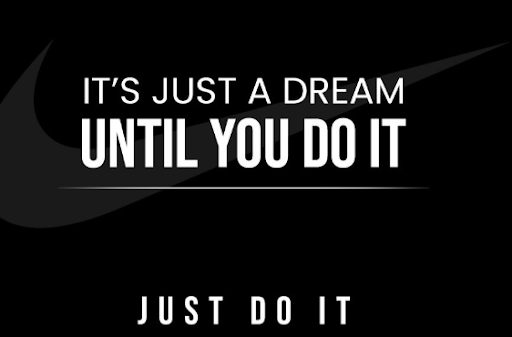
When Nike launched the "Just Do It" campaign in 1988, the market for sportswear was already saturated. Instead of listing the features of its shoes and gear, Nike decided to focus on human aspirations.
This iconic marketing campaign encouraged people at all fitness levels to challenge themselves. No matter if you were an Olympic champion or just started your early-morning jog, the message remained the same.
The Results:
- Nike's share of the North American athletic shoe market grew from 18% to 43% within ten years.
- Worldwide sales increased from approximately $877 million to $9.2 billion between 1988 and 1998.
Why It Still Works Today
Marketing campaigns in the digital age are about living a lifestyle, not using products.
Nike keeps the same philosophy alive through inspiring social media posts, athletes' documentaries, challenges, and campaigns focused on purposes beyond advertising.
Lesson for marketers: Nobody buys products; they buy identities.
2. Coca-Cola's "Share a Coke" – Personalisation Before AI Made It Popular
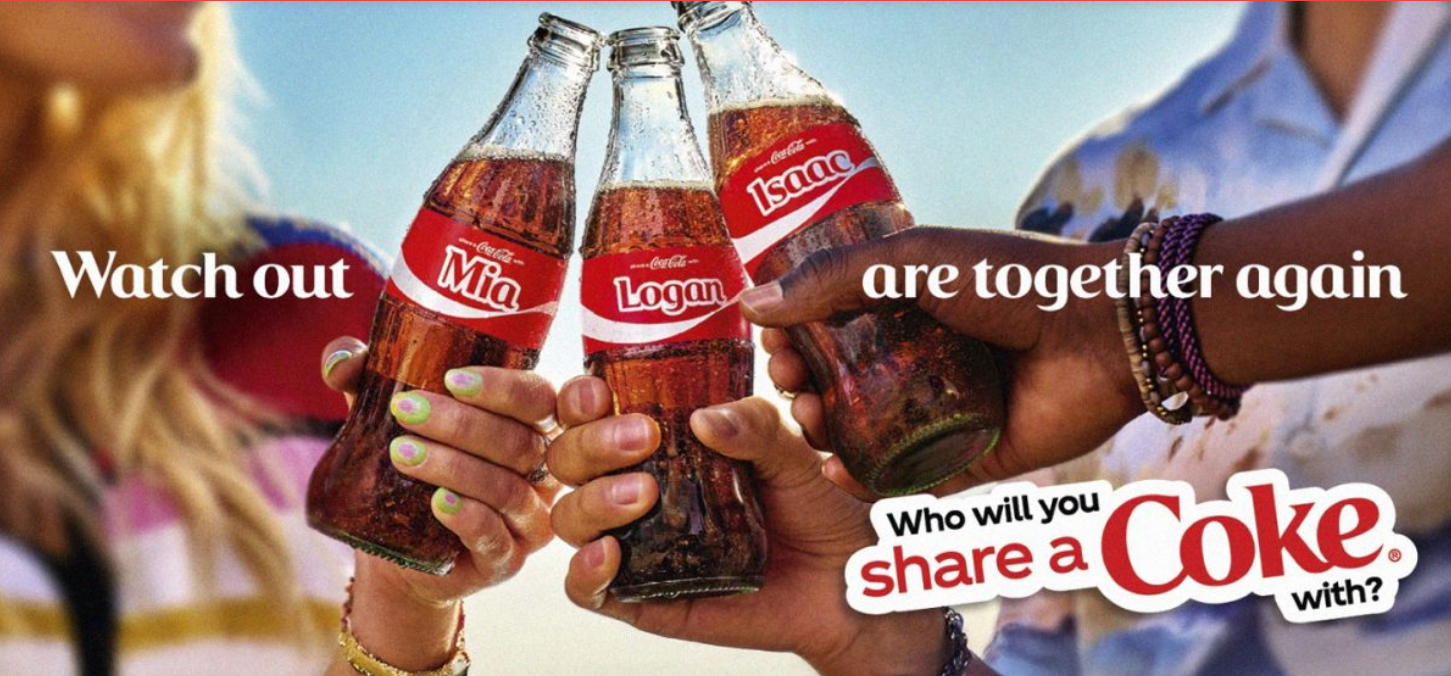
Long before personalised recommendations became standard in digital marketing, Coca-Cola demonstrated the power of making customers feel individually recognised.
The "Share a Coke" campaign replaced the Coca-Cola logo on bottles with popular first names, encouraging consumers to find bottles for themselves and friends.
What appeared to be a simple packaging change became a global social phenomenon.
The Campaign Performance Metrics:
- Rolled out across more than 80 countries.
- In Australia, Coca-Cola reported:
- 4% growth in market share
- 7% increase in consumption among young adults during the campaign.
Why It Still Works Today
Today's marketers combine AI, CRM systems, behavioural data, recommendation engines, and customer insights to deliver increasingly personalised experiences across multiple digital touchpoints.
Though the principle remains unchanged:
Consumers love brands that make them feel seen.
From personalised email campaigns and customised product recommendations to AI-powered shopping experiences, modern marketing continues to be built on the same psychological foundation laid.
3. Dove's "Real Beauty" – Purpose Before Purpose Marketing Became Mainstream
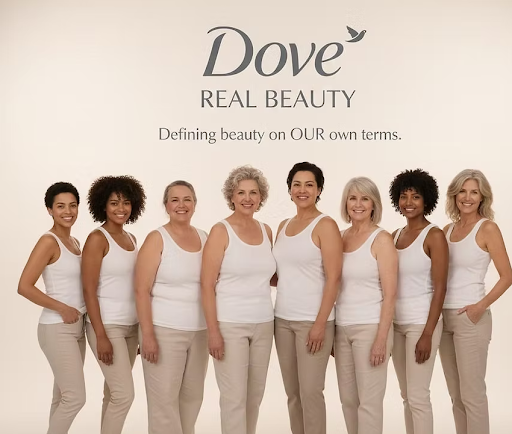
When Dove launched its Campaign for Real Beauty in 2004, beauty advertising was dominated by heavily edited images and unrealistic standards.
Instead of following industry norms, Dove featured women of different ages, body types, and ethnic backgrounds.
The campaign was not simply advertising soap.
It was challenging cultural perceptions of beauty.
The Campaign Performance Metrics:
This Iconic marketing campaign is based on a study carried out globally, which found that just 2% of women believed they were beautiful, thus creating a gap between advertisements and the truth.
After two decades, this campaign is still going strong and continues to impact the brand communication of Dove.
The campaign also generated significant earned media and helped position Dove as one of the brands most closely associated with purpose-driven marketing.
Why It Still Works Today
Customers expect more from brands than mere profit generation.
Purpose-oriented marketing campaigns prevail on digital media since customers appreciate sincerity and react negatively to insincere messages.
Many consumers increasingly expect brands to demonstrate authentic social responsibility alongside their commercial objectives and to consistently reinforce those commitments across every customer touchpoint.
4. Old Spice's "The Man Your Man Could Smell Like" – The Birth of Real-Time Viral Marketing
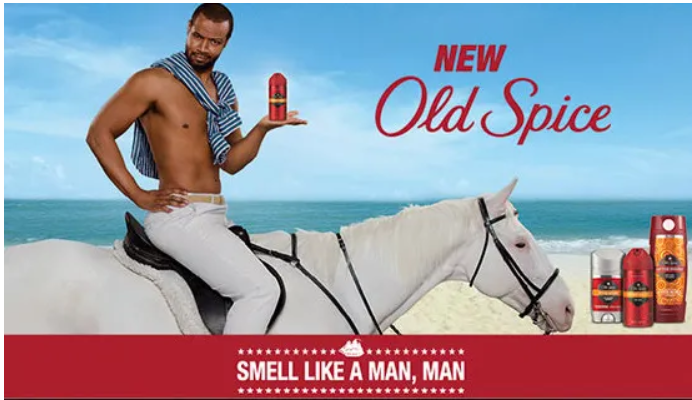
Back in time, when social media was not a major marketing medium, Old Spice used TV advertising and real-time digital engagement.
Shortly thereafter, its humorous commercial with Isaiah Mustafa that was aired in 2010 went viral, but the true innovation happened afterward.
The brand created hundreds of personalised video responses to questions submitted by consumers across Twitter, YouTube, and Facebook.
Instead of treating advertising as a one-way broadcast, Old Spice transformed it into a live conversation.
The Results:
According to Nielsen, by May of 2010, unit sales of Old Spice Red Zone body wash had increased 60% from the previous year. And by July of 2010, sales had more than doubled versus the prior year, with an increase of 125% – an all-time high for the brand.
Why It Still Works Today
The marketing campaign was full of techniques that make up modern digital marketing efforts:
- Real-time engagement
- Community interaction
- Sharing content
- Social media conversations
- Personality branding
Today's brands accomplish these things via TikTok trends, live streams, and social media campaigns.
Also Read: Customer Reviews: Integrating Customer Reviews Into Your Marketing Campaigns
What Has Changed in the Digital Age?
Although technology has changed the ways in which marketing techniques operate, the psychology behind it remains unchanged.
The motivation of consumers towards developing an attachment to the brand remains the same.
Technology may change the medium of communication, but not its content.
The Biggest Lesson Modern Marketers Often Forget
Many organizations are spending massive amounts of money on automation, artificial intelligence, marketing analytics, and advertising platforms.
There is the ability to enhance effectiveness through such technologies.
However, technology can enhance effective marketing practices but not substitute for it.
The most successful campaigns combine technology with creativity, empathy, and a deep understanding of customer behaviour. Digital platforms may expand reach, but meaningful stories remain the foundation of lasting brand relationships.
It is a known fact that consumers tend to retain stories more than numbers.
They retain emotions rather than promotions.
The digital campaigns that work the best use the fundamentals laid down several decades back – understanding of the people, genuine communication, and messages that are worthy of being shared.
Also Read: What is Marketing Management? A Complete Guide to Its Importance, Process & Career Scope
Final Thoughts
The digital age has changed marketing tools, but not human nature.
Nike inspired ambition.
Coca-Cola encouraged personal connections.
Dove challenged social norms.
Old Spice reinvented audience engagement.
Every successful marketing campaign understands its audience before choosing its channel or technology. As artificial intelligence continues to reshape marketing, the platforms and tools may evolve, but the brands that endure will be those that combine timeless human insight with the opportunities created by new technology.
References:
- PR Week (2024). Dove's Campaign for Real Beauty revolutionized marketing
ContentGrip. Best Marketing Campaigns of All Time (Old Spice overview) - Begin Efusion (n.d.) Case study: Coca-Cola's "Share a Coke" campaign. Available at: https://www.beginefusion.com/post/case-study-coca-cola-s-share-a-coke-campaign
- Campaign (n.d.) No longer just doing it: Nike must recapture its magic. Available at: https://www.campaignlive.com/article/no-longer-just-doing-it-nike-recapture-its-magic/1883244
- Marketing Week (n.d.) How the Old Spice hunk took over the world. Available at: https://www.marketingweek.com/how-the-old-spice-hunk-took-over-the-world/
Our Popular Courses

$14000


Doctoral Degree in Business Administration
Universidad Catolica De Murcia (UCAM), Spain
Duration:
2 - 3 Years
$17500*
Integrated Doctorate of Business Administration
Guglielmo Marconi University, Italy
Universidad Catolica De Murcia (UCAM), Spain
Duration:
2.5 - 3.5 Years
$5600*
Master of Business Administration
Guglielmo Marconi University, Italy
Duration:
12 - 24 Months
$5600*
MBA in Operations & Project Management
Guglielmo Marconi University, Italy
Duration:
12 - 24 Months
$5600*
Master in Supply Chain and Logistics Management
Guglielmo Marconi University, Italy
Duration:
12 - 24 Months
$5950*
Master in Data Sciences
Guglielmo Marconi University, Italy
Duration:
12 - 24 Months
$5600*
Master in Engineering Management
Guglielmo Marconi University, Italy
Duration:
12 - 24 Months
$5600*
Master in Procurement and Contract Management
Guglielmo Marconi University, Italy
Duration:
12 - 24 Months
$5600*
Master in Public Health
Guglielmo Marconi University, Italy
Duration:
12 - 24 MonthsOur Popular Courses
COMMENTS(0)
Our Popular Courses
$14000
Doctoral Degree in Business Administration
Universidad Catolica De Murcia (UCAM), Spain
Duration:
2 - 3 Years
$17500*
Integrated Doctorate of Business Administration
Guglielmo Marconi University, Italy
Universidad Catolica De Murcia (UCAM), Spain
Duration:
2.5 - 3.5 Years
$5600*
Master of Business Administration
Guglielmo Marconi University, Italy
Duration:
12 - 24 Months
$5600*
MBA in Operations & Project Management
Guglielmo Marconi University, Italy
Duration:
12 - 24 Months
$5600*
Master in Supply Chain and Logistics Management
Guglielmo Marconi University, Italy
Duration:
12 - 24 Months
$5950*
Master in Data Sciences
Guglielmo Marconi University, Italy
Duration:
12 - 24 Months
$5600*
Master in Engineering Management
Guglielmo Marconi University, Italy
Duration:
12 - 24 Months
$5600*
Master in Procurement and Contract Management
Guglielmo Marconi University, Italy
Duration:
12 - 24 Months
$5600*
Master in Public Health
Guglielmo Marconi University, Italy
Duration:
12 - 24 MonthsOur Popular Courses
Our Popular Insights
Careers are shifting faster than ever, and staying relevant takes more than experience. Explore UniAthena’s most-read blogs for sharp insights, emerging skills, and practical pathways that help you move forward with clarity and confidence in a changing professional world.


🌟 Top Project Performer – June 2026 🌟
Read More
1
mins read


🌟 Top Project Performer – May 2026 🌟
Read More
1
mins read

🌟 Top Project Performer – April 2026 🌟
Read More
1
mins read
🌟 Top Project Performer – June 2026 🌟
Read more
1
mins read
🌟 Top Project Performer – May 2026 🌟
Read more
1
mins read
🌟 Top Project Performer – April 2026 🌟
Read more
1
mins read
Get in Touch

It’s Time to Start
Join NowMost Popular Online Specialization
- Master of International Business Administration
- Master of Business Administration
- MBA in General Management- FastTrack
- Master in Innovation and Entrepreneurship
- MBA-Family Business Management
- Master in Procurement and Contract Management
- Extended Diploma in Business Analytics (SCQF Level 11)
- Diploma in Supply Chain and Logistics Management (SCQF Level 11)
- Strategic Human Resource Management Practitioner
- Master in Data Science
- Master in Engineering Management
Trending Online
- Integrated Doctorate of Business Administration
- Postgraduate Certificate in Finance for Next Generation Managers
- Master of Business Administration- General Management (Fast Track)
- Postgraduate Certificate in Socio-Economic and Legal Framework
- Postgraduate Certificate in Business Sustainability
- Certified Manager
- Supply Chain Management Practitioner
- MBA - AI in Business
- MBA - Accounting & Finance
- Master in Supply Chain and Logistics Management
Top Universities Online Certificates
- Postgraduate Certificate in International Marketing Management
- Postgraduate Certificate In International Human Resource Management
- Postgraduate Certificate in Strategic Management
- Postgraduate Certificate in Procurement & Contracts Management
- Postgraduate Certificate in Business Analytics
- Postgraduate Certificate in Strategic Supply Chain & Logistics Management
- Postgraduate Certificate in Human Resource and Leadership
- Project Management Practitioner
- Postgraduate Certificate in Supply Chain Design & Implementation
- Postgraduate Certificate in Management Accounting and Finance
Accredited Online Degree Program
- MBA - Digital Transformation
- MBA - Family Business Management
- MBA - Marketing Management
- MBA in Quality Management
- MBA - Business Intelligence & Data Analytics
- MBA in Operations & Project Management
- MBA in Energy Management
- MBA In Construction & Safety Management
- Master in Organisational Leadership
- Master in Public Health
- Master in Construction Management
- Bachelor of Arts in Business Administration


 Install Now


UniAthena is an Ed-Tech, offering flexible, affordable learning solutions, including Free-Learning Upskilling Courses and Academic Programs in partnerships with accredited and globally renowned universities and professional qualification bodies.


Do you have any questions ?
Feel free to send us your questions or request a free consultation
Send a message
UK
Athena Global Education
Magdalen Centre,
Robert Robinson Avenue,
Oxford, OX4 4GA, UK
Phone : 01865 784299
MIDDLE EAST
Athena Global Education FZE
Block L-03, First Floor,
P O Box 519265, Sharjah Publishing City,
Free Zone, Sharjah, UAE
Phone : +971 55 879 5492
INDIA
Uniathena Private Limited
9A,Midas Tower
Phase 1
Hinjewadi Rajiv Gandhi Infotech Park
Pune-411057
Phone: +91 9145665544
All Copyrights Reserved @ Athena Global Education 2021-2026