-

Bachelor's

-

Masters
-

MBA
-

Doctorate
-

Micro Credit
-

Explore all Courses
-
Postgraduate Certifications

-
Postgraduate Diploma
-
Undergraduate Diploma
-
Diploma



Exploring Ruflo: An Emerging Approach to AI Workflow Automation

Author: pallavi patnaik
|9
MINS READ
| 0
| 304
Created On: 16 June, 2026
Share




Table of Contents (TOC):
- Introduction
- Key Takeaways
- Understanding Ruflo and Its emergence
- How AI Workflow Automation Works
- Why Businesses Are Turning to AI-Powered Workflow Management
- Ruflo and the Evolution of Intelligent Workflow Automation
- Workflow Automation Use Cases Across Industries
- Future Trends in Workflow Automation
- Conclusion
- FAQs
Introduction
Not long ago, workflow automation was largely about creating rules: when a specific event occurred, a predefined action followed. While this approach helped organizations reduce repetitive work, it often struggled to keep pace with today's dynamic business environments, where decisions must be made in real time, data arrives from multiple sources, and processes rarely follow a perfectly predictable path.
The emergence of artificial intelligence is changing this landscape. Workflows are no longer limited to executing instructions, they are increasingly capable of understanding context, analyzing information, and coordinating complex tasks across systems. This evolution marks a significant shift in the future of AI, transforming automation from a tool that follows commands into one that can actively support intelligent decision-making.
Amid this transformation, the growing interest in Ruflo has attracted growing attention among developers, automation enthusiasts, and businesses exploring next-generation AI workflow automation. As an open-source framework available on GitHub, Ruflo represents a new approach to workflow automation, enabling the creation of intelligent, adaptable workflows that combine AI capabilities with process orchestration. Its emergence reflects a broader movement toward smarter, more flexible automation systems that are redefining how organizations manage operations, improve productivity, and prepare for the future of digital work.
This article explores what Ruflo is, how it works, and why it is increasingly being viewed as an important step toward the next generation of AI-powered workflow management and business process automation.
Key Takeaways:
- Ruflo is an open-source framework designed to support advanced AI workflow automation.
- Modern workflow automation combines AI, data processing, and orchestration to automate complex business processes.
- Organizations are adopting AI-powered workflow management to improve efficiency, accuracy, and scalability.
- Intelligent automation frameworks are shaping the future of AI workflow automation across industries.
- Ruflo highlights the growing transition from rule-based automation to adaptive, AI-driven systems.
Understanding Ruflo and Its emergence
Ruflo is part of a new generation of frameworks focused on intelligent workflow orchestration. Unlike traditional automation systems that follow predefined instructions, Ruflo enables workflows to integrate AI models, process dynamic information, and coordinate multiple tasks across systems.
The growing interest in Ruflo can be attributed to several industry developments. The rapid advancement of generative AI, increasing demand for business automation, and emergence of open-source development have created favorable conditions for AI-native workflow frameworks. At the same time, organizations are seeking more scalable and flexible solutions capable of orchestrating complex, multi-step processes. Ruflo addresses these requirements by combining workflow orchestration with AI-driven decision-making in an accessible open-source environment.
Interest in Ruflo has grown largely through developer communities and GitHub discussions focused on AI agents and workflow orchestration. As organizations experiment with AI-powered automation, open-source frameworks such as Ruflo provide a practical environment for testing and deploying intelligent workflows without the licensing costs associated with many enterprise platforms.
Because Ruflo is open source, developers can customize workflows, integrate external tools, and create automation solutions tailored to specific organizational requirements. This flexibility makes it particularly appealing for businesses exploring advanced automation strategies.
The growing interest in Ruflo also reflects a broader industry trend: organizations are no longer looking to automate individual tasks alone. Instead, they seek comprehensive solutions capable of managing end-to-end workflows intelligently.
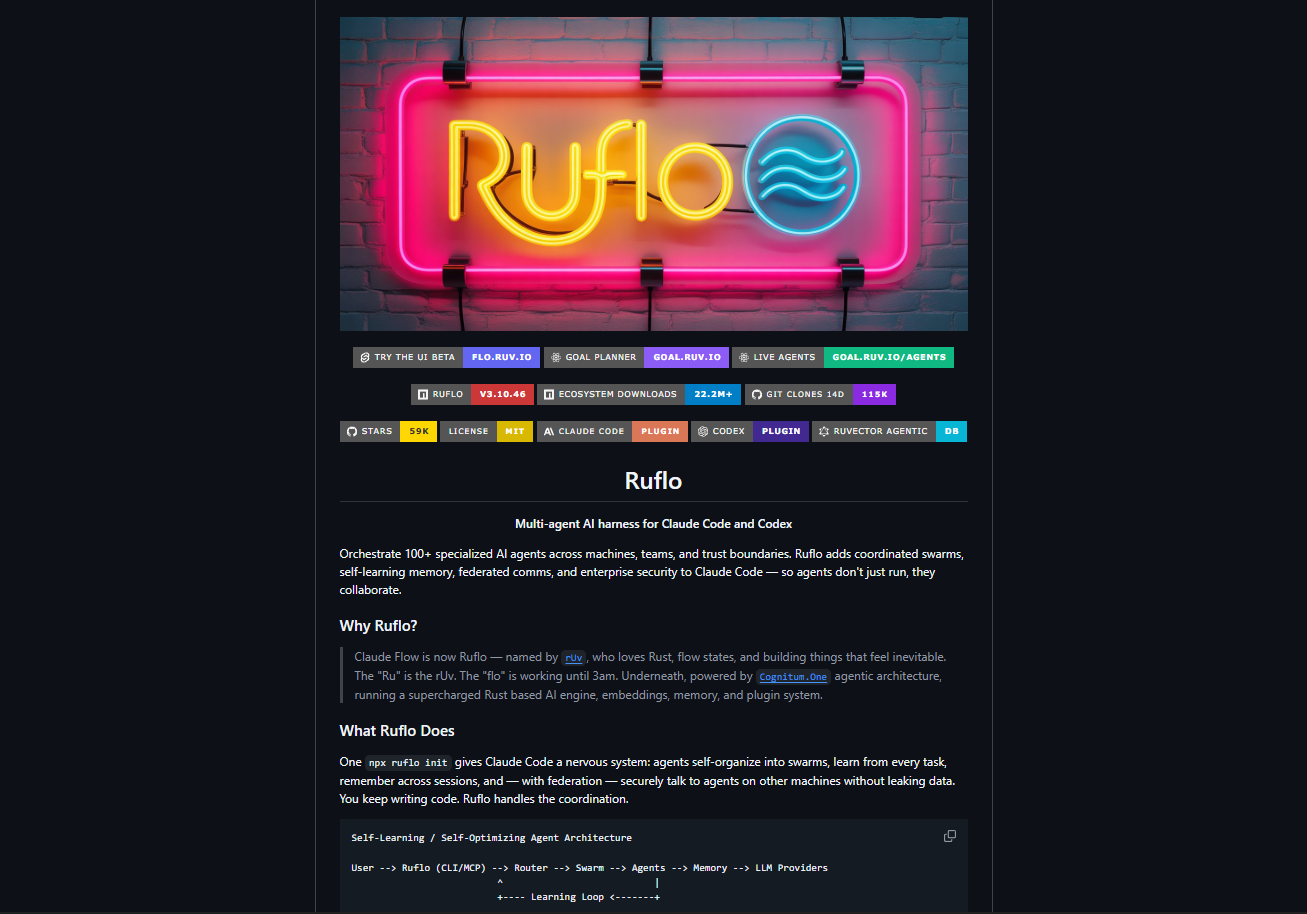
Fig: Ruflo's GitHub documentation introduces its multi-agent orchestration framework, highlighting how users, routers, AI agent swarms, memory systems, and language models collaborate within an intelligent workflow environment. Source: Ruflo GitHub Repository.
How AI Workflow Automation Works
To understand the growing interest in Ruflo and similar frameworks, it is important to examine how AI workflow automation functions behind the scenes. Unlike traditional automation systems that simply follow predefined rules, AI-powered workflows combine data processing, intelligent decision-making, and task orchestration to manage complex business operations.
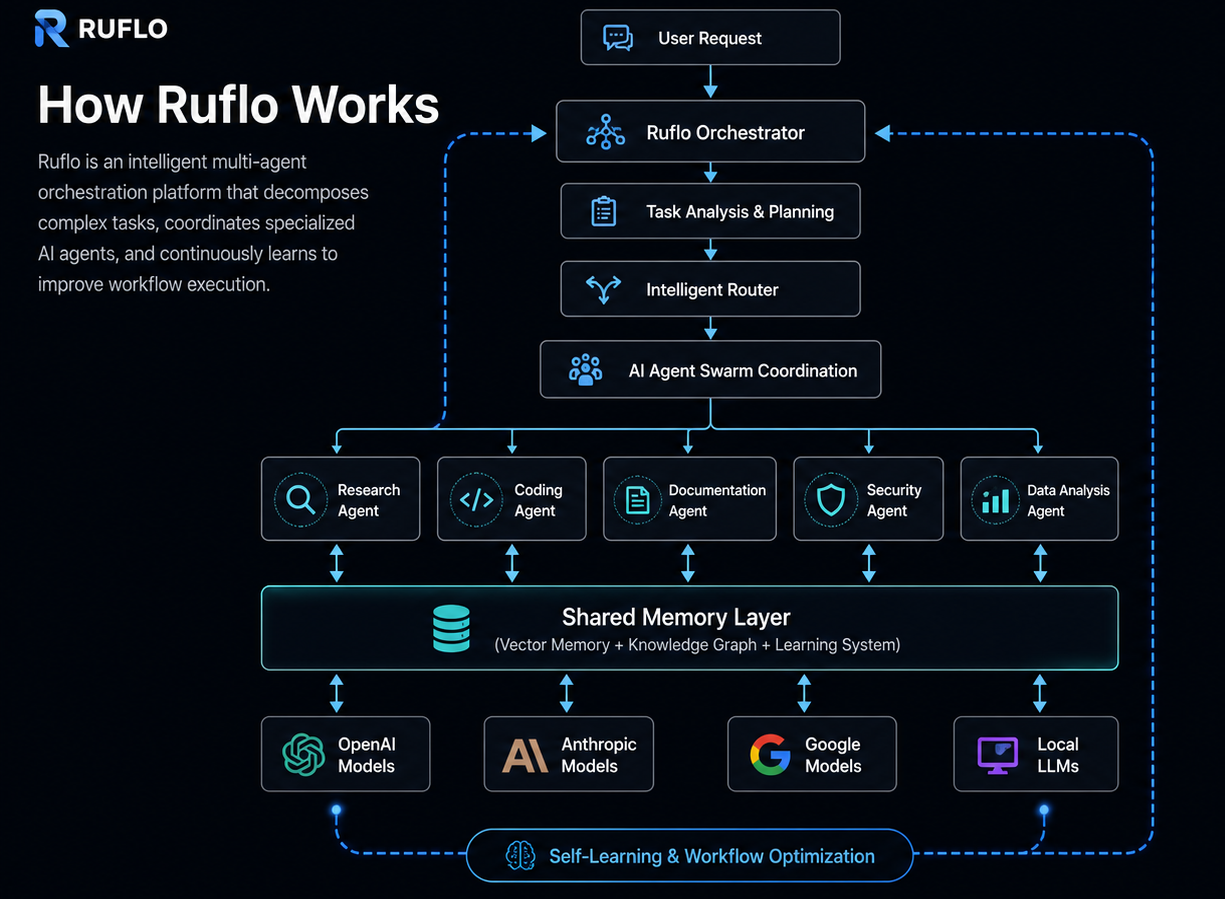
Fig 3: Conceptual workflow showing how Ruflo orchestrates AI agents, memory systems, and intelligent routing to automate complex business processes.
1. Data Collection
The process begins with data collection, where information is gathered from multiple sources such as emails, documents, databases, APIs, customer interactions, and enterprise applications. By consolidating data from different systems, AI workflows gain the context required to understand business processes and make informed decisions. This stage forms the foundation of the entire automation cycle, as the quality and relevance of the collected data directly influence workflow performance.
2. AI Analysis
Once the information is collected, artificial intelligence models analyze the data to identify patterns, classify requests, extract meaningful insights, and generate recommendations. Unlike conventional automation tools that rely solely on predefined instructions, AI systems can process both structured and unstructured information, enabling them to interpret context and respond more intelligently to varying situations.
3. Workflow Orchestration
After the data has been analyzed, the workflow orchestration layer determines the most appropriate sequence of actions. At this stage, the system decides which tasks should be executed, which applications or services need to be involved, and whether human approval is required before proceeding. This orchestration capability enables workflows to operate seamlessly across multiple platforms while maintaining consistency and efficiency.
4. Automated Execution
The final stage involves automated execution, where actions are carried out through connected software systems, business applications, or digital services. Tasks such as updating records, sending notifications, processing requests, or generating reports can be completed automatically without manual intervention. This allows organizations to reduce repetitive work, accelerate operations, and improve overall productivity.
Together, these four stages create the foundation of modern intelligent workflow automation, enabling businesses to move beyond simple rule-based processes and adopt more adaptive, AI-driven operational models.
Why Businesses Are Turning to AI-Powered Workflow Management
Organizations are increasingly adopting AI-powered workflow management because traditional business processes often struggle to keep pace with growing operational complexity. AI workflow automation helps reduce manual effort, improve accuracy, accelerate decision-making, and scale operations more effectively.
Whether it is customer support, finance, HR, or software development, intelligent workflows enable organizations to automate routine tasks while maintaining greater visibility and control over business processes. These advantages make AI workflow automation an increasingly strategic investment for modern enterprises.
Ruflo and the Evolution of Intelligent Workflow Automation
Ruflo represents an important step in the evolution of business process automation.
Historically, automation tools focused on repetitive and predictable tasks. While effective, these systems often struggled when dealing with:
- Unstructured data
- Natural language communication
- Dynamic decision-making
- Multi-step business processes
Modern AI frameworks address these limitations by introducing intelligence into workflow execution.
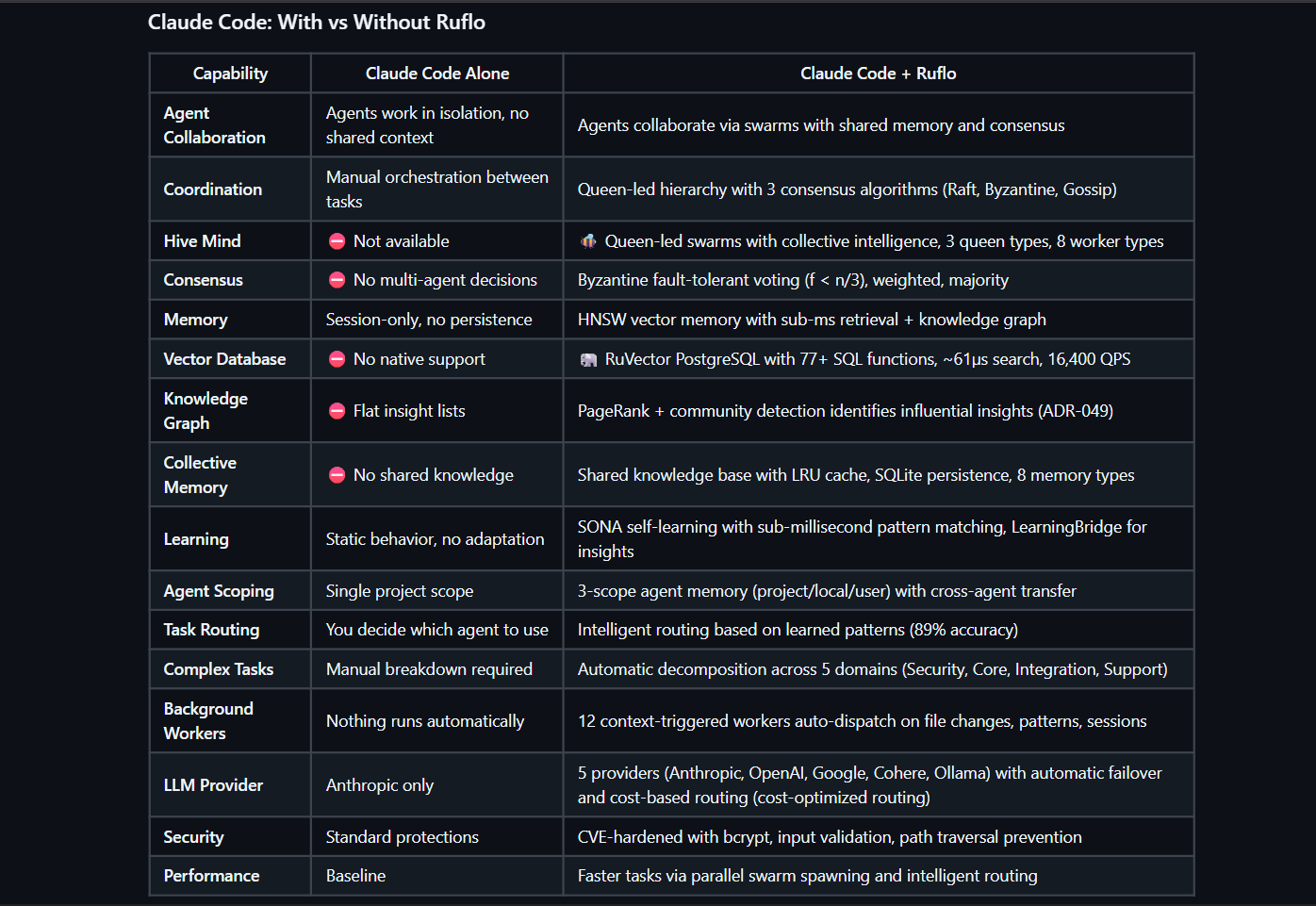
Fig 2: Comparison of workflow orchestration capabilities with and without Ruflo.
Source: https://github.com/ruvnet/ruflo/blob/main/docs/USERGUIDE.md
Key characteristics that distinguish Ruflo from conventional automation solutions include:
1. AI-Native Design
Ruflo is designed specifically for AI-driven workflows rather than traditional process automation.
2. Workflow Orchestration
The framework coordinates multiple systems, tools, and AI services within a single workflow.
3. Flexibility and Extensibility
Developers can customize workflows and integrate new technologies as business requirements evolve.
4. Open-Source Accessibility
Unlike many enterprise automation platforms, Ruflo enables experimentation and innovation without significant licensing costs.
While open-source frameworks offer flexibility, organizations may also face challenges related to implementation complexity, governance, ongoing maintenance, and technical expertise. Successfully deploying AI-native workflows often requires careful planning, integration capabilities, and continuous oversight.
[Note: Ruflo operates within a rapidly expanding ecosystem of AI orchestration frameworks. Organizations evaluating workflow automation solutions should consider factors such as scalability, governance, integration requirements, community support, and long-term maintenance when selecting a platform.]
Workflow Automation Use Cases Across Industries
The practical value of AI automation becomes most apparent when examining how organizations apply it to real-world business processes. Across industries, intelligent workflow automation is helping teams reduce manual effort, improve operational efficiency, and make faster, data-driven decisions.
- Customer Support
Customer service teams often manage large volumes of requests that require quick and accurate responses. AI workflow automation can streamline this process by automatically analyzing incoming tickets, categorizing issues, prioritizing requests based on urgency, and routing them to the appropriate support teams. For example, an AI-powered workflow can identify a technical support query, assign it to the relevant specialist, and even generate a preliminary response before human intervention is required.
- Human Resources
Human resource departments handle numerous administrative processes that are both repetitive and time-sensitive. Intelligent automation can simplify employee onboarding, verify submitted documents, respond to routine policy-related inquiries, and support recruitment workflows. By automating these tasks, HR professionals can devote more attention to employee engagement and strategic workforce planning.
- Finance and Accounting
In finance functions, accuracy and compliance are critical. AI-powered workflow management can assist with invoice processing, expense approvals, compliance monitoring, and financial reporting. Automating these workflows reduces the risk of manual errors while accelerating approval cycles and improving financial visibility across the organization.
- Sales and Marketing
Sales and marketing teams generate and manage significant amounts of customer data. AI workflow automation can help qualify leads, segment audiences, coordinate marketing campaigns, and generate performance insights automatically. This enables businesses to engage prospects more effectively while optimizing marketing resources and improving conversion rates.
- Software Development
Development teams increasingly rely on workflow automation to improve collaboration and accelerate project delivery. AI-driven workflows can support code documentation, issue tracking, release coordination, and development lifecycle management. As software projects become more complex, automation helps teams maintain productivity and focus on innovation rather than administrative tasks.
These examples illustrate how improving productivity with AI is becoming a strategic objective across industries. As organizations continue to embrace digital transformation, intelligent workflow automation is evolving from a competitive advantage into a fundamental business capability.
Also Read: The Rise of Intelligent IT Support: How Automation Is Changing the Way Businesses Operate
Future Trends in Workflow Automation
The future of AI workflow automation will likely be shaped by several emerging developments.
1. Autonomous AI Agents
Future systems will increasingly perform tasks independently, requiring minimal human oversight.
2. Context-Aware Decision Making
AI models will make workflow decisions based on historical data, business objectives, and real-time conditions.
3. Hyperautomation
Organizations will combine multiple technologies, including AI, machine learning, robotic process automation, and analytics, to automate entire business ecosystems.
4. Greater Human-AI Collaboration
Rather than replacing employees, intelligent systems will augment human capabilities by handling repetitive work and providing decision support.
5. Expansion of Open-Source Ecosystems
As an open-source framework, Ruflo is particularly well-positioned to benefit from this trend. Community-driven innovation enables developers to continuously expand its capabilities, integrate emerging AI models, and create specialized workflow solutions that evolve alongside industry requirements.
As these trends continue to evolve, the role of AI in business operations will become increasingly central to organizational success.
Also Read: AI Is No Longer Helping You Work. It’s Working With You
Conclusion
The growing interest in Ruflo reflects a broader transformation in workflow automation, where AI-driven systems are increasingly capable of understanding context, coordinating tasks, and supporting intelligent decision-making.
As organizations continue to explore smarter approaches to process management, frameworks like Ruflo demonstrate how open-source innovation can accelerate the adoption of intelligent workflow automation. While the technology is still evolving, it offers a compelling glimpse into the future of AI-powered business operations.
FAQs
Q1. What is Ruflo?
A: Ruflo is an open-source AI workflow orchestration framework that enables developers and organizations to build intelligent automation systems using AI-driven workflows.
Q2. How does AI workflow automation differ from traditional automation?
A: Traditional automation relies on predefined rules, while AI workflow automation can analyze information, make decisions, and adapt workflows based on changing conditions.
Q3. What makes Ruflo different from traditional workflow automation tools?
A: Unlike conventional automation platforms that primarily rely on predefined rules, Ruflo is designed to support AI-native workflows. It enables intelligent decision-making, workflow orchestration, and integration with AI models, making it suitable for more adaptive and complex automation scenarios.
Q4. Can small businesses benefit from AI workflow automation?
A: Yes. Modern automation frameworks and open-source solutions make intelligent workflow automation accessible to businesses of all sizes.
Q5. What is the future of AI workflow automation?
A: The future is expected to include autonomous AI agents, hyperautomation, predictive decision-making, and deeper integration between AI systems and business processes.
Explore Related Courses











COMMENTS(0)
Explore Related Courses
Our Popular Insights
Careers are shifting faster than ever, and staying relevant takes more than experience. Explore UniAthena’s most-read blogs for sharp insights, emerging skills, and practical pathways that help you move forward with clarity and confidence in a changing professional world.






What is the Role of AI in Education?
Read More
4
mins read



What is the Role of AI in Education?
Read more
4
mins read
Get in Touch

It’s Time to Start
Join NowMost Popular Online Specialization
- Master of International Business Administration
- Master of Business Administration
- MBA in General Management- FastTrack
- Master in Innovation and Entrepreneurship
- MBA-Family Business Management
- Master in Procurement and Contract Management
- Extended Diploma in Business Analytics (SCQF Level 11)
- Diploma in Supply Chain and Logistics Management (SCQF Level 11)
- Strategic Human Resource Management Practitioner
- Master in Data Science
- Master in Engineering Management
Trending Online
- Integrated Doctorate of Business Administration
- Postgraduate Certificate in Finance for Next Generation Managers
- Master of Business Administration- General Management (Fast Track)
- Postgraduate Certificate in Socio-Economic and Legal Framework
- Postgraduate Certificate in Business Sustainability
- Certified Manager
- Supply Chain Management Practitioner
- MBA - AI in Business
- MBA - Accounting & Finance
- Master in Supply Chain and Logistics Management
Top Universities Online Certificates
- Postgraduate Certificate in International Marketing Management
- Postgraduate Certificate In International Human Resource Management
- Postgraduate Certificate in Strategic Management
- Postgraduate Certificate in Procurement & Contracts Management
- Postgraduate Certificate in Business Analytics
- Postgraduate Certificate in Strategic Supply Chain & Logistics Management
- Postgraduate Certificate in Human Resource and Leadership
- Project Management Practitioner
- Postgraduate Certificate in Supply Chain Design & Implementation
- Postgraduate Certificate in Management Accounting and Finance
Accredited Online Degree Program
- MBA - Digital Transformation
- MBA - Family Business Management
- MBA - Marketing Management
- MBA in Quality Management
- MBA - Business Intelligence & Data Analytics
- MBA in Operations & Project Management
- MBA in Energy Management
- MBA In Construction & Safety Management
- Master in Organisational Leadership
- Master in Public Health
- Master in Construction Management
- Bachelor of Arts in Business Administration


 Install Now


UniAthena is an Ed-Tech, offering flexible, affordable learning solutions, including Free-Learning Upskilling Courses and Academic Programs in partnerships with accredited and globally renowned universities and professional qualification bodies.


Do you have any questions ?
Feel free to send us your questions or request a free consultation
Send a message
UK
Athena Global Education
Magdalen Centre,
Robert Robinson Avenue,
Oxford, OX4 4GA, UK
Phone : 01865 784299
MIDDLE EAST
Athena Global Education FZE
Block L-03, First Floor,
P O Box 519265, Sharjah Publishing City,
Free Zone, Sharjah, UAE
Phone : +971 55 879 5492
INDIA
Uniathena Private Limited
9A,Midas Tower
Phase 1
Hinjewadi Rajiv Gandhi Infotech Park
Pune-411057
Phone: +91 9145665544
All Copyrights Reserved @ Athena Global Education 2021-2026