-

Bachelor's

-

Masters
-

MBA
-

Doctorate
-

Micro Credit
-

Explore all Courses
-
Postgraduate Certifications

-
Postgraduate Diploma
-
Undergraduate Diploma
-
Diploma



How AI and Machine Learning Are Powering the Future of Business Automation

Author: malik basit ahmad
|5
MINS READ
| 0
| 407
Created On: 30 October, 2025
Share




AI (Artificial Intelligence) and ML (Machine Learning) are not just buzzwords or speculative technologies anymore; they have become enablers of transformation in nearly every sector. Whether automating tasks or optimizing decision-making and scaling new business efficiencies, AI and ML are changing how businesses operate and set new standards.
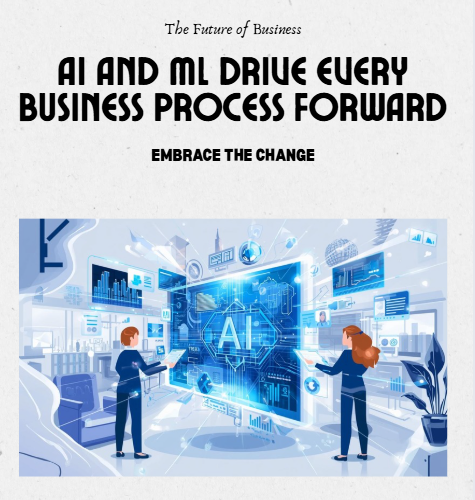
In this blog, we will analyze how AI and ML are driving automation, operations, and improvement processes in business, and more.
Understanding AI and ML in a Business Context
Artificial Intelligence (AI):
AI refers to the ability of machines to perform tasks that would normally require human intelligence. This includes recognizing patterns, making decisions, and solving problems based on data. AI encompasses several technologies like Natural Language Processing (NLP), computer vision, and predictive analytics.
Machine Learning (ML):
Machine Learning (ML) is a subset of AI where systems learn and improve from experience without being explicitly programmed. ML algorithms analyze data, identify patterns, and make predictions or decisions based on that data. As data increases, the models become more accurate, leading to continuous improvement in processes and operations.
Together, AI and ML are essential components in business automation and process optimization.
How AI and ML Drive Business Forward
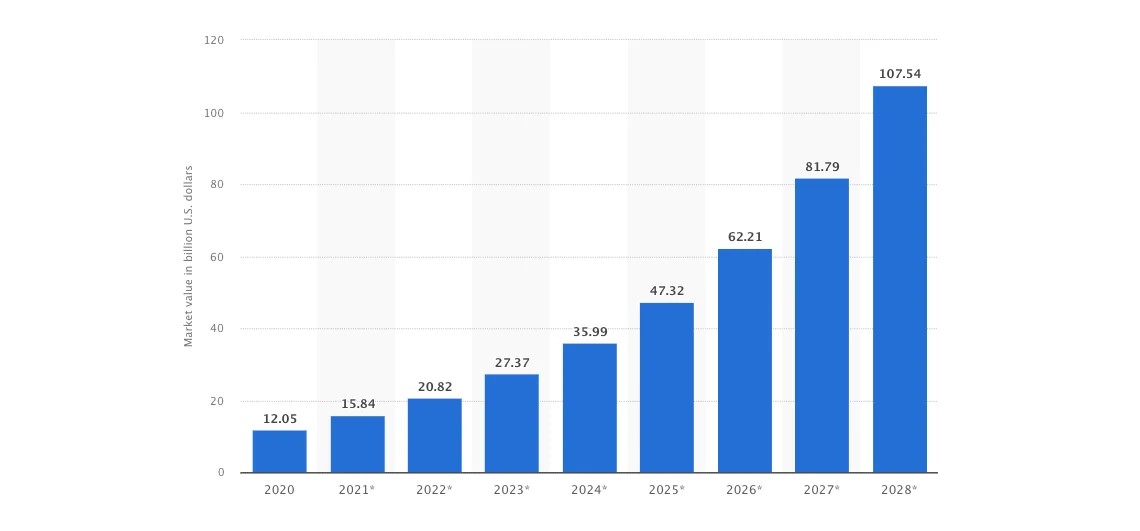
In 2021, the global market for artificial intelligence (AI) in marketing was valued at approximately 15.84 billion U.S. dollars. Statista forecasts that this figure will exceed 107.5 billion dollars by 2028. Meanwhile, the worldwide market for Machine Learning (ML) was valued at 19.20 billion dollars in 2022.
It is expected to grow from 26.03 billion dollars in 2023 to an impressive 225.91 billion dollars by 2030, with a compound annual growth rate (CAGR) of 36.2%.
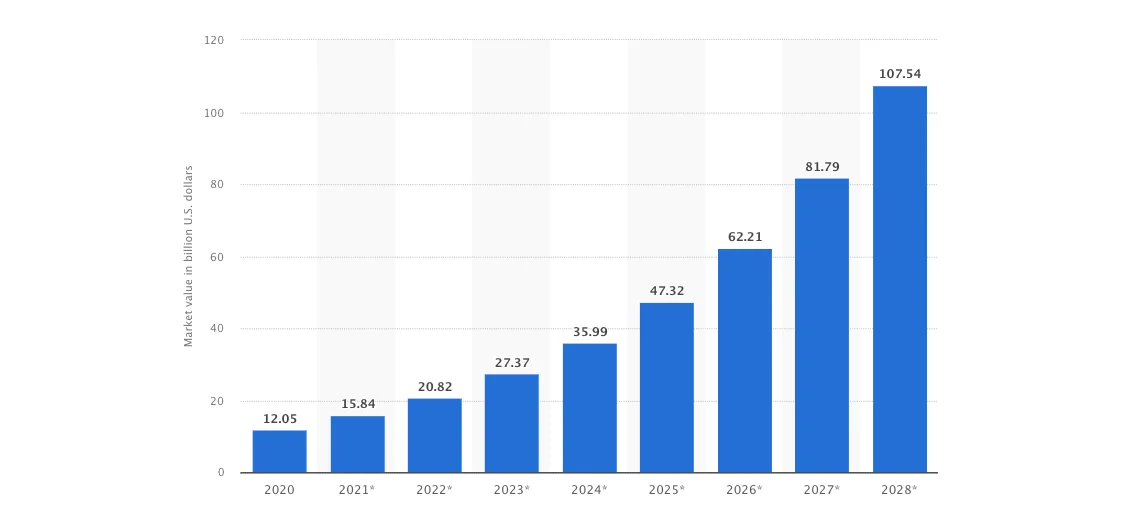
Source: AI Marketing Revenue Worldwide
The influence of AI and ML on business is substantial, as both technologies are driving significant transformations across various business sectors, resulting in notable advancements and efficiencies.
Here’s a closer look at the different aspects of AI and ML driving business transformation:
1. AI in Business Automation:
AI technology is increasingly used in business automation to streamline repetitive tasks, reducing human effort and error.
- Automate Repetitive Tasks: AI can perform tasks like data entry, customer support, and inventory management automatically.
- Improved Efficiency: AI-driven business transformation minimizes delays, increasing operational efficiency.
- Faster Decision-making: AI helps in quick decision-making by processing data faster than humans.
2. AI Business Process Automation:
AI business process automation (AI-BPA) is a powerful tool that optimizes entire workflows within organizations. It enhances business operations by:
- Improving Accuracy: Machine learning algorithms help reduce manual errors and improve data accuracy.
- Scaling Operations: Businesses can handle larger workloads without the need for proportional increases in human resources.
- Real-time Analytics: AI can track and optimize business processes in real-time, providing insights that enable quick adjustments.
The Role of AI in Enhancing Business Operations
AI and ML have a profound impact on business operations across all sectors. Here’s how:
By using AI to enhance business operations, businesses can work smarter, not harder, thereby gaining a competitive edge.
How AI and ML Impact Business Growth
The integration of AI into business growth is a game-changer. AI-driven business transformation allows companies to scale effectively while minimizing risks.
Here are some of the ways AI and ML contribute to business growth:
- Personalized Customer Experiences: By leveraging generative AI applications, businesses can offer personalized products and services tailored to individual needs, enhancing customer loyalty and retention.
- Market Insights: Machine learning algorithms provide valuable market insights, helping businesses understand trends and customer preferences.
- Optimizing Supply Chain: AI optimizes inventory management and improves logistics, reducing operational costs and enhancing profitability.
Businesses utilizing AI for business growth will find themselves ahead in an increasingly competitive landscape.
Also Read: Machine Learning vs Artificial Intelligence
Applications of AI in Business
Let’s dive deeper into the applications of AI across various sectors:
1. AI in Marketing:
- Personalized marketing: AI analyzes customer behavior to create targeted campaigns.
- Content creation: Generative AI tools streamline content creation and marketing processes.
2. AI in Customer Service:
- AI chatbots: Provide 24/7 customer service, answering queries, and guiding customers through processes.
- Predictive support: AI predicts issues before they arise, offering proactive support.
3. AI in Human Resources:
- Recruitment automation: AI tools analyze resumes and predict the best candidates based on past data.
- Employee management: AI enhances productivity and engagement by providing real-time feedback.
Also Read: Is Machine Learning Changing Businesses for Good? Three Use Cases
Key AI Business Use Cases
Here are a few common AI business use cases:
- AI for Process Automation: Automating tasks like invoicing, scheduling, and reporting.
- AI in Business Operations: Managing workflow automation and optimizing resources.
- AI for Decision Support: Machine learning models support data-driven decision-making, especially in financial services, retail, and healthcare.
How Does AI Help Businesses?
By leveraging AI business solutions, businesses can automate processes like customer engagement, inventory management, and more. In turn, this leads to:
- Increased efficiency in everyday operations
- Improved customer experience
- Higher profitability through cost reduction and resource optimization
How to Use AI in Business
1. Identify Repetitive Tasks:
AI and ML are perfect for tasks that are routine and time-consuming, such as business automation workflows. Identify these tasks and look for AI solutions that can streamline them.
2. Invest in the Right AI Technology for Business:
Choose the right AI tools and platforms that align with your goals. Whether it’s AI for business operations, process automation, or AI in business growth, select tools that cater to your needs.
3. Train Your Team:
Train your team on how to use AI in business effectively. This ensures seamless integration of AI applications into existing processes.
Conclusion
Artificial Intelligence (AI) and Machine Learning (ML) are not only cutting-edge technologies of the future—they are essential for modern business success. Emerging technologies include AI systems that automate business processes, augment decision-making, and drive sustainable business growth, and the list goes on.
As AI is integrated into business practices, organizations are able to make better decisions, automate processes, and improve the customer experience, resulting in a more efficient and profitable operation. As AI and Machine Learning continue to evolve, integrating these technologies will be crucial for businesses aiming to remain relevant and resilient.
Explore Related Courses








COMMENTS(0)
Explore Related Courses
Our Popular Insights
Careers are shifting faster than ever, and staying relevant takes more than experience. Explore UniAthena’s most-read blogs for sharp insights, emerging skills, and practical pathways that help you move forward with clarity and confidence in a changing professional world.

What is Business Development?
Read More
6
mins read

🌟 Top Project Performer – June 2026 🌟
Read More
1
mins read

What is the Role of AI in Education?
Read More
4
mins read


🌟 Top Project Performer – May 2026 🌟
Read More
1
mins read


🌟 Top Project Performer – April 2026 🌟
Read More
1
mins read
What is Business Development?
Read more
6
mins read
🌟 Top Project Performer – June 2026 🌟
Read more
1
mins read
What is the Role of AI in Education?
Read more
4
mins read
🌟 Top Project Performer – May 2026 🌟
Read more
1
mins read

🌟 Top Project Performer – April 2026 🌟
Read more
1
mins read
Get in Touch

It’s Time to Start
Join NowMost Popular Online Specialization
- Master of International Business Administration
- Master of Business Administration
- MBA in General Management- FastTrack
- Master in Innovation and Entrepreneurship
- MBA-Family Business Management
- Master in Procurement and Contract Management
- Extended Diploma in Business Analytics (SCQF Level 11)
- Diploma in Supply Chain and Logistics Management (SCQF Level 11)
- Strategic Human Resource Management Practitioner
- Master in Data Science
- Master in Engineering Management
Trending Online
- Integrated Doctorate of Business Administration
- Postgraduate Certificate in Finance for Next Generation Managers
- Master of Business Administration- General Management (Fast Track)
- Postgraduate Certificate in Socio-Economic and Legal Framework
- Postgraduate Certificate in Business Sustainability
- Certified Manager
- Supply Chain Management Practitioner
- MBA - AI in Business
- MBA - Accounting & Finance
- Master in Supply Chain and Logistics Management
Top Universities Online Certificates
- Postgraduate Certificate in International Marketing Management
- Postgraduate Certificate In International Human Resource Management
- Postgraduate Certificate in Strategic Management
- Postgraduate Certificate in Procurement & Contracts Management
- Postgraduate Certificate in Business Analytics
- Postgraduate Certificate in Strategic Supply Chain & Logistics Management
- Postgraduate Certificate in Human Resource and Leadership
- Project Management Practitioner
- Postgraduate Certificate in Supply Chain Design & Implementation
- Postgraduate Certificate in Management Accounting and Finance
Accredited Online Degree Program
- MBA - Digital Transformation
- MBA - Family Business Management
- MBA - Marketing Management
- MBA in Quality Management
- MBA - Business Intelligence & Data Analytics
- MBA in Operations & Project Management
- MBA in Energy Management
- MBA In Construction & Safety Management
- Master in Organisational Leadership
- Master in Public Health
- Master in Construction Management
- Bachelor of Arts in Business Administration


 Install Now


UniAthena is an Ed-Tech, offering flexible, affordable learning solutions, including Free-Learning Upskilling Courses and Academic Programs in partnerships with accredited and globally renowned universities and professional qualification bodies.


Do you have any questions ?
Feel free to send us your questions or request a free consultation
Send a message
UK
Athena Global Education
Magdalen Centre,
Robert Robinson Avenue,
Oxford, OX4 4GA, UK
Phone : 01865 784299
MIDDLE EAST
Athena Global Education FZE
Block L-03, First Floor,
P O Box 519265, Sharjah Publishing City,
Free Zone, Sharjah, UAE
Phone : +971 55 879 5492
INDIA
Uniathena Private Limited
9A,Midas Tower
Phase 1
Hinjewadi Rajiv Gandhi Infotech Park
Pune-411057
Phone: +91 9145665544
All Copyrights Reserved @ Athena Global Education 2021-2026