-

Bachelor's

-

Masters
-

MBA
-

Doctorate
-

Micro Credit
-

Explore all Courses
-
Postgraduate Certifications

-
Postgraduate Diploma
-
Undergraduate Diploma
-
Diploma



How to Learn Coding from Scratch

Author: munazzah ali
|6
MINS READ
| 0
| 468
Created On: 04 October, 2025
Share




Table Of Contents (TOC):
- Why Learning Coding Today is a Game-Changer
- Coding Develops Professional Skills
- Coding Can Lead to More Money
- Coding Allows You to Create Projects
- Coding Can Assist You to Better Interpret the World Around You
- How to Start Coding
- Determine Why You Want to Learn to Program
- Select Which Programming Language to Master First
- Setting up and Practicing Programming
- Key Learning Steps
- Take Online Courses
- Tips to Boost Your Programming Skills
- Conclusion
If you’ve ever wondered how to code but weren’t sure where to start, you are among many. Starting from scratch may feel daunting, but it leads to a world of potential. This guide is intended to make coding accessible and will provide you with an effective learning path for coding. Acquiring coding skills proves valuable for those seeking to venture into web development or any tech career driven by data and algorithms.
Why Learning Coding Today is a Game-Changer
In today’s tech-driven world, learning coding isn't just about becoming a software engineer. It’s about becoming future-ready.
Coding Develops Professional Skills
In the current job market, possessing coding skills creates multiple professional competencies that boost your employability. Organizations seek employees who understand the technical operations of their positions.
Learning to code enhances problem-solving as well as analytical skills, making you efficient at handling various challenges. Not only are these skills valuable for a job in the tech sector, but they are also sought after in marketing, finance, and healthcare fields.
Coding Can Lead to More Money
Taking the time to learn coding can be a financial investment. Most of the positions that involve technology and coding have higher-paying job options compared to those that don't involve technology. For example, a data analyst or software developer can command a high-paying job, thanks to the increased demand for professionals with expertise in such fields.
Industry reports claim that, as of 2024, programmers earn an average annual salary of $77,077—approximately 78% higher than the typical U.S. entry-level salary of $43,262. As businesses move forward with the trend of becoming more digitally focused, there will be more opportunities for high-paying positions for coders.
Coding Allows You to Create Projects
This is one of the most exciting aspects of coding practice. Coding is the force that allows anyone to turn their ideas into digital reality, such as websites, applications, and games.
The creative process of developing code makes you a better programmer and boosts your confidence as your projects become a reality.
Coding Can Assist You to Better Interpret the World Around You
Learning how to code helps you with how technology works in daily life. From your phone apps to the websites you use, all of them rely on coding to simplify online interactions.
Learning how to code can unlock your thinking potential while gaining insights into how software can impact other sectors.
How to Start Coding
Now that we have established the ‘why,’ it’s time for the ‘how.’ There is no need to have a technological background to start learning to code, you simply have to have a direction and the right mindset.
1. Determine Why You Want to Learn to Program
Have you thought about your motivation before getting into the depths of syntax and algorithms? Are you looking to create apps, automate tasks, improve your resume, or change careers? Clear motivations will direct your decisions for learning to code and keep you focused when things get hard.
2. Select Which Programming Language to Master First
Various purposes demand various programming languages. Python is typically the first choice for new users because it is easy to read and is versatile. For those who wish to have a deeper understanding of this field, consider enrolling for UniAthena’s Basics Of Python course.
It is a self-learning course that can be completed within a 4-6 hour duration, and upon completion, equips you with a certification from the CIQ, UK.
Also Read: SQL vs Python: Which is Better for a Career?
3. Setting up and Practicing Programming
Set up your programming environment and get familiar with writing and testing code efficiently before diving in.
These are the steps you should follow:
- Install a Code Editor or Integrated Development Environment (IDE): Get a simple code editor such as Visual Studio Code or PyCharm Community Edition for beginners. They feature syntax highlighting, autocomplete, and debugging instruments. They simplify and speed up writing and testing code for beginners.
- Install Python Locally: Install Python by getting the latest version from the official Python website. While installing, make sure that the “Add Python to PATH” box is ticked. With this in place, running Python becomes simple.
- Practice Coding: Write some mock scripts to familiarize yourself with how Python is written, including its variables and data types. The interactive coding may be performed with Replit or Jupyter notebooks.
- Use Debugging Tools: Learn to work with debugging features in your integrated development environment to spot and fix errors more efficiently.
If your goal is to work with databases, SQL is the starting point. The Diploma in SQL: Beginner to Advanced Levels at UniAthena provides learners with an understanding of database operations. In just 1-2 weeks of free, flexible learning, you'll learn SQL fundamentals to effectively write complex queries while obtaining a Blockchain-verified certificate.
4. Key Learning Steps
- Install a Database System: Install either one of the three available database systems: MySQL, PostgreSQL, or SQLite. These are widely used database engines that can be installed either locally or on cloud servers.
- Practice Building Queries: To begin, learn about the SELECT, INSERT, UPDATE, and DELETE commands. Start with basic joins and slowly work your way up to more complicated subqueries and procedures.
- Understand Data Modeling: Learn about database schemas, normalization, and relationships as part of data modeling. This foundation will help you organize your database efficiently.
5. Take Online Courses
Begin with a formal beginner's course in coding. Online coding courses provide lesson-by-lesson learning, peer-to-peer discussion, and mentor support.
Consider taking the course "Basics of SQL: Aggregate Functions & Joins" offered by UniAthena, which provides a solid starting point for learning databases. This course provides an introduction to the basic concepts of querying using SQL.
With a simple, direct, and fully online format, the self-paced course lasts 4-6 hours and provides CIQ, UK certification, enabling learners to demonstrate their learning.
Tips to Boost Your Programming Skills
- Practice: You must practice often because the more you practice, the easier it will become to program. Utilize 30-60 minutes of your time daily to solve small problems, drill on the syntax, and repeat examples.
- Make Simple Projects: Try to make small projects with the knowledge which you have learned. In case you are working with Python, you can try to create a calculator, a quiz application, or a personal budget tracker. To master SQL, develop a mock customer database and query it to extract information from it.
- Test Your Code: Try running your code with different kinds of inputs, such as test cases. This will allow you to know how to debug bugs and track the behaviour of a program in different situations.
Also Read: 5 Popular Tech Fields You Can Build a New Career In
Conclusion
Learning to code from the ground up is a worthwhile skill as well as a rewarding experience. Your journey to coding success starts with recognizing its current importance, then defining your objectives before choosing the right programming language.
Online programming courses, together with beginner courses, improve your learning journey through their established frameworks and social networks. Further, growth in your coding skills will result in an increase in career opportunities, along with personal growth.
Want to take your first step into the world of coding? Learning to code is not impossible. With determination and proper materials, the dream of becoming part of the coding community is closer than you think.
Bonus Point
- Once you have mastered the fundamentals, you can take the next step forward is to deepen your understanding of APIs, databases, and frameworks.
Explore Related Courses












COMMENTS(0)
Explore Related Courses
Our Popular Insights
Careers are shifting faster than ever, and staying relevant takes more than experience. Explore UniAthena’s most-read blogs for sharp insights, emerging skills, and practical pathways that help you move forward with clarity and confidence in a changing professional world.

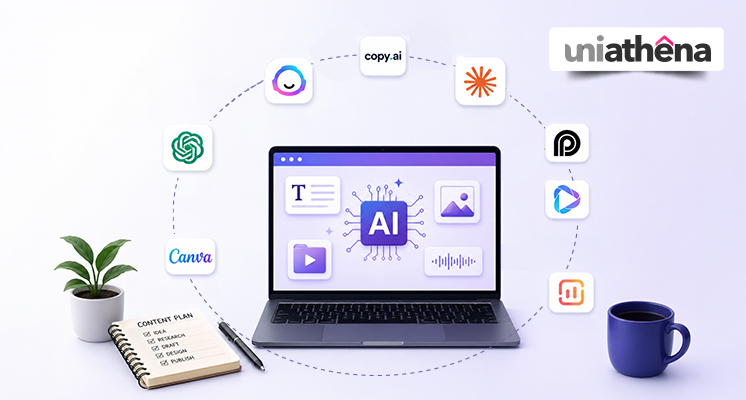
Best AI Tools for Content Creation
Read More
9
mins read


🌟 Top Project Performer – June 2026 🌟
Read More
1
mins read



🌟 Top Project Performer – May 2026 🌟
Read More
1
mins read


Best AI Tools for Content Creation
Read more
9
mins read
🌟 Top Project Performer – June 2026 🌟
Read more
1
mins read
🌟 Top Project Performer – May 2026 🌟
Read more
1
mins read
Get in Touch

It’s Time to Start
Join NowMost Popular Online Specialization
- Master of International Business Administration
- Master of Business Administration
- MBA in General Management- FastTrack
- Master in Innovation and Entrepreneurship
- MBA-Family Business Management
- Master in Procurement and Contract Management
- Extended Diploma in Business Analytics (SCQF Level 11)
- Diploma in Supply Chain and Logistics Management (SCQF Level 11)
- Strategic Human Resource Management Practitioner
- Master in Data Science
- Master in Engineering Management
Trending Online
- Integrated Doctorate of Business Administration
- Postgraduate Certificate in Finance for Next Generation Managers
- Master of Business Administration- General Management (Fast Track)
- Postgraduate Certificate in Socio-Economic and Legal Framework
- Postgraduate Certificate in Business Sustainability
- Certified Manager
- Supply Chain Management Practitioner
- MBA - AI in Business
- MBA - Accounting & Finance
- Master in Supply Chain and Logistics Management
Top Universities Online Certificates
- Postgraduate Certificate in International Marketing Management
- Postgraduate Certificate In International Human Resource Management
- Postgraduate Certificate in Strategic Management
- Postgraduate Certificate in Procurement & Contracts Management
- Postgraduate Certificate in Business Analytics
- Postgraduate Certificate in Strategic Supply Chain & Logistics Management
- Postgraduate Certificate in Human Resource and Leadership
- Project Management Practitioner
- Postgraduate Certificate in Supply Chain Design & Implementation
- Postgraduate Certificate in Management Accounting and Finance
Accredited Online Degree Program
- MBA - Digital Transformation
- MBA - Family Business Management
- MBA - Marketing Management
- MBA in Quality Management
- MBA - Business Intelligence & Data Analytics
- MBA in Operations & Project Management
- MBA in Energy Management
- MBA In Construction & Safety Management
- Master in Organisational Leadership
- Master in Public Health
- Master in Construction Management
- Bachelor of Arts in Business Administration


 Install Now


UniAthena is an Ed-Tech, offering flexible, affordable learning solutions, including Free-Learning Upskilling Courses and Academic Programs in partnerships with accredited and globally renowned universities and professional qualification bodies.


Do you have any questions ?
Feel free to send us your questions or request a free consultation
Send a message
UK
Athena Global Education
Magdalen Centre,
Robert Robinson Avenue,
Oxford, OX4 4GA, UK
Phone : 01865 784299
MIDDLE EAST
Athena Global Education FZE
Block L-03, First Floor,
P O Box 519265, Sharjah Publishing City,
Free Zone, Sharjah, UAE
Phone : +971 55 879 5492
INDIA
Uniathena Private Limited
9A,Midas Tower
Phase 1
Hinjewadi Rajiv Gandhi Infotech Park
Pune-411057
Phone: +91 9145665544
All Copyrights Reserved @ Athena Global Education 2021-2026