-

Bachelor's

-

Masters
-

MBA
-

Doctorate
-

Micro Credit
-

Explore all Courses
-
Postgraduate Certifications

-
Postgraduate Diploma
-
Undergraduate Diploma
-
Diploma



What is Consumer Behaviour in Marketing? Importance & Key Factors

Author: aishwarya sancheti
|5
MINS READ
| 0
| 2,058
Created On: 14 October, 2025
Share




Table of Contents (TOC):
- What is Consumer Behaviour
- Types of Consumer Behaviour
- Factors Influencing Consumer Behaviour in Marketing
- Consumer Behaviour Concepts and Models
- Importance of Consumer Behaviour
- Conclusion
- Bonus Points
Global consumer confidence may be down but spending isn't, welcome to the paradox of the modern era. Across markets, shoppers are feeling anxious about inflation and economic instability, yet they're still cutting loose especially on essentials and experiences.
At the same time, 67 percent of consumers worldwide now prefer brands that offer experiences only to them but more than half of the people express their concerns about privacy when data is used to customize messages to them.
These tendencies are not simply statistics, but they are clues to a world in which value is matched by doubt, in which personalization either creates or destroys trust. In this day and age, it is the knowledge of consumer behaviour that creates a difference between those brands that are identified with and those that are forgotten.
What is Consumer Behaviour?
In simple terms, definition of consumer behaviour is the study of how individuals, groups, or organizations select, use, and dispose of goods and services. It’s about the “why” behind purchases, exploring the motivations, perceptions, and influences that drive people to choose one product over another.
For those eager to explore the foundations and frameworks in depth, explore Diploma in Consumer Behavior, a structured understanding of definitions, models, and research techniques, helping learners translate theory into practical marketing strategies.
Types of Consumer Behaviour
Consumer decisions typically fall into four categories:
- Complex Buying Behaviour - Complex purchases that involve research such as cars or laptops.
- Dissonance-Reducing Buying Behaviour - Buying choices between closely related products in which consumers might second-guess themselves later.
- Habitual Buying Behaviour - Routine decisions, such as choosing the same brand of toothpaste without much consideration.
- Variety-Seeking Buying Behaviour - Changing products just to be different, like using a new snack brand.
These categories reveal that every purchase has its own decision-making journey.
Factors Influencing Consumer Behaviour in Marketing
1. Psychological Factors
Internal factors are often used to influence decisions and they include motivation, perception, attitudes and learning. Motivation is the urge to use a need and perception is the way individuals think about the value of a brand.
As an example, an individual may consider a luxury brand a symbol of status - prestige, whereas the other one will discard it as too expensive or overpriced. The willingness to buy also is based on attitudes and prior experiences.
2. Personal Factors
Age, lifestyle, occupation, income and other personal factors directly affect buying behavior. The budget and practicality will lead a student who aims to buy cheap headphones, whereas the corporate employee will be inclined to high-quality products that reflect his or her status and quality. Fitness-fully oriented, minimalist or luxury-oriented lifestyle decisions are also defined in terms of defining tastes.
3. Social Factors
Humans are social creatures and the choices we make are impacted by the people around us. Family traditions, peer recommendations, and community trends often sway what we purchase.This has grown in the digital era - online reviews, social media and influence endorsements are now considered modern social proof.
It can be a sneaker that attracts Hashtags on Instagram or a highly rated product on Amazon, social influence has become the center of consumer behaviour.
4. Cultural and Ethical Factors
Cultural context sets the stage for what is seen as valuable or aspirational. Meanwhile, it is possible to observe that ethics are becoming significant in the formation of consumer trust. Consumers are now more interested in products that are responsible in terms of sustainability, fair trade or transparent business. These values do not only affect the purchasing decision, but also reinforce long term loyalty.
UniAthena’s Essentials of Consumer Rights & Ethics program explores how ethical standards and consumer rights affect both individual decision-making and corporate reputation, offering learners a perspective that goes beyond transactions to focus on trust.
5. Economic and Technological Factors
The purchasing power is dictated by economic conditions and technology is transforming the mode through which individuals judge and make decisions. Technology has established a core filter that consumers use to make their choices with AI-based suggestions, e-commerce algorithms, and tailored digital experiences.
To a lot of people, when an intelligent shopping application recommends a product it feels more credible than a conventional ad. Research posted on arXiv indicates that these online conveniences are changing not only buying behavior but long-term loyalty as well.
Consumer Behaviour Concepts and Models
Frameworks help marketers make sense of complex buyer journeys:
- Maslow’s Hierarchy of Needs explains how purchases change as people move from basic needs like food and safety to aspirational ones like self-expression.
- The Decision-Making Funnel breaks down the stages from awareness to post-purchase evaluation.
Importance of Consumer Behaviour
Consumer behaviour isn’t just about predicting what people will buy but about seeing through their eyes. Whether it is psychological stimuli or cultural factors, each of them narrates the reason behind the selection of choices. To businesses, knowing these stories is to have the capacity to create products, campaigns, and experiences that touch a person at a more emotional level.
For a deeper exploration of how perception and learning shape consumer decisions, UniAthena’s Mastering Consumer Insights – Perception and Learnings course provides targeted insights into these psychological dynamics.
Conclusion
Next time you choose one product over the other, pause and ask yourself, was it price, perception, peer influence or culture that drove your decision? Behind every decision lies a fascinating web of influences that marketers strive to understand..
And to those who desire to master this comprehension, UniAthena special courses can provide not only knowledge, but the skills to apply the knowledge to the real-world success of marketing.
Bonus Points:
- Emotions often outweigh logic in purchasing decisions, studies show that up to 95% of buying decisions are driven by subconscious emotions rather than rational thought.
- According to PwC’s Voice of the Consumer Survey 2024, consumers are willing to pay on average ~9.7% more for goods that are sustainably produced or sourced, even amid inflation and cost-of-living pressures.
Explore Related Courses








.jpg)



COMMENTS(0)
Explore Related Courses
Our Popular Insights
Careers are shifting faster than ever, and staying relevant takes more than experience. Explore UniAthena’s most-read blogs for sharp insights, emerging skills, and practical pathways that help you move forward with clarity and confidence in a changing professional world.

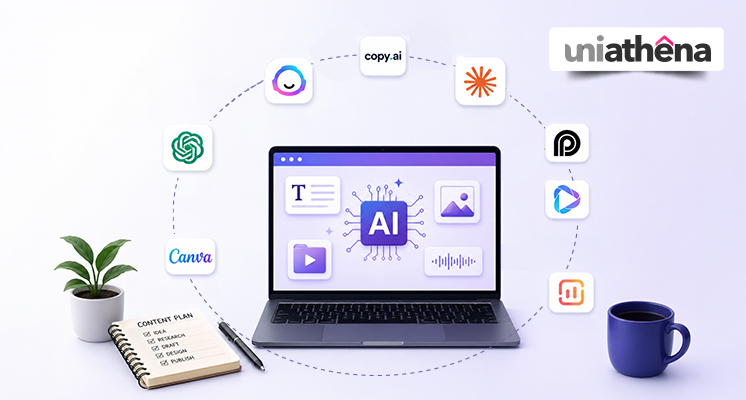
Best AI Tools for Content Creation
Read More
9
mins read


🌟 Top Project Performer – June 2026 🌟
Read More
1
mins read


🌟 Top Project Performer – May 2026 🌟
Read More
1
mins read


Best AI Tools for Content Creation
Read more
9
mins read
🌟 Top Project Performer – June 2026 🌟
Read more
1
mins read
🌟 Top Project Performer – May 2026 🌟
Read more
1
mins read
Get in Touch

It’s Time to Start
Join NowMost Popular Online Specialization
- Master of International Business Administration
- Master of Business Administration
- MBA in General Management- FastTrack
- Master in Innovation and Entrepreneurship
- MBA-Family Business Management
- Master in Procurement and Contract Management
- Extended Diploma in Business Analytics (SCQF Level 11)
- Diploma in Supply Chain and Logistics Management (SCQF Level 11)
- Strategic Human Resource Management Practitioner
- Master in Data Science
- Master in Engineering Management
Trending Online
- Integrated Doctorate of Business Administration
- Postgraduate Certificate in Finance for Next Generation Managers
- Master of Business Administration- General Management (Fast Track)
- Postgraduate Certificate in Socio-Economic and Legal Framework
- Postgraduate Certificate in Business Sustainability
- Certified Manager
- Supply Chain Management Practitioner
- MBA - AI in Business
- MBA - Accounting & Finance
- Master in Supply Chain and Logistics Management
Top Universities Online Certificates
- Postgraduate Certificate in International Marketing Management
- Postgraduate Certificate In International Human Resource Management
- Postgraduate Certificate in Strategic Management
- Postgraduate Certificate in Procurement & Contracts Management
- Postgraduate Certificate in Business Analytics
- Postgraduate Certificate in Strategic Supply Chain & Logistics Management
- Postgraduate Certificate in Human Resource and Leadership
- Project Management Practitioner
- Postgraduate Certificate in Supply Chain Design & Implementation
- Postgraduate Certificate in Management Accounting and Finance
Accredited Online Degree Program
- MBA - Digital Transformation
- MBA - Family Business Management
- MBA - Marketing Management
- MBA in Quality Management
- MBA - Business Intelligence & Data Analytics
- MBA in Operations & Project Management
- MBA in Energy Management
- MBA In Construction & Safety Management
- Master in Organisational Leadership
- Master in Public Health
- Master in Construction Management
- Bachelor of Arts in Business Administration


 Install Now


UniAthena is an Ed-Tech, offering flexible, affordable learning solutions, including Free-Learning Upskilling Courses and Academic Programs in partnerships with accredited and globally renowned universities and professional qualification bodies.


Do you have any questions ?
Feel free to send us your questions or request a free consultation
Send a message
UK
Athena Global Education
Magdalen Centre,
Robert Robinson Avenue,
Oxford, OX4 4GA, UK
Phone : 01865 784299
MIDDLE EAST
Athena Global Education FZE
Block L-03, First Floor,
P O Box 519265, Sharjah Publishing City,
Free Zone, Sharjah, UAE
Phone : +971 55 879 5492
INDIA
Uniathena Private Limited
9A,Midas Tower
Phase 1
Hinjewadi Rajiv Gandhi Infotech Park
Pune-411057
Phone: +91 9145665544
All Copyrights Reserved @ Athena Global Education 2021-2026