-

Bachelor's

-

Masters
-

MBA
-

Doctorate
-

Micro Credit
-

Explore all Courses
-
Postgraduate Certifications

-
Postgraduate Diploma
-
Undergraduate Diploma
-
Diploma



Why Traditional Security Models Fail in Cloud-Native Systems

Author: priyanka chatterjee
|4
MINS READ
| 0
| 192
Created On: 24 February, 2026
Share




Table of Content(TOC):
- The Boundaries of Traditional Security
- How Cloud-Native Systems Break Old Assumptions
- Cloud Networking Complexity
- Cloud Security vs Traditional Security
- Identity Is the New Control Layer
- Benefits and Risks of Cloud Computing
- What Security Framework Is Best?
- Final Thoughts
Cloud adoption has changed the way applications are built, deployed, and accessed. Organizations no longer operate with fixed servers or defined network boundaries. Rather, applications today operate in distributed environments that are dynamic and scale automatically. In this new reality, relying on traditional security methods frequently results in more vulnerabilities than protection .
Many security breaches in modern environments are not caused by weak tools but by outdated security concepts. cloud-native systems demand a security model that can handle the speed, automation, and complexity—something traditional approaches were never designed to handle.

Source link: https://tinyurl.com/2s48p74c
The Boundaries of Traditional Security
To comprehend the issue, it is helpful to examine what traditional security is. Traditional security models were based on on-premise technology, which had predictable and controllable networks. Security measures such perimeter defenses, intrusion detection systems, and firewalls were placed at the edge of the network.
These classic security models assume that anything inside the network is reliable. However, this presumption is entirely circumvented by modern traditional security concerns like insider attacks, lateral movement, and credential theft. Once an attacker gets inside, traditional security often fails to stop them.
Also Read: Zero Trust Architecture: A Must-Have for Cloud Security in Modern Times
How Cloud-Native Systems Break Old Assumptions
Cloud-native environments are made to be quick and flexible. Microservices, containers, and continually communicating APIs are used in the development of applications. Resources are automatically generated and destroyed frequently in a matter of minutes.
This has a significant effect on the cloud computing network.Traffic no longer flows only from users to servers. As an alternative, services exchange information internally, resulting in intricate east-west traffic patterns. It is difficult for traditional security tools to monitor and regulate this activity.
It's important to know what cloud-native systems are because they're dynamic by nature, whereas traditional security relies on stability.
Cloud Networking Complexity
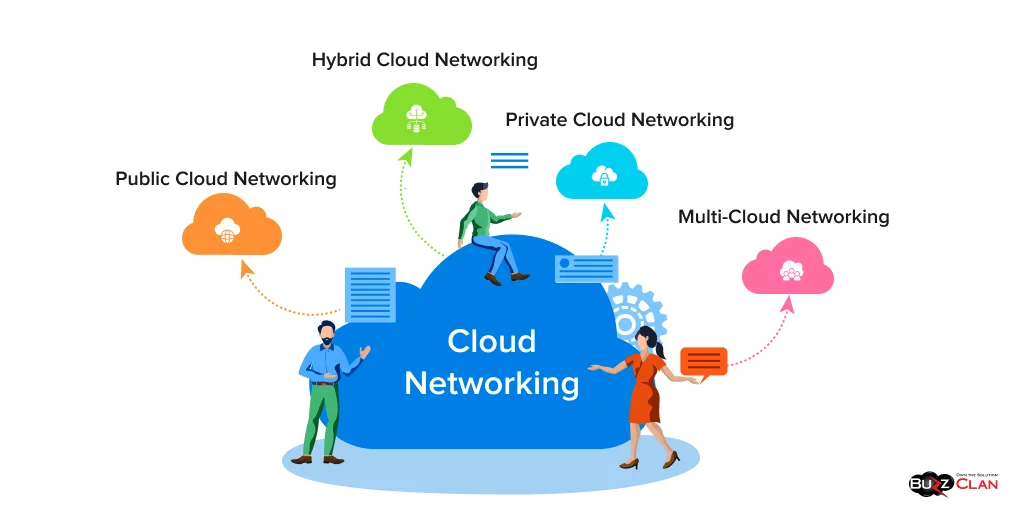
Many forms of cloud networking, such as public, private, hybrid, and multi-cloud configurations, are supported in modern systems. Each model introduces different risks and responsibilities.
Virtual networks, security groups, routing tables, and identity-based access are essential components of a well-designed cloud networking architecture. Critical services may be exposed to the internet due to errors in any of these layers. Traditional security tools lack visibility into these cloud-specific components, making it difficult to detect issues early.
Source link: https://tinyurl.com/y6nz44yf
Cloud Security vs Traditional Security
When comparing cloud security vs traditional security, the difference is fundamental.
Traditional security is:
- Perimeter-focused
- Hardware-oriented
- Manually operated
Cloud security is:
- Identity-focused
- Software-defined
- Automated and scalable
Cloud platforms provide built-in capabilities like encryption, logging, and monitoring. These features offer robust protection and operating efficiency when utilized appropriately. This is among the main advantages of cloud security over traditional approaches.
Identity Is the New Control Layer
One of the biggest weaknesses of traditional security is its limited focus on identity. In cloud-native systems, users, applications, and services all require constant authentication.
This is where the zero trust security model becomes essential. Zero trust does not imply trust based on network location. Every activity is recorded, every request is validated, and every access is restricted. This strategy is entirely aligned with modern cyber security paradigms designed for cloud systems.
Also Read: Cloud Computing Explained: How the Internet Runs Almost Everythingty in Modern Times
Benefits and Risks of Cloud Computing
It is necessary to analyze the benefits and risks of cloud computing.
Benefits consist of:
- Rapid scalability
- High accessibility
- Integrated security features
Risks consist of:
- Misconfigured resources
- Poor identity management
- Absence of visibility
The majority of cloud security incidents occur not because the cloud is insecure but because traditional security thinking is applied incorrectly.
What Security Framework Is Best?
Modern organizations frequently combine:
- Zero Trust Architecture
- Identity and Access Management (IAM)
- DevSecOps practices
- Continuous monitoring and automation
These frameworks are made to evolve alongside cloud environments, unlike traditional security models that remain static.
Final Thoughts
Traditional security models fail in cloud-native systems because they are created for a world that no longer exists. Manual controls, long-lived servers, and fixed perimeters are insufficient to safeguard distributed and dynamic environments.
Cloud-native security requires a shift in mindset—from perimeter defense to identity-based access, from manual controls to automation, and from static rules to continuous verification. Organizations that adopt this change will be able to take full advantage of the cloud while maintaining robust security.
References
- https://engro.io/blog/why-traditional-security-fails-in-cloud-native-environments
- https://www.clouddefense.ai/cloud-security-vs-traditional-security/
- https://intercept.cloud/en-gb/blogs/what-is-cloud-native-security
- https://www.kamatera.com/blog/advantages-disadvantages-of-cloud-computing/
Explore Related Courses









COMMENTS(0)
Explore Related Courses
Our Popular Insights
Careers are shifting faster than ever, and staying relevant takes more than experience. Explore UniAthena’s most-read blogs for sharp insights, emerging skills, and practical pathways that help you move forward with clarity and confidence in a changing professional world.


How to Switch Career to Data Analytics?
Read More
6
mins read




How to Switch Career to Data Analytics?
Read more
6
mins read

Get in Touch

It’s Time to Start
Join NowMost Popular Online Specialization
- Master of International Business Administration
- Master of Business Administration
- MBA in General Management- FastTrack
- Master in Innovation and Entrepreneurship
- MBA-Family Business Management
- Master in Procurement and Contract Management
- Extended Diploma in Business Analytics (SCQF Level 11)
- Diploma in Supply Chain and Logistics Management (SCQF Level 11)
- Strategic Human Resource Management Practitioner
- Master in Data Science
- Master in Engineering Management
Trending Online
- Integrated Doctorate of Business Administration
- Postgraduate Certificate in Finance for Next Generation Managers
- Master of Business Administration- General Management (Fast Track)
- Postgraduate Certificate in Socio-Economic and Legal Framework
- Postgraduate Certificate in Business Sustainability
- Certified Manager
- Supply Chain Management Practitioner
- MBA - AI in Business
- MBA - Accounting & Finance
- Master in Supply Chain and Logistics Management
Top Universities Online Certificates
- Postgraduate Certificate in International Marketing Management
- Postgraduate Certificate In International Human Resource Management
- Postgraduate Certificate in Strategic Management
- Postgraduate Certificate in Procurement & Contracts Management
- Postgraduate Certificate in Business Analytics
- Postgraduate Certificate in Strategic Supply Chain & Logistics Management
- Postgraduate Certificate in Human Resource and Leadership
- Project Management Practitioner
- Postgraduate Certificate in Supply Chain Design & Implementation
- Postgraduate Certificate in Management Accounting and Finance
Accredited Online Degree Program
- MBA - Digital Transformation
- MBA - Family Business Management
- MBA - Marketing Management
- MBA in Quality Management
- MBA - Business Intelligence & Data Analytics
- MBA in Operations & Project Management
- MBA in Energy Management
- MBA In Construction & Safety Management
- Master in Organisational Leadership
- Master in Public Health
- Master in Construction Management
- Bachelor of Arts in Business Administration


 Install Now


UniAthena is an Ed-Tech, offering flexible, affordable learning solutions, including Free-Learning Upskilling Courses and Academic Programs in partnerships with accredited and globally renowned universities and professional qualification bodies.


Do you have any questions ?
Feel free to send us your questions or request a free consultation
Send a message
UK
Athena Global Education
Magdalen Centre,
Robert Robinson Avenue,
Oxford, OX4 4GA, UK
Phone : 01865 784299
MIDDLE EAST
Athena Global Education FZE
Block L-03, First Floor,
P O Box 519265, Sharjah Publishing City,
Free Zone, Sharjah, UAE
Phone : +971 55 879 5492
INDIA
Uniathena Private Limited
9A,Midas Tower
Phase 1
Hinjewadi Rajiv Gandhi Infotech Park
Pune-411057
Phone: +91 9145665544
All Copyrights Reserved @ Athena Global Education 2021-2026