-

Bachelor's

-

Masters
-

MBA
-

Doctorate
-

Micro Credit
-

Explore all Courses
-
Postgraduate Certifications

-
Postgraduate Diploma
-
Undergraduate Diploma
-
Diploma



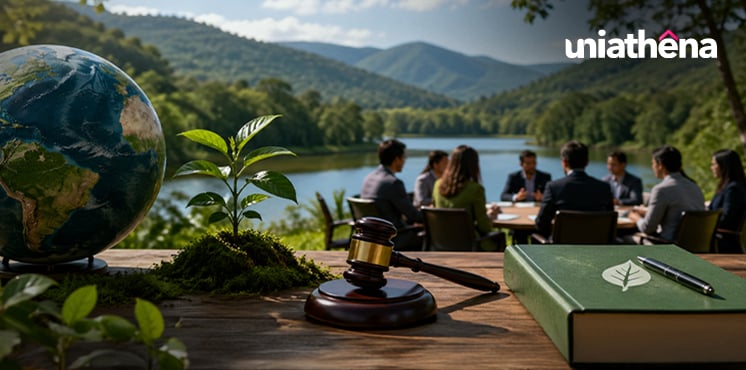
What is Environmental Governance?
Author: maharajan p
|7
MINS READ
| 0
| 128
Created On: 03 June, 2026
Share




Table of Contents (TOC):
- Introduction
- Key Takeaways
- What Is Environmental Governance?
- Why Is Environmental Governance Important?
- Key Elements of Environmental Governance
- How Environmental Governance Works
- Career Opportunities in Environmental Governance
- Conclusion
- FAQs
Introduction
You've probably seen them before: plastic bans, noise restrictions, air pollution alerts. But have you ever wondered why announcements like these seem to appear out of nowhere, and more importantly, why they show up right in your neighborhood?
The answer is simple: they're a direct response to the environmental changes happening around you. These decisions are made by environmental governance bodies, which exist to enforce new rules, policies, and regulations that better manage and reduce our impact on the environment.
Key Takeaways:
- Environmental governance defines how rules, policies, and institutions manage environmental impact through structured decision-making and enforcement systems.
- It ensures sustainability by reducing environmental harm, promoting accountability, and guiding responsible use of natural resources across sectors.
- Core elements include policies, institutions, stakeholder participation, and transparency, which together create an effective environmental management framework.
- Growing demand for sustainability has increased the focus on environment and governance, creating career opportunities in ESG, compliance, and policy roles across multiple industries.
What Is Environmental Governance?
Environmental governance refers to the systems, rules, and processes used to manage how people interact with the environment.
It focuses on how decisions are made about natural resources, pollution, and sustainability. These decisions are guided by laws, policies, and institutions that aim to protect the environment while supporting economic and social needs. It involves multiple players:
- Governments that create and enforce regulations
- Businesses that must follow environmental standards
- Communities and organizations that influence and monitor actions
Why Is Environmental Governance Important?
Without it, there are no clear rules on how natural resources should be used or protected. This often leads to overuse, pollution, and long-term damage that is hard to reverse.
- One of its main roles is to reduce environmental harm. Laws and policies help control air and water pollution, manage waste, and protect ecosystems.
- It also supports long-term sustainability. Instead of focusing only on short-term growth, environmental governance ensures that resources are available for future use.
- Another key reason is accountability. Governments and businesses are expected to follow environmental standards. Monitoring and reporting systems help track whether they meet those standards.
It also plays a role in addressing global issues like climate change and biodiversity loss. Coordinated policies and agreements help countries and organizations work toward shared environmental goals.
Key Elements of Environmental Governance
Environmental governance is built on a few core elements. Each one plays a specific role in how environmental decisions are made, applied, and monitored.
1. Policies and Regulations
Policies and regulations are the formal rules that guide environmental action.
Policies set the direction. They define goals such as reducing emissions, protecting forests, or managing water use. Regulations turn those goals into enforceable rules. These rules can include limits on pollution, requirements for waste treatment, or standards for industrial activity.
In practice, this means businesses and individuals must follow defined environmental standards. If they fail to comply, penalties or legal action may apply.
2. Institutions and Authorities
Institutions are the bodies responsible for implementing and enforcing environmental rules.
These include government departments, regulatory agencies, and environmental boards. Their role is to:
- Issue permits and approvals
- Monitor environmental impact
- Inspect operations
- Enforce compliance
For example, a factory may need approval from an environmental authority before it starts operations. The same authority may also check if the factory meets pollution standards over time.
3. Stakeholder Participation
Environmental decisions affect many groups, so participation is important.
Stakeholders include local communities, businesses, non-governmental organizations, and researchers. Their involvement helps ensure that decisions are not made in isolation.
Participation can take different forms:
- Public consultations before large projects
- Community feedback on local environmental issues
- Input from experts during policy development
This process improves decision-making by bringing in different perspectives and local knowledge.
4. Transparency and Accountability
Transparency means that environmental information is open and accessible.
This includes data on pollution levels, environmental impact reports, and compliance records. When this information is available, it becomes easier to understand what is happening and why decisions are made.
Accountability ensures that actions are tracked and evaluated. Organizations and governments are expected to report their environmental performance and explain their decisions.
Together, transparency and accountability create a system where environmental actions are visible, measurable, and subject to review.
How Environmental Governance Works
Environmental governance works as a structured process. It moves from setting rules to enforcing them and reviewing results.
- The process usually starts with policy development. Governments or regulatory bodies identify an environmental issue, such as air pollution or water scarcity. Based on research and data, they set goals and create policies to address the problem.
- Next comes rulemaking and standards. These policies are translated into clear regulations. For example, setting emission limits for industries or defining how waste should be treated.
- Once rules are in place, the focus shifts to implementation. Businesses, local authorities, and other entities are required to follow these regulations in their operations. This may involve obtaining permits, adopting cleaner technologies, or changing processes.
- After implementation, there is monitoring and reporting. Authorities track whether the rules are being followed. This can include inspections, environmental audits, and regular reporting of data such as emissions or resource usage.
- If violations are found, enforcement actions are taken. This may include fines, penalties, or restrictions on operations. The goal is to ensure compliance and prevent further harm.
- Finally, there is review and improvement. Environmental conditions and technologies change over time, so policies and regulations are updated to stay effective.
In simple terms, environmental governance works as a continuous cycle—set rules, apply them, check results, and improve where needed.
Also Read: What is Environmental Impact Assessment (EIA)?
Career Opportunities in Environmental Governance
As environmental regulations and sustainability goals expand, new roles are emerging across industries. Many of them are built around environmental governance.
Here are a few roles you can explore:
- ESG Analyst: Focuses on how companies perform on environmental, social, and governance factors. This role involves analyzing data, preparing reports, and helping organizations meet sustainability standards.
- Sustainability Manager: Works within organizations to design and implement sustainability strategies. This includes reducing environmental impact, improving resource use, and aligning business operations with long-term environmental goals.
- Environmental Policy Advisor: Supports governments or organizations by researching, developing, and evaluating environmental policies. This role requires a strong understanding of regulations, global frameworks, and policy impact.
- Compliance Officer: Ensures that organizations follow environmental laws and regulations. This includes audits, reporting, and making sure operations meet legal and environmental standards.
Also Read: ESG vs EHS: What’s the Real Difference
Industries You Can Work In
Environmental governance roles are not limited to one sector. You can find opportunities in:
- Corporate organizations (ESG, CSR, sustainability teams)
- Government and public policy institutions
- Environmental consulting firms
- Non-governmental organizations (NGOs)
- Energy, manufacturing, and infrastructure sectors
- International organizations working on climate and sustainability
These roles are growing because businesses and governments are under increasing pressure to manage environmental impact in a structured and measurable way.
To enter this field, you need a strong understanding of environmental policies, sustainability frameworks, and regulatory systems. This is where structured learning helps.
If you are starting out or planning a transition, you can build your fundamentals through short, focused courses:
- The Basics of Environmental Governance & Sustainability course introduces key concepts like sustainable development, global policies, and governance frameworks that shape environmental decisions.
- The Essentials of Environmental Governance & Sustainability course helps you understand how sustainability is applied within organizations, including leadership, strategy, and value chain integration.
- The Basics of International Environment Law course explains the legal frameworks, global agreements, and institutional roles that guide environmental protection across countries.
👉 Explore UniAthena’s range of short courses to start building your foundation in environmental governance today.
Also Read: AI and the Environment: Can Intelligent Energy Systems Drive Sustainability?
Conclusion
Environmental governance defines how environmental decisions are made, applied, and enforced. It connects policies, institutions, and people into a system that manages environmental impact in a structured way.
As environmental concerns continue to grow, the role of governance becomes more critical across industries and regions. Understanding how it works helps you not only stay informed, but also see where you can contribute.
FAQs
Q1. How can I start a career in environmental governance?
A: Build knowledge in policies, sustainability, and regulations through relevant courses and gain practical skills for industry roles.
Q2. Why is environmental governance important?
A: It helps reduce environmental damage, ensures accountability, and supports long-term sustainability through structured policies and enforcement.
Q3. Who is responsible for environmental governance?
A: Governments, regulatory bodies, businesses, and communities all play a role in environmental decision-making and compliance.
Q4. What are the key elements of environmental governance?
A: Policies, regulations, institutions, stakeholder participation, transparency, and accountability form the core elements of environmental governance.
Q5. What careers are available in environmental governance?
A: Roles include ESG analyst, sustainability manager, environmental policy advisor, and compliance officer across various industries.
Explore Related Courses








COMMENTS(0)
Explore Related Courses
Our Popular Insights
Careers are shifting faster than ever, and staying relevant takes more than experience. Explore UniAthena’s most-read blogs for sharp insights, emerging skills, and practical pathways that help you move forward with clarity and confidence in a changing professional world.


How to Switch Career to Data Analytics?
Read More
6
mins read





How to Switch Career to Data Analytics?
Read more
6
mins read

Get in Touch

It’s Time to Start
Join NowMost Popular Online Specialization
- Master of International Business Administration
- Master of Business Administration
- MBA in General Management- FastTrack
- Master in Innovation and Entrepreneurship
- MBA-Family Business Management
- Master in Procurement and Contract Management
- Extended Diploma in Business Analytics (SCQF Level 11)
- Diploma in Supply Chain and Logistics Management (SCQF Level 11)
- Strategic Human Resource Management Practitioner
- Master in Data Science
- Master in Engineering Management
Trending Online
- Integrated Doctorate of Business Administration
- Postgraduate Certificate in Finance for Next Generation Managers
- Master of Business Administration- General Management (Fast Track)
- Postgraduate Certificate in Socio-Economic and Legal Framework
- Postgraduate Certificate in Business Sustainability
- Certified Manager
- Supply Chain Management Practitioner
- MBA - AI in Business
- MBA - Accounting & Finance
- Master in Supply Chain and Logistics Management
Top Universities Online Certificates
- Postgraduate Certificate in International Marketing Management
- Postgraduate Certificate In International Human Resource Management
- Postgraduate Certificate in Strategic Management
- Postgraduate Certificate in Procurement & Contracts Management
- Postgraduate Certificate in Business Analytics
- Postgraduate Certificate in Strategic Supply Chain & Logistics Management
- Postgraduate Certificate in Human Resource and Leadership
- Project Management Practitioner
- Postgraduate Certificate in Supply Chain Design & Implementation
- Postgraduate Certificate in Management Accounting and Finance
Accredited Online Degree Program
- MBA - Digital Transformation
- MBA - Family Business Management
- MBA - Marketing Management
- MBA in Quality Management
- MBA - Business Intelligence & Data Analytics
- MBA in Operations & Project Management
- MBA in Energy Management
- MBA In Construction & Safety Management
- Master in Organisational Leadership
- Master in Public Health
- Master in Construction Management
- Bachelor of Arts in Business Administration


 Install Now


UniAthena is an Ed-Tech, offering flexible, affordable learning solutions, including Free-Learning Upskilling Courses and Academic Programs in partnerships with accredited and globally renowned universities and professional qualification bodies.


Do you have any questions ?
Feel free to send us your questions or request a free consultation
Send a message
UK
Athena Global Education
Magdalen Centre,
Robert Robinson Avenue,
Oxford, OX4 4GA, UK
Phone : 01865 784299
MIDDLE EAST
Athena Global Education FZE
Block L-03, First Floor,
P O Box 519265, Sharjah Publishing City,
Free Zone, Sharjah, UAE
Phone : +971 55 879 5492
INDIA
Uniathena Private Limited
9A,Midas Tower
Phase 1
Hinjewadi Rajiv Gandhi Infotech Park
Pune-411057
Phone: +91 9145665544
All Copyrights Reserved @ Athena Global Education 2021-2026