-

Bachelor's

-

Masters
-

MBA
-

Doctorate
-

Micro Credit
-

Explore all Courses
-
Postgraduate Certifications

-
Postgraduate Diploma
-
Undergraduate Diploma
-
Diploma



How Venezuela Shapes the Global Oil Market
Author: maharajan p
|6
MINS READ
| 0
| 110
Created On: 10 April, 2026
Share




Table of Contents (TOC):
- Introduction
- Key Takeaways
- Venezuela’s Oil Landscape: Brief Story
- How Venezuela Influences the Global Oil Market Today
- What Venezuela’s Oil Means for the Future of Global Energy
- FAQs
Introduction
Forget Saudi Arabia for a moment.
Everyone assumes the world's biggest oil story is somewhere in the Middle East: desert kingdoms, sprawling rigs, and trillion-dollar sovereign funds.
But the country sitting on more proven oil than anywhere else on Earth isn't Saudi Arabia. It isn't Russia. It isn't even the United States.
It's Venezuela.
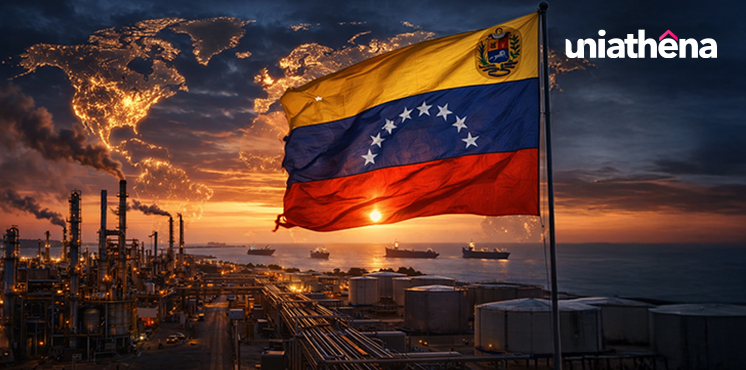
Despite being widely associated with political turmoil and economic crisis, the oil and gas industry in Venezuela rests on an extraordinary foundation: roughly 303 billion barrels of proven crude oil reserves, close to 17% of all known oil on the planet. That means nearly one out of every six barrels of oil in the ground belongs to Venezuela.
So why aren't we talking about it more?
Because having oil and producing oil are two very different things. And Venezuela's story, of staggering potential, political dysfunction, and quiet but persistent global influence is one of the most fascinating, and most misunderstood, in the entire energy world.
Here's what's really going on beneath the surface.
Key Takeaways:
- Reserves outweigh output: The Venezuela oil market impact comes from its unmatched reserve base, even though current production remains under 1% of global supply.
- Not all oil is equal: The country’s Venezuela oil type (largely extra-heavy crude) affects refining choices, costs, and trade flows worldwide.
- Sanctions and policy drive trade patterns: U.S. regulations and international decisions determine who can buy and move its oil.
- Future potential shapes market risk: Investors price Venezuelan oil for its possible future impact, not current barrels.
Venezuela’s Oil Landscape: Production, Reserves, and Global Significance
When discussing global oil superpowers, countries like Saudi Arabia, Russia, and the United States are usually the first to be mentioned.
But here’s something that surprises many readers: Venezuela holds the largest proven oil reserves in the world.
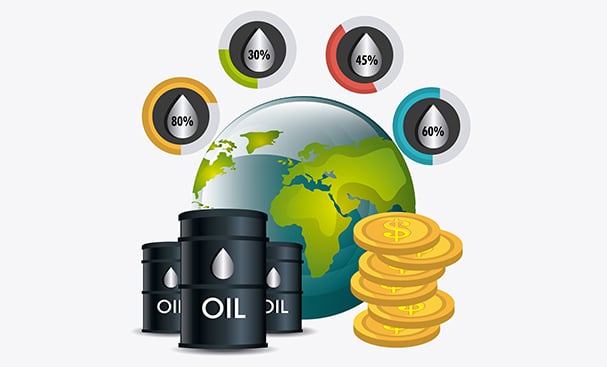
According to the U.S. Energy Information Administration (EIA), Venezuela has about 303 billion barrels of proven crude oil reserves. That’s roughly 17% of the world’s total proven reserves. In simple terms, nearly one out of every six barrels of known oil underground belongs to Venezuela.
On paper, that sounds like an energy giant. But reserves and production are not the same thing.
Most of Venezuela’s reserves are concentrated in the Orinoco Oil Belt, a vast geological region containing extra-heavy, high-sulfur crude. This type of oil is far more difficult to process than lighter crude because it often requires blending, upgrading, and specialized refining infrastructure before it can be transported or sold efficiently on global markets.
That added complexity, along with the higher costs it often brings, helps explain why Venezuela’s enormous reserves do not automatically result in equally large production levels today.
Current Production vs. Proven Reserves
In 2023, Venezuela accounted for roughly 0.8 % of global crude oil production, producing under 1 million barrels per day. Output remained constrained in 2024, averaging around 900,000 barrels per day.
That’s small. Significantly small compared with its vast reserve base.
To put that in perspective, Venezuela once produced more than three million barrels per day in its peak years. Today, output is a fraction of that, despite the country still holding the largest reserves globally.
Although Venezuela produces less than 1% of global oil, how does it still manage to influence the world’s oil market?
Also Read: Powering the Future of Oil & Gas: How PyTorch is Transforming AI and Machine Learning
How Venezuela Influences the Global Oil Market Today
Venezuela’s impact on the oil market today comes less from volume and more from geopolitics, trade, and long-term supply potential.
1. Geopolitical Importance and Market Impact
Its massive reserves give it a unique geopolitical weight. Here’s how it influences the world:
- Latent Supply Factor: Markets watch Venezuela because its huge reserves could boost global supply if production ramps up, affecting futures and investment sentiment.
- Refinery Impact: Venezuelan heavy crude feeds refineries specially configured for thick, high-sulfur oil; disruptions shift trade flows and blending needs.
- Risk Premiums: Political instability and changing policies create uncertainty, which can subtly influence global oil pricing and trading decisions.
In short, Venezuela matters not for current output, but for the potential and risk its oil represents.
2. U.S. Sanctions and International Trade Dynamics
Here’s how sanctions continue to shape Venezuela’s role in global oil trade:
- Policy changes matter: In early 2026, the Office of Foreign Assets Control issued new licenses that eased some restrictions on energy transactions, changing how companies assess investment and trade risk.
- Trade routes were redirected: During the strictest sanctions period, most Venezuelan crude was routed to China and through trans-shipment hubs instead of traditional Western buyers.
- Flows remain fragile: Even small policy updates from the United States can disrupt tanker movements and contracts, creating uncertainty in short-term oil trade flows.
So while Venezuela’s production is limited, sanctions still decide where its oil goes, and how predictable those flows are.
Also Read: Inside the Intelligent Oilfield: AI-Driven Digital Twins and the New Era of Energy Operations
3. OPEC Membership and Strategic Role
Venezuela’s influence also comes from its long-standing role inside the Organization of the Petroleum Exporting Countries (OPEC), even if its production today is limited.
Here’s where that role still matters:
- Founding member status: Venezuela isn’t a newcomer. It was one of the original OPEC members, which gives it historical credibility and a seat in long-term supply discussions.
- Signaling effect: When OPEC discusses future capacity, compliance, or exemptions, Venezuela’s condition often signals how much untapped supply could re-enter the market over time.
Also Read: Energy 2.0: How Data is Powering the Future of Oil & Gas
What Venezuela’s Oil Means for the Future of Global Energy
So if Venezuela isn’t a major producer today, what does its oil actually mean for the future of global energy?
Think of it less as a price-moving force right now and more as a long-term variable markets can’t ignore.
Here’s the real takeaway:
- Future supply potential: If politics, policy, and investment align, Venezuela could gradually add meaningful barrels back to the market.
- Market expectations: Even the possibility of higher output influences long-term pricing, forecasts, and investment decisions.
- Strategic uncertainty: Venezuela remains one of the biggest “what-ifs” in global oil planning, not active supply, but possible supply.
That’s why Venezuela matters. Not for what it produces today, but for how its vast reserves shape expectations about future energy supply, risk, and balance in a world still heavily dependent on oil.
If you’re part of the petroleum or oil and gas industry, and curious about how oil trade, reserves, and energy finance really work behind the scenes, this is where deeper learning matters.
Below, we’ve shortlisted a set of programs that unpack the oil and gas industry from multiple angles—covering core economics, reserves and valuation, market dynamics and trading, as well as the broader financial, strategic, and managerial side of the energy business. Whether you're looking to build foundational knowledge or step into leadership-level understanding, these courses offer a structured way to navigate how the energy world actually operates.
➡️ Check Out: MBA in Oil and Gas Management
➡️ Check Out: Basics of Oil & Gas - Economics
➡️ Check Out: Basics of Oil & Gas - Reserves, Risk & Value
➡️ Check Out: Essentials of Oil & Gas - Energy Markets & Trading
➡️ Check Out: Diploma in Oil & Gas Business - Finance & Strategy
FAQs
Q1. How much oil does Venezuela currently produce compared to the world?
A: Venezuela produces less than 1% of global oil output, far below its historical peak and far smaller than its reserve size would suggest.
Q2. Does Venezuela still play a role in OPEC?
A: Yes. Venezuela is a founding member of OPEC, and while its output is low, its future capacity is still part of long-term supply discussions.
Q3. Could Venezuela significantly increase oil production in the future?
A: Production could rise gradually if investment, infrastructure upgrades, and stable policies come together, but any major increase would take years, not months.
Q4. Does Venezuela influence oil prices today?
A: Not directly through volume, but indirectly through geopolitical risk, future supply expectations, and market sentiment tied to its reserves and policy shifts.
Sources:
Explore Related Courses














COMMENTS(0)
Explore Related Courses
Our Popular Insights
Careers are shifting faster than ever, and staying relevant takes more than experience. Explore UniAthena’s most-read blogs for sharp insights, emerging skills, and practical pathways that help you move forward with clarity and confidence in a changing professional world.


How to Switch Career to Data Analytics?
Read More
6
mins read






How to Switch Career to Data Analytics?
Read more
6
mins read

Get in Touch

It’s Time to Start
Join NowMost Popular Online Specialization
- Master of International Business Administration
- Master of Business Administration
- MBA in General Management- FastTrack
- Master in Innovation and Entrepreneurship
- MBA-Family Business Management
- Master in Procurement and Contract Management
- Extended Diploma in Business Analytics (SCQF Level 11)
- Diploma in Supply Chain and Logistics Management (SCQF Level 11)
- Strategic Human Resource Management Practitioner
- Master in Data Science
- Master in Engineering Management
Trending Online
- Integrated Doctorate of Business Administration
- Postgraduate Certificate in Finance for Next Generation Managers
- Master of Business Administration- General Management (Fast Track)
- Postgraduate Certificate in Socio-Economic and Legal Framework
- Postgraduate Certificate in Business Sustainability
- Certified Manager
- Supply Chain Management Practitioner
- MBA - AI in Business
- MBA - Accounting & Finance
- Master in Supply Chain and Logistics Management
Top Universities Online Certificates
- Postgraduate Certificate in International Marketing Management
- Postgraduate Certificate In International Human Resource Management
- Postgraduate Certificate in Strategic Management
- Postgraduate Certificate in Procurement & Contracts Management
- Postgraduate Certificate in Business Analytics
- Postgraduate Certificate in Strategic Supply Chain & Logistics Management
- Postgraduate Certificate in Human Resource and Leadership
- Project Management Practitioner
- Postgraduate Certificate in Supply Chain Design & Implementation
- Postgraduate Certificate in Management Accounting and Finance
Accredited Online Degree Program
- MBA - Digital Transformation
- MBA - Family Business Management
- MBA - Marketing Management
- MBA in Quality Management
- MBA - Business Intelligence & Data Analytics
- MBA in Operations & Project Management
- MBA in Energy Management
- MBA In Construction & Safety Management
- Master in Organisational Leadership
- Master in Public Health
- Master in Construction Management
- Bachelor of Arts in Business Administration


 Install Now


UniAthena is an Ed-Tech, offering flexible, affordable learning solutions, including Free-Learning Upskilling Courses and Academic Programs in partnerships with accredited and globally renowned universities and professional qualification bodies.


Do you have any questions ?
Feel free to send us your questions or request a free consultation
Send a message
UK
Athena Global Education
Magdalen Centre,
Robert Robinson Avenue,
Oxford, OX4 4GA, UK
Phone : 01865 784299
MIDDLE EAST
Athena Global Education FZE
Block L-03, First Floor,
P O Box 519265, Sharjah Publishing City,
Free Zone, Sharjah, UAE
Phone : +971 55 879 5492
INDIA
Uniathena Private Limited
9A,Midas Tower
Phase 1
Hinjewadi Rajiv Gandhi Infotech Park
Pune-411057
Phone: +91 9145665544
All Copyrights Reserved @ Athena Global Education 2021-2026