-

Bachelor's

-

Masters
-

MBA
-

Doctorate
-

Micro Credit
-

Explore all Courses
-
Postgraduate Certifications

-
Postgraduate Diploma
-
Undergraduate Diploma
-
Diploma



Powering the Future of Oil & Gas: How PyTorch is Transforming AI and Machine Learning

Author: maria rashid
|7
MINS READ
| 0
| 143
Created On: 17 December, 2025
Share




Table of Contents (TOC):
1. Introduction
2. Key Takeaways
3. The Role of AI and ML in the Oil & Gas Sector
4. Practical Applications of AI & ML in the Oil and Gas Industry
5. PyTorch: A Tool for Advancing AI and Machine Learning in Oil & Gas
6. Conclusion
7. FAQ Section
Introduction
The energy sector is rapidly embracing digital transformation, and no organization can afford to ignore the operational and strategic implications of this shift. For executives and professionals in oil and gas, leveraging advanced technologies like Artificial Intelligence (AI) and Machine Learning (ML) is critical to maintaining competitiveness, efficiency, and sustainability.
Environmental pressures, market volatility, and tightening regulatory frameworks are increasing the demand for operational excellence. AI and ML offer data-driven solutions to complex operational challenges, including automation of routine processes, predictive insights, risk reduction, and overall optimization.
Among the many tools enabling this transformation, PyTorch has emerged as a leading framework for developing advanced ML models tailored to oil and gas operations. Its flexibility, dynamic computation graphs, and support for deep learning allow companies to tackle complex challenges, from predictive maintenance to automation and real-time monitoring.
In this blog, we explore how AI and ML are reshaping the industry, with a special focus on PyTorch and its practical applications across upstream, midstream, and downstream operations.
Key Takeaways:
- The Oil and Gas industry is going through a digital transformation due to the integration of AI and ML in its operations.
- The key applications of AI and ML in the industry are related to data-driven decision-making, automation, predictive maintenance, and overall optimization.
- A significant tool used to generate AI models for optimizing operations in the industry is PyTorch.
- The integration of such technologies in the operations of the Oil and Gas industry is not just a strategic move but is crucial for the future of the industry.
- As technology is constantly evolving, we can ensure the generation of more innovations and tools that will further transform the industry.
The Role of AI and ML in Oil & Gas
Oil and gas operations generate massive volumes of data from drilling rigs, equipment sensors, pipelines, and refinery systems. Historically, analyzing this data has been manual and time-intensive, limiting the industry’s ability to make real-time, proactive decisions.
Today, AI and ML allow companies to process vast datasets in real time, enabling predictive insights that anticipate operational issues, optimize processes, and automate routine workflows. This shift supports proactive decision-making, improved safety, and operational efficiency.
By gaining a solid understanding of AI and ML applications, professionals can translate data insights into actionable strategies, optimize operations, and drive innovation across the oil and gas value chain. This combination of technical knowledge and strategic perspective is increasingly essential for leaders who want to guide their organizations through digital transformation successfully.
Practical Applications of AI & ML in Oil and Gas
Predictive Maintenance:
The most efficient practical application of AI and ML in the Oil and Gas Industry is predictive maintenance, as it helps in predicting when and how any equipment is likely to fail, enabling proactive maintenance scheduling and reducing both downtime and costs, rather than reacting after failures occur.
AI tools leverage sensors embedded in equipment to detect signs of wear or potential failure—often imperceptible to the human eye. This approach results in fewer operational disruptions and lower maintenance expenses.
Operational Automation:
Automation is transforming how operations are executed in the oil and gas industry. AI- and ML-powered systems can perform a wide range of tasks—from drilling and refining to adjusting pressures, temperatures, and machine speeds—with enhanced precision and efficiency.

Robotics:
Robotics has become invaluable in the oil and gas sector, particularly for offshore and remote drilling sites. AI-powered robots can operate in hazardous environments where humans cannot, expanding operational reach, minimizing risks, and improving safety in critical operations.
Robotics is a game-changer, enabling continuous operations at locations where human intervention is impractical, such as deep-sea extraction sites.
Data Analytics:
Through real-time monitoring and analysis of data from sources such as geological surveys, environmental conditions, and production systems, AI provides actionable insights for informed, data-driven decision-making.
With AI and ML processing capabilities far beyond human speed, operators can make timely, accurate decisions that optimize efficiency and performance.
PyTorch: A Tool for Advancing AI and Machine Learning in Oil & Gas
PyTorch is a widely used, open-source machine learning framework that has gained significant traction across industries, including oil and gas. Its flexible architecture and ease of use allow users to develop complex ML models efficiently. PyTorch supports both deep learning and traditional machine learning algorithms, making it adaptable to a variety of operational applications in the sector.
In an industry like oil and gas, where real-time data and rapidly changing conditions demand agility, PyTorch’s dynamic computation graph provides a major advantage. Models can evolve and adapt as new data is received, enabling faster learning and more accurate predictions.
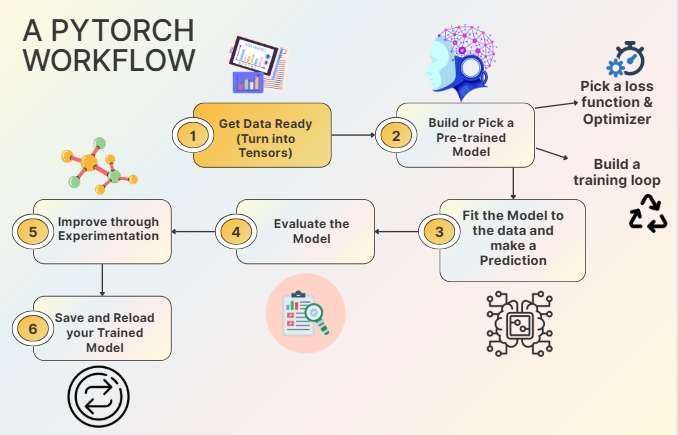
Use Cases of PyTorch in the Oil and Gas Industry
With its scalability, flexibility, and deep learning abilities, PyTorch is helping companies in the Oil and Gas industry to develop sophisticated AI and ML models for various applications.
Here are some of the key uses of PyTorch in the Oil and Gas sector:
- Data Insights for Informed Decisions: With the help of PyTorch, companies can analyze and track operational data to uncover market trends and make informed decisions for resource management and strategic planning.
- Automation Algorithms: AI models developed through PyTorch help in automating various tasks and operations, reducing human errors, and enhancing speed and precision.
- AI-driven Fraud Detection: PyTorch helps in developing AI models that can detect potential fraudulent activities in transactions and asset tracking, reducing financial and resource losses.
- Optimization of Supply Chain and Logistics: PyTorch models help in optimizing the supply chain and logistics functions of the oil and gas industry by tracking inventory, predicting demand, and logistics requirements.
- Real-Time Monitoring: PyTorch allows for real-time monitoring of the data from operations of oil and gas companies, so that inefficiencies and failures are detected and avoided before they occur.
By leveraging PyTorch across these applications, organizations can reduce costs, enhance productivity, and improve operational reliability.
Conclusion
AI and ML are transforming the oil and gas industry, and tools like PyTorch are central to this change. By enabling predictive, automated, and data-driven operations, PyTorch helps organizations unlock operational efficiency, minimize risks, and maximize productivity.
As the sector continues to evolve, integrating AI and ML technologies is essential to remain competitive, achieve sustainability goals, and drive long-term success. For professionals looking to gain the skills to lead these transformations, programs such as UniAthena’s MBA in Oil & Gas Management provide the technical knowledge and strategic perspective needed to guide organizations through digital innovation and operational excellence.
The future of oil and gas is digital, and frameworks like PyTorch are helping define that transformation.
FAQs
Q1. How are AL and ML contributing towards changing the operations in the Oil and Gas industry?
A: AI and ML are optimizing the operations of the Oil and Gas industry by providing predictive maintenance, automating routine tasks so that workers can focus on more complex issues, and providing real-time insights from large data sets. This allows for making data-driven decisions and improving the efficiency of various operations.
Q2. What is PyTorch, and what is its use in the Oil and Gas industry?
A: PyTorch is an AI and ML tool that is an open-ended machine learning library utilized for developing AI models for various applications. It is used in the Oil and Gas industry by developing AI models to help in predictive maintenance, fraud detection, optimizing supply chain and logistics, and in many other applications and functions.
Q3. Can you recall some practical applications of AI and ML in the oil and gas industry?
A: The significant practical applications of AI and ML in the oil and gas industry are predictive maintenance, automation, AI-powered robotics, and data analytics, which result in enhanced safety and efficiency, and reduced losses and failures.
Q4. Is there any good platform that can help professionals prepare for the transformation in the Oil and Gas industry?
A: Yes, programs like UniAthena’s MBA in Oil & Gas Management provide professionals with the technical knowledge and strategic perspective, equipping them to lead digital transformation initiatives and drive operational excellence.
References:
- https://www.sciencedirect.com/science/article/pii/S2096249521000429
- https://www.wipro.com/oil-and-gas/articles/the-synergy-of-ai-ml-and-digital-inspections-transforming-oil-and-gas-operations/
- https://www.ibm.com/think/topics/pytorch
- https://www.qservicesit.com/enhancing-reliability-predictive-maintenance-with-azure-ml-in-oil-and-gas-industry
Explore Related Courses














COMMENTS(0)
Explore Related Courses
Our Popular Insights
Careers are shifting faster than ever, and staying relevant takes more than experience. Explore UniAthena’s most-read blogs for sharp insights, emerging skills, and practical pathways that help you move forward with clarity and confidence in a changing professional world.

What is Business Development?
Read More
6
mins read

🌟 Top Project Performer – June 2026 🌟
Read More
1
mins read

What is the Role of AI in Education?
Read More
4
mins read


🌟 Top Project Performer – May 2026 🌟
Read More
1
mins read


🌟 Top Project Performer – April 2026 🌟
Read More
1
mins read
What is Business Development?
Read more
6
mins read
🌟 Top Project Performer – June 2026 🌟
Read more
1
mins read
What is the Role of AI in Education?
Read more
4
mins read
🌟 Top Project Performer – May 2026 🌟
Read more
1
mins read

🌟 Top Project Performer – April 2026 🌟
Read more
1
mins read
Get in Touch

It’s Time to Start
Join NowMost Popular Online Specialization
- Master of International Business Administration
- Master of Business Administration
- MBA in General Management- FastTrack
- Master in Innovation and Entrepreneurship
- MBA-Family Business Management
- Master in Procurement and Contract Management
- Extended Diploma in Business Analytics (SCQF Level 11)
- Diploma in Supply Chain and Logistics Management (SCQF Level 11)
- Strategic Human Resource Management Practitioner
- Master in Data Science
- Master in Engineering Management
Trending Online
- Integrated Doctorate of Business Administration
- Postgraduate Certificate in Finance for Next Generation Managers
- Master of Business Administration- General Management (Fast Track)
- Postgraduate Certificate in Socio-Economic and Legal Framework
- Postgraduate Certificate in Business Sustainability
- Certified Manager
- Supply Chain Management Practitioner
- MBA - AI in Business
- MBA - Accounting & Finance
- Master in Supply Chain and Logistics Management
Top Universities Online Certificates
- Postgraduate Certificate in International Marketing Management
- Postgraduate Certificate In International Human Resource Management
- Postgraduate Certificate in Strategic Management
- Postgraduate Certificate in Procurement & Contracts Management
- Postgraduate Certificate in Business Analytics
- Postgraduate Certificate in Strategic Supply Chain & Logistics Management
- Postgraduate Certificate in Human Resource and Leadership
- Project Management Practitioner
- Postgraduate Certificate in Supply Chain Design & Implementation
- Postgraduate Certificate in Management Accounting and Finance
Accredited Online Degree Program
- MBA - Digital Transformation
- MBA - Family Business Management
- MBA - Marketing Management
- MBA in Quality Management
- MBA - Business Intelligence & Data Analytics
- MBA in Operations & Project Management
- MBA in Energy Management
- MBA In Construction & Safety Management
- Master in Organisational Leadership
- Master in Public Health
- Master in Construction Management
- Bachelor of Arts in Business Administration


 Install Now


UniAthena is an Ed-Tech, offering flexible, affordable learning solutions, including Free-Learning Upskilling Courses and Academic Programs in partnerships with accredited and globally renowned universities and professional qualification bodies.


Do you have any questions ?
Feel free to send us your questions or request a free consultation
Send a message
UK
Athena Global Education
Magdalen Centre,
Robert Robinson Avenue,
Oxford, OX4 4GA, UK
Phone : 01865 784299
MIDDLE EAST
Athena Global Education FZE
Block L-03, First Floor,
P O Box 519265, Sharjah Publishing City,
Free Zone, Sharjah, UAE
Phone : +971 55 879 5492
INDIA
Uniathena Private Limited
9A,Midas Tower
Phase 1
Hinjewadi Rajiv Gandhi Infotech Park
Pune-411057
Phone: +91 9145665544
All Copyrights Reserved @ Athena Global Education 2021-2026