-

Bachelor's

-

Masters
-

MBA
-

Doctorate
-

Micro Credit
-

Explore all Courses
-
Postgraduate Certifications

-
Postgraduate Diploma
-
Undergraduate Diploma
-
Diploma



Unlocking Web3 Potential: n8n as the Automation Layer for Blockchain

Author: neha mondal
|5
MINS READ
| 0
| 432
Created On: 08 October, 2025
Share




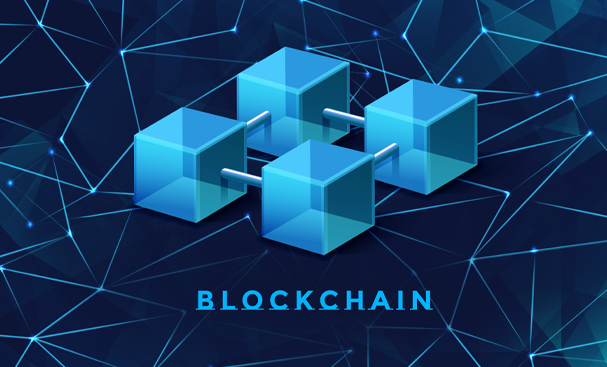
Web3 is changing how we imagine the internet by prioritising decentralisation, greater security, and putting users in control of their data as well as digital assets. Central to this transformation is blockchain technology, a decentralised ledger system that enables transparent, immutable transactions without intermediaries.
But to achieve the full potential of Web3, it will take more than blockchain infrastructure; it also needs intelligent automation to unite and coordinate these decentralised technologies with existing systems.
This is where n8n, a free-of-charge workflow automation framework, comes in as a crucial solution for bridging the gap between Web3 functionality and the traditional software world.
Understanding Web3 and Blockchain Technology
Web3 (sometimes referred to as Web 3.0) is the future of the internet, where power is decentralised and no longer held by large centralised platforms, but rather by individual users. Web3 supports peer-to-peer communications that are cryptographically secure, unlike the existing Web 2.0 model, which is characterised by centralised control over data and applications.
At the core of Web3 is blockchain technology, a distributed digital ledger maintained across a network of independent nodes, making data tamper-proof and fostering trust without central authorities.
In addition to cryptocurrencies, blockchain can also be used to support smart contracts, which are self-executing agreements coded to execute automatically once specific requirements are fulfilled.
This allows a broad ecosystem of decentralised applications (DApps), spanning finance, supply chains, gaming, and identity management. Together, these technologies form a more transparent ecosystem, with greater privacy and user sovereignty.

Source: Key differences among web3, web1.0 & web2.0
Technologies Driving Web3
The Web3 ecosystem is powered by a synergy of technologies, including:
- Ethereum and Solana: Programmable blockchain networks
- Smart Contracts: Intermediary-free business logic automation
- Decentralised Storage: Tools such as IPFS store censorship-resistant information
- BI-Layered API Gateways: Integration bridges between blockchain data and traditional systems
- AI Integration: Supplements decision-making and analytics on decentralised data
This deep technology layer contributes to innovation but also creates complexity, which requires strong automation tools.
Also Read: How Blockchain Powers Web3 and the Metaverse
Introducing n8n: The Open-Source Automation Engine
n8n (also known as n-eight-n) is a free-to-use platform that aims to make it easier to automate a variety of systems, even in complex environments. It enables users to visually build workflows that interconnect applications, services, and APIs, and requires little code to do so.
The fully self-hosted nature of n8n is among its greatest strengths, as it provides enterprises with total control over their automation processes and sensitive data. It is flexible and supports custom code in JavaScript and Python, features over 400 pre-built integrations, and can support any blockchain workflow needs.
Core Functionality of n8n That Makes Web3 Easier to Automate
To emphasise the key features that make n8n a better option, the following are some of its notable features:
- Visual Workflow Builder: Visual complex automation available in an easy-to-use drag-and-drop format.
- Real-Time Triggers: Instantly respond to blockchain events like token transfers or smart contract executions.
- Plug and Play Extensive Integrations: Integrate over 400 apps, APIs, and blockchain platforms without any limitations.
- Self-Hosting: Host n8n on your own system with maximum data privacy and compliance.
- Custom Code Execution: Embed JavaScript or Python for tailored logic and advanced automation scenarios.
- AI Integration: Seamlessly incorporate AI models for tasks like predictive analytics and contract auditing.
These features combine to provide a high degree of control and adaptability, which is crucial in the fast-evolving Web3 environment.
Considering Alternatives: Every Automation Tool Has Its Place
While n8n offers feature-rich Web3 automation, it is important to acknowledge other workflow automation platforms like Zapier, Make (formerly Integromat), and similar tools that can also be integrated with blockchain. All of these have strengths, with Zapier frequently being touted as easy to use and simple to integrate with, and Make providing advanced visual scripting.
But there are trade-offs associated with each tool. Closed-source systems might not allow their users to customise or control their data, whereas open-source platforms such as n8n are technically demanding, yet offer more flexibility and self-hosting options.
These platforms have diverse pricing models, community assistance, and feature density. Ultimately, organisations should evaluate and experiment with the tools that best align with their technical needs, budget, and long-term goals.
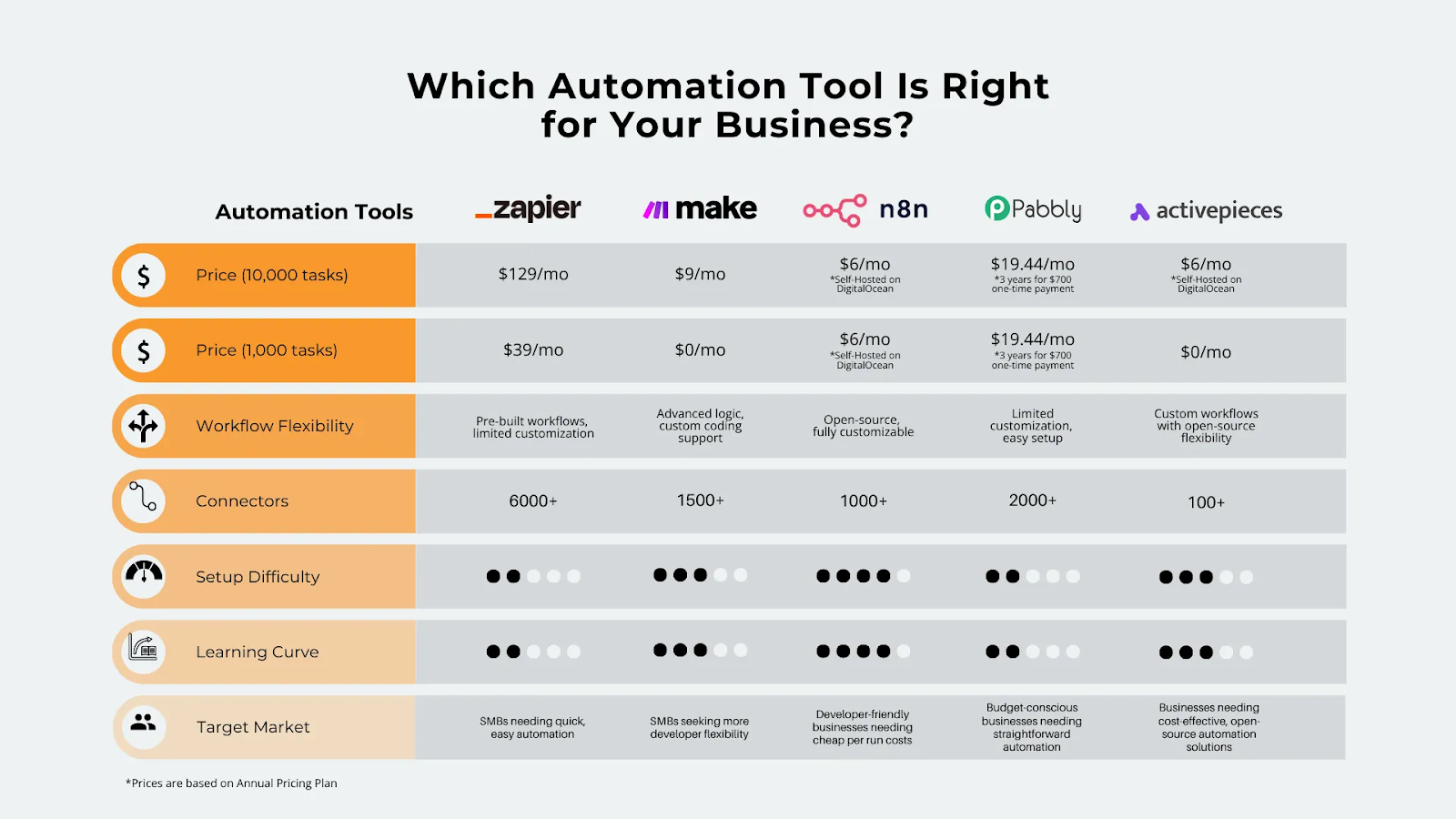
Source: Comparison Chart of Automation Platforms
Why n8n is Gaining Traction in the Web3 Space
Self-hosting capability enables data privacy and compliance requirements, which is frequently a key consideration in blockchain-based initiatives. Its large library of integrations and the ability to write custom code allow developers to build solutions that actually reflect the complexity of decentralised workflows.
In addition to this, the use of real-time triggers in n8n makes workflows remain receptive to changing blockchain events, which applications in DeFi, NFTs, and decentralised identity require.
Moreover, the community-based mode of development at n8n encourages the constant creation of innovative ideas, particularly around AI integration that can enhance Web3’s growth into intelligent, automated ecosystems. As a result, n8n is emerging as a compelling choice for organisations looking to innovate in decentralised automation.
Practical Web3 Use Cases Powered by n8n
Across industries, n8n has enabled automation that accelerates blockchain adoption:
- DeFi platforms automate complex financial workflows triggered by on-chain data.
- NFT marketplaces streamline minting, sales tracking, and community engagement automatically.
- Enterprises integrate blockchain audit trails with internal reporting and compliance systems.
- AI-powered smart contract analysis and decentralised identity verification are automated efficiently.
These examples demonstrate n8n’s role in reducing manual effort, increasing reliability, and speeding innovation.
The Road Ahead: Automation as a Cornerstone of Web3 Adoption
Looking forward, as Web3 infrastructures scale and intertwine with AI and IoT, the need for robust, adaptable automation grows. n8n’s transparent, extensible approach positions it well to support the evolving demands of decentralised ecosystems.
Ultimately, organisations should test multiple tools, balancing usability, control, and scalability to build effective blockchain-powered workflows that drive next-generation digital experiences.
References:
- n8n Official Documentation
- n8n Features and Integrations
- n8n Workflow Templates
- n8n GitHub Repository
- Blockchain Integration Strategies - Wipro
- n8n Public REST API Documentation
- https://aws.amazon.com/what-is/web3/
- https://www.wipro.com/applications/blockchain-what-it-means-for-your-enterprise-integration-strategy/
- https://www.investopedia.com/web-20-web-30-5208698
- https://en.wikipedia.org/wiki/Web3
Explore Related Courses












COMMENTS(0)
Explore Related Courses
Our Popular Insights
Careers are shifting faster than ever, and staying relevant takes more than experience. Explore UniAthena’s most-read blogs for sharp insights, emerging skills, and practical pathways that help you move forward with clarity and confidence in a changing professional world.


How to Switch Career to Data Analytics?
Read More
6
mins read




How to Switch Career to Data Analytics?
Read more
6
mins read

Get in Touch

It’s Time to Start
Join NowMost Popular Online Specialization
- Master of International Business Administration
- Master of Business Administration
- MBA in General Management- FastTrack
- Master in Innovation and Entrepreneurship
- MBA-Family Business Management
- Master in Procurement and Contract Management
- Extended Diploma in Business Analytics (SCQF Level 11)
- Diploma in Supply Chain and Logistics Management (SCQF Level 11)
- Strategic Human Resource Management Practitioner
- Master in Data Science
- Master in Engineering Management
Trending Online
- Integrated Doctorate of Business Administration
- Postgraduate Certificate in Finance for Next Generation Managers
- Master of Business Administration- General Management (Fast Track)
- Postgraduate Certificate in Socio-Economic and Legal Framework
- Postgraduate Certificate in Business Sustainability
- Certified Manager
- Supply Chain Management Practitioner
- MBA - AI in Business
- MBA - Accounting & Finance
- Master in Supply Chain and Logistics Management
Top Universities Online Certificates
- Postgraduate Certificate in International Marketing Management
- Postgraduate Certificate In International Human Resource Management
- Postgraduate Certificate in Strategic Management
- Postgraduate Certificate in Procurement & Contracts Management
- Postgraduate Certificate in Business Analytics
- Postgraduate Certificate in Strategic Supply Chain & Logistics Management
- Postgraduate Certificate in Human Resource and Leadership
- Project Management Practitioner
- Postgraduate Certificate in Supply Chain Design & Implementation
- Postgraduate Certificate in Management Accounting and Finance
Accredited Online Degree Program
- MBA - Digital Transformation
- MBA - Family Business Management
- MBA - Marketing Management
- MBA in Quality Management
- MBA - Business Intelligence & Data Analytics
- MBA in Operations & Project Management
- MBA in Energy Management
- MBA In Construction & Safety Management
- Master in Organisational Leadership
- Master in Public Health
- Master in Construction Management
- Bachelor of Arts in Business Administration


 Install Now


UniAthena is an Ed-Tech, offering flexible, affordable learning solutions, including Free-Learning Upskilling Courses and Academic Programs in partnerships with accredited and globally renowned universities and professional qualification bodies.


Do you have any questions ?
Feel free to send us your questions or request a free consultation
Send a message
UK
Athena Global Education
Magdalen Centre,
Robert Robinson Avenue,
Oxford, OX4 4GA, UK
Phone : 01865 784299
MIDDLE EAST
Athena Global Education FZE
Block L-03, First Floor,
P O Box 519265, Sharjah Publishing City,
Free Zone, Sharjah, UAE
Phone : +971 55 879 5492
INDIA
Uniathena Private Limited
9A,Midas Tower
Phase 1
Hinjewadi Rajiv Gandhi Infotech Park
Pune-411057
Phone: +91 9145665544
All Copyrights Reserved @ Athena Global Education 2021-2026