-

Bachelor's

-

Masters
-

MBA
-

Doctorate
-

Micro Credit
-

Explore all Courses
-
Postgraduate Certifications

-
Postgraduate Diploma
-
Undergraduate Diploma
-
Diploma



Smart Contracts - The Building Blocks of Blockchain
Author: lynn lawrence
|3
MINS READ
| 0
| 210
Created On: 21 February, 2025 Updated On: 18 July, 2025
Share




How Smart Contracts are Revolutionizing the Industries?
In 2022, a real estate transaction worth millions was completed without a single lawyer or bank involved. Instead, a Smart Contract executed the deal seamlessly, transferring ownership instantly once payment was received. This isn’t science fiction—it’s the power of smart contracts and blockchain technology in action.
Smart Contracts, which are self-executing agreements powered by blockchain technology, are transforming industries by making transactions faster, more secure, and transparent. But what exactly makes them the backbone of blockchain, and how are they being applied in various sectors? Let’s dive in.
Understanding Smart Contracts
What are Smart Contracts?
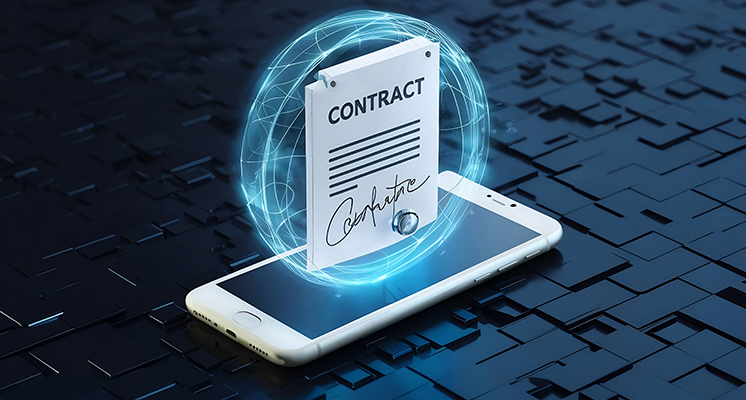
Smart Contracts are automated digital contracts that execute transactions when pre-set conditions are met. Unlike traditional contracts, they eliminate the need for intermediaries such as banks or legal firms. They operate on blockchain networks such as Ethereum, enabling secure, decentralized agreements.
Key Features of Smart Contracts
- Automation: Transactions are executed instantly without human intervention.
- Transparency: The contract terms are visible and immutable on the blockchain.
- Security: Data is encrypted, reducing fraud and unauthorized alterations.

Source: https://bit.ly/4b9m3gY
A smart contract follows a structured, automated process:
- First, the involved parties agree on predefined terms and conditions.
- Once a specified event occurs, such as a payment or milestone completion, the contract executes automatically.
- Finally, the settlement is processed instantly, ensuring efficiency and security.
Applications of Smart Contracts
1. Finance & DeFi (Decentralized Finance)
- Powering DeFi Smart Contracts for lending, borrowing, and trading.
- Enabling automated payments and settlements without banks.
- Reducing transaction costs for cross-border payments.
2. Supply Chain & Logistics
- Enhancing transparency in Smart Contracts in Supply Chain tracking.
- Automating payments once goods are verified at checkpoints.
- Reducing paperwork and human error in logistics.
3. Real Estate & Property Management
- Enabling peer-to-peer property transactions using blockchain-based smart contracts.
- Automating rental agreements and maintenance payments.
- Improving security against fraudulent land titles.
4. Healthcare & Insurance
- Ensuring secure storage and sharing of sensitive patient information.
- Automating insurance claims processing for faster settlements.
- Reducing administrative costs and fraud.
5. Intellectual Property & Digital Rights
- Ensuring transparent royalty payments for artists and creators.
- Protecting ownership rights for digital assets and NFTs.
- Enforcing copyright agreements via blockchain technology.
Challenges & Smart Contract Vulnerabilities
Despite their benefits, Smart Contracts are not without risks:
- Bugs & Exploits: Coding flaws can lead to major security breaches.
- Legal Uncertainty: Many jurisdictions lack clear regulations for blockchain agreements.
- Scalability Issues: High transaction fees and network congestion can limit efficiency.
The Future of Smart Contracts
As more businesses learn Smart Contracts and integrate them into operations, we can expect advancements such as:
- AI-Powered Smart Contracts: Automating decision-making processes.
- Cross-Chain Compatibility: Seamless transactions across multiple blockchains.
- Legal Integration: Governments recognizing and standardizing blockchain-based contracts.
The world is moving towards a blockchain-driven future, and Smart Contracts are leading the charge. Whether you’re a Smart Contract developer, a business owner, or just curious about blockchain education, now is the time to explore how this technology can redefine industries.
Smart contracts are more than a feature of blockchain; they are reshaping digital transactions. As industries embrace automation and decentralization, understanding smart contracts is essential for staying competitive. The future is automated—smart contracts are just the beginning.
Explore Related Courses











COMMENTS(0)
Explore Related Courses
Our Popular Insights
Careers are shifting faster than ever, and staying relevant takes more than experience. Explore UniAthena’s most-read blogs for sharp insights, emerging skills, and practical pathways that help you move forward with clarity and confidence in a changing professional world.

What is Business Development?
Read More
6
mins read
🌟 Top Project Performer – June 2026 🌟
Read More
1
mins read

What is the Role of AI in Education?
Read More
4
mins read
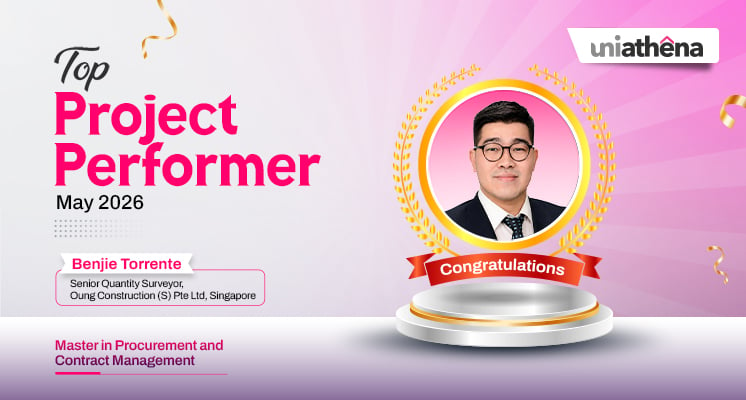
🌟 Top Project Performer – May 2026 🌟
Read More
1
mins read


🌟 Top Project Performer – April 2026 🌟
Read More
1
mins read
What is Business Development?
Read more
6
mins read
🌟 Top Project Performer – June 2026 🌟
Read more
1
mins read
What is the Role of AI in Education?
Read more
4
mins read
🌟 Top Project Performer – May 2026 🌟
Read more
1
mins read

🌟 Top Project Performer – April 2026 🌟
Read more
1
mins read
Get in Touch

It’s Time to Start
Join NowMost Popular Online Specialization
- Master of International Business Administration
- Master of Business Administration
- MBA in General Management- FastTrack
- Master in Innovation and Entrepreneurship
- MBA-Family Business Management
- Master in Procurement and Contract Management
- Extended Diploma in Business Analytics (SCQF Level 11)
- Diploma in Supply Chain and Logistics Management (SCQF Level 11)
- Strategic Human Resource Management Practitioner
- Master in Data Science
- Master in Engineering Management
Trending Online
- Integrated Doctorate of Business Administration
- Postgraduate Certificate in Finance for Next Generation Managers
- Master of Business Administration- General Management (Fast Track)
- Postgraduate Certificate in Socio-Economic and Legal Framework
- Postgraduate Certificate in Business Sustainability
- Certified Manager
- Supply Chain Management Practitioner
- MBA - AI in Business
- MBA - Accounting & Finance
- Master in Supply Chain and Logistics Management
Top Universities Online Certificates
- Postgraduate Certificate in International Marketing Management
- Postgraduate Certificate In International Human Resource Management
- Postgraduate Certificate in Strategic Management
- Postgraduate Certificate in Procurement & Contracts Management
- Postgraduate Certificate in Business Analytics
- Postgraduate Certificate in Strategic Supply Chain & Logistics Management
- Postgraduate Certificate in Human Resource and Leadership
- Project Management Practitioner
- Postgraduate Certificate in Supply Chain Design & Implementation
- Postgraduate Certificate in Management Accounting and Finance
Accredited Online Degree Program
- MBA - Digital Transformation
- MBA - Family Business Management
- MBA - Marketing Management
- MBA in Quality Management
- MBA - Business Intelligence & Data Analytics
- MBA in Operations & Project Management
- MBA in Energy Management
- MBA In Construction & Safety Management
- Master in Organisational Leadership
- Master in Public Health
- Master in Construction Management
- Bachelor of Arts in Business Administration


 Install Now


UniAthena is an Ed-Tech, offering flexible, affordable learning solutions, including Free-Learning Upskilling Courses and Academic Programs in partnerships with accredited and globally renowned universities and professional qualification bodies.


Do you have any questions ?
Feel free to send us your questions or request a free consultation
Send a message
UK
Athena Global Education
Magdalen Centre,
Robert Robinson Avenue,
Oxford, OX4 4GA, UK
Phone : 01865 784299
MIDDLE EAST
Athena Global Education FZE
Block L-03, First Floor,
P O Box 519265, Sharjah Publishing City,
Free Zone, Sharjah, UAE
Phone : +971 55 879 5492
INDIA
Uniathena Private Limited
9A,Midas Tower
Phase 1
Hinjewadi Rajiv Gandhi Infotech Park
Pune-411057
Phone: +91 9145665544
All Copyrights Reserved @ Athena Global Education 2021-2026