-

Bachelor's

-

Masters
-

MBA
-

Doctorate
-

Micro Credit
-

Explore all Courses
-
Postgraduate Certifications

-
Postgraduate Diploma
-
Undergraduate Diploma
-
Diploma



How to Become an Influencer

Author: aishwarya sancheti
|7
MINS READ
| 0
| 503
Created On: 09 March, 2026
Share




Table of Contents (TOC):
- Introduction
- Key Takeaways
- What is an Influencer?
- Rise of Influencer Marketing
- Famous Global Influencers and What They Do
- How Influencers Drive Brands & Demand
- Different Types of Influencers Building Influence
- What Do Influencers Actually Do?
- How to Become a Social Media Influencer - Step-by-Step
- Skills Influencers Need Today
- Recommended Courses to Boost Your Influencer Journey
- Actionable Tips to Become an Influencer
- Conclusion
- FAQs
Introduction
Stop trying to become an influencer. Your phone already thinks you are. (Hahaa)
Your feed is full of “Day in my life” videos, faceless podcasts, AI voiceovers, GRWM routines, and someone explaining life while making coffee. Posting isn’t rare anymore, it’s background noise.
Once, influence belonged to kings and powerful speakers. Today, it lives in your pocket- inside Reels, Shorts, comments, stories, and podcasts recorded from bedrooms. But in 2026, it’s not virality that wins, it’s consistency, credibility, and relevance.
Everyone’s doing something online, dancing, podcasting, reviewing products, explaining life over stock videos. Your barber has a Reel. Your aunt has a YouTube channel. Even AI has opinions now.
What most people don’t understand is why some creators change decisions, while others vanish after three scrolls.
That difference is what this blog is about.
Key Takeaways:
- Influence today is built on trust, consistency, and relevance, not follower counts.
- Anyone can post content, but few can shape decisions, that’s real influence.
- Dance, beauty, and podcast content dominate because they connect emotionally and solve real problems.
- Micro and nano influencers often outperform celebrities in engagement and trust.
- Influencer marketing is now a core business strategy.
- Learning marketing fundamentals turns random visibility into repeat demand and income.
- Influence compounds over time - content keeps working even when you’re offline.
What is an Influencer?
At its core: An influencer is someone who can affect the decisions of others because of their authenticity, expertise, or personality. When people ask what is an influencer on social media, it’s someone whose voice carries trust and movement.
Real influence starts by giving people what they actually need, using skills or talents you already have. Today’s most effective creators don’t overproduce; they show up consistently with value that feels familiar and human.
That’s why dance, beauty, and podcast-style content are dominating: dance connects emotionally without language, beauty solves visible, everyday problems, and podcasts build deep trust through long-form conversation. When content helps, entertains, or resonates on a personal level, it keeps working even when the creator is offline, building relevance, trust, and income over time.
A clear example is Lasizwe Dambuza, one of Africa’s most influential digital creators. He didn’t rely on expensive production or celebrity access. He used humor, cultural honesty, and consistency to reflect everyday experiences people recognized themselves in.
Take MrBeast as another example. He didn’t become influential by asking people to follow him, he became influential by obsessing over what viewers enjoy and giving them more value than expected, every single time. His content continued to work even when he wasn’t posting, earning views, trust, and revenue while he slept. That compounding value is what turns creators into trusted influencers, and trust is what eventually makes content viral and influential.
Rise of Influencer Marketing
Influence, known to be a trend, is a multi-billion-dollar industry now:
- The global influencer marketing industry is projected to reach more than $32.5 billion in 2025, almost triple what it was just a few years ago.
- Around 86% of marketers say they’ll use influencer marketing.
- ~63.8% of global brands plan to partner with influencers in 2025.
- Micro-influencers often generate up to 60% more engagement than big influencers.
- Short-form video (TikTok, Reels, Shorts) is now requested in 87% of micro-influencer campaigns.
This industry is no longer experimental but mainline marketing.
Famous Global Influencers and What They Do
Influence leaves clues. The world’s most powerful creators didn’t follow a formula, they built one by aligning their talent, audience, and purpose. Here’s what that looks like in real life.
Let’s move from theory to real people, legends whose influence stretches across industries and continents.
1. Celebrity & Mass Influencers
- Cristiano Ronaldo: Legendary footballer with massive Instagram engagement and global brand reach.
- Lionel Messi: Sports icon with millions of followers influencing sports, lifestyle, and brand campaigns.
- BTS’s Kim Taehyung (V): Ranked among the top global influencers, outperforming stars like Selena Gomez.
These creators aren’t just famous, they're platforms in themselves.
2. Digital-Native Creators
- Emma Chamberlain: Known for authentic YouTube and podcast content, has reshaped how young audiences engage online.
- Alix Earle: TikTok sensation whose honest content and beauty recommendations have sparked rapid brand sell-outs and high engagement among all including GenZs.
- Khaby Lame: The world’s most-followed TikToker, whose silent comedy clips made him a global marketing figure and business force.
3. Niche & Lifestyle Influencers
- Huda Kattan: Beauty mogul with 54M+ followers; has directly influenced product demand through her recommendations.
- Chiara Ferragni: Once called Italy’s queen of influencers, blending fashion and branding (also a case study in the importance of authenticity).
- Murad Osmann: Travel influencer who made social visuals iconic with his viral “Follow Me To” series.
4. Virtual Influencers
- Kyra: India’s first virtual influencer, working with brands like Amazon Prime Video and boAt.
Influence now includes AI and character-based creators too, showing how fluid the term has become.
What follows is not merely a list of famous names, but a mirror of potential. Thus just knowing who these influencers are or what they do is not what is convey but about what’s possible when individual strengths, skills, and interests are aligned with purpose. Each name here represents a different path to influence, showing how personal talent, cultural insight, and consistency can grow into global impact.
Also Read: How to Make Money on Social Media?
How Influencers Drive Brands & Demand
Influencers don’t just talk, they sell:
Fashion & Luxury: SKIMS
The brand SKIMS (co-founded by Kim Kardashian) regularly uses influencer marketing with celebrities like Rosé (BLACKPINK), Paris Hilton, and SZA inside campaigns. This isn’t random, it’s targeted cultural influence. Different personalities bring different audiences.
Product Demand Through Creators
When Huda Kattan mentioned a beauty gadget on her channel, it sold out in major stores within a week, a classic example of direct influencer impact.
These stories show the real ROI of influencer marketing: strong, measurable results.
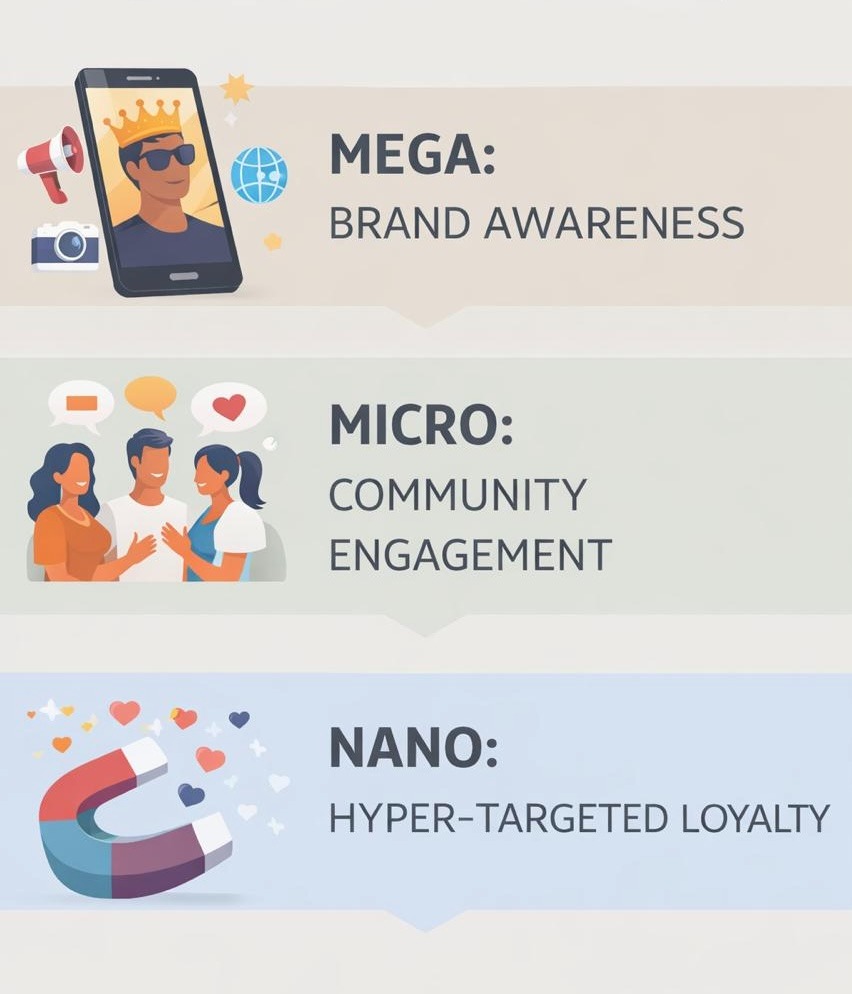
Different Types of Influencers Building Influence
These tiers serve different strategies:
Also Read: Storytelling in Marketing: Why Emotion Drives Sales
What Do Influencers Actually Do?
Influencers create social proof:
- Authentic reviews
- Tutorials and how-tos
- Trend interpretation
- Community building
They turn social interest into real decisions. This is why brands pay billions for influencer partnerships.
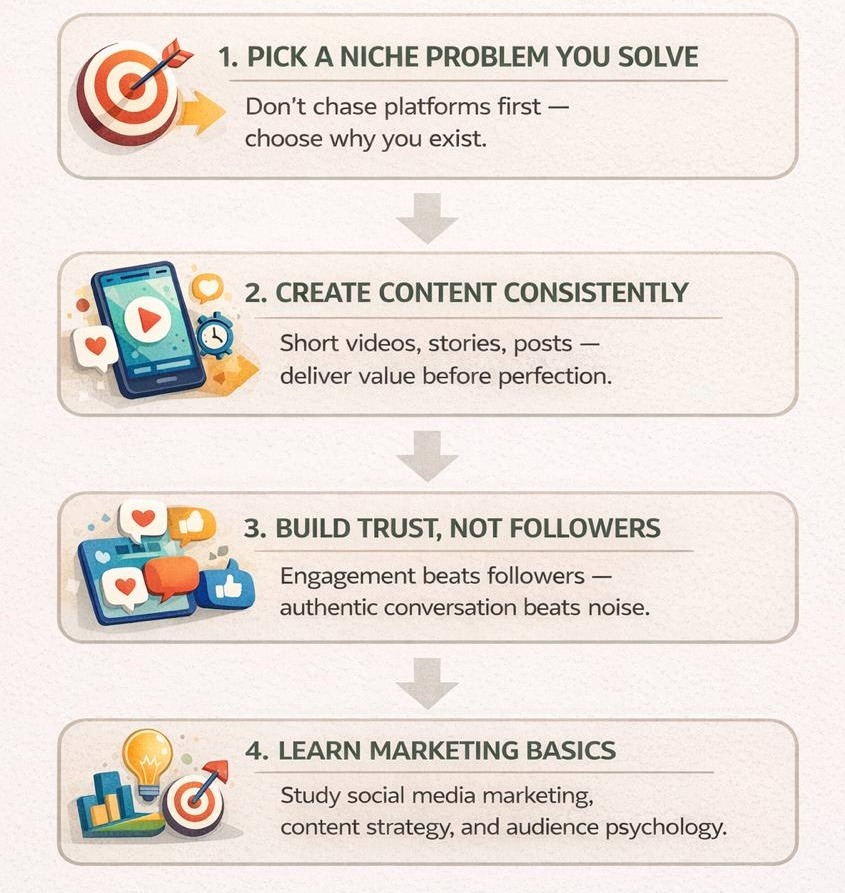
How to Become a Social Media Influencer - Step-by-Step
Here’s the repeatable path that successful influencers follow:
Skills Influencers Need Today
Influence does not just happen rather are built through:
- Storytelling and clarity
- Video & visual communication
- Audience psychology
- Analytics and optimization
- Brand collaboration strategy
This is why many serious creators study marketing fundamentals.
Recommended Courses to Boost Your Influencer Journey
To build a strong foundation, consider:
- Basics of Social Media Marketing
- Basics of Content Marketing
- Diploma in Digital Marketing
- Executive Diploma in Digital Marketing
Going viral is about timing and demand. These UniAthena courses help you understand both. While starting out costs nothing, the right learning equips you with frameworks for consistency, monetization, and scale, helping you move from random visibility to repeat demand, relevance, and breakout success.
Actionable Tips to Become an Influencer
- Focus on helping not just showing
- Share knowledge consistently
- Choose platforms that match your audience
- Leverage short-form video trends
- Always be learning and iterating
Also Read: The Psychology of Colours in Digital Advertising
Conclusion
Serve Purpose Not Popularity.
Becoming a successful influencer isn’t about overnight fame but about building trust, solving problems, and being consistent. Whether it’s a mega-star like Khaby Lame or a niche creator with 50K followers, the underlying principle remains the same:
Influence = Trust × Value × Consistency
Start with that and you’ll be building influence that lasts.
FAQs
Q1. What is an influencer in simple terms?
A: An influencer is someone whose content consistently affects how others think, decide, or buy.
Q2. Do you need millions of followers to be an influencer?
A: No, trust and engagement matter more than follower count.
Q3. Which type of influencer is most effective today?
A: Micro and nano influencers often deliver the highest engagement and conversion rates.
Q4. Is influencer marketing still growing in 2026?
A: Yes, it’s a multi-billion-dollar industry and now a core marketing channel for brands.
Q5. What skills do influencers actually need?
A: Storytelling, audience psychology, consistency, and basic marketing knowledge.
Q6. Can anyone become an influencer?
A: Ofcourse Yes, if they solve a real problem, show up consistently, and build trust over time.
Explore Related Courses










COMMENTS(0)
Explore Related Courses
Our Popular Insights
Careers are shifting faster than ever, and staying relevant takes more than experience. Explore UniAthena’s most-read blogs for sharp insights, emerging skills, and practical pathways that help you move forward with clarity and confidence in a changing professional world.


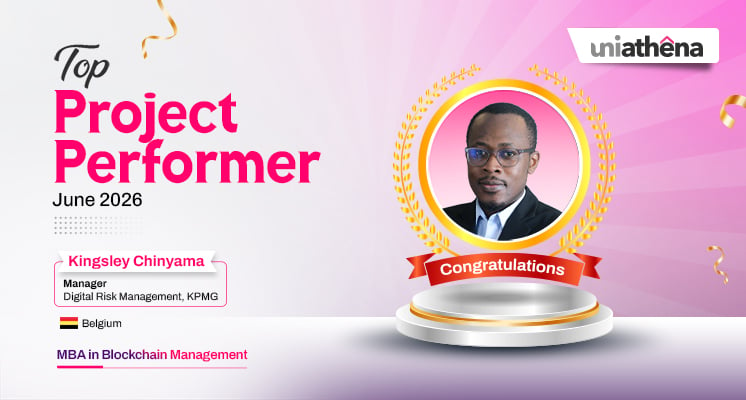
🌟 Top Project Performer – June 2026 🌟
Read More
1
mins read


🌟 Top Project Performer – May 2026 🌟
Read More
1
mins read

🌟 Top Project Performer – June 2026 🌟
Read more
1
mins read

🌟 Top Project Performer – May 2026 🌟
Read more
1
mins read
Get in Touch

It’s Time to Start
Join NowMost Popular Online Specialization
- Master of International Business Administration
- Master of Business Administration
- MBA in General Management- FastTrack
- Master in Innovation and Entrepreneurship
- MBA-Family Business Management
- Master in Procurement and Contract Management
- Extended Diploma in Business Analytics (SCQF Level 11)
- Diploma in Supply Chain and Logistics Management (SCQF Level 11)
- Strategic Human Resource Management Practitioner
- Master in Data Science
- Master in Engineering Management
Trending Online
- Integrated Doctorate of Business Administration
- Postgraduate Certificate in Finance for Next Generation Managers
- Master of Business Administration- General Management (Fast Track)
- Postgraduate Certificate in Socio-Economic and Legal Framework
- Postgraduate Certificate in Business Sustainability
- Certified Manager
- Supply Chain Management Practitioner
- MBA - AI in Business
- MBA - Accounting & Finance
- Master in Supply Chain and Logistics Management
Top Universities Online Certificates
- Postgraduate Certificate in International Marketing Management
- Postgraduate Certificate In International Human Resource Management
- Postgraduate Certificate in Strategic Management
- Postgraduate Certificate in Procurement & Contracts Management
- Postgraduate Certificate in Business Analytics
- Postgraduate Certificate in Strategic Supply Chain & Logistics Management
- Postgraduate Certificate in Human Resource and Leadership
- Project Management Practitioner
- Postgraduate Certificate in Supply Chain Design & Implementation
- Postgraduate Certificate in Management Accounting and Finance
Accredited Online Degree Program
- MBA - Digital Transformation
- MBA - Family Business Management
- MBA - Marketing Management
- MBA in Quality Management
- MBA - Business Intelligence & Data Analytics
- MBA in Operations & Project Management
- MBA in Energy Management
- MBA In Construction & Safety Management
- Master in Organisational Leadership
- Master in Public Health
- Master in Construction Management
- Bachelor of Arts in Business Administration


 Install Now


UniAthena is an Ed-Tech, offering flexible, affordable learning solutions, including Free-Learning Upskilling Courses and Academic Programs in partnerships with accredited and globally renowned universities and professional qualification bodies.


Do you have any questions ?
Feel free to send us your questions or request a free consultation
Send a message
UK
Athena Global Education
Magdalen Centre,
Robert Robinson Avenue,
Oxford, OX4 4GA, UK
Phone : 01865 784299
MIDDLE EAST
Athena Global Education FZE
Block L-03, First Floor,
P O Box 519265, Sharjah Publishing City,
Free Zone, Sharjah, UAE
Phone : +971 55 879 5492
INDIA
Uniathena Private Limited
9A,Midas Tower
Phase 1
Hinjewadi Rajiv Gandhi Infotech Park
Pune-411057
Phone: +91 9145665544
All Copyrights Reserved @ Athena Global Education 2021-2026