-

Bachelor's

-

Masters
-

MBA
-

Doctorate
-

Micro Credit
-

Explore all Courses
-
Postgraduate Certifications

-
Postgraduate Diploma
-
Undergraduate Diploma
-
Diploma



The Future of Strategic HRM in 2026 and Beyond

Author: ruchika nangia
|6
MINS READ
| 0
| 10
Created On: 25 June, 2026
Share




Table of Contents (TOC):
- Introduction
- AI in HR and Digital Transformation
- Strategic Workforce Planning and Talent Management
- The Future of Work: Hybrid and Remote Workforce Management
- International Human Resource Management and Global Talent Strategy
- The Rise of Strategic Human Resource Management
- Key HR Challenges in 2026 and Beyond
- Conclusion
Introduction
As organizations navigate rapid technological change, evolving workforce expectations, and increasing global competition, strategic workforce leadership is becoming a critical business function. In 2026 and beyond, HR will be expected not only to manage talent but also to influence business resilience, workforce transformation, and long-term organizational performance.
The future of human resources will focus not just on administrative tasks but also on promoting organizational growth, innovation, and resilience. Understanding emerging HR trends and the future of HR is crucial for business leaders who want to create agile, future-ready workforces. As organisations rethink their HR strategy and long-term HR strategic plan, human resource management in the future will play a central role in shaping business success.
AI in HR and Digital Transformation
One of the most important changes affecting human resource management in the future is the use of AI in HR. From hiring and talent acquisition to performance management and employee analytics, AI tools are changing traditional HR processes. Organizations are using HR technology to automate routine tasks, make better decisions, and improve employee experiences.
As a result, HR digital transformation has become a top priority for companies around the world. Modern HR technology is enabling organisations to automate routine processes, improve workforce insights, and accelerate strategic HR initiatives across the employee lifecycle.
However, the growing use of AI in HR also creates important strategic trade-offs. While automation improves efficiency and accelerates decision-making, organizations must balance these benefits against concerns related to fairness, transparency, bias, and employee privacy. The challenge is no longer whether to adopt AI, but how to use it responsibly while maintaining human judgment in critical workforce decisions.
Strategic Workforce Planning and Talent Management
Another important part of the future of HR is the increasing focus on strategic workforce planning. Organisations are investing in advanced workforce planning tools to better anticipate talent needs, address capability gaps, and align workforce priorities with long-term business goals.
Businesses are using better workforce planning tools to predict talent needs, spot skill gaps, and prepare for future business challenges.
Workforce analytics is also becoming a core component of modern HR strategy. By analysing workforce data, employee performance trends, retention patterns, and skills availability, organisations can make more informed talent decisions. This shift is transforming HR from a primarily people-focused function into a data-driven strategic partner that directly supports business planning and growth.
An effective talent management strategy and a strong talent management framework will help organizations attract, develop, and retain high-performing employees in a competitive labor market.
Unlike workforce planning approaches used a few years ago, organizations are increasingly shifting toward skills-based workforce models. Rather than focusing solely on job titles and traditional career paths, businesses are identifying critical skills, mapping capability gaps, and aligning talent investments with future business priorities.
Another major shift is the rise of skills-based organisations. Instead of relying solely on job titles, qualifications, or traditional career pathways, businesses are increasingly focusing on specific capabilities and transferable skills. Skills-first hiring, internal talent marketplaces, and skills-based workforce planning allow organisations to respond more quickly to changing business needs while creating greater career mobility for employees.
The Future of Work: Hybrid and Remote Workforce Management
The continuing rise of remote and hybrid work models is transforming future workplace practices. HR experts must create employee engagement strategies that promote collaboration and well-being across distributed teams. Meanwhile, organizations must review and revise their HR policies and procedures to reflect new workplace realities, including flexible work-from-home arrangements, cybersecurity requirements, and digital communication protocols.
Many future of work trends are forcing organisations to revisit traditional HR responsibilities and redesign employee engagement strategies for increasingly distributed teams. This shift requires HR leaders to modernise HR policies and procedures while maintaining productivity, collaboration, and employee wellbeing.
The future of work also presents new leadership challenges. Organizations must balance flexibility with culture, autonomy with accountability, and remote productivity with collaboration. HR leaders play a central role in designing employee experiences that support both organizational performance and workforce well-being.
Employee experience is becoming a key competitive differentiator. Beyond compensation, employees increasingly expect flexibility, meaningful work, professional development opportunities, wellbeing support, and a strong organisational culture. Organisations that prioritise workforce engagement and employee experience are often better positioned to attract, retain, and develop high-performing talent.
International Human Resource Management and Global Talent Strategy
As companies go cross-border, international human resource management and global human resources practices are becoming important. Organisations must develop HR strategy frameworks that support global growth while remaining responsive to local workforce needs and regulatory requirements.
HR leaders must balance global consistency with local workforce realities, regulatory requirements, and cultural expectations. Successfully managing this balance is becoming increasingly important as businesses compete for talent across diverse global markets.
A clearly defined HR strategic plan is necessary to align talent initiatives with global business objectives.
Also Read: Difference Between Domestic HRM and International HRM
The Rise of Strategic Human Resource Management
HR leaders are taking on greater business responsibilities as strategic human resource management evolves.
HRM is evolving rapidly in response to technological advancements, economic shifts, and changing workforce expectations.
Modern HR practices increasingly contribute to organisational performance by improving workforce capability, productivity, adaptability, and long-term business resilience.
As strategic human resource management continues to evolve, HR leaders are taking on greater influence in business decision-making. Workforce analytics increasingly inform investment priorities, talent strategies support digital transformation initiatives, and people-related decisions are becoming closely linked to business outcomes. The most successful organizations are increasingly treating workforce capabilities as a competitive advantage rather than a support function.
Leading organisations are increasingly implementing strategic HR initiatives that connect talent decisions directly to business outcomes. Strong examples of HR strategy include leadership development programs, skills-based workforce planning, succession planning, internal talent marketplaces, and workforce transformation initiatives designed to improve organisational agility.
Key HR Challenges in 2026 and Beyond
The future holds a number of HR challenges for organizations, including a potential lack of talent, rapid technological evolution, skills obsolescence, and changing employee expectations. To remain competitive, organizations must engage in HR transformation and continue investing in employee development, including reskilling and leadership development.
These HR challenges are accelerating the need for HR transformation. Organisations that fail to modernise their talent management framework and talent management strategy may struggle to attract, develop, and retain skilled professionals in an increasingly competitive labour market.
Employee expectations are also evolving rapidly. Modern professionals increasingly value flexibility, meaningful work, career development opportunities, and well-being alongside traditional compensation. Organizations that fail to adapt to these expectations may face greater challenges in attracting and retaining talent.
The blend of technology with human-centered leadership will give companies the greatest advantage for long-term success.
Also Read: Why HR professionals need a Business Management Degree?
Conclusion
The future of HR will be defined by an organisation's ability to integrate AI in HR, leverage HR technology effectively, execute strategic workforce planning, and align talent initiatives with broader business objectives. Strategic human resource management is no longer a support function. It is becoming a key driver of organisational performance and competitive advantage.
The future of HR management extends far beyond traditional people management. As workforce transformation accelerates, HR leaders will increasingly influence business strategy, organizational resilience, and long-term growth. Success will depend on balancing technology with human-centered leadership, leveraging workforce analytics responsibly, and building adaptable talent ecosystems that can respond to constant change.
The organizations that succeed in the coming decade may not be those with the most advanced technology, but those that can continuously develop, adapt, and retain talent in an increasingly dynamic business environment. In this future, strategic HR leadership will not simply support business success. It will help define it.
Our Popular Courses

$14000


Doctoral Degree in Business Administration
Universidad Catolica De Murcia (UCAM), Spain
Duration:
2 - 3 Years
$17500*
Integrated Doctorate of Business Administration
Guglielmo Marconi University, Italy
Universidad Catolica De Murcia (UCAM), Spain
Duration:
2.5 - 3.5 Years
$5600*
Master of Business Administration
Guglielmo Marconi University, Italy
Duration:
12 - 24 Months
$5600*
MBA in Operations & Project Management
Guglielmo Marconi University, Italy
Duration:
12 - 24 Months
$5600*
Master in Supply Chain and Logistics Management
Guglielmo Marconi University, Italy
Duration:
12 - 24 Months
$5950*
Master in Data Sciences
Guglielmo Marconi University, Italy
Duration:
12 - 24 Months
$5600*
Master in Engineering Management
Guglielmo Marconi University, Italy
Duration:
12 - 24 Months
$5600*
Master in Procurement and Contract Management
Guglielmo Marconi University, Italy
Duration:
12 - 24 Months
$5600*
Master in Public Health
Guglielmo Marconi University, Italy
Duration:
12 - 24 MonthsOur Popular Courses
COMMENTS(0)
Our Popular Courses
$14000
Doctoral Degree in Business Administration
Universidad Catolica De Murcia (UCAM), Spain
Duration:
2 - 3 Years
$17500*
Integrated Doctorate of Business Administration
Guglielmo Marconi University, Italy
Universidad Catolica De Murcia (UCAM), Spain
Duration:
2.5 - 3.5 Years
$5600*
Master of Business Administration
Guglielmo Marconi University, Italy
Duration:
12 - 24 Months
$5600*
MBA in Operations & Project Management
Guglielmo Marconi University, Italy
Duration:
12 - 24 Months
$5600*
Master in Supply Chain and Logistics Management
Guglielmo Marconi University, Italy
Duration:
12 - 24 Months
$5950*
Master in Data Sciences
Guglielmo Marconi University, Italy
Duration:
12 - 24 Months
$5600*
Master in Engineering Management
Guglielmo Marconi University, Italy
Duration:
12 - 24 Months
$5600*
Master in Procurement and Contract Management
Guglielmo Marconi University, Italy
Duration:
12 - 24 Months
$5600*
Master in Public Health
Guglielmo Marconi University, Italy
Duration:
12 - 24 MonthsOur Popular Courses
Our Popular Insights
Careers are shifting faster than ever, and staying relevant takes more than experience. Explore UniAthena’s most-read blogs for sharp insights, emerging skills, and practical pathways that help you move forward with clarity and confidence in a changing professional world.


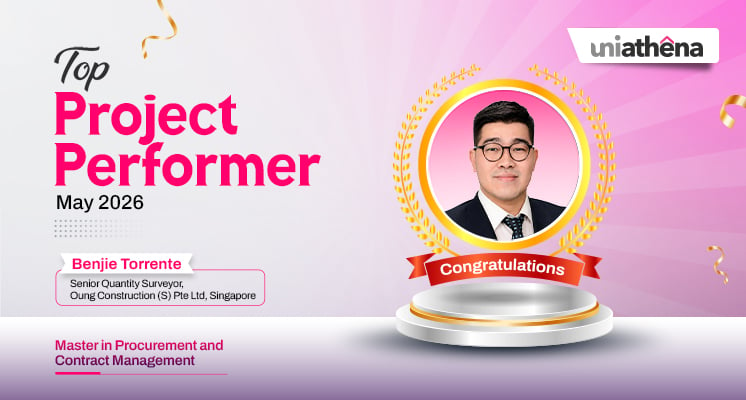
🌟 Top Project Performer – May 2026 🌟
Read More
1
mins read

How Do I Improve My Grammar?
Read More
5
mins read

How to Start a Business?
Read More
8
mins read
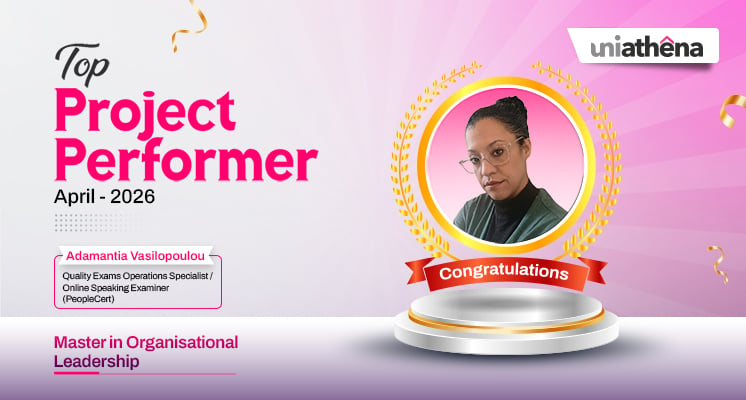
🌟 Top Project Performer – April 2026 🌟
Read More
1
mins read


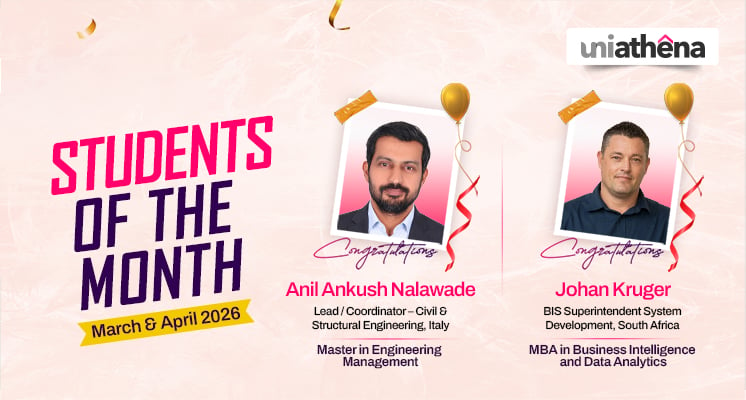
🌟 Top Project Performer – May 2026 🌟
Read more
1
mins read
How Do I Improve My Grammar?
Read more
5
mins read
How to Start a Business?
Read more
8
mins read
🌟 Top Project Performer – April 2026 🌟
Read more
1
mins read
Get in Touch

It’s Time to Start
Join NowMost Popular Online Specialization
- Master of International Business Administration
- Master of Business Administration
- MBA in General Management- FastTrack
- Master in Innovation and Entrepreneurship
- MBA-Family Business Management
- Master in Procurement and Contract Management
- Extended Diploma in Business Analytics (SCQF Level 11)
- Diploma in Supply Chain and Logistics Management (SCQF Level 11)
- Strategic Human Resource Management Practitioner
- Master in Data Science
- Master in Engineering Management
Trending Online
- Integrated Doctorate of Business Administration
- Postgraduate Certificate in Finance for Next Generation Managers
- Master of Business Administration- General Management (Fast Track)
- Postgraduate Certificate in Socio-Economic and Legal Framework
- Postgraduate Certificate in Business Sustainability
- Certified Manager
- Supply Chain Management Practitioner
- MBA - AI in Business
- MBA - Accounting & Finance
- Master in Supply Chain and Logistics Management
Top Universities Online Certificates
- Postgraduate Certificate in International Marketing Management
- Postgraduate Certificate In International Human Resource Management
- Postgraduate Certificate in Strategic Management
- Postgraduate Certificate in Procurement & Contracts Management
- Postgraduate Certificate in Business Analytics
- Postgraduate Certificate in Strategic Supply Chain & Logistics Management
- Postgraduate Certificate in Human Resource and Leadership
- Project Management Practitioner
- Postgraduate Certificate in Supply Chain Design & Implementation
- Postgraduate Certificate in Management Accounting and Finance
Accredited Online Degree Program
- MBA - Digital Transformation
- MBA - Family Business Management
- MBA - Marketing Management
- MBA in Quality Management
- MBA - Business Intelligence & Data Analytics
- MBA in Operations & Project Management
- MBA in Energy Management
- MBA In Construction & Safety Management
- Master in Organisational Leadership
- Master in Public Health
- Master in Construction Management
- Bachelor of Arts in Business Administration


 Install Now


UniAthena is an Ed-Tech, offering flexible, affordable learning solutions, including Free-Learning Upskilling Courses and Academic Programs in partnerships with accredited and globally renowned universities and professional qualification bodies.


Do you have any questions ?
Feel free to send us your questions or request a free consultation
Send a message
UK
Athena Global Education
Magdalen Centre,
Robert Robinson Avenue,
Oxford, OX4 4GA, UK
Phone : 01865 784299
MIDDLE EAST
Athena Global Education FZE
Block L-03, First Floor,
P O Box 519265, Sharjah Publishing City,
Free Zone, Sharjah, UAE
Phone : +971 55 879 5492
INDIA
Uniathena Private Limited
9A,Midas Tower
Phase 1
Hinjewadi Rajiv Gandhi Infotech Park
Pune-411057
Phone: +91 9145665544
All Copyrights Reserved @ Athena Global Education 2021-2026