-

Bachelor's

-

Masters
-

MBA
-

Doctorate
-

Micro Credit
-

Explore all Courses
-
Postgraduate Certifications

-
Postgraduate Diploma
-
Undergraduate Diploma
-
Diploma



Why Biodiversity is Important for Human Survival
Author: maharajan p
|7
MINS READ
| 0
| 13
Created On: 24 June, 2026
Share




Table of Contents (TOC):
- Introduction
- Key Takeaways
- What is Biodiversity?
- Types of Biodiversity
- How Biodiversity Supports Ecosystem Balance
- Why Biodiversity is Important for Human Survival
- Real-World Effects of Biodiversity Loss
- Bottom line
- FAQs
Introduction
What would happen if bees disappeared? Or if forests stopped regulating rainfall and temperature the way they do today?
Many systems humans depend on every day, including food production, clean water, climate balance, and even medicine, are closely connected to biodiversity. Yet biodiversity loss is happening across the world at an alarming rate.
As biodiversity declines, these natural systems become more fragile. Understanding how biodiversity works is important not only for environmental awareness, but also for understanding how human survival is connected to ecosystem balance.
Key Takeaways:
- The importance of biodiversity can be seen in how it supports food systems, clean water, climate regulation, and ecosystem stability essential for human survival.
- Genetic, species, and ecosystem diversity together help natural systems remain balanced, resilient, and environmentally sustainable over time.
- The value of biodiversity becomes more visible as biodiversity loss continues to affect pollination, freshwater systems, marine ecosystems, and climate stability worldwide.
- Protecting biodiversity helps strengthen ecosystems, reduce environmental risks, and support healthier living conditions for future generations.
What is Biodiversity?
Biodiversity refers to the rich variety of life on Earth. It includes all living things such as plants, animals, fungi, and tiny microorganisms. It also covers the ecosystems where they live, including forests, oceans, rivers, deserts, and grasslands.
In simple terms, biodiversity is what keeps nature functioning as a connected system.
For example, a forest is not made up of trees alone. It also includes birds, insects, soil organisms, fungi, and animals that depend on each other to survive. If one part of that system disappears, it can affect the entire ecosystem over time.
Biodiversity is usually grouped into three main types:
- Species Diversity: different kinds of plants and animals
- Genetic Diversity: differences within the same species
- Ecosystem Diversity: different natural environments and habitats
Types of Biodiversity
Biodiversity is divided into three main types: species diversity, genetic diversity, and ecosystem diversity. Each type explains a different aspect of how life exists and functions in nature.
1. Species Diversity
Species diversity refers to the variety of different plants, animals, fungi, and microorganisms found in a specific area.
A place with high species diversity has many different living organisms interacting with each other. For example, a rainforest has thousands of plant species, along with birds, insects, reptiles, and mammals all sharing the same environment.
Higher species diversity usually means a more stable and resilient ecosystem.
2. Genetic Diversity
Genetic diversity refers to differences within the same species.
Even when organisms belong to the same species, they are not completely identical. These genetic differences help species adapt to environmental changes, resist diseases, and survive over time.
For example, different varieties of rice can have different traits such as drought resistance, growth speed, or grain size. Similarly, humans also show genetic differences in features like eye color, height, and immunity.
Genetic diversity is important because it improves the long-term survival and adaptability of species.
3. Ecosystem Diversity
Ecosystem diversity refers to the variety of different natural environments on Earth. This includes forests, deserts, oceans, rivers, wetlands, grasslands, and mountain ecosystems. Each ecosystem has its own climate, species, and natural processes.
For example, a desert ecosystem is very different from a coral reef ecosystem, but both support unique forms of life adapted to their conditions.
Ecosystem diversity ensures that life exists in many different forms and conditions across the planet.
How Biodiversity Supports Ecosystem Balance
Every ecosystem depends on a network of living organisms working together. Plants, animals, fungi, bacteria, and other microorganisms each play a role in keeping natural systems stable. When biodiversity is strong, ecosystems are better able to function, recover from disruptions, and support life over time.
Here are some of the major ways biodiversity helps maintain ecosystem balance:
- Supports food chains and food webs:
Different species depend on each other for food and survival. If one species disappears, it can affect predators, prey, and other organisms connected to that ecosystem.
- Maintains soil fertility and nutrient cycling:
Soil organisms, fungi, and bacteria break down dead organic matter and return nutrients back into the soil. This process supports plant growth and healthy agricultural systems.
- Supports pollination in crops and plants:
Bees, butterflies, birds, bats, and other pollinators help plants reproduce. According to the World Health Organization, more than 75% of global food crops depend partly on pollinators.
- Helps ecosystems resist diseases:
Biodiverse ecosystems help control the spread of harmful organisms. Balanced ecosystems reduce the chances of a single disease or invasive species spreading rapidly.
- Regulates climate and environmental conditions:
Forests, oceans, wetlands, and grasslands absorb carbon dioxide, regulate temperature, and reduce soil erosion. Forest ecosystems alone absorb around 2.6 billion tonnes of carbon dioxide each year.
- Supports water purification and storage:
Wetlands, rivers, and natural vegetation help filter pollutants from water and maintain freshwater systems used by humans and wildlife.
- Improves ecosystem resilience:
Ecosystems with higher biodiversity are generally more resilient to floods, droughts, wildfires, and climate-related disruptions because multiple species help maintain ecosystem functions.
Together, these functions help ecosystems remain stable, productive, and capable of supporting both environmental and human survival.
Why Biodiversity is Important for Human Survival
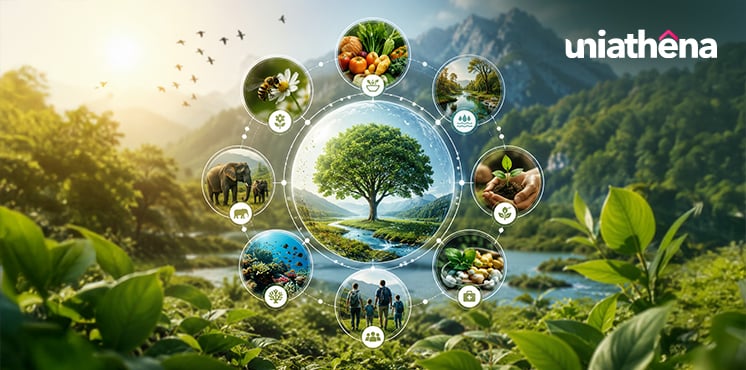
Biodiversity is not only important for nature, it is also closely connected to human survival. The food we eat, the water we use, the air we breathe, and many medicines we depend on all come from healthy ecosystems supported by biodiversity.
When biodiversity declines, these natural systems become weaker and less reliable over time. This can affect food production, public health, climate stability, and overall quality of life.
Also Read: What is Environmental Impact Assessment (EIA)?
Here are some of the major reasons biodiversity is important for human survival:
- Supports global food production by maintaining pollination, soil fertility, and healthy agricultural systems.
- Provides natural sources for medicines used in modern healthcare and medical research.
- Helps purify air and water through forests, wetlands, oceans, and other ecosystems.
- Regulates climate conditions by absorbing carbon dioxide and maintaining environmental balance.
- Reduces the spread of diseases by supporting balanced ecosystems and limiting harmful outbreaks.
- Protects livelihoods and economies connected to agriculture, fisheries, forestry, and tourism.
- Strengthens ecosystem resilience against droughts, floods, wildfires, and climate-related disruptions.
- Supports oxygen production and nutrient cycles that sustain life on Earth.
- Preserves genetic diversity that helps species adapt to environmental changes over time.
- Maintains overall ecosystem stability needed for long-term human and environmental survival.
Real-World Effects of Biodiversity Loss
What happens when biodiversity starts declining?
The effects are not limited to forests or wildlife alone. Over time, biodiversity loss can affect food production, water systems, climate stability, and even local economies. In many parts of the world, some of these impacts are already visible.
Here are a few real-world examples that show how biodiversity loss is affecting ecosystems and human life:
- Declining bee populations are affecting food production:
Bees and other pollinators play a major role in helping crops grow. In fact, more than 75% of global food crops depend partly on pollinators. However, habitat destruction, pesticide use, and climate change have contributed to major declines in bee populations worldwide. This is already affecting the production of fruits, vegetables, and nuts in several regions.
- Wetland destruction is increasing water-related problems:
Wetlands help filter water naturally and reduce flooding risks. But nearly 35% of the world’s wetlands have disappeared since 1970. As these ecosystems decline, many regions face higher risks of water pollution, poor water storage, and flooding during heavy rainfall.
- Coral reef loss is disrupting marine ecosystems:
Coral reefs support nearly 25% of marine life and protect coastal communities from strong ocean waves. Rising ocean temperatures, pollution, and overfishing have caused serious coral reef damage across the world. This has affected fish populations, marine biodiversity, tourism, and food security in many coastal areas.
If you want to explore how biodiversity and ecosystems function in greater detail, this short course can be a good starting point.
The Basics of Biodiversity & Ecosystems program covers:
- Fundamental concepts related to biodiversity and ecosystem balance
- Different types of biodiversity and their environmental role
- Real-world environmental challenges linked to biodiversity loss and conservation
Access the course: Basics of Biodiversity & Ecosystems
Bottom line
Biodiversity is not limited to wildlife or forests. It supports the ecosystems that humans depend on for food, clean water, medicine, climate stability, and environmental balance.
As biodiversity declines, ecosystems become weaker and less capable of supporting life sustainably. Protecting biodiversity is therefore not only an environmental concern, but also a long-term necessity for human survival.
Also Read: What is Environmental Governance?
FAQs
Q1. What is biodiversity in simple words?
A: Biodiversity refers to the variety of living organisms, including plants, animals, microorganisms, and the ecosystems they inhabit.
Q2. Why is biodiversity important for humans?
A: Biodiversity supports food systems, clean water, climate regulation, medicines, and ecosystem stability essential for human survival.
Q3. What are the three main types of biodiversity?
A: The three main types are genetic diversity, species diversity, and ecosystem diversity across different natural environments.
Q4. How does biodiversity support ecosystems?
A: Biodiversity helps maintain food chains, nutrient cycling, pollination, water purification, and overall ecosystem balance and resilience.
Q5. What causes biodiversity loss?
A: Deforestation, pollution, climate change, habitat destruction, and overuse of natural resources are major causes of biodiversity loss.
Our Popular Courses

$14000


Doctoral Degree in Business Administration
Universidad Catolica De Murcia (UCAM), Spain
Duration:
2 - 3 Years
$17500*
Integrated Doctorate of Business Administration
Guglielmo Marconi University, Italy
Universidad Catolica De Murcia (UCAM), Spain
Duration:
2.5 - 3.5 Years
$5600*
Master of Business Administration
Guglielmo Marconi University, Italy
Duration:
12 - 24 Months
$5600*
MBA in Operations & Project Management
Guglielmo Marconi University, Italy
Duration:
12 - 24 Months
$5600*
Master in Supply Chain and Logistics Management
Guglielmo Marconi University, Italy
Duration:
12 - 24 Months
$5950*
Master in Data Sciences
Guglielmo Marconi University, Italy
Duration:
12 - 24 Months
$5600*
Master in Engineering Management
Guglielmo Marconi University, Italy
Duration:
12 - 24 Months
$5600*
Master in Procurement and Contract Management
Guglielmo Marconi University, Italy
Duration:
12 - 24 Months
$5600*
Master in Public Health
Guglielmo Marconi University, Italy
Duration:
12 - 24 MonthsOur Popular Courses
COMMENTS(0)
Our Popular Courses
$14000
Doctoral Degree in Business Administration
Universidad Catolica De Murcia (UCAM), Spain
Duration:
2 - 3 Years
$17500*
Integrated Doctorate of Business Administration
Guglielmo Marconi University, Italy
Universidad Catolica De Murcia (UCAM), Spain
Duration:
2.5 - 3.5 Years
$5600*
Master of Business Administration
Guglielmo Marconi University, Italy
Duration:
12 - 24 Months
$5600*
MBA in Operations & Project Management
Guglielmo Marconi University, Italy
Duration:
12 - 24 Months
$5600*
Master in Supply Chain and Logistics Management
Guglielmo Marconi University, Italy
Duration:
12 - 24 Months
$5950*
Master in Data Sciences
Guglielmo Marconi University, Italy
Duration:
12 - 24 Months
$5600*
Master in Engineering Management
Guglielmo Marconi University, Italy
Duration:
12 - 24 Months
$5600*
Master in Procurement and Contract Management
Guglielmo Marconi University, Italy
Duration:
12 - 24 Months
$5600*
Master in Public Health
Guglielmo Marconi University, Italy
Duration:
12 - 24 MonthsOur Popular Courses
Our Popular Insights
Careers are shifting faster than ever, and staying relevant takes more than experience. Explore UniAthena’s most-read blogs for sharp insights, emerging skills, and practical pathways that help you move forward with clarity and confidence in a changing professional world.

How to Start a Business?
Read More
8
mins read


🌟 Top Project Performer – May 2026 🌟
Read More
1
mins read


🌟 Top Project Performer – April 2026 🌟
Read More
1
mins read

How Do I Improve My Grammar?
Read More
5
mins read


How to Start a Business?
Read more
8
mins read
🌟 Top Project Performer – May 2026 🌟
Read more
1
mins read

🌟 Top Project Performer – April 2026 🌟
Read more
1
mins read
How Do I Improve My Grammar?
Read more
5
mins read
Get in Touch

It’s Time to Start
Join NowMost Popular Online Specialization
- Master of International Business Administration
- Master of Business Administration
- MBA in General Management- FastTrack
- Master in Innovation and Entrepreneurship
- MBA-Family Business Management
- Master in Procurement and Contract Management
- Extended Diploma in Business Analytics (SCQF Level 11)
- Diploma in Supply Chain and Logistics Management (SCQF Level 11)
- Strategic Human Resource Management Practitioner
- Master in Data Science
- Master in Engineering Management
Trending Online
- Integrated Doctorate of Business Administration
- Postgraduate Certificate in Finance for Next Generation Managers
- Master of Business Administration- General Management (Fast Track)
- Postgraduate Certificate in Socio-Economic and Legal Framework
- Postgraduate Certificate in Business Sustainability
- Certified Manager
- Supply Chain Management Practitioner
- MBA - AI in Business
- MBA - Accounting & Finance
- Master in Supply Chain and Logistics Management
Top Universities Online Certificates
- Postgraduate Certificate in International Marketing Management
- Postgraduate Certificate In International Human Resource Management
- Postgraduate Certificate in Strategic Management
- Postgraduate Certificate in Procurement & Contracts Management
- Postgraduate Certificate in Business Analytics
- Postgraduate Certificate in Strategic Supply Chain & Logistics Management
- Postgraduate Certificate in Human Resource and Leadership
- Project Management Practitioner
- Postgraduate Certificate in Supply Chain Design & Implementation
- Postgraduate Certificate in Management Accounting and Finance
Accredited Online Degree Program
- MBA - Digital Transformation
- MBA - Family Business Management
- MBA - Marketing Management
- MBA in Quality Management
- MBA - Business Intelligence & Data Analytics
- MBA in Operations & Project Management
- MBA in Energy Management
- MBA In Construction & Safety Management
- Master in Organisational Leadership
- Master in Public Health
- Master in Construction Management
- Bachelor of Arts in Business Administration


 Install Now


UniAthena is an Ed-Tech, offering flexible, affordable learning solutions, including Free-Learning Upskilling Courses and Academic Programs in partnerships with accredited and globally renowned universities and professional qualification bodies.


Do you have any questions ?
Feel free to send us your questions or request a free consultation
Send a message
UK
Athena Global Education
Magdalen Centre,
Robert Robinson Avenue,
Oxford, OX4 4GA, UK
Phone : 01865 784299
MIDDLE EAST
Athena Global Education FZE
Block L-03, First Floor,
P O Box 519265, Sharjah Publishing City,
Free Zone, Sharjah, UAE
Phone : +971 55 879 5492
INDIA
Uniathena Private Limited
9A,Midas Tower
Phase 1
Hinjewadi Rajiv Gandhi Infotech Park
Pune-411057
Phone: +91 9145665544
All Copyrights Reserved @ Athena Global Education 2021-2026