-

Bachelor's

-

Masters
-

MBA
-

Doctorate
-

Micro Credit
-

Explore all Courses
-
Postgraduate Certifications

-
Postgraduate Diploma
-
Undergraduate Diploma
-
Diploma



From SEO to GEO: The New Rules of Digital Marketing

Author: ankita jawalkar
|3
MINS READ
| 0
| 73
Created On: 27 March, 2026
Share




Table of Contents (TOC):
- New Rulebook: The Age of the Evolving Consumer
- The Rise of the Sophisticated Searcher
- Phygital Retail: Intelligent Omnichannel Commerce
- The Expectation of Hyper-Personalization
- Authenticity Over Production Value
- The Ethics of Influence
New Rulebook: The Age of the Evolving Consumer
In 2026, the digital marketing landscape is no longer a one-way street. The power dynamic has shifted decisively into the hands of the consumer, who is more informed, more skeptical, and more technologically integrated than at any point in history. For marketing managers, success no longer comes from shouting the loudest, but from listening the closest and responding with meticulous precision.
The Rise of the Sophisticated Searcher
The traditional linear marketing process of Awareness, Interest, Desire, and Action has been replaced with the "messy middle" of perpetual evaluation. Today's consumer is the "Search Everywhere" enthusiast. They no longer "Google it"; they TikTok it, they ask their AI, and they survey their Discord communities.
This shift requires marketing teams to move beyond traditional SEO toward Generative Engine Optimization (GEO). In order to stay relevant, we have to make sure that our data is optimized so that the AI models cite us as a source. If your AI assistant does not recommend your product when someone asks the question "What is the best sustainable running shoe?" then you might as well not exist.
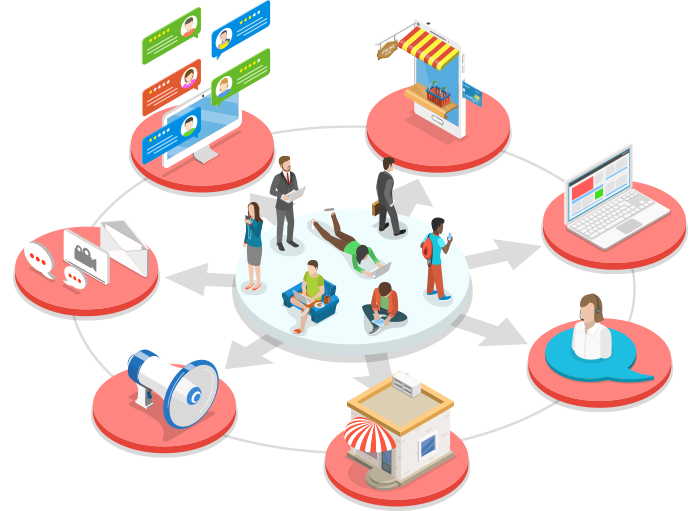
Phygital Retail: Intelligent Omnichannel Commerce
This visual represents the shift from isolated marketing silos to a unified consumer-centric ecosystem. At the heart of the model is the modern, device-agnostic shopper who expects a seamless transition between the digital and physical worlds.
The strategy is defined by four key integration points:
- Platform Fluidity: Whether a customer is browsing reviews, using a mobile app, or visiting a physical storefront, the brand experience remains consistent and interconnected.
- Real-Time Data Loops: The arrows signify a two-way flow of information. Insights gathered from social media or customer support calls immediately inform the personalized offers sent via email or displayed in-store.
- Frictionless Support: By integrating live chat, video, and call centers, management ensures that help is available at the exact moment of a "pain point," preventing cart abandonment.
- Harmonized Messaging: Traditional "push" advertising (the megaphone) is balanced with "pull" engagement (community reviews), creating a trustworthy and holistic brand presence.
Also Read: Why SEO is Essential for Product Marketing in the AI Era
The Expectation of Hyper-Personalization
Despite increasing awareness of privacy concerns, consumers expect highly personalized experiences. They value both data protection and tailored interactions that reflect their preferences and behavior.
In response, digital marketing management is increasingly focused on first-party data strategies and agent-driven systems. By using Customer Data Platforms (CDPs), organizations can deploy AI agents that deliver real-time, context-specific interactions, such as personalized recommendations or targeted offers.
This shift moves marketing from segment-based targeting to individualized engagement, often described as a “segment of one.” As a result, generic communication methods are becoming less effective and are often ignored.
Authenticity Over Production Value
The "Instagram-perfect" aesthetic has faded, replaced by a demand for radical authenticity. The rise of short-form, shoppable video has turned every smartphone into a storefront. Consumers now trust User-Generated Content (UGC) and micro-influencers far more than celebrity endorsements or high-budget commercials.
Marketing managers must now act more like community curators than advertising directors. The goal is to facilitate "Phygital" experiences—where a customer might use Augmented Reality (AR) to see how a sofa looks in their living room before clicking a "Buy Now" button that triggers a local store pickup.
Also Read: Free Digital Marketing Courses with Certificates
The Ethics of Influence
The modern consumer increasingly aligns purchasing decisions with personal values. Brand positioning around sustainability, data ethics, and social responsibility has become a meaningful factor in consumer choice.
In this context, the role of digital marketing management is to ensure that these values are consistently reflected across all customer touchpoints.
Digital marketing today involves balancing advanced technologies with human-centered communication. The evolution of consumer behavior continues to emphasize transparency, personalization, and responsiveness.
Rather than focusing only on technological capability, marketing effectiveness now depends on how well organizations connect these tools to genuine consumer needs and expectations.
Explore Related Courses









COMMENTS(0)
Explore Related Courses
Our Popular Insights
Careers are shifting faster than ever, and staying relevant takes more than experience. Explore UniAthena’s most-read blogs for sharp insights, emerging skills, and practical pathways that help you move forward with clarity and confidence in a changing professional world.

🌟 Top Project Performer – June 2026 🌟
Read More
1
mins read



🌟 Top Project Performer – May 2026 🌟
Read More
1
mins read


🌟 Top Project Performer – April 2026 🌟
Read More
1
mins read
🌟 Top Project Performer – June 2026 🌟
Read more
1
mins read
🌟 Top Project Performer – May 2026 🌟
Read more
1
mins read
🌟 Top Project Performer – April 2026 🌟
Read more
1
mins read
Get in Touch

It’s Time to Start
Join NowMost Popular Online Specialization
- Master of International Business Administration
- Master of Business Administration
- MBA in General Management- FastTrack
- Master in Innovation and Entrepreneurship
- MBA-Family Business Management
- Master in Procurement and Contract Management
- Extended Diploma in Business Analytics (SCQF Level 11)
- Diploma in Supply Chain and Logistics Management (SCQF Level 11)
- Strategic Human Resource Management Practitioner
- Master in Data Science
- Master in Engineering Management
Trending Online
- Integrated Doctorate of Business Administration
- Postgraduate Certificate in Finance for Next Generation Managers
- Master of Business Administration- General Management (Fast Track)
- Postgraduate Certificate in Socio-Economic and Legal Framework
- Postgraduate Certificate in Business Sustainability
- Certified Manager
- Supply Chain Management Practitioner
- MBA - AI in Business
- MBA - Accounting & Finance
- Master in Supply Chain and Logistics Management
Top Universities Online Certificates
- Postgraduate Certificate in International Marketing Management
- Postgraduate Certificate In International Human Resource Management
- Postgraduate Certificate in Strategic Management
- Postgraduate Certificate in Procurement & Contracts Management
- Postgraduate Certificate in Business Analytics
- Postgraduate Certificate in Strategic Supply Chain & Logistics Management
- Postgraduate Certificate in Human Resource and Leadership
- Project Management Practitioner
- Postgraduate Certificate in Supply Chain Design & Implementation
- Postgraduate Certificate in Management Accounting and Finance
Accredited Online Degree Program
- MBA - Digital Transformation
- MBA - Family Business Management
- MBA - Marketing Management
- MBA in Quality Management
- MBA - Business Intelligence & Data Analytics
- MBA in Operations & Project Management
- MBA in Energy Management
- MBA In Construction & Safety Management
- Master in Organisational Leadership
- Master in Public Health
- Master in Construction Management
- Bachelor of Arts in Business Administration


 Install Now


UniAthena is an Ed-Tech, offering flexible, affordable learning solutions, including Free-Learning Upskilling Courses and Academic Programs in partnerships with accredited and globally renowned universities and professional qualification bodies.


Do you have any questions ?
Feel free to send us your questions or request a free consultation
Send a message
UK
Athena Global Education
Magdalen Centre,
Robert Robinson Avenue,
Oxford, OX4 4GA, UK
Phone : 01865 784299
MIDDLE EAST
Athena Global Education FZE
Block L-03, First Floor,
P O Box 519265, Sharjah Publishing City,
Free Zone, Sharjah, UAE
Phone : +971 55 879 5492
INDIA
Uniathena Private Limited
9A,Midas Tower
Phase 1
Hinjewadi Rajiv Gandhi Infotech Park
Pune-411057
Phone: +91 9145665544
All Copyrights Reserved @ Athena Global Education 2021-2026