-

Bachelor's

-

Masters
-

MBA
-

Doctorate
-

Micro Credit
-

Explore all Courses
-
Postgraduate Certifications

-
Postgraduate Diploma
-
Undergraduate Diploma
-
Diploma



Data Analyst vs Business Analyst: What’s the Difference & Which Career Is Better Now?

Author: aishwarya sancheti
|5
MINS READ
| 2
| 1,146
Created On: 22 December, 2025
Share




Table of Contents (TOC):
- Introduction
- What Do Data Analysts and Business Analysts Actually Do?
- What Does a Data Analyst Do?
- What Does a Business Analyst Do?
- Data Analyst vs Business Analyst
- Salary Overview
- Skill-Building Starting Points
- Future Job Market: What’s Changing Next?
- Conclusion: Which Career Is Better for You?
- FAQs
Introduction
In the modern career world, choosing between a Data Analyst and a Business Analyst has become the new “Excel vs Python” debate and the noise isn’t slowing down anytime soon.
The digital workforce is now split into two fast-growing tribes: the data people (Data Analysts) and the business people (Business Analysts).
And honestly? The debate is getting louder every month.
A recent LinkedIn Workforce insight shows that Data Analyst and Business Analyst roles consistently rank among the top 10 most in-demand digital jobs worldwide, while global Google searches for terms like:
- “business analyst vs data analyst”
- “difference between data analyst and business analyst”
- “data analyst vs business analyst salary”
- “data analyst vs business analyst which is better”
have surged dramatically, rising 40%+ year-on-year.
People aren’t just curious anymore. They’re comparing skills, salaries, job descriptions, career stability, and even personality fit, because everyone wants a career that is:
✔ future-proof
✔ high-earning
✔ in-demand
✔ and resilient in an AI-driven workplace
So if you’ve ever searched “business analyst vs data analyst which is better”, you’re at the right place. This comparison is now one of the most popular global career questions, especially among freshers, career-switchers, and professionals upgrading their tech or analytics skills.
Key Takeaways:
- Data Analysts focus on tools, data, and insights; Business Analysts focus on processes, requirements, and decisions.
- BAs typically start with slightly higher salaries, while DAs often surpass later through advanced technical specializations.
- Global demand for both roles is rising due to digital transformation, AI adoption, and the need for data-driven decision-making.
- A strong learning foundation through flexible, industry-relevant online programs helps beginners transition smoothly into either role.
- The best career depends on your personality: choose data-heavy work for DA or business-focused, communication-driven work for BA.
What Do Data Analysts & Business Analysts Actually Do?
What Does a Data Analyst Do? ( Job Description)
A Data Analyst turns raw data into useful insights. Their daily tasks include:
- Collecting & cleaning data
- Writing SQL queries
- Running Python/R scripts
- Building dashboards (Power BI / Tableau)
- Identifying trends, patterns, risks
In short: Data Analysts answer “What is happening?” using data.
What Does a Business Analyst Do? (Job Description)
A Business Analyst works with teams, processes, and business goals. Their daily tasks include:
- Understanding business problems
- Gathering & documenting requirements
- Mapping processes and workflows
- Communicating with stakeholders
- Recommending improvements
In short: Business Analysts answer “Why is it happening?” and “What should we change?”
Data Analyst vs Business Analyst
Salary Overview
- Business Analyst Salary (Global Average): ~$85,000
- Data Analyst Salary (Global Average): ~$75,000
Business Analysts start slightly higher due to their proximity to decision-making, while Data Analysts often surpass BAs later if they transition into advanced.

Skill-Building Starting Points
Before diving into either career, it helps to build a strong foundation with the right learning path. Platforms like UniAthena offer flexible, online, industry-relevant programs that let you learn anytime, anywhere - whether you’re working, switching careers, or upskilling from home.
Business understanding, requirement analysis, communication frameworks, decision-making skills
Future Job Market: What’s Changing Next?
The analytics job market is evolving rapidly, and the demand for skilled professionals is rising across industries and geographies. Whether in finance, healthcare, e‑commerce, government, telecom, or startups, analytics skills are needed globally.
Here are some Stats that shows the broader view of Data Market:
- Shortage of skilled data analysts globally - about 53% of organizations report a shortage of skilled Data Analysts.
- Projected global job growth for data‑related occupations - data‑science/data‑analysis roles expected to grow much faster than average (5.3%) over 2021–2031 period.
- Data‑analyst job growth projected at 11% from 2018–2028, with over 108,400 new jobs in that period; average data‑analyst pay ≈ US $74,342 annually (2025 estimate).
- About 57% of European enterprises have adopted analytics for process optimization; many are integrating AI-driven analytics for efficiency.
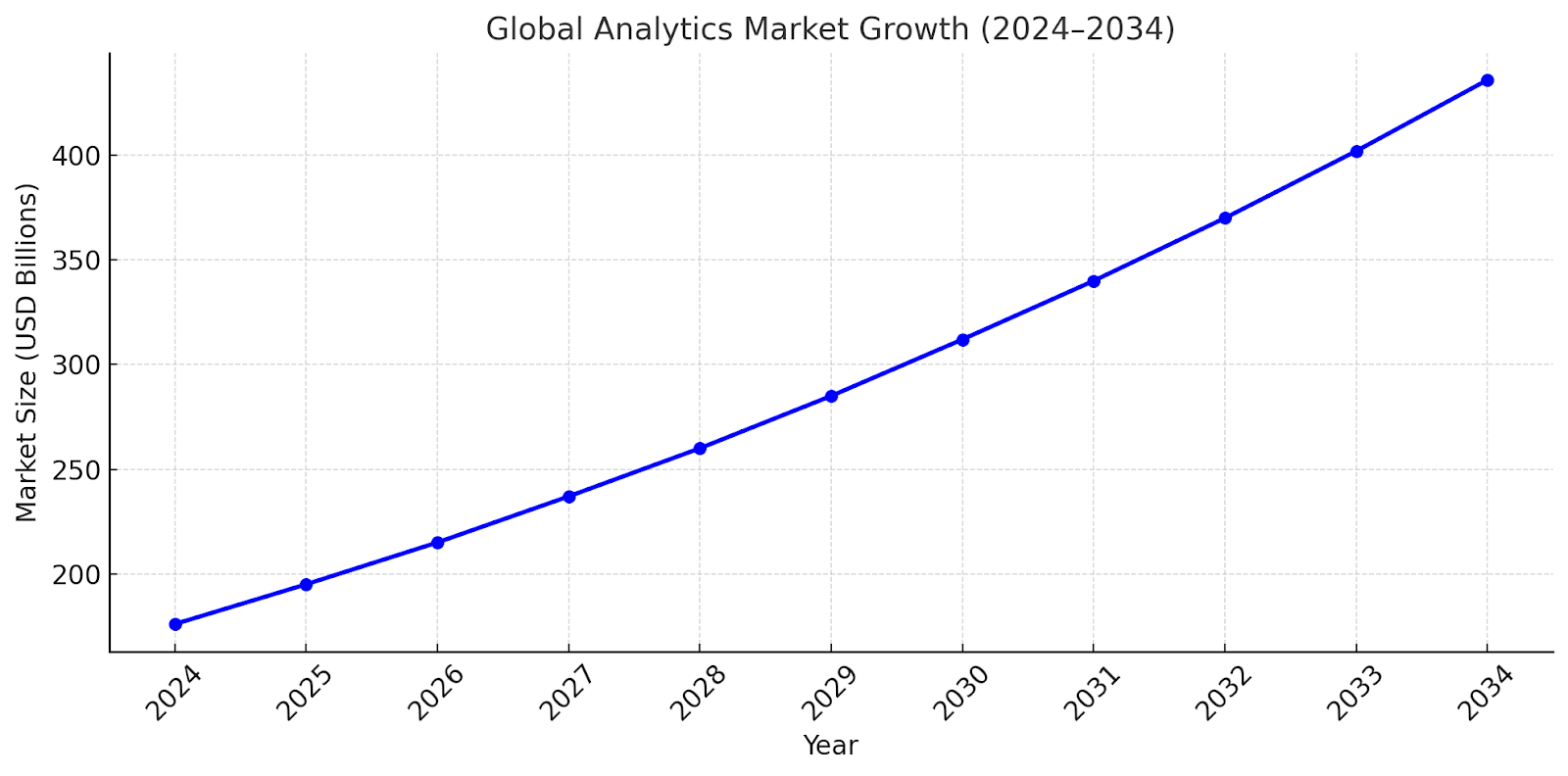
The table below highlights the key trends shaping the future of Data Analyst and Business Analyst roles globally.
In short, you can’t rely on “just Excel” or “just communication” anymore.
Companies want multi-skilled professionals.
Conclusion: Which Career is Better for You?
Choosing the right career path between a Data Analyst and a Business Analyst comes down to your interests, strengths, and long-term goals. If you love numbers, dashboards, and technical work, the Data Analyst path is ideal.
If you thrive on communication, planning, and solving business problems, the Business Analyst path fits better. And if you want a mix of both, hybrid roles in product operations, analytics consulting, or digital transformation could be your perfect fit.
And remember:
You can always switch as you learn. Many professionals do.
FAQs
Q1. Is Data Analyst and Business Analyst the same?
A: No. A Data Analyst works with data and tools; a Business Analyst works with business processes and requirements.
Q2. What does a Data Analyst do?
A: They analyze data using SQL, Python, Excel, and BI tools to help companies make decisions.
Q3. What does a Business Analyst do?
A: They gather requirements, improve processes, and ensure business needs are translated into solutions.
Q4. Data Analyst vs Business Analyst, which is better?
A: Neither is “better”; it depends on whether you prefer technical or business-focused work.
Q5. Which certifications help?
A: Data Analytics certifications, Power BI certifications, and Business Analysis fundamentals courses help beginners.
Explore Related Courses











COMMENTS(2)

UniAthena
Thank you for your support. Keep browsing. You can visit our page uniathena.com to explore more courses.
Thank you for your support. Keep browsing. You can visit our page uniathena.com to explore more courses.
Explore Related Courses
Our Popular Insights
Careers are shifting faster than ever, and staying relevant takes more than experience. Explore UniAthena’s most-read blogs for sharp insights, emerging skills, and practical pathways that help you move forward with clarity and confidence in a changing professional world.

What is the Role of AI in Education?
Read More
4
mins read


🌟 Top Project Performer – June 2026 🌟
Read More
1
mins read


🌟 Top Project Performer – May 2026 🌟
Read More
1
mins read



🌟 Top Project Performer – April 2026 🌟
Read More
1
mins read
What is the Role of AI in Education?
Read more
4
mins read
🌟 Top Project Performer – June 2026 🌟
Read more
1
mins read

🌟 Top Project Performer – May 2026 🌟
Read more
1
mins read
🌟 Top Project Performer – April 2026 🌟
Read more
1
mins read
Get in Touch

It’s Time to Start
Join NowMost Popular Online Specialization
- Master of International Business Administration
- Master of Business Administration
- MBA in General Management- FastTrack
- Master in Innovation and Entrepreneurship
- MBA-Family Business Management
- Master in Procurement and Contract Management
- Extended Diploma in Business Analytics (SCQF Level 11)
- Diploma in Supply Chain and Logistics Management (SCQF Level 11)
- Strategic Human Resource Management Practitioner
- Master in Data Science
- Master in Engineering Management
Trending Online
- Integrated Doctorate of Business Administration
- Postgraduate Certificate in Finance for Next Generation Managers
- Master of Business Administration- General Management (Fast Track)
- Postgraduate Certificate in Socio-Economic and Legal Framework
- Postgraduate Certificate in Business Sustainability
- Certified Manager
- Supply Chain Management Practitioner
- MBA - AI in Business
- MBA - Accounting & Finance
- Master in Supply Chain and Logistics Management
Top Universities Online Certificates
- Postgraduate Certificate in International Marketing Management
- Postgraduate Certificate In International Human Resource Management
- Postgraduate Certificate in Strategic Management
- Postgraduate Certificate in Procurement & Contracts Management
- Postgraduate Certificate in Business Analytics
- Postgraduate Certificate in Strategic Supply Chain & Logistics Management
- Postgraduate Certificate in Human Resource and Leadership
- Project Management Practitioner
- Postgraduate Certificate in Supply Chain Design & Implementation
- Postgraduate Certificate in Management Accounting and Finance
Accredited Online Degree Program
- MBA - Digital Transformation
- MBA - Family Business Management
- MBA - Marketing Management
- MBA in Quality Management
- MBA - Business Intelligence & Data Analytics
- MBA in Operations & Project Management
- MBA in Energy Management
- MBA In Construction & Safety Management
- Master in Organisational Leadership
- Master in Public Health
- Master in Construction Management
- Bachelor of Arts in Business Administration


 Install Now


UniAthena is an Ed-Tech, offering flexible, affordable learning solutions, including Free-Learning Upskilling Courses and Academic Programs in partnerships with accredited and globally renowned universities and professional qualification bodies.


Do you have any questions ?
Feel free to send us your questions or request a free consultation
Send a message
UK
Athena Global Education
Magdalen Centre,
Robert Robinson Avenue,
Oxford, OX4 4GA, UK
Phone : 01865 784299
MIDDLE EAST
Athena Global Education FZE
Block L-03, First Floor,
P O Box 519265, Sharjah Publishing City,
Free Zone, Sharjah, UAE
Phone : +971 55 879 5492
INDIA
Uniathena Private Limited
9A,Midas Tower
Phase 1
Hinjewadi Rajiv Gandhi Infotech Park
Pune-411057
Phone: +91 9145665544
All Copyrights Reserved @ Athena Global Education 2021-2026