-

Bachelor's

-

Masters
-

MBA
-

Doctorate
-

Micro Credit
-

Explore all Courses
-
Postgraduate Certifications

-
Postgraduate Diploma
-
Undergraduate Diploma
-
Diploma



What Does a Data Analyst Do?

Author: sheza firoz
|7
MINS READ
| 0
| 482
Created On: 09 July, 2025
Share




Table of Contents (TOC):
- Introduction: The Rise of the Data Analyst
- Domain Dive: What is Data Analytics?
- Demystifying the Role: What does a Data Analyst do?
- Skills Required to be a Data Analyst
- How to Become a Data Analyst?
- Data Analytics Course Recommendations
- Conclusion: Your Future in Data
- Bonus Points
Introduction: The Rise of the Data Analyst
Did you know? The US Bureau of Labor Statistics has projected a massive 36% increase in demand for Data Analysts from 2023 - 2033, which is much faster than the average rate of growth for occupations.
The data on Data Analytics speaks for itself. From delivering personalised experiences to facilitating precise trend spotting, Data Analytics has changed how industries and organisations look at information. As the world shifts towards a data-driven economy, competition for the role of Data Analyst will also grow. If you, like many others, are interested in becoming a Data Analyst, you have come to the right place.
In this blog, we take a closer look at Data Analysts. We cover how to become a Data Analyst, key Data Analyst roles and responsibilities, Data Analytics Courses to do, and more, so you can get some clarity on your next steps.
Domain Dive: What is Data Analytics?
Data Analytics involves collecting, cleaning, examining, and analyzing existing data to extract insights. With the patterns and perspectives these analyses reveal, businesses can:
- Improve Decision-making: No more gut-feel or guesswork, decisions can be made based on hard facts and figures.
- Build a Competitive Advantage: Organisations that use Data Analytics are often more empowered than others to identify and respond to market opportunities.
- Enhance Productivity: Companies that use data have increased productivity levels by up to 63%.
- Cut Costs: Netflix’s data-powered personalised recommendation algorithm has saved the company $1 billion.
- Improve Customer Relationships: Analysing customer feedback and data can help businesses offer tailored experiences, enhancing customer retention & brand loyalty.
- Remain Future-proof: With data-driven insights, companies can innovate and stay ahead of the curve.
Demystifying the Role: What does a Data Analyst do?
Key Data Analyst responsibilities involve performing the following tasks:
- Collect Data: Analysts are involved in collecting the data they wish to analyse, from both internal and external sources. From platform analytics to customer surveys, several methods of collection can be employed.
- Clean the Data: From duplicate values to dubious outliers, raw data is usually riddled with inconsistencies that must be corrected. Processing raw data without using data cleaning tools can lead to inaccurate or skewed interpretations and insights.
- Model the Data: Data must be arranged to be stored in relevant databases, depending upon its characteristics. The role of a Data Analyst is to ensure that the cleaned data is stored appropriately, be it in relational databases or an Excel sheet.
- Analyse the Data: Analysts apply key techniques, such as Regression Analysis or Time Series Analysis, to the data to extract hidden insights. This is the main role of a Data Analyst, and it involves knowledge of programming languages too.
- Extract Data Insights: Upon completing the analysis, Data Analysts review the results and put them into context. This helps derive actionable insights that contribute to data-driven decision-making.
- Visualize the Data: Data Analysts use Data Visualization tools to convert statistical formulas, complex figures, and technical jargon into clear, concise charts and graphs. This helps communicate insights to a non-technical audience.
With rigorous analysis and context-based interpretation of results, Data Analysts can unearth significant insights that power data-driven decision making, ensuring a clear rationale behind organisational activities.
Skills Required to be a Data Analyst
Skills for Data Analysts usually comprise a blend of diverse abilities. They include the standard Data Analyst technical skills, alongside ever-important soft skills like presentation, communication, and critical thinking skills.
1. Programming Languages:
Skills for Data Analysts usually comprise a blend of diverse abilities. They include the standard Data Analyst technical skills, alongside ever-important soft skills like presentation, communication, and critical thinking skills.
2. SQL:
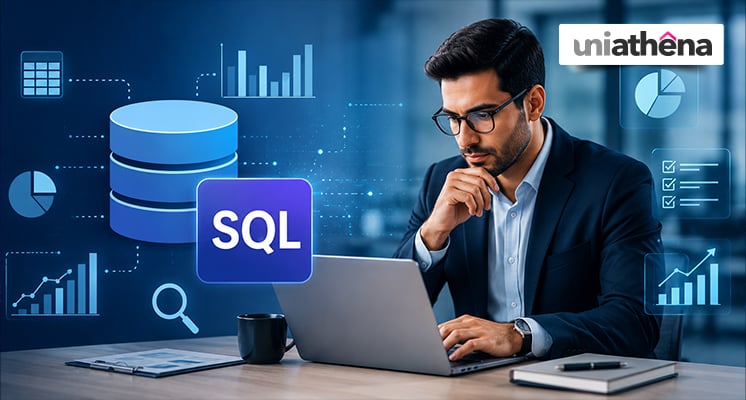
Referring to Structured Query Language, SQL is a programming language that allows Data Analysts to add, display, edit, and retrieve data stored in relational databases. It is beginner-friendly and a key skill needed to be a Data Analyst.
3. Data Visualization Tools:
Data Analysts must be able to use data visualization tools to turn complex data into clear, informative visuals. These include pie charts, bar graphs, Venn diagrams, or any other visual aid that simplifies complex results.
4. Data Handling:
A Data Analyst job would involve cleaning and storing large volumes of data regularly, so being proficient in using data cleaning tools and key data management practices is crucial.
5. Artificial Intelligence & Machine Learning:
AI and ML are among the top Data skills that any professional working in tech, Data analytics, and otherwise, must build. It helps automate routine tasks like data cleaning, freeing up time for creative thinking.
Additionally, Data Analyst skills that might go under the radar include communication skills, presentation skills, collaboration, teamwork, problem-solving, and critical thinking skills. Additionally, having an eye for detail and a commitment to regular upskilling are crucial for long-term success at a Data Analyst job.
How to Become a Data Analyst?
- The first step towards becoming a Data Analyst is earning the relevant educational qualifications. Candidates can consider earning undergraduate or postgraduate degrees in Mathematics, Statistics, Economics, Data Analytics, Business Analytics, or other relevant fields. You must also learn programming languages like R, Python, JavaScript, and SQL
- It is important to indicate proficiency in conducting Data Analytics. You could either do your undergraduate or postgraduate education specialising in Data Analytics, or you could opt for online Data Analytics Courses. Higher education is expensive, so look for institutions offering scholarships, financial aid, or distance learning, as these options can significantly reduce or even eliminate tuition fees. UniAthena offers cost-effective learning opportunities, too.
- Once you have developed the primary proficiencies, from analytical expertise to data visualisation techniques, it’s time to practice and build experience. You can do this by opting to work on individual data projects using data sets available online. Data Camp, DataLab, Kaggle, and even Google offer free data sets you can use for practice. This is your chance to gain hands-on experience.
- You should also build a strong portfolio of data projects. Make sure your portfolio features an array of undertakings, from Data Cleaning projects to Exploratory Data Analysis (EDA) projects. This offers insight into your capabilities and conveys your expertise to recruiters. Then, you can build your resume, apply for entry-level data positions, and work your way up the corporate ladder. Diligent upskilling will help you grow and keep your momentum going.
Data Analytics Course Recommendations
If you are looking to begin preparing for the role of a Data Analyst right away, UniAthena is on your side. Our offerings are 100% online, Self-Paced, and free to learn – perfect for beginners and learners on a budget! We recommend:
1. Basics of Data Science
This beginner-friendly Data Science program offers a glimpse into data cleaning techniques for structured and unstructured datasets, and key analytical techniques beginners must know. This course can be completed in 4-6 hours, and learners can qualify for a free certification from CIQ, UK.
2. Essentials of Data Analytics
Developed for Intermediate learners, the Essentials of Data Analytics covers the business applications of Data Analytics, analytical models and methods, and Big Data. This Data Analytics Short Course can be completed in 6-9 hours, completely online and free of charge.
3. Diploma in Data Analytics
The more comprehensive Diploma in Data Analytics offers insight into the issues, challenges, and methodologies involved in business data and applying algorithms to business problems. This Data Analytics Diploma can be completed in 1-2 weeks, online.
4. Executive Diploma in Data Analytics
The Executive Diploma offers a holistic overview of Data Analytics, touching upon Big Data, Data Privacy and Ethics, Analytics methods, models and techniques, Business Analytics, and more. This course can be completed in 2-3 weeks, is self-paced, and free to learn.
Conclusion: Your Future in Data
In this blog, we offered a glimpse into the role of Data Analysts, including domain features. We covered key Data Analyst skills, roles, and responsibilities, and outlined how to become a Data Analyst. The blog further explores Data Analytics courses, including free-learning Short Course recommendations for Data Analyst aspirants, from beginner to advanced. With these insights, you can begin your Data Analytics journey right away.
Bonus Points:
- The average Data Analyst salary is $83,288 per annum in the United States, as per Indeed.
- Becoming a Data Analyst will require years of intensive study, hands-on expertise, and advanced technical proficiency, but the scope of opportunities makes it worthwhile.
Explore Related Courses











COMMENTS(0)
Explore Related Courses
Our Popular Insights
Careers are shifting faster than ever, and staying relevant takes more than experience. Explore UniAthena’s most-read blogs for sharp insights, emerging skills, and practical pathways that help you move forward with clarity and confidence in a changing professional world.

🌟 Students of the Month | May – June 2026 🌟
Read More
1
mins read






🌟 Students of the Month | May – June 2026 🌟
Read more
1
mins read
Get in Touch

It’s Time to Start
Join NowMost Popular Online Specialization
- Master of International Business Administration
- Master of Business Administration
- MBA in General Management- FastTrack
- Master in Innovation and Entrepreneurship
- MBA-Family Business Management
- Master in Procurement and Contract Management
- Extended Diploma in Business Analytics (SCQF Level 11)
- Diploma in Supply Chain and Logistics Management (SCQF Level 11)
- Strategic Human Resource Management Practitioner
- Master in Data Science
- Master in Engineering Management
Trending Online
- Integrated Doctorate of Business Administration
- Postgraduate Certificate in Finance for Next Generation Managers
- Master of Business Administration- General Management (Fast Track)
- Postgraduate Certificate in Socio-Economic and Legal Framework
- Postgraduate Certificate in Business Sustainability
- Certified Manager
- Supply Chain Management Practitioner
- MBA - AI in Business
- MBA - Accounting & Finance
- Master in Supply Chain and Logistics Management
Top Universities Online Certificates
- Postgraduate Certificate in International Marketing Management
- Postgraduate Certificate In International Human Resource Management
- Postgraduate Certificate in Strategic Management
- Postgraduate Certificate in Procurement & Contracts Management
- Postgraduate Certificate in Business Analytics
- Postgraduate Certificate in Strategic Supply Chain & Logistics Management
- Postgraduate Certificate in Human Resource and Leadership
- Project Management Practitioner
- Postgraduate Certificate in Supply Chain Design & Implementation
- Postgraduate Certificate in Management Accounting and Finance
Accredited Online Degree Program
- MBA - Digital Transformation
- MBA - Family Business Management
- MBA - Marketing Management
- MBA in Quality Management
- MBA - Business Intelligence & Data Analytics
- MBA in Operations & Project Management
- MBA in Energy Management
- MBA In Construction & Safety Management
- Master in Organisational Leadership
- Master in Public Health
- Master in Construction Management
- Bachelor of Arts in Business Administration


 Install Now


UniAthena is an Ed-Tech, offering flexible, affordable learning solutions, including Free-Learning Upskilling Courses and Academic Programs in partnerships with accredited and globally renowned universities and professional qualification bodies.


Do you have any questions ?
Feel free to send us your questions or request a free consultation
Send a message
UK
Athena Global Education
Magdalen Centre,
Robert Robinson Avenue,
Oxford, OX4 4GA, UK
Phone : 01865 784299
MIDDLE EAST
Athena Global Education FZE
Block L-03, First Floor,
P O Box 519265, Sharjah Publishing City,
Free Zone, Sharjah, UAE
Phone : +971 55 879 5492
INDIA
Uniathena Private Limited
9A,Midas Tower
Phase 1
Hinjewadi Rajiv Gandhi Infotech Park
Pune-411057
Phone: +91 9145665544
All Copyrights Reserved @ Athena Global Education 2021-2026