-

Bachelor's

-

Masters
-

MBA
-

Doctorate
-

Micro Credit
-

Explore all Courses
-
Postgraduate Certifications

-
Postgraduate Diploma
-
Undergraduate Diploma
-
Diploma



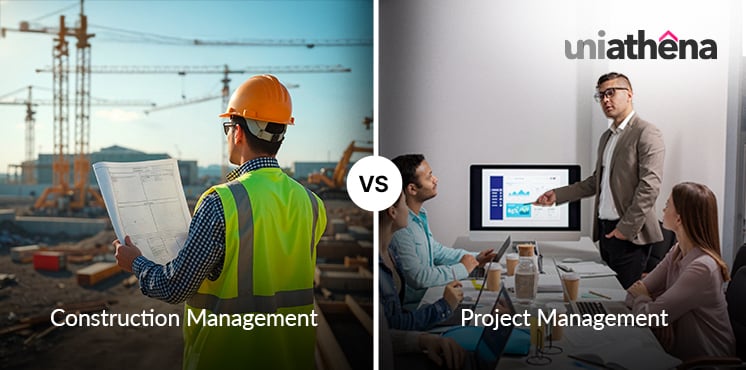
Construction Management Vs Project Management: What Sets Them Apart in Real Work
Author: maharajan p
|9
MINS READ
| 0
| 96
Created On: 04 May, 2026
Share




Table of Contents (TOC):
- Introduction
- Key Takeaways
- What is Construction Management?
- What is Project Management?
- Construction Management vs Project Management: Key Differences
- Construction Management in Practice
- Project Management in Practice
- Final Take
- FAQs
Introduction
Every project, whether constructing a skyscraper, developing infrastructure, or launching a new initiative, depends on three main things: planning, coordination, and execution. Getting all three right comes down to who’s in charge, and that’s where two roles become critical: the construction manager and the project manager.
- A construction manager (CM) focuses on on-site execution, overseeing daily construction activities, contractors, safety, and progress during the build phase. While heavily focused on execution, construction managers may also contribute to planning, cost estimation, and procurement decisions.
- A project manager (PM) oversees the entire project lifecycle, managing planning, budget, timelines, resources, and stakeholders from start to finish.
The key difference lies in scope. Project management is a broad discipline applied across industries, from healthcare to tech to finance. Whereas Construction management is a specialized discipline within the broader project delivery process, focused on the built environment.
Key Takeaways:
- The scope of construction management is largely focused on on-site execution, especially in building and infrastructure projects.
- Project managers operate across industries, handling planning, coordination, and communication beyond just construction environments.
- There are multiple project management career paths, and professionals can transition from construction roles into broader leadership positions over time.
- Pay increases with experience in both roles, with opportunities to advance into senior and strategic positions over time.
What is Construction Management?
Construction management is all about making sure a construction project runs smoothly from start to finish. A construction manager is the primary authority on-site, coordinating everything that happens during the building process. They work closely with contractors, suppliers, and workers to keep the project on schedule, within budget, and up to quality standards.
Here’s what construction management involves:
- On-Site Supervision: Overseeing daily construction activities and ensuring safety and quality standards are met.
- Resource Coordination: Managing materials, equipment, and labor to keep the project moving efficiently.
- Schedule and Budget Control: Tracking timelines and expenses to avoid delays and cost overruns.
What is Project Management?
Project management is about planning, organizing, and guiding a project from start to finish, no matter the industry. A project manager keeps an eye on the big picture, coordinating people, resources, and timelines to make sure everything comes together as planned.
Key aspects of project management include:
- Planning and Strategy: Setting goals, defining tasks, and mapping out the timeline for the entire project.
- Team Coordination: Ensuring all team members and stakeholders are aligned and working together smoothly.
- Monitoring and Reporting: Tracking progress, managing risks, and keeping the project on budget and schedule.
Construction Management vs Project Management: Key Differences
While construction managers and project managers often work closely together, the main difference comes down to scope and focus. One is more hands-on with the building itself, while the other oversees the entire project journey.
Here’s a side-by-side look at how they differ:
Construction Management in Practice
Construction management isn’t the same every day; no two days look exactly alike. The work mostly revolves around the construction manager, who keeps the project moving smoothly, solves problems on the fly, and ensures everything on-site runs as planned.
1. Day in the Life of a Construction Manager
A typical day for a construction manager is fast-paced and hands-on. They’re the ones making sure everything on-site is running smoothly, solving problems as they come up, and keeping the project on track.
Here’s how a day might look:
- Morning Site Walk: Checking progress, reviewing safety measures, and making sure crews are on schedule.
- Team Coordination: Meeting with contractors, architects, and engineers to discuss tasks and resolve any issues.
- Problem-Solving on the Spot: Handling unexpected delays, equipment issues, or material shortages.
- Tracking Progress and Reporting: Updating project timelines, budgets, and reporting to higher management or clients.
- End-of-Day Review: Planning for the next day, ensuring everything is set for smooth operations tomorrow.
2. Salary and Career Scope
The pay varies widely depending on experience, location, and project size.
- Entry‑Level: ~$65,000 – $85,000 per year — early career, on‑site handling routine supervision.
- Mid‑Level: ~$95,000 – $120,000 per year — more responsibility across larger jobs.
- Senior/Expert: above $150,000 per year — leading big projects, teams, or divisions.
In the US, median construction manager compensation sits around $106,980 annually, and top earners can even exceed $172,000 with bonuses and perks.
Here’s how the career progression typically evolves:
- Start (0‑3 yrs): Assistant or junior construction manager — learning the ropes, coordinating small teams or packages.
- Mid (3‑7 yrs): Lead on larger site segments or full builds — more autonomy and budget responsibility.
- Senior (7+ yrs): Managing large projects or multiple sites, interfacing with owners and clients, shaping strategy.
With experience, many construction managers can transition into project management roles, especially if they complement site experience with planning, scheduling, and stakeholder coordination skills. Over time, this can open doors to project director, operations director, or executive leadership positions with significantly higher salaries and influence.
3. Skills Needed for Construction Management
To succeed in construction management, you need a mix of technical knowledge and on-site leadership skills. It’s not just about understanding how construction works; it’s about keeping everything running smoothly under real-world pressure.
Here are the key skills you need:
- Construction Fundamentals: Understanding project management basics, building services, and how construction systems work together.
- Safety and Compliance Awareness: Knowledge of environmental, health, and safety (EHS) practices to maintain safe job sites.
- Planning and Execution: Ability to move a project from planning to completion while handling real-time challenges.
If you’re looking to build these skills, your learning path can vary depending on your experience level:
- A Diploma in Construction Management is a short, self-paced program (1–2 weeks) that focuses on core areas like project management, EHS, building services, and energy-efficient construction. It’s designed to give a solid foundation quickly, especially if you’re starting out or want to refresh basics.
- A Postgraduate Diploma in Construction Management is a 16 ECTS credit program that can be completed in around 3–6 months. It goes deeper into areas like building services, engineering, and safety management, helping you develop practical skills for managing construction activities more independently.
- A Master in Construction Management is a more comprehensive program (90 ECTS credits) from GMU, Italy that covers advanced topics like planning complex projects, managing teams, procurement, finance, and risk. It typically requires a bachelor’s degree or relevant experience (minimum age 23 for mature entry) and is suited for those aiming for senior or leadership roles.
Each option builds on the same core idea: start with fundamentals, then move toward deeper specialization as your career grows.
Project Management in Practice
Project managers coordinate teams, timelines, and resources across different departments, keeping everyone on track from start to finish. Their work is less about hands-on construction and more about planning, guiding, and problem-solving as the project unfolds.
1. Day in the Life of a Project Manager
A day for a project manager can be dynamic and varied, often changing depending on deadlines, meetings, and project milestones. Here’s what a typical day might look like:
- Morning Team Check-ins: Reviewing tasks, setting priorities, and aligning team members on goals for the day.
- Stakeholder Meetings: Coordinating with clients, executives, and department leads to ensure everyone is on the same page.
- Problem-Solving and Decision-Making: Addressing risks, resolving delays, and adjusting plans as challenges arise.
- Monitoring Progress: Tracking project timelines, budgets, and milestones to keep everything on schedule.
- End-of-Day Wrap-up: Updating reports, documenting decisions, and planning next steps for the team.
2. Salary and Career Scope
Project management roles in the US are among the better‑paid globally, especially in tech, consulting, and large structured industries.
- Entry‑Level (0–2 years): Typically $65,000 – $80,000 per year.
- Mid‑Level (3–6 years): Around $80,000 – $110,000 per year.
- Senior/Expert (7+ years): From $100,000 – $135,000+ or more, especially in sectors like software, finance, and healthcare. Across employer‑reported data, typical compensation ranges between $93,000 and $128,000 for many established PM roles.
In the US, project management can even scale into six figures with experience and certifications like PMP or agile accreditations.
With experience (especially 7–10+ years), project managers often move into Program Manager, Portfolio Manager, PMO Lead, or Director roles — roles that command significantly higher compensation and strategic influence.
3. Skills Needed for Project Management
Project management is less about being on-site and more about bringing structure to chaos. You’re handling timelines, people, budgets, and expectations, all at the same time.
To do that well, you need a mix of planning, communication, and decision-making skills:
- Project Planning and Execution: Breaking down complex projects into clear tasks, timelines, and milestones.
- Resource and Time Management: Allocating people, budget, and tools efficiently to meet deadlines.
- Communication and Stakeholder Management: Keeping teams, clients, and stakeholders aligned throughout the project.
- Understanding Project Lifecycle and Processes: Knowing how projects move from initiation to completion, including cost, quality, and performance tracking.
If you’re looking to build these skills, your learning path can vary depending on your current level:
- An Executive Diploma in Project Management is a short, self-paced program (around 2–3 weeks) that introduces core concepts like project lifecycle, constraints, resource planning, and stakeholder expectations. It’s designed for beginners, professionals, or anyone looking to quickly understand how projects are planned and executed.
- A Project Management Practitioner program is more structured, typically completed over 40–80 days, and focuses on areas like operations, risk, procurement, cost, time, and quality management. You’ll also get online personal tutor support as you go through the program. Upon completion, you’ll receive a certification from the Chartered Management Institute (CMI), which you can add to your resume.
- A Postgraduate Diploma in Project Management is a 16 ECTS credit program that can be completed in 3–6 months. It covers both operational and strategic aspects of project management, including planning, leadership, documentation, and budgeting, helping you handle projects more independently and at a higher level.
Each option builds on the same path: start with the basics, move into practical application, and then step into more strategic project leadership roles as you grow.
Final Take
Construction managers handle on-site execution, supervising crews, materials, and safety. Project managers oversee the entire project, coordinating teams, budgets, and timelines across departments.
Career paths and salaries vary by role, experience, and region, with both offering growth into senior leadership. If you enjoy hands-on site work, construction management is the path to take. If you prefer planning, coordination, and strategy, project management is the better fit.
FAQs
Q1. Can a construction manager become a project manager?
A: Yes, with experience in planning, budgeting, and team coordination, a construction manager can transition into project management roles.
Q2. Which industries hire project managers?
A: Project managers work across construction, IT, healthcare, marketing, consulting, and more. Construction management is mostly specific to building and infrastructure projects.
Q3. What skills are essential for a construction manager?
A: Technical knowledge, on-site leadership, safety compliance, problem-solving, and team coordination.
Q4. What skills are essential for a project manager?
A: Planning, communication, risk management, budgeting, and stakeholder coordination.
Q5. Which role is better for long-term career growth?
A: Both roles offer strong growth. Project management provides broader opportunities across industries, while construction management can lead to senior on-site leadership or transition to project management.
Our Popular Courses

$14000


Doctoral Degree in Business Administration
Universidad Catolica De Murcia (UCAM), Spain
Duration:
2 - 3 Years
$17,500*
Integrated Doctorate of Business Administration
Guglielmo Marconi University, Italy
Universidad Catolica De Murcia (UCAM), Spain
Duration:
2.5 - 3.5 Years
$5,600*
Master of Business Administration
Guglielmo Marconi University, Italy
Duration:
12 - 24 Months
$5,600*
MBA in Operations & Project Management
Guglielmo Marconi University, Italy
Duration:
12 - 24 Months
$5,600*
Master in Supply Chain and Logistics Management
Guglielmo Marconi University, Italy
Duration:
12 - 24 Months
$5,950*
Master in Data Sciences
Guglielmo Marconi University, Italy
Duration:
12 - 24 Months
$5,600*
Master in Engineering Management
Guglielmo Marconi University, Italy
Duration:
12 - 24 Months
$5,600*
Master in Procurement and Contract Management
Guglielmo Marconi University, Italy
Duration:
12 - 24 Months
$5,600*
Master in Public Health
Guglielmo Marconi University, Italy
Duration:
12 - 24 MonthsOur Popular Courses
COMMENTS(0)
Our Popular Courses
$14000
Doctoral Degree in Business Administration
Universidad Catolica De Murcia (UCAM), Spain
Duration:
2 - 3 Years
$17,500*
Integrated Doctorate of Business Administration
Guglielmo Marconi University, Italy
Universidad Catolica De Murcia (UCAM), Spain
Duration:
2.5 - 3.5 Years
$5,600*
Master of Business Administration
Guglielmo Marconi University, Italy
Duration:
12 - 24 Months
$5,600*
MBA in Operations & Project Management
Guglielmo Marconi University, Italy
Duration:
12 - 24 Months
$5,600*
Master in Supply Chain and Logistics Management
Guglielmo Marconi University, Italy
Duration:
12 - 24 Months
$5,950*
Master in Data Sciences
Guglielmo Marconi University, Italy
Duration:
12 - 24 Months
$5,600*
Master in Engineering Management
Guglielmo Marconi University, Italy
Duration:
12 - 24 Months
$5,600*
Master in Procurement and Contract Management
Guglielmo Marconi University, Italy
Duration:
12 - 24 Months
$5,600*
Master in Public Health
Guglielmo Marconi University, Italy
Duration:
12 - 24 MonthsOur Popular Courses
Our Popular Insights
Careers are shifting faster than ever, and staying relevant takes more than experience. Explore UniAthena’s most-read blogs for sharp insights, emerging skills, and practical pathways that help you move forward with clarity and confidence in a changing professional world.


How to Switch Career to Data Analytics?
Read More
6
mins read




How to Switch Career to Data Analytics?
Read more
6
mins read

Get in Touch

It’s Time to Start
Join NowMost Popular Online Specialization
- Master of International Business Administration
- Master of Business Administration
- MBA in General Management- FastTrack
- Master in Innovation and Entrepreneurship
- MBA-Family Business Management
- Master in Procurement and Contract Management
- Extended Diploma in Business Analytics (SCQF Level 11)
- Diploma in Supply Chain and Logistics Management (SCQF Level 11)
- Strategic Human Resource Management Practitioner
- Master in Data Science
- Master in Engineering Management
Trending Online
- Integrated Doctorate of Business Administration
- Postgraduate Certificate in Finance for Next Generation Managers
- Master of Business Administration- General Management (Fast Track)
- Postgraduate Certificate in Socio-Economic and Legal Framework
- Postgraduate Certificate in Business Sustainability
- Certified Manager
- Supply Chain Management Practitioner
- MBA - AI in Business
- MBA - Accounting & Finance
- Master in Supply Chain and Logistics Management
Top Universities Online Certificates
- Postgraduate Certificate in International Marketing Management
- Postgraduate Certificate In International Human Resource Management
- Postgraduate Certificate in Strategic Management
- Postgraduate Certificate in Procurement & Contracts Management
- Postgraduate Certificate in Business Analytics
- Postgraduate Certificate in Strategic Supply Chain & Logistics Management
- Postgraduate Certificate in Human Resource and Leadership
- Project Management Practitioner
- Postgraduate Certificate in Supply Chain Design & Implementation
- Postgraduate Certificate in Management Accounting and Finance
Accredited Online Degree Program
- MBA - Digital Transformation
- MBA - Family Business Management
- MBA - Marketing Management
- MBA in Quality Management
- MBA - Business Intelligence & Data Analytics
- MBA in Operations & Project Management
- MBA in Energy Management
- MBA In Construction & Safety Management
- Master in Organisational Leadership
- Master in Public Health
- Master in Construction Management
- Bachelor of Arts in Business Administration


 Install Now


UniAthena is an Ed-Tech, offering flexible, affordable learning solutions, including Free-Learning Upskilling Courses and Academic Programs in partnerships with accredited and globally renowned universities and professional qualification bodies.


Do you have any questions ?
Feel free to send us your questions or request a free consultation
Send a message
UK
Athena Global Education
Magdalen Centre,
Robert Robinson Avenue,
Oxford, OX4 4GA, UK
Phone : 01865 784299
MIDDLE EAST
Athena Global Education FZE
Block L-03, First Floor,
P O Box 519265, Sharjah Publishing City,
Free Zone, Sharjah, UAE
Phone : +971 55 879 5492
INDIA
Uniathena Private Limited
9A,Midas Tower
Phase 1
Hinjewadi Rajiv Gandhi Infotech Park
Pune-411057
Phone: +91 9145665544
All Copyrights Reserved @ Athena Global Education 2021-2026