-

Bachelor's

-

Masters
-

MBA
-

Doctorate
-

Micro Credit
-

Explore all Courses
-
Postgraduate Certifications

-
Postgraduate Diploma
-
Undergraduate Diploma
-
Diploma



Top Cybersecurity Courses in Ghana

Author: maharajan p
|7
MINS READ
| 0
| 17
Created On: 09 July, 2026
Share




Table of Contents (TOC)
- Introduction
- Key Takeaways
- Why Cybersecurity Skills Are in Demand in Ghana
- Top Cybersecurity Roles in Ghana
- Cybersecurity Courses to Build Job-Ready Skills in Ghana
- Conclusion
- FAQs
Introduction
If you've been watching Ghana's digital space over the last few years, you'll notice something: a lot is moving.
- GRA has been rolling out digital tax systems.
- The Bank of Ghana pushed out guidelines on IT risk management for banks.
- MTN and Telecel are expanding infrastructure. Stanbic and Ecobank have been deepening their digital banking offerings.
All this movement towards digitalization across sectors highlights the growing importance of safer, more secure systems. This is what’s driving the rising demand for cybersecurity and for skilled professionals in the field.
There is no better way to build that expertise than by leveling yourself up with updated frameworks and industry-relevant, applied methods. In this guide, you’ll get exactly that.
Key Takeaways
- Cybersecurity protects systems, networks, and data from threats like hacking, fraud, and breaches across digital platforms.
- Cybersecurity work involves monitoring threats, analyzing risks, and responding to attacks across systems in real time skills that are increasingly essential for landing cyber security jobs in Ghana.
- You can aim for roles like Information Security Analyst, Network Security Engineer, or Cybersecurity Consultant across key industries.
- Earning a certificate in cybersecurity adds credibility and supports your transition into the field. Short, structured cybersecurity courses can help you achieve that by introducing you to foundational concepts and real-time skills needed for the role.
Why Cybersecurity Skills Are in Demand in Ghana
Ghana’s digital economy is expanding fast and with it, the need to secure financial systems, telecom networks, and public infrastructure. With high transaction volumes and growing online services, cybersecurity has become a critical priority across industries.
Here’s what’s driving the demand:
- Rapid Digital Growth: Increased use of mobile money, e-commerce, and digital platforms have widened the attack surface, making businesses more vulnerable to cyber threats.
- Banking & Fintech Exposure: Institutions like Stanbic Bank, Ecobank, and services like MTN Mobile Money handle massive daily transactions, making them prime targets for fraud and cyberattacks.
- Telecom Infrastructure Risks: Providers such as MTN Ghana and Telecel Ghana manage sensitive user data and financial access points, increasing the need for network security.
- Government Digitization & Regulation: Expanding digital services and stricter data protection requirements are driving demand for skilled professionals in public sector security.
Organizations across Ghana are actively seeking cybersecurity talent to protect systems, data, and transactions.
Top Cybersecurity Roles in Ghana
From protecting financial transactions to securing national infrastructure, organizations are actively hiring professionals who can manage cyber risks and respond to threats in real time.
Below is a breakdown of the top industries, roles, salary ranges, and key employers shaping cybersecurity careers in Ghana.
1. Banking & Fintech (Highest Demand Sector)
This is the largest cybersecurity hiring sector in Ghana, driven by the rapid growth of digital banking and mobile money services. With financial data constantly at risk, organizations invest heavily in security talent.
2. Telecommunications (Infrastructure Security)
Telecom companies operate large-scale networks serving millions of users. This makes them a prime target for cyberattacks, increasing the need for strong infrastructure security.
3. Government & Regulatory Bodies
With increasing focus on national cybersecurity and data protection laws, government agencies are expanding their cybersecurity capabilities.
These roles highlight a clear opportunity; cybersecurity professionals are in demand across Ghana’s most critical industries. However, stepping into these positions requires more than interest. It requires the right set of skills, practical exposure, and industry-relevant training.
Also Read: Inside AI-Driven Cybersecurity: How Modern Threats Are Detected in Real Time
Cybersecurity Courses to Build Job-Ready Skills in Ghana
Building a strong foundation in cybersecurity starts with the right learning approach. Self-paced online programs make it possible to develop essential skills, such as understanding cyber threats, attack methods, and regulatory frameworks at your own pace. These fundamentals directly connect to the roles in demand across Ghana’s banking, telecom, and consulting sectors.
UniAthena offers structured short programs designed to deliver practical cybersecurity knowledge within a short time frame. With free access to these courses, you can explore key areas, build relevant skills, and choose a learning path that aligns with your career goals.
1. Basics of Cyber Crimes - CIQ Certified
This program introduces the core concepts of cybercrime, helping learners understand how digital threats take shape across modern systems. It covers key areas such as fraud, hacking, privacy breaches, and cyber terrorism building a clear foundation for anyone looking to step into cybersecurity or related roles.
What this program offers:
- A structured understanding of cybercrimes such as cyber fraud, hacking, obscenity and pornography, privacy attacks, and cyber terrorism
- Practical awareness of real-world digital threats affecting individuals and organizations
2. Essentials of Cyber Attacks
This program focuses on how cyberattacks are carried out, giving learners a clear understanding of the techniques used by attackers. It explores common attack methods such as phishing, malware, and man-in-the-middle attacks, helping build a practical foundation in identifying and responding to threats.
What this program offers:
- Insight into how cybercriminals plan and execute attacks
- Understanding of common attack methods and how they can be prevented
- A strong foundation to support further learning and progression in cybersecurity
3. Diploma in Cyber Laws
This program focuses on the legal and regulatory side of cybersecurity, helping learners understand how digital activities are governed. It covers key areas such as data protection, intellectual property, and cyber regulations, providing essential knowledge for roles that involve compliance and risk management.
What this program offers:
- Understanding of cyber-space, cybercrimes, and their legal implications
- Introduction to intellectual property issues and data regulations
4. Basics of Cyber Attacks & Threats - CIQ Certified
This program introduces the core concepts of cyber threats and the sources behind them, helping learners understand how attacks originate and evolve. It focuses on building awareness of common attack techniques while highlighting basic protection strategies used in real-world environments.
What this program offers:
- Understanding of common cyber threats and the tools used in attacks
- Awareness of different threat sources and how they target systems
- A foundational base for progressing into more advanced cybersecurity topics
5. Basics of Regulating E-Commerce - CIQ Certified
This program focuses on the legal and regulatory frameworks that govern e-commerce, helping learners understand how online transactions are managed and protected. It covers key areas such as consumer protection, cyber law, and transaction-related issues, providing essential knowledge for operating in digital business environments.
What this program offers:
- A foundational understanding of frameworks governing the e-commerce industry
- Knowledge of consumer protection law and cyber law in e-commerce
- Insight into resolving transaction-related issues in digital commerce
As you build a foundation across these areas, you may find yourself leaning toward specific paths. This is especially true for legal and compliance-focused roles within cybersecurity.
For those looking to go deeper in that direction, the Postgraduate Certificate in Cyber Law from UniAthena, offers a more guided way to build advanced knowledge in data protection, regulatory frameworks, and digital governance.
Also Read: Highest Paying Jobs in Ghana
Conclusion
Ghana is moving fast on the digital front, and that naturally brings a growing need for people who understand how to keep systems secure. The opportunities are there across banking, telecom, and beyond.
Start now with the basic programs; build your fundamentals. Work your way through strategies and applied methods. Test yourself with projects and then build real-world experiences. That’s how you position yourself for the roles shaping Ghana’s digital future.
FAQs
Q1. Is cybersecurity a good career choice in Ghana right now?
A: Yes, demand is growing across banking, telecom, and government sectors, making cybersecurity a stable and rewarding career path with strong long-term opportunities.
Q2. What skills do I need to start a cybersecurity career?
A: You need a basic understanding of networks, cyber threats, attack methods, and security principles, along with the ability to think analytically and solve problems.
Q3. Can I learn cybersecurity without a technical background?
A: Yes, many beginner-friendly programs start from fundamentals, allowing learners without technical backgrounds to gradually build knowledge and move into specialized roles.
Q4. How long does it take to learn cybersecurity basics?
A: You can understand core concepts within a few hours to weeks through structured short courses, depending on your pace and consistency in learning.
Q5. Which industries in Ghana hire cybersecurity professionals the most?
A: Banking, fintech, telecommunications, and government sectors are the primary employers, as they handle sensitive data and require strong security systems.
Our Popular Courses

$14000


Doctoral Degree in Business Administration
Universidad Catolica De Murcia (UCAM), Spain
Duration:
2 - 3 Years
$17500*
Integrated Doctorate of Business Administration
Guglielmo Marconi University, Italy
Universidad Catolica De Murcia (UCAM), Spain
Duration:
2.5 - 3.5 Years
$5600*
Master of Business Administration
Guglielmo Marconi University, Italy
Duration:
12 - 24 Months
$5600*
MBA in Operations & Project Management
Guglielmo Marconi University, Italy
Duration:
12 - 24 Months
$5600*
Master in Supply Chain and Logistics Management
Guglielmo Marconi University, Italy
Duration:
12 - 24 Months
$5950*
Master in Data Sciences
Guglielmo Marconi University, Italy
Duration:
12 - 24 Months
$5600*
Master in Engineering Management
Guglielmo Marconi University, Italy
Duration:
12 - 24 Months
$5600*
Master in Procurement and Contract Management
Guglielmo Marconi University, Italy
Duration:
12 - 24 Months
$5600*
Master in Public Health
Guglielmo Marconi University, Italy
Duration:
12 - 24 MonthsOur Popular Courses
COMMENTS(0)
Our Popular Courses
$14000
Doctoral Degree in Business Administration
Universidad Catolica De Murcia (UCAM), Spain
Duration:
2 - 3 Years
$17500*
Integrated Doctorate of Business Administration
Guglielmo Marconi University, Italy
Universidad Catolica De Murcia (UCAM), Spain
Duration:
2.5 - 3.5 Years
$5600*
Master of Business Administration
Guglielmo Marconi University, Italy
Duration:
12 - 24 Months
$5600*
MBA in Operations & Project Management
Guglielmo Marconi University, Italy
Duration:
12 - 24 Months
$5600*
Master in Supply Chain and Logistics Management
Guglielmo Marconi University, Italy
Duration:
12 - 24 Months
$5950*
Master in Data Sciences
Guglielmo Marconi University, Italy
Duration:
12 - 24 Months
$5600*
Master in Engineering Management
Guglielmo Marconi University, Italy
Duration:
12 - 24 Months
$5600*
Master in Procurement and Contract Management
Guglielmo Marconi University, Italy
Duration:
12 - 24 Months
$5600*
Master in Public Health
Guglielmo Marconi University, Italy
Duration:
12 - 24 MonthsOur Popular Courses
Our Popular Insights
Careers are shifting faster than ever, and staying relevant takes more than experience. Explore UniAthena’s most-read blogs for sharp insights, emerging skills, and practical pathways that help you move forward with clarity and confidence in a changing professional world.


What Is Grok AI?
Read More
9
mins read
🌟 Top Project Performer – June 2026 🌟
Read More
1
mins read



🌟 Top Project Performer – May 2026 🌟
Read More
1
mins read
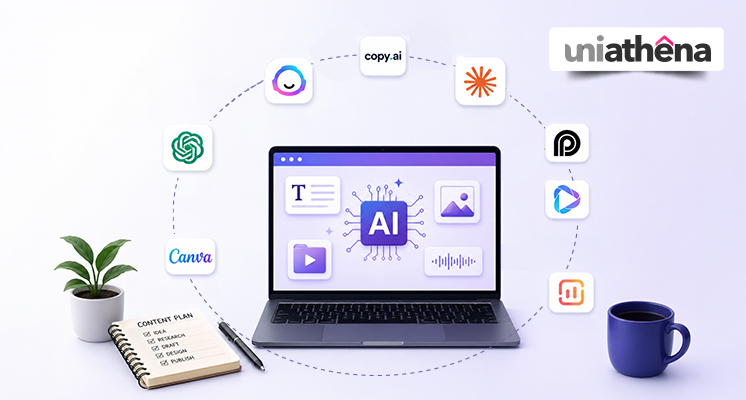
Best AI Tools for Content Creation
Read More
8
mins read


🌟 Top Project Performer – April 2026 🌟
Read More
1
mins read
What Is Grok AI?
Read more
9
mins read
🌟 Top Project Performer – June 2026 🌟
Read more
1
mins read
🌟 Top Project Performer – May 2026 🌟
Read more
1
mins read
Best AI Tools for Content Creation
Read more
8
mins read
🌟 Top Project Performer – April 2026 🌟
Read more
1
mins read
Get in Touch

It’s Time to Start
Join NowMost Popular Online Specialization
- Master of International Business Administration
- Master of Business Administration
- MBA in General Management- FastTrack
- Master in Innovation and Entrepreneurship
- MBA-Family Business Management
- Master in Procurement and Contract Management
- Extended Diploma in Business Analytics (SCQF Level 11)
- Diploma in Supply Chain and Logistics Management (SCQF Level 11)
- Strategic Human Resource Management Practitioner
- Master in Data Science
- Master in Engineering Management
Trending Online
- Integrated Doctorate of Business Administration
- Postgraduate Certificate in Finance for Next Generation Managers
- Master of Business Administration- General Management (Fast Track)
- Postgraduate Certificate in Socio-Economic and Legal Framework
- Postgraduate Certificate in Business Sustainability
- Certified Manager
- Supply Chain Management Practitioner
- MBA - AI in Business
- MBA - Accounting & Finance
- Master in Supply Chain and Logistics Management
Top Universities Online Certificates
- Postgraduate Certificate in International Marketing Management
- Postgraduate Certificate In International Human Resource Management
- Postgraduate Certificate in Strategic Management
- Postgraduate Certificate in Procurement & Contracts Management
- Postgraduate Certificate in Business Analytics
- Postgraduate Certificate in Strategic Supply Chain & Logistics Management
- Postgraduate Certificate in Human Resource and Leadership
- Project Management Practitioner
- Postgraduate Certificate in Supply Chain Design & Implementation
- Postgraduate Certificate in Management Accounting and Finance
Accredited Online Degree Program
- MBA - Digital Transformation
- MBA - Family Business Management
- MBA - Marketing Management
- MBA in Quality Management
- MBA - Business Intelligence & Data Analytics
- MBA in Operations & Project Management
- MBA in Energy Management
- MBA In Construction & Safety Management
- Master in Organisational Leadership
- Master in Public Health
- Master in Construction Management
- Bachelor of Arts in Business Administration


 Install Now


UniAthena is an Ed-Tech, offering flexible, affordable learning solutions, including Free-Learning Upskilling Courses and Academic Programs in partnerships with accredited and globally renowned universities and professional qualification bodies.


Do you have any questions ?
Feel free to send us your questions or request a free consultation
Send a message
UK
Athena Global Education
Magdalen Centre,
Robert Robinson Avenue,
Oxford, OX4 4GA, UK
Phone : 01865 784299
MIDDLE EAST
Athena Global Education FZE
Block L-03, First Floor,
P O Box 519265, Sharjah Publishing City,
Free Zone, Sharjah, UAE
Phone : +971 55 879 5492
INDIA
Uniathena Private Limited
9A,Midas Tower
Phase 1
Hinjewadi Rajiv Gandhi Infotech Park
Pune-411057
Phone: +91 9145665544
All Copyrights Reserved @ Athena Global Education 2021-2026