-

Bachelor's

-

Masters
-

MBA
-

Doctorate
-

Micro Credit
-

Explore all Courses
-
Postgraduate Certifications

-
Postgraduate Diploma
-
Undergraduate Diploma
-
Diploma



Beyond the Bot: How ChatGPT Is Changing the Way Students Learn

Author: maharajan p
|7
MINS READ
| 0
| 88
Created On: 20 April, 2026
Share




Table of Contents (TOC):
- Introduction
- Key Takeaways
- What Is ChatGPT?
- How ChatGPT Is Changing Education
- Benefits of ChatGPT in Education
- Challenges and Risks of ChatGPT in Education
- Best Ways Students Can Use ChatGPT for Learning
- FAQs
Introduction
If you are a student, teacher, or lifelong learner, you have likely heard about ChatGPT. In a short time, it has become one of the most widely used AI tools for answering questions, explaining complex ideas, and helping people write or research faster.
Many students now turn to ChatGPT to clarify difficult topics, summarize study materials, or brainstorm ideas for assignments. Educators are also exploring how the tool can support lesson planning and provide additional learning resources.
As its use continues to grow, an important question emerges: What is the real impact of ChatGPT on education?
Key Takeaways:
- ChatGPT is part of a larger shift toward AI in education.
- ChatGPT is a generative AI system that uses large language models to understand prompts and produce human-like responses for explanations, writing assistance, and research support.
- Students are discovering the practical benefits of using AI tools in education. Many learners use ChatGPT to clarify difficult concepts, summarize study materials, brainstorm assignment ideas, and improve writing clarity.
- Teachers use ChatGPT to streamline teaching preparation. Educators often rely on it to generate lesson plans, prepare quizzes, adapt course materials for different learning levels, and create summaries or teaching resources.
- Over-reliance on AI, academic integrity concerns, and the possibility of inaccurate information mean you should always verify facts and continue developing independent learning skills.
What Is ChatGPT?
Think about the last time you needed a quick answer, a drafted email, or an explanation of a complex topic. Chances are, you either searched for it, asked someone, or figured it out yourself. Well, ChatGPT introduced a fourth option. It will answer your questions and help you with your tasks like a knowledgeable subject matter expert.
Technically, it is a conversational AI that constructs responses in real time, based on what you ask and the context around it. Ask it a vague question, and it asks for clarity. Give it a task, and it works through it. Push back on its answer, and it reconsiders.
Key characteristics of ChatGPT include:
- Natural Language Processing: It interprets and generates text in everyday language.
- Context-Based Responses: The model analyzes the prompt and produces replies based on patterns learned during training.
- Generative Capability: Instead of retrieving fixed answers, it constructs new responses dynamically.
How ChatGPT Is Changing Education
AI tools like ChatGPT are no longer niche innovations. They are now used by more than 900 million people globally every week - one of the fastest adoption rates of any consumer technology.
This level of usage also translates into billions of queries processed daily, signaling a fundamental shift in how people access, process, and apply information in everyday life.
Nowhere is this change more visible than in education. According to the Higher Education Policy Institute, students' use of AI tools in academic work rose from 66% in 2024 to 92% in 2025, highlighting how quickly AI-assisted learning is becoming the norm.
Note: These figures come from a survey of 1,041 undergraduate students conducted by the HEPI. The findings represent responses from the surveyed students, though they align with the wider rise in the use of tools like ChatGPT in academic settings.
Students commonly use AI tools for tasks such as:
- Clarifying complex topics
- Summarizing long study materials
- Brainstorming ideas for assignments
- Checking grammar and improving writing
Educators are also adopting AI tools in their teaching workflow. Recent education technology reports indicate that nearly six in ten classes now involve some form of AI-assisted activity.
Teachers are using AI systems to:
- Generate lesson plans and quizzes
- Adapt course materials for different learning levels
- Create summaries and teaching resources
As a result, AI tools are increasingly becoming part of the everyday learning environment, supporting both classroom teaching and independent study.
Where ChatGPT Makes a Difference in Education
1. Personalized Learning Support
When you study on your own, you do not always get immediate help when something is confusing. ChatGPT allows you to ask questions and receive explanations instantly.
If a concept feels difficult, you can ask the tool to explain it again in simpler terms or provide additional examples. This makes it easier to understand topics that may not have been clear during a class session.
2. 24/7 Academic Assistance
Academic questions often come up while studying outside class hours. ChatGPT gives you access to learning support whenever you need it.
You can use it to:
- Check homework questions
- Ask for quick explanations
- Review unfamiliar terms
- Clarify instructions for assignments
3. Improved Writing and Communication Skills
ChatGPT can also help you refine your writing, especially if you are preparing essays, reports, or research summaries.
You can use it to:
- Correct grammar errors
- Restructure sentences for clarity
- Improve word choice and vocabulary
- Simplify complex sentences
For students learning English as a second language, this kind of feedback can make it easier to communicate ideas clearly in academic writing.
4. Faster Research and Study Support
When you start learning a new topic, it often takes time to understand the basic concepts before deeper research begins.
ChatGPT can help you move through the early stage of research faster by:
- Summarizing complex topics
- Explaining unfamiliar concepts
- Generating possible angles for assignments
- Helping you organize ideas for reports or essays
This allows you to spend more time reviewing reliable sources and less time struggling with basic explanations.
Also Read: AI Isn’t Just Assisting Anymore. It’s Working as an Agent
The Hidden Risks of ChatGPT in Education
1. Academic Integrity and Plagiarism
While ChatGPT can assist with learning, it also creates challenges for academic integrity.
You can easily generate essays, answers, or summaries using AI tools. When students submit this content as their own work without proper effort or verification, it raises concerns about plagiarism. Before submitting their work, students should review it for unintended similarities and remove plagiarism where necessary to ensure it reflects their own understanding.
This also makes it harder for educators to determine whether an assignment truly reflects a student’s understanding. In many cases, AI-generated text can appear well-structured and convincing, which complicates the process of verifying original work.
2. Over-reliance on AI Tools
If you begin to rely on AI tools for every academic task, it may reduce how much you think through problems on your own.
Instead of analyzing a question, organizing your ideas, and developing an answer independently, you might be tempted to ask AI systems to produce the response for you.
Over time, this can lead to:
- Reduced independent thinking
- Weaker analytical skills
- Less practice solving problems on your own
3. Risk of Inaccurate Information
Another challenge is that AI systems can sometimes produce incorrect or misleading information. This issue is commonly known as AI hallucination.
Because AI models generate responses based on patterns in data rather than direct knowledge verification, some answers may contain errors or outdated information.
For this reason, it is important to treat AI responses as a starting point rather than a final source. You should always:
- Verify facts using reliable academic sources
- Cross-check statistics and research claims
- Confirm information through textbooks or peer-reviewed materials
Fact-checking ensures that your work remains accurate and academically reliable.
Also Read: How to Learn Faster & Improve Skills with ChatGPT
Best Ways Students Can Use ChatGPT for Learning
Whether you are a student, a tutor, or even someone working in fields like writing or marketing, understanding how to interact with AI tools can help you work faster and organize information more efficiently.
At the same time, AI does not replace the fundamentals of learning. You still need subject knowledge, critical thinking, and research skills. Tools like ChatGPT simply help you apply those skills more efficiently.
If you want to build practical skills in using ChatGPT and understanding AI tools, here are a few courses you can explore.
1. Master ChatGPT
This course introduces you to the fundamentals of ChatGPT and shows how to interact with the tool effectively.
In this program, you learn how to:
- Understand the development and background of ChatGPT
- Write effective prompts to improve responses
- Use ChatGPT for research, brainstorming, and content creation
- Explore creative applications such as generating ideas, stories, or visuals
2. Mastering AI: Fundamentals, Strategies & Representation
If you want to go beyond using ChatGPT and understand how AI systems work, this course focuses on the core concepts of artificial intelligence.
Through this program, you will learn about:
- The meaning and types of artificial intelligence
- How AI systems and intelligent agents operate
- Real-world applications of AI across industries
- Problem-solving strategies used in AI systems
- Knowledge representation and logical frameworks in AI
By understanding these foundations, you can better interpret how AI tools generate responses and where their limitations may exist.
Also Read: Can AI Help You Decide Your Future Career and Education Path?
FAQs
Q1. How is ChatGPT used in education?
A: Students and educators use ChatGPT to explain concepts, summarize study materials, brainstorm ideas, and assist with writing or research tasks.
Q2. Can ChatGPT replace teachers in the classroom?
A: No. ChatGPT can support learning, but teachers remain essential for instruction, guidance, feedback, and evaluating student understanding.
Q3. Is it acceptable to use ChatGPT for homework?
A: It can be used for explanations, study support, and idea generation, but submitting AI-generated work as your own may violate academic integrity policies.
Q4. What are the main benefits of ChatGPT for students?
A: It helps you clarify difficult topics, improve writing, summarize information, and receive instant study support.
Q5. Can ChatGPT provide incorrect information?
A: Yes. AI tools can sometimes generate inaccurate responses, so it is important to verify information using reliable academic sources.
Explore Related Courses













COMMENTS(0)
Explore Related Courses
Our Popular Insights
Careers are shifting faster than ever, and staying relevant takes more than experience. Explore UniAthena’s most-read blogs for sharp insights, emerging skills, and practical pathways that help you move forward with clarity and confidence in a changing professional world.

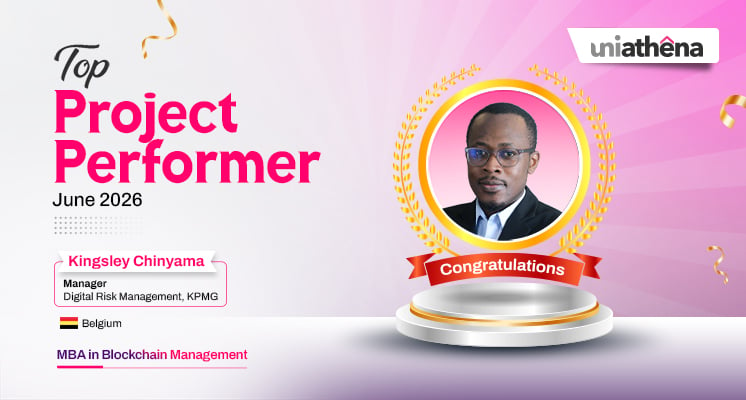
🌟 Top Project Performer – June 2026 🌟
Read More
1
mins read

Best AI Tools for Content Creation
Read More
9
mins read

🌟 Top Project Performer – May 2026 🌟
Read More
1
mins read

What Is Grok AI?
Read More
9
mins read
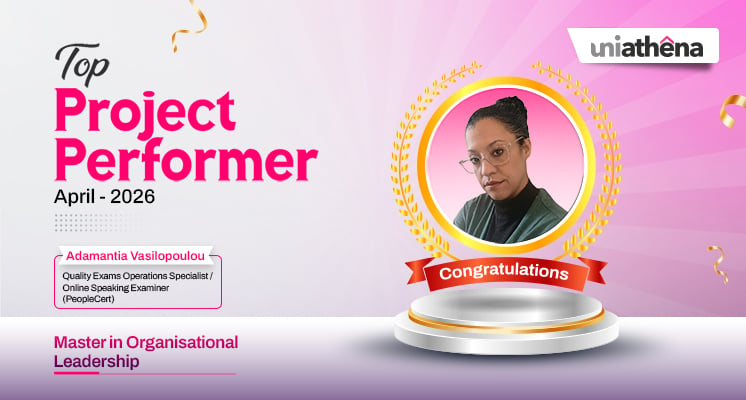
🌟 Top Project Performer – April 2026 🌟
Read More
1
mins read
🌟 Top Project Performer – June 2026 🌟
Read more
1
mins read
Best AI Tools for Content Creation
Read more
9
mins read
🌟 Top Project Performer – May 2026 🌟
Read more
1
mins read
What Is Grok AI?
Read more
9
mins read
🌟 Top Project Performer – April 2026 🌟
Read more
1
mins read
Get in Touch

It’s Time to Start
Join NowMost Popular Online Specialization
- Master of International Business Administration
- Master of Business Administration
- MBA in General Management- FastTrack
- Master in Innovation and Entrepreneurship
- MBA-Family Business Management
- Master in Procurement and Contract Management
- Extended Diploma in Business Analytics (SCQF Level 11)
- Diploma in Supply Chain and Logistics Management (SCQF Level 11)
- Strategic Human Resource Management Practitioner
- Master in Data Science
- Master in Engineering Management
Trending Online
- Integrated Doctorate of Business Administration
- Postgraduate Certificate in Finance for Next Generation Managers
- Master of Business Administration- General Management (Fast Track)
- Postgraduate Certificate in Socio-Economic and Legal Framework
- Postgraduate Certificate in Business Sustainability
- Certified Manager
- Supply Chain Management Practitioner
- MBA - AI in Business
- MBA - Accounting & Finance
- Master in Supply Chain and Logistics Management
Top Universities Online Certificates
- Postgraduate Certificate in International Marketing Management
- Postgraduate Certificate In International Human Resource Management
- Postgraduate Certificate in Strategic Management
- Postgraduate Certificate in Procurement & Contracts Management
- Postgraduate Certificate in Business Analytics
- Postgraduate Certificate in Strategic Supply Chain & Logistics Management
- Postgraduate Certificate in Human Resource and Leadership
- Project Management Practitioner
- Postgraduate Certificate in Supply Chain Design & Implementation
- Postgraduate Certificate in Management Accounting and Finance
Accredited Online Degree Program
- MBA - Digital Transformation
- MBA - Family Business Management
- MBA - Marketing Management
- MBA in Quality Management
- MBA - Business Intelligence & Data Analytics
- MBA in Operations & Project Management
- MBA in Energy Management
- MBA In Construction & Safety Management
- Master in Organisational Leadership
- Master in Public Health
- Master in Construction Management
- Bachelor of Arts in Business Administration


 Install Now


UniAthena is an Ed-Tech, offering flexible, affordable learning solutions, including Free-Learning Upskilling Courses and Academic Programs in partnerships with accredited and globally renowned universities and professional qualification bodies.


Do you have any questions ?
Feel free to send us your questions or request a free consultation
Send a message
UK
Athena Global Education
Magdalen Centre,
Robert Robinson Avenue,
Oxford, OX4 4GA, UK
Phone : 01865 784299
MIDDLE EAST
Athena Global Education FZE
Block L-03, First Floor,
P O Box 519265, Sharjah Publishing City,
Free Zone, Sharjah, UAE
Phone : +971 55 879 5492
INDIA
Uniathena Private Limited
9A,Midas Tower
Phase 1
Hinjewadi Rajiv Gandhi Infotech Park
Pune-411057
Phone: +91 9145665544
All Copyrights Reserved @ Athena Global Education 2021-2026