-

Bachelor's

-

Masters
-

MBA
-

Doctorate
-

Micro Credit
-

Explore all Courses
-
Postgraduate Certifications

-
Postgraduate Diploma
-
Undergraduate Diploma
-
Diploma



Supply Chains as Systems: An Engineer’s View of Flow, Failure, and Recovery

Author: rinta george
|4
MINS READ
| 0
| 80
Created On: 16 January, 2026
Share




As engineers, they are taught to view the world as interconnected systems: systems that are made up of inputs, processes, constraints, and outputs, with defined rules governing how materials move through the system and at what point the system will fail. Looking at the current state of supply chains through an engineering mindset allows us to recognize that we are dealing with complex supply chain systems built much like engineered infrastructure.
The capability to analyse flow through the system, identify failure points, and design recovery mechanisms within the supply chain is vital to surviving in an uncertain and disruptive world.
What is Supply Chain Flow? A Systems Perspective
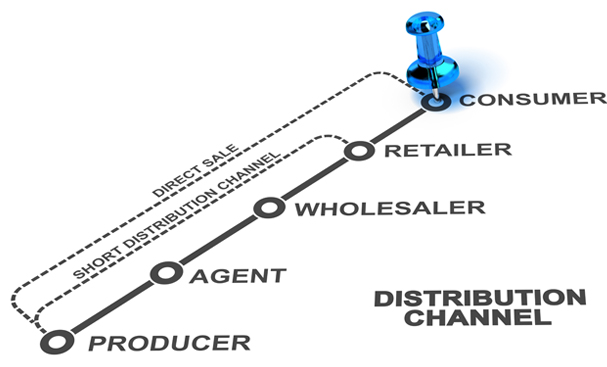
Supply chain flow can be understood as the movement of raw materials, products, services, and information from suppliers to final consumers. A series of events within an engineering model of the supply chain process explains how each element collaborates through a continuous flow of activities. Players or organisations within the supply chain can be perceived as “nodes.” These nodes may represent suppliers, manufacturers, distributors, warehouses, or distribution centres, and transportation links.
Just like fluid or electrical currents, disruptions in supply chain flow often result from asymmetries in capacity between nodes, unsynchronised processes, or poor system supervision. In most cases, a disruption occurs when demand and available capacity diverge beyond acceptable tolerances.
Supply Chain Bottlenecks and Constraints
From an engineering perspective, a system is no stronger than its weakest link. In supply chains, these weak links manifest as bottleneck constraints. Examples include suppliers with limited capacity, congested ports, dependence on single-source suppliers, or outdated information technology infrastructure. These constraints behave like classic system limitations, where amplification effects propagate upstream and downstream.
Understanding and managing these constraints is central to effective supply chain management. Without intervention, bottlenecks restrict throughput, magnify variability, and increase systemic risk.
Supply Chain Failures: When Systems Break Down
Failure is inherent in engineered systems, and the same applies to supply chains. A supply chain failure occurs when normal operations are disrupted beyond the system’s ability to self-correct. Such failures may result from supplier shutdowns, labour strikes in transportation networks, cyberattacks on logistics platforms, or sudden surges in customer demand.
The most severe failures escalate into supply chain disasters. In these cases, local disruptions trigger cascading effects that lead to prolonged shortages, revenue loss, and systemic instability across multiple organisations. History has repeatedly shown that a failure at a single node can propagate globally.
Supply Chain Issues and Real-World Examples
Modern supply chain challenges rarely occur in isolation. Instead, they emerge from the interaction of multiple vulnerabilities, such as dependence on a single geography, limited visibility, and rigid operating models.
When these issues converge, organisations face full-scale supply chain crises. Recent global disruptions have demonstrated how fragile complex systems can become when exposed simultaneously to geopolitical shocks, logistical breakdowns, and policy constraints.
Understanding Supply Chain Risk and Risk Management
From an engineering risk perspective, supply chain risk refers to both the likelihood and the impact of events that disrupt normal operations. These risks may be operational, financial, strategic, or external.
Supply chain risk management is the discipline of identifying vulnerabilities, analysing failure modes, and designing controls to mitigate impact. Engineers approach this challenge using principles such as redundancy, diversification, stress testing, and fail-safe design, all of which are directly applicable to supply chain systems.
Designing a Supply Chain Disaster Recovery Plan
Just as critical infrastructure requires contingency planning, resilient organisations need robust supply chain disaster recovery strategies. These strategies define how systems respond to disruption through alternative suppliers, rerouted logistics, buffer inventory, and rapid decision-making tools.
An effective recovery plan transforms disruption from a catastrophic failure into a manageable deviation. The objective is not to eliminate risk entirely, which is impossible, but to stabilise operations and recover as quickly as possible.
The Future of Supply Chains Through an Engineering Lens
Viewing supply chains as engineered systems fundamentally changes how problems are addressed. Engineers seek root causes, while traditional management approaches often focus on treating symptoms within an environment of recurring challenges.
By understanding system behaviour, managing flows, anticipating disruptions, and designing recovery mechanisms, organisations can build supply chains that are both resilient and efficient. The future of excellence in supply chain management lies in applying engineering principles to what may be the most complex and critical system in the global economy.
Explore Related Courses










COMMENTS(0)
Explore Related Courses
Our Popular Insights
Careers are shifting faster than ever, and staying relevant takes more than experience. Explore UniAthena’s most-read blogs for sharp insights, emerging skills, and practical pathways that help you move forward with clarity and confidence in a changing professional world.


How to Switch Career to Data Analytics?
Read More
6
mins read




How to Switch Career to Data Analytics?
Read more
6
mins read

Get in Touch

It’s Time to Start
Join NowMost Popular Online Specialization
- Master of International Business Administration
- Master of Business Administration
- MBA in General Management- FastTrack
- Master in Innovation and Entrepreneurship
- MBA-Family Business Management
- Master in Procurement and Contract Management
- Extended Diploma in Business Analytics (SCQF Level 11)
- Diploma in Supply Chain and Logistics Management (SCQF Level 11)
- Strategic Human Resource Management Practitioner
- Master in Data Science
- Master in Engineering Management
Trending Online
- Integrated Doctorate of Business Administration
- Postgraduate Certificate in Finance for Next Generation Managers
- Master of Business Administration- General Management (Fast Track)
- Postgraduate Certificate in Socio-Economic and Legal Framework
- Postgraduate Certificate in Business Sustainability
- Certified Manager
- Supply Chain Management Practitioner
- MBA - AI in Business
- MBA - Accounting & Finance
- Master in Supply Chain and Logistics Management
Top Universities Online Certificates
- Postgraduate Certificate in International Marketing Management
- Postgraduate Certificate In International Human Resource Management
- Postgraduate Certificate in Strategic Management
- Postgraduate Certificate in Procurement & Contracts Management
- Postgraduate Certificate in Business Analytics
- Postgraduate Certificate in Strategic Supply Chain & Logistics Management
- Postgraduate Certificate in Human Resource and Leadership
- Project Management Practitioner
- Postgraduate Certificate in Supply Chain Design & Implementation
- Postgraduate Certificate in Management Accounting and Finance
Accredited Online Degree Program
- MBA - Digital Transformation
- MBA - Family Business Management
- MBA - Marketing Management
- MBA in Quality Management
- MBA - Business Intelligence & Data Analytics
- MBA in Operations & Project Management
- MBA in Energy Management
- MBA In Construction & Safety Management
- Master in Organisational Leadership
- Master in Public Health
- Master in Construction Management
- Bachelor of Arts in Business Administration


 Install Now


UniAthena is an Ed-Tech, offering flexible, affordable learning solutions, including Free-Learning Upskilling Courses and Academic Programs in partnerships with accredited and globally renowned universities and professional qualification bodies.


Do you have any questions ?
Feel free to send us your questions or request a free consultation
Send a message
UK
Athena Global Education
Magdalen Centre,
Robert Robinson Avenue,
Oxford, OX4 4GA, UK
Phone : 01865 784299
MIDDLE EAST
Athena Global Education FZE
Block L-03, First Floor,
P O Box 519265, Sharjah Publishing City,
Free Zone, Sharjah, UAE
Phone : +971 55 879 5492
INDIA
Uniathena Private Limited
9A,Midas Tower
Phase 1
Hinjewadi Rajiv Gandhi Infotech Park
Pune-411057
Phone: +91 9145665544
All Copyrights Reserved @ Athena Global Education 2021-2026