-

Bachelor's

-

Masters
-

MBA
-

Doctorate
-

Micro Credit
-

Explore all Courses
-
Postgraduate Certifications

-
Postgraduate Diploma
-
Undergraduate Diploma
-
Diploma



The Role of Upcycling in Supply Chains: Turning Waste into Profit

Author: christina roslin chandraprakash
|6
MINS READ
| 0
| 105
Created On: 14 July, 2025
Share




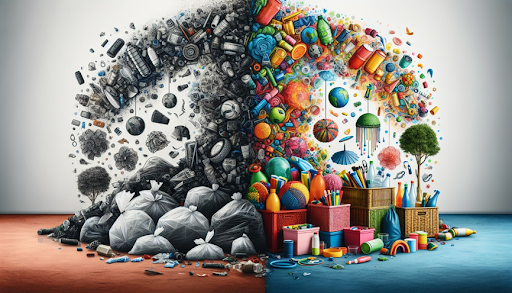
What if the waste that ends up in landfills today could turn out to be the most valuable resource in the near future? Upcycling is an operational shift that is transforming global supply chains in the era of circular economies and responsible consumers.
Introduction
The UN Food and Agriculture Organization (UN FAO) estimates that over 30% of the world's food supply—roughly 1 billion tons annually—is wasted. In the US, where about 40% of all food is thrown away, or around 145 billion meals, this percentage is even higher.
In this era, where resources are limited, consumer demands are constantly changing, and the climate is drastically shifting, businesses must re-examine their supply chain strategies for the benefit of all. A rising hero in this story is Upcycling, which is the art of successfully repurposing waste material to a better form, thereby appreciating its value.
But how do we differentiate between upcycling and recycling in the supply chain?
Upcycling enhances the value of commodities while preserving the quality of the original material, producing goods of higher quality without much exertion, in contrast to recycling, which degrades the materials to their most basic form for reuse (often leading to "downcycling" or quality loss). Consider reusing denim to make luxurious bags or repurposing industrial wood pallets of wood into chic furniture.
In modern supply chains, where sustainability is crucial for business rather than a choice, upcycling has begun to gain traction. It's not only an effective way to reduce waste but also a strategic lever to cut costs, open new revenue streams, and build brand loyalty.
The Problem with Traditional Supply Chains
The linear model of most traditional supply chains is Take → Make → Use → Dispose. This industrial-era model is wasteful and inherently harmful to the environment by nature. It results in more materials ending up in landfills, a rise in carbon emissions, and increased dependency on limited resources.
Additionally, the linear model fails to identify the potential for a business opportunity. The labour, energy, and raw materials that firms have historically wasted remain untapped resources.
What is Upcycling?
Upcycling is taking something that’s considered waste and repurposing it. The upcycled item often becomes more functional or beautiful than what it previously was.
Unlike the linear model, a circular supply chain model allows materials to be reused, remanufactured, or upcycled, treating waste as a starting point rather than an end result. Additionally, this lowers environmental risk and also promotes innovation, and reflects the ideals of today's ethical shoppers. Upcycling goes beyond recycling because it uses existing resources to create more valuable goods in addition to decreasing waste.
The Many Faces of Upcycling
1. Plastics
Circular economic impact: Across the EU, plastic upcycling could unlock up to USD 630 billion in net material savings and recover USD 4.5 trillion lost in linear supply chains.
Environmental uplift: Initiatives like Ecoalf’s “Upcycling the Oceans” have harvested 188 million bottles and converted 400 tons of ocean plastic into shirts, jackets, and shoes.
2. Wood
InventWood (Maryland, USA) chemically treats and compresses low-grade scrap wood into Superwood, a bullet-and fire-resistant material stronger than steel, yet lighter.
While there are limited concrete examples, wood upcycling often involves repurposing pallet waste, industrial leftovers, or fallen timber into furniture, décor, or architectural features that are both functional and visually striking. More investigation into this growth is needed.
3. Fashion/Textile
Suay Sew Shop upcycles over 381 tons of clothing, offers repairs, and communal dye services—all while fostering worker ownership.
MUD Jeans uses 40% post-consumer denim, offers leasing plans, and has achieved fully recycled jeans through mechanical + chemical recycling.
At Milan Fashion Week, Simon Cracker showcased garments from flood-damaged and reclaimed materials.
4. Electronic Waste
Rare-earth recovery: To improve the sustainability of the EU supply, ETH Zurich created a novel extractant to collect rare-earth elements from fluorescent lights, of which less than 1% are currently recycled.
Creative repurposing: Designers use circuit boards, keyboards, and CRTs to create jewellery, furniture, clocks, fish tanks, and stools.
5. Construction
K‑Briq (Scotland): Made from 90% construction & demolition debris, producing bricks with just one-tenth of the carbon emissions compared to traditional bricks.
Pretty Plastic Façade (Netherlands): Shingles from recycled PVC window frames and gutters cladding a school in Oosterhout—a sustainable and fire-resistant architectural showcase.
Benefits of Upcycling
Upcycling has gained popularity among millennials. 73% of this demographic expresses a preference for sustainable products. According to a report by the World Economic Forum, upcycling has the potential to create 1.5 million jobs globally by 2030.
Conservation of Natural Resources:
The demand for fresh raw materials is reduced when a material is upcycled, as it preserves the quality. This not only prevents the harmful effects that mining and extraction operations have on the environment but also fosters conservation of resources like water, wood, and minerals.
Decreased Landfill Waste:
The world's trash problem is becoming worse. By 2050, the World Bank predicts that 3.4 billion tons of trash will be generated worldwide. Through upcycling, we can extend the life cycle of common products by reusing them, which would otherwise end up in growing landfills.
Enhanced Innovation and Creativity:
Upcycling promotes innovative thinking on both a personal and professional level. By transforming "junk" into something useful, we foster an innovative and sustainable culture.
Reduced Material Costs:
Global supply chain interruptions and growing expenses pose threats to the fashion business. By employing second-hand products or local waste, upcycling helps reduce these and improves the predictability and resilience of supply chains. This method creates distinctive, value-added products that can command high prices while lowering the costs of raw materials and disposal.
Lower Carbon Footprint:
Upcycling is an environmentally friendly substitute because it uses little to no energy. According to a University of California, Berkeley study, upcycling can save carbon emissions by up to 60%, especially in sectors like construction and apparel.
Breaking Down Barriers: Making Upcycling Mainstream
A number of challenges must be addressed before upcycling becomes widely accepted. Among these challenges are:
Ø The dominant linear economic model, which emphasizes rapid and inexpensive manufacturing to produce disposable consumer goods
Ø Securing reliable, high-quality waste materials
Ø Managing storage for used products and materials
Ø Combating consumer preference for mass-produced goods over sustainable alternatives
Conclusion
Upcycling is a growing trend in the era of circular economies and responsible consumers, transforming global supply chains. It involves successfully repurposing waste materials to their better form, appreciating their value while preserving the original material's quality. This
approach goes beyond recycling, as it uses discarded resources to create more valuable goods and reduces trash.
Upcycling can be applied to various sectors, such as plastics, wood, fashion/textiles, electronics, creative repurposing, construction, and more. Benefits of upcycling include conserving natural resources, decreasing landfill waste, promoting innovation and creativity, reducing material costs, and reducing carbon footprint.
However, challenges must be addressed before upcycling becomes widely accepted, including the prevalent linear economic paradigm, finding reliable and superior waste materials, organizing used product storage space, and combating the trend of mass-produced goods. By addressing these challenges, we can achieve a sustainable supply chain in businesses.
Sources:
- Plastic Reimagined (2022). The Definition of Upcycling & 4 Ways It Can Help The Planet. [online] www.plasticreimagined.org. Available at: https://www.plasticreimagined.org/articles/upcycling-explained-4-ways-it-can-help-the-planet.
- Chemistry & Industry (2025) From waste to taste: why food upcycling is the next big thing. 1 May. Available at: https://www.soci.org/chemistry-and-industry/cni-data/2025/5/from-waste-to-taste-why-food-upcycling-is-the-next-big-thing (Accessed: 1 July 2025).
- Supply Chain Dive (2022). Supply Chain News and Analysis | Supply Chain Dive. [online] Supplychaindive.com. Available at: https://www.supplychaindive.com/.
- Re-thinking The Future (n.d.). 10 examples of upcycling in architecture. Available at: https://www.re-thinkingthefuture.com/rtf-fresh-perspectives/a1989-10-examples-of-upcycling-in-architecture/ (Accessed: 2 July 2025).
- Gabriel, M. (2024). Benefits of Upcycling to the Environment: How to Transform Waste into Value | What is Green Living? [online] What is Green Living? Available at: https://whatisgreenliving.com/benefits-of-upcycling-to-the-environment/.
Explore Related Courses









.jpg)


COMMENTS(0)
Explore Related Courses
Our Popular Insights
Careers are shifting faster than ever, and staying relevant takes more than experience. Explore UniAthena’s most-read blogs for sharp insights, emerging skills, and practical pathways that help you move forward with clarity and confidence in a changing professional world.




What is the Role of AI in Education?
Read More
4
mins read

What is the Role of AI in Education?
Read more
4
mins read
Get in Touch

It’s Time to Start
Join NowMost Popular Online Specialization
- Master of International Business Administration
- Master of Business Administration
- MBA in General Management- FastTrack
- Master in Innovation and Entrepreneurship
- MBA-Family Business Management
- Master in Procurement and Contract Management
- Extended Diploma in Business Analytics (SCQF Level 11)
- Diploma in Supply Chain and Logistics Management (SCQF Level 11)
- Strategic Human Resource Management Practitioner
- Master in Data Science
- Master in Engineering Management
Trending Online
- Integrated Doctorate of Business Administration
- Postgraduate Certificate in Finance for Next Generation Managers
- Master of Business Administration- General Management (Fast Track)
- Postgraduate Certificate in Socio-Economic and Legal Framework
- Postgraduate Certificate in Business Sustainability
- Certified Manager
- Supply Chain Management Practitioner
- MBA - AI in Business
- MBA - Accounting & Finance
- Master in Supply Chain and Logistics Management
Top Universities Online Certificates
- Postgraduate Certificate in International Marketing Management
- Postgraduate Certificate In International Human Resource Management
- Postgraduate Certificate in Strategic Management
- Postgraduate Certificate in Procurement & Contracts Management
- Postgraduate Certificate in Business Analytics
- Postgraduate Certificate in Strategic Supply Chain & Logistics Management
- Postgraduate Certificate in Human Resource and Leadership
- Project Management Practitioner
- Postgraduate Certificate in Supply Chain Design & Implementation
- Postgraduate Certificate in Management Accounting and Finance
Accredited Online Degree Program
- MBA - Digital Transformation
- MBA - Family Business Management
- MBA - Marketing Management
- MBA in Quality Management
- MBA - Business Intelligence & Data Analytics
- MBA in Operations & Project Management
- MBA in Energy Management
- MBA In Construction & Safety Management
- Master in Organisational Leadership
- Master in Public Health
- Master in Construction Management
- Bachelor of Arts in Business Administration


 Install Now


UniAthena is an Ed-Tech, offering flexible, affordable learning solutions, including Free-Learning Upskilling Courses and Academic Programs in partnerships with accredited and globally renowned universities and professional qualification bodies.


Do you have any questions ?
Feel free to send us your questions or request a free consultation
Send a message
UK
Athena Global Education
Magdalen Centre,
Robert Robinson Avenue,
Oxford, OX4 4GA, UK
Phone : 01865 784299
MIDDLE EAST
Athena Global Education FZE
Block L-03, First Floor,
P O Box 519265, Sharjah Publishing City,
Free Zone, Sharjah, UAE
Phone : +971 55 879 5492
INDIA
Uniathena Private Limited
9A,Midas Tower
Phase 1
Hinjewadi Rajiv Gandhi Infotech Park
Pune-411057
Phone: +91 9145665544
All Copyrights Reserved @ Athena Global Education 2021-2026