-

Bachelor's

-

Masters
-

MBA
-

Doctorate
-

Micro Credit
-

Explore all Courses
-
Postgraduate Certifications

-
Postgraduate Diploma
-
Undergraduate Diploma
-
Diploma



Why Every Business Professional Should Learn SQL

Author: urvi malusare
|5
MINS READ
| 0
| 12
Created On: 21 July, 2026
Share




Table of Contents (TOC) :
- Key Takeaways
- What Is SQL?
- Importance of SQL
- Why Do Business Professionals Need SQL Skills?
- Learn SQL for Business With UniAthena
- Conclusion
- FAQs
When you hear ‘programming language,’ do you imagine a black screen with lines of matrix-like code?
Well, SQL is not that.
You don’t need a computer science background to learn SQL skills because, while it is a programming language, it is not limited to coding and engineering.
Key Takeaways:
- SQL knowledge is important for data analysts, business analysts, marketing professionals, financial analysts, product managers, and even HR leaders.
- Business professionals can learn some SQL for beginners and add this technical skill to their resume to make them stand out.
- An SQL course can teach you to write queries that will help you sort through huge databases and find the relevant information you are looking for. This can help hyper-target ad campaigns, find financial anomalies, understand customer behaviour, and improve employee retention rate in an organization.
What Is SQL?
SQL, also known as Structured Query Language, is a programming language that helps you interact with a database. You do not need coding skills to understand this language. It allows you to write your queries in English and helps you locate data in huge databases.
Not only is SQL knowledge important for data analysts, but it is also relevant for business professionals. It helps you extract information from databases to make business decisions.
Importance of SQL
Here is why learning SQL for business analysts is important:
It allows you to leave behind data dependencies. You don’t need to raise a ticket to the data team or the IT department to help you find specific information from a large database.
Opens access to large datasets that are difficult to analyze in Excel.
Prepares you to smoothly navigate business intelligence tools like Power BI and Tableau.
Shows the employer that you have technical skills beyond just the usual business acumen.
Why Do Business Professionals Need SQL Skills?
To properly understand why SQL for business professionals is important, here are some real-world examples of the way SQL can be applicable in all four major departments in the corporate environment:
1. Importance of SQL in Digital Marketing:
SQL skills can help you save on ad spend. If you are preparing to launch a huge ad retargeting campaign, you can use SQL to find your target segment from your email list. You filter for users who spent more than $100 the previous year but haven't opened an email or made a purchase in the last 90 days.
Now, by sending these users a hyper-targeted email offering a discount, you can redirect your ad spend from a generalized campaign to a very specific audience.
2. SQL for Finance Professionals:
SQL knowledge in the finance department can be useful in identifying anomalies. During an annual financial review, just looking at spreadsheets and their summaries will not give you details on sudden spikes or drops in numbers.
Instead, connecting SQL to your transaction ledger database can help you find specific transactions with specific vendors. This will make it easier for you to find the anomalies, such as a vendor quietly increasing their shipping fees.
3. SQL Training for Product Managers:
The importance of SQL in product management can be seen when mapping the user conversion funnel. For example, if you see a gap in the number of people who clicked on ‘buy now’ and the number of people who actually completed the purchase, knowing exactly where you lost your customers can help improve the process.
You will need to write a multi-step query in SQL to help you find exactly where in the journey most of your potential customers dropped off. Identifying this problem brings you one step closer to finding the solution.
4. Learn SQL as an HR Professional:
HR leaders can improve the company’s employee retention rate with SQL. An SQL course can help you understand how to use the tool to identify a pattern regarding employees’ departure from the organization.
You can run a query matching your employee directory database with recent exit-interview logs. You sort the data by department and seniority and figure out the average time an employee is staying in a role before they resign. Then, identifying the reason these employees resigned can help you address and resolve the issue, improving the retention rate.
Learn SQL for Business With UniAthena
You can learn SQL for free using SQL online courses at UniAthena. We offer a variety of SQL courses from beginner to advanced levels.
Here are some of the best SQL certifications for you:
- Basics of SQL: Aggregate Functions & Joins
- Basics of SQL Statements & Indexes
- Basics of SQL: Stored Procedures
- Essentials of SQL Fundamentals & Practical Applications
- Essentials of Intermediate and Advanced Concepts in SQL
- Diploma in SQL: Beginner to Advanced Levels
Conclusion
Just like how Excel has become an essential tool in business today, SQL is gaining traction for its unique ability to extract data from any database with a simple query.
While being a programming language, it does not require specialized knowledge in coding. This makes SQL training more accessible to business professionals. So if you are a business professional working in any of the core four areas of business, learning SQL is the right step for you.
FAQs
Q1. Is SQL worth learning in 2026?
A: Yes. Everyone who has to work with data or databases should learn SQL. Business professionals need to add SQL skills to their stack if they want to stay ahead of the curve.
Q2. Is SQL like Excel?
A: No, SQL and Excel have completely different purposes, even if they both help you sort through data. In SQL, you write queries using SELECT, FROM, WHERE, GROUP BY, and HAVING. And in Excel you use formulas like AVERAGE, SUM, PIVOT TABLE, and more.
Q3. Is SQL hard for beginners?
A: No, gaining SQL skills is not really considered hard for beginners. Usually, it takes you around 2 weeks to understand the basic concepts and write simple queries in SQL. It might take you a few months to get a good understanding of the tool.
Our Popular Courses

$14000


Doctoral Degree in Business Administration
Universidad Catolica De Murcia (UCAM), Spain
Duration:
2 - 3 Years
$17,500*
Integrated Doctorate of Business Administration
Guglielmo Marconi University, Italy
Universidad Catolica De Murcia (UCAM), Spain
Duration:
2.5 - 3.5 Years
$5,600*
Master of Business Administration
Guglielmo Marconi University, Italy
Duration:
12 - 24 Months
$5,600*
MBA in Operations & Project Management
Guglielmo Marconi University, Italy
Duration:
12 - 24 Months
$5,600*
Master in Supply Chain and Logistics Management
Guglielmo Marconi University, Italy
Duration:
12 - 24 Months
$5,950*
Master in Data Sciences
Guglielmo Marconi University, Italy
Duration:
12 - 24 Months
$5,600*
Master in Engineering Management
Guglielmo Marconi University, Italy
Duration:
12 - 24 Months
$5,600*
Master in Procurement and Contract Management
Guglielmo Marconi University, Italy
Duration:
12 - 24 Months
$5,600*
Master in Public Health
Guglielmo Marconi University, Italy
Duration:
12 - 24 MonthsOur Popular Courses
COMMENTS(0)
Our Popular Courses
$14000
Doctoral Degree in Business Administration
Universidad Catolica De Murcia (UCAM), Spain
Duration:
2 - 3 Years
$17,500*
Integrated Doctorate of Business Administration
Guglielmo Marconi University, Italy
Universidad Catolica De Murcia (UCAM), Spain
Duration:
2.5 - 3.5 Years
$5,600*
Master of Business Administration
Guglielmo Marconi University, Italy
Duration:
12 - 24 Months
$5,600*
MBA in Operations & Project Management
Guglielmo Marconi University, Italy
Duration:
12 - 24 Months
$5,600*
Master in Supply Chain and Logistics Management
Guglielmo Marconi University, Italy
Duration:
12 - 24 Months
$5,950*
Master in Data Sciences
Guglielmo Marconi University, Italy
Duration:
12 - 24 Months
$5,600*
Master in Engineering Management
Guglielmo Marconi University, Italy
Duration:
12 - 24 Months
$5,600*
Master in Procurement and Contract Management
Guglielmo Marconi University, Italy
Duration:
12 - 24 Months
$5,600*
Master in Public Health
Guglielmo Marconi University, Italy
Duration:
12 - 24 MonthsOur Popular Courses
Our Popular Insights
Careers are shifting faster than ever, and staying relevant takes more than experience. Explore UniAthena’s most-read blogs for sharp insights, emerging skills, and practical pathways that help you move forward with clarity and confidence in a changing professional world.


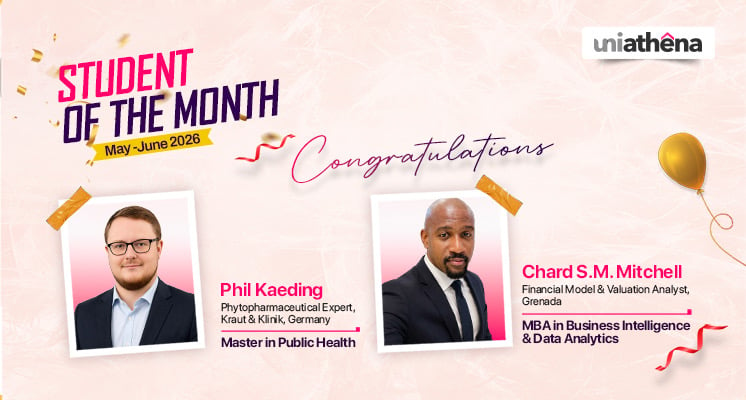
🌟 Students of the Month | May – June 2026 🌟
Read More
1
mins read
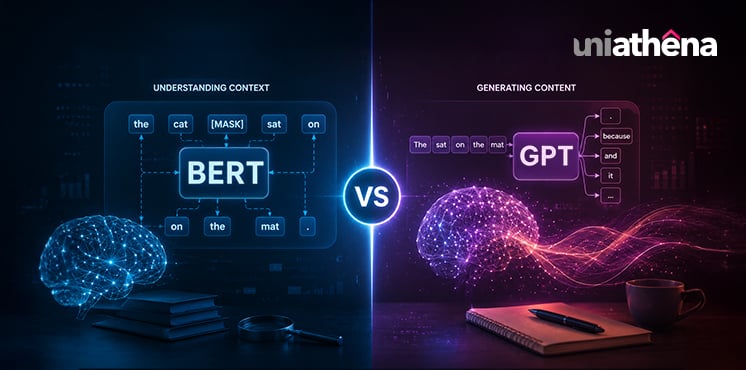





🌟 Students of the Month | May – June 2026 🌟
Read more
1
mins read
Get in Touch

It’s Time to Start
Join NowMost Popular Online Specialization
- Master of International Business Administration
- Master of Business Administration
- MBA in General Management- FastTrack
- Master in Innovation and Entrepreneurship
- MBA-Family Business Management
- Master in Procurement and Contract Management
- Extended Diploma in Business Analytics (SCQF Level 11)
- Diploma in Supply Chain and Logistics Management (SCQF Level 11)
- Strategic Human Resource Management Practitioner
- Master in Data Science
- Master in Engineering Management
Trending Online
- Integrated Doctorate of Business Administration
- Postgraduate Certificate in Finance for Next Generation Managers
- Master of Business Administration- General Management (Fast Track)
- Postgraduate Certificate in Socio-Economic and Legal Framework
- Postgraduate Certificate in Business Sustainability
- Certified Manager
- Supply Chain Management Practitioner
- MBA - AI in Business
- MBA - Accounting & Finance
- Master in Supply Chain and Logistics Management
Top Universities Online Certificates
- Postgraduate Certificate in International Marketing Management
- Postgraduate Certificate In International Human Resource Management
- Postgraduate Certificate in Strategic Management
- Postgraduate Certificate in Procurement & Contracts Management
- Postgraduate Certificate in Business Analytics
- Postgraduate Certificate in Strategic Supply Chain & Logistics Management
- Postgraduate Certificate in Human Resource and Leadership
- Project Management Practitioner
- Postgraduate Certificate in Supply Chain Design & Implementation
- Postgraduate Certificate in Management Accounting and Finance
Accredited Online Degree Program
- MBA - Digital Transformation
- MBA - Family Business Management
- MBA - Marketing Management
- MBA in Quality Management
- MBA - Business Intelligence & Data Analytics
- MBA in Operations & Project Management
- MBA in Energy Management
- MBA In Construction & Safety Management
- Master in Organisational Leadership
- Master in Public Health
- Master in Construction Management
- Bachelor of Arts in Business Administration


 Install Now


UniAthena is an Ed-Tech, offering flexible, affordable learning solutions, including Free-Learning Upskilling Courses and Academic Programs in partnerships with accredited and globally renowned universities and professional qualification bodies.


Do you have any questions ?
Feel free to send us your questions or request a free consultation
Send a message
UK
Athena Global Education
Magdalen Centre,
Robert Robinson Avenue,
Oxford, OX4 4GA, UK
Phone : 01865 784299
MIDDLE EAST
Athena Global Education FZE
Block L-03, First Floor,
P O Box 519265, Sharjah Publishing City,
Free Zone, Sharjah, UAE
Phone : +971 55 879 5492
INDIA
Uniathena Private Limited
9A,Midas Tower
Phase 1
Hinjewadi Rajiv Gandhi Infotech Park
Pune-411057
Phone: +91 9145665544
All Copyrights Reserved @ Athena Global Education 2021-2026