-

Bachelor's

-

Masters
-

MBA
-

Doctorate
-

Micro Credit
-

Explore all Courses
-
Postgraduate Certifications

-
Postgraduate Diploma
-
Undergraduate Diploma
-
Diploma



Python vs Java: Which is Better?
Author: munazzah ali
|6
MINS READ
| 0
| 105
Created On: 17 December, 2025
Share




Table Of Contents (TOC):
- Key Takeaways
- Understanding What Is Python
- Key Features of Python
- Advantages of Using Python
- A Closer Look at What Java Is
- Distinctive Features of Java
- Advantages of Java
- Key Differences Between Python and Java
- Learn and Grow with UniAthena
- Conclusion
- FAQs
Developers and learners are usually left in a dilemma when deciding on Python vs Java. They are both among the most popular programming languages, which dominate the industries of web development and artificial intelligence. However, the comparison of Python and Java is not only about syntax, but also about efficiency, scalability, and career opportunities.
If you are wondering what the difference is between Python and Java, whether you are a beginner learning to write code or an expert exploring new frontiers, read on to learn about their differences, advantages, and best use cases.
Key Takeaways:
- Python is ideal for beginner's and data-driven programs, whereas Java is a highly enterprise-level language.
- Java has better runtime performance; Python has better development cycles.
- The two languages are associated with lucrative employment opportunities and community support.
- The right decision will be based on your career path, whether in data science or enterprise development.
Understanding What is Python
The Python language is among the most accessible programming languages in the current technology world. It is simple and easy to read, and as a result, it gives programmers the power to solve real-world problems with ease and efficiency.
Its suitability is still soaring, as the world Python market is expected to reach USD 100.6 million by 2030, with a CAGR of 44.8%, as per Emergen Research, highlighting how integral Python has become across industries.
Key Features of Python
- Object-Oriented Design: Python is an object-oriented programming language that enables programmers to structure code with the help of classes and objects.
- Programming Support GUI: Python is not hard to work with when it comes to development of a graphical application, which is interactive due to libraries like Tkinter and PyQt.
- Dynamic Memory Allocation: Python contains dynamic memory allocation that is run-time adaptable, hence enabling it to be flexible and scalable to huge datasets.
- Beginner-Friendly Nature: It is easy to code and has a large user base, which is its best feature, thus, when the question is, Is Python easy to learn? The answer is yes.
Advantages of Using Python
- Versatility: Python is an extremely versatile programming language, employed in web development, data analysis, AI, and automation.
- Large Libraries: Its libraries, including NumPy, Pandas and TensorFlow, simplify complicated computational issues.
- Ease of Learning: If you are asking yourself how long it takes to learn Python, then the answer is that with regular practice, most learners can learn the basics of Python in a couple of weeks.
- Strong Community Support: A worldwide community guarantees constant updates, tutorials and open-source contributions.
A Closer Look at What Java Is
Java is among the most potent programming languages of modern computing. It was designed in 1995 by Sun Microsystems, and it is founded on the concept of "write once, run anywhere," to allow a smooth implementation of the code on over a single platform, with the use of the Java Virtual Machine (JVM).
It is a scalable and stable language, which is applied in enterprise-level applications, android development and high-performance systems.
Distinctive Features of Java
- Simplified Syntax: Java has a structured syntax, which makes it more disciplined than Python and minimizes runtime errors.
- Object-Oriented Architecture: The high OOP of Java ensures modularity and reusability of the code in projects.
- Robust and Secure: Java is reliable with built-in security measures such as verification of the bytecodes and exception handling, among other features, which make it secure for use by the enterprise.
Advantages of Java
- Scalability: Ideal for large, distributed systems.
- Performance Stability: Works well in performance-based systems such as a bank or a telecommunications organizations.
- Security: Provides enhanced access control and encryption.
- Powerful Ecosystem: Powered by powerful structures and APIs.
Also Read: SQL vs Python: Which is Better for a Career?
Key Differences Between Python and Java
Also Read: Exploratory Data Analysis with Pandas, NumPy, Matplotlib & Seaborn: A Beginner’s Guide
Learn and Grow with UniAthena
If you’re looking to enhance your programming knowledge or advance your career in technology, UniAthena offers flexible, online courses designed to fit your schedule and professional goals
1. Basics of Python
This course on Python provides an easy overview of programming, beginning with the syntax of Python, variables and simple data structures. The conditionals, loops, and manipulating strings will then be introduced to the learners to make them think logically and acquire the necessary skills to code.
It is a self-paced, 4-6 hour learning course that comes with certification from CIQ, UK, and is therefore a great place where one can begin as a programmer.
2. Basics of Predictive Analytics
The course equips you with insight into predictive models, as well as the use of supervised, unsupervised and reinforcement models of learning.
The course can be completed in just 4-6 hours of self-paced learning and is certified by CIQ, UK.
3. Basics of Data Visualization Using Python
This course on Data Visualization with Python will educate learners on how to make smart and tailor-made charts to present data in an effective manner. It also discusses the strong libraries of Python, enabling you to create static, animated and interactive plots and map-designing methods.
The course focuses on beginners, encompassing 4-6 hours of self-paced learning, while also getting you certified with a CIQ, UK certification.
4. Essentials of Data Exploration & Visualization Using Python
The course provides practice tips and tricks for learners to visualize data. It shows how Python can be used to turn raw data into valuable insights with the help of exploration and visualisation.
The students will learn the main aspects of Python in working with data, wrangling, and visualizing data and networks with the help of Python and have direct experience with NumPy as a tool of data processing and map creation.
This 6-9 hour self-paced learning course will also get you certified with an AUPD certification
Conclusion
Python vs. Java is a question you have to answer depending on your goals and career. Python is a choice of the person who values simplicity, fast development, and versatility, making it suitable for the fields of data science, automation, and innovative projects.
Java, on the other hand, is better in terms of performance, scalability and enterprise-level applications and is therefore the choice when it comes to large systems, android development and backend solutions.
The decisions you make in either language must be in line with the kind of projects you would like to develop and the skills you would like to acquire. Both languages have great chances and are much appreciated in the technology sector.
FAQs
Q1. Is Python easier to learn than Java?
A: Yes. The syntax in Python is more readable and user-friendly, and therefore, it is easier to start coding in a short time.
Q2. How long does it take to learn Python?
A: It requires a few weeks of consistent learning to understand the basics of Python, and structured online courses can help you do it.
Q3. What are the key differences between Python and Java?
A: Python is more concerned with simplicity and flexibility, whereas Java is more concerned with performance and structure.
Q4. Can I learn Python for free?
A: Absolutely. Platforms like UniAthena provide free self-paced courses that enable you to start learning.
Explore Related Courses













COMMENTS(0)
Explore Related Courses
Our Popular Insights
Careers are shifting faster than ever, and staying relevant takes more than experience. Explore UniAthena’s most-read blogs for sharp insights, emerging skills, and practical pathways that help you move forward with clarity and confidence in a changing professional world.


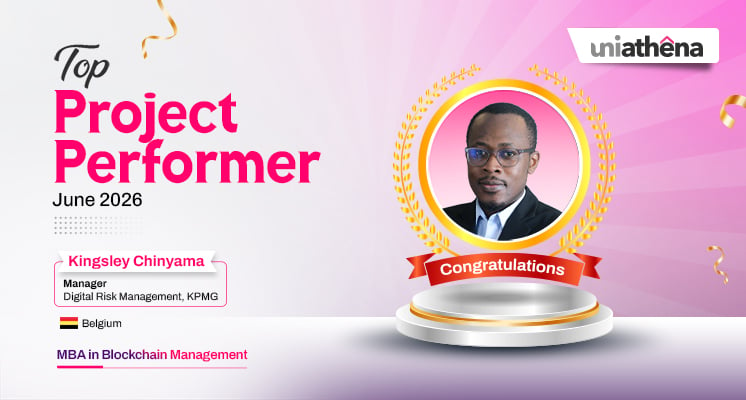
🌟 Top Project Performer – June 2026 🌟
Read More
1
mins read


🌟 Top Project Performer – May 2026 🌟
Read More
1
mins read


🌟 Top Project Performer – April 2026 🌟
Read More
1
mins read
🌟 Top Project Performer – June 2026 🌟
Read more
1
mins read

🌟 Top Project Performer – May 2026 🌟
Read more
1
mins read
🌟 Top Project Performer – April 2026 🌟
Read more
1
mins read
Get in Touch

It’s Time to Start
Join NowMost Popular Online Specialization
- Master of International Business Administration
- Master of Business Administration
- MBA in General Management- FastTrack
- Master in Innovation and Entrepreneurship
- MBA-Family Business Management
- Master in Procurement and Contract Management
- Extended Diploma in Business Analytics (SCQF Level 11)
- Diploma in Supply Chain and Logistics Management (SCQF Level 11)
- Strategic Human Resource Management Practitioner
- Master in Data Science
- Master in Engineering Management
Trending Online
- Integrated Doctorate of Business Administration
- Postgraduate Certificate in Finance for Next Generation Managers
- Master of Business Administration- General Management (Fast Track)
- Postgraduate Certificate in Socio-Economic and Legal Framework
- Postgraduate Certificate in Business Sustainability
- Certified Manager
- Supply Chain Management Practitioner
- MBA - AI in Business
- MBA - Accounting & Finance
- Master in Supply Chain and Logistics Management
Top Universities Online Certificates
- Postgraduate Certificate in International Marketing Management
- Postgraduate Certificate In International Human Resource Management
- Postgraduate Certificate in Strategic Management
- Postgraduate Certificate in Procurement & Contracts Management
- Postgraduate Certificate in Business Analytics
- Postgraduate Certificate in Strategic Supply Chain & Logistics Management
- Postgraduate Certificate in Human Resource and Leadership
- Project Management Practitioner
- Postgraduate Certificate in Supply Chain Design & Implementation
- Postgraduate Certificate in Management Accounting and Finance
Accredited Online Degree Program
- MBA - Digital Transformation
- MBA - Family Business Management
- MBA - Marketing Management
- MBA in Quality Management
- MBA - Business Intelligence & Data Analytics
- MBA in Operations & Project Management
- MBA in Energy Management
- MBA In Construction & Safety Management
- Master in Organisational Leadership
- Master in Public Health
- Master in Construction Management
- Bachelor of Arts in Business Administration


 Install Now


UniAthena is an Ed-Tech, offering flexible, affordable learning solutions, including Free-Learning Upskilling Courses and Academic Programs in partnerships with accredited and globally renowned universities and professional qualification bodies.


Do you have any questions ?
Feel free to send us your questions or request a free consultation
Send a message
UK
Athena Global Education
Magdalen Centre,
Robert Robinson Avenue,
Oxford, OX4 4GA, UK
Phone : 01865 784299
MIDDLE EAST
Athena Global Education FZE
Block L-03, First Floor,
P O Box 519265, Sharjah Publishing City,
Free Zone, Sharjah, UAE
Phone : +971 55 879 5492
INDIA
Uniathena Private Limited
9A,Midas Tower
Phase 1
Hinjewadi Rajiv Gandhi Infotech Park
Pune-411057
Phone: +91 9145665544
All Copyrights Reserved @ Athena Global Education 2021-2026