-

Bachelor's

-

Masters
-

MBA
-

Doctorate
-

Micro Credit
-

Explore all Courses
-
Postgraduate Certifications

-
Postgraduate Diploma
-
Undergraduate Diploma
-
Diploma



What Is NumPy In Python?

Author: urvi malusare
|4
MINS READ
| 0
| 134
Created On: 04 July, 2025
Share




Table of Contents (TOC):
- What Is NumPy?
- Key Features Of NumPy
- How To Learn NumPy?
- Basics of NumPy
- Mastering NumPy and Pandas
- Conclusion
- Bonus Points
If you are new to learning Python, questions like ‘What is NumPy in Python?’, ‘What does it do?’ and ‘How do you use it?’ must be on your mind. This article will help you understand these concepts and make learning Python easier for you.
What Is NumPy In Python?
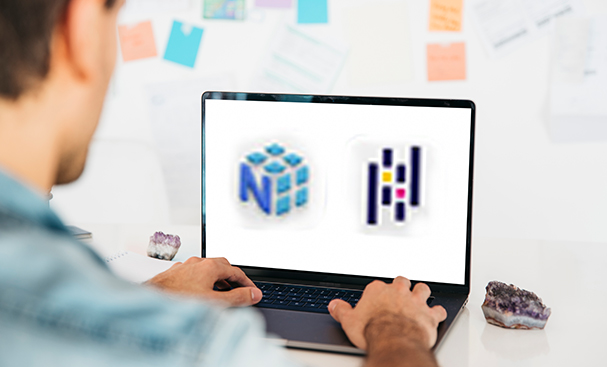
NumPy, also known as Numerical Python, is a Python library specifically designed for numerical computation. It is essential for working with large datasets and multi-dimensional objects with various mathematical functions. So if your work requires heavy computation, learning Python NumPy is very important.
Key Features Of NumPy
1. Powerful N-dimensional Array Object
NumPy Arrays are lists in which numerical data can be structured and optimized. In comparison to regular Python Arrays, NumPy Arrays support N-dimensional Array objects, making the entire process more efficient.
2. Broadcasting
NumPy in Python also simplifies operations by allowing computations between different arrays. It aligns various arrays based on their dimensions automatically, avoiding creating new data.
3. Comprehensive Mathematical Functions
When you import NumPy in Python, you get access to a vast library of mathematical functions. This includes trigonometric functions, exponential functions, basic arithmetic operations, and more.
4. Linear Algebra Capabilities
It also contains routines for linear algebra operations like matrix multiplication, decompositions, calculating determinants, and more.
5. Random Number Generation
If your work requires you to generate random numbers for probability distributions, Python NumPy can help you with it. It includes a module dedicated to generating random numbers that can be crucial for simulations, statistical modelling, machine learning tasks, and more.
6. Fourier Transform Routines
For those working in Engineering fields, the NumPy library in Python can help you perform FFTs for signal processing and image analysis.
7. Tools for Integration with Other Languages
If you are interested in learning about Python libraries, NumPy can be a great starting point. A fundamental understanding of Numpy will make learning scientific libraries like SciPy and Pandas easier.
8. Ease of Use and Expressiveness
Seeing as NumPy is specifically designed for Numerical Python functions, it is easier to use when working with numerical code in comparison to Python.
Also Read: Exploratory Data Analysis with Pandas, NumPy, Matplotlib & Seaborn
How To Learn NumPy?
Learning Python and NumPy does not have to be complicated. UniAthena’s Basics of Python free short course will help you get started with Python programming and learn the fundamentals in just 4-6 hours.
This course is a great starting point for anyone new to this programming language. You will get the chance to learn about the various variables, data structures, strings, and functions of Python. This will create a strong foundation on which you can build your knowledge.
1. Basics of NumPy
You can learn about the NumPy library in Python with our Basics of NumPy free short course. You will just need to sign in or log in to access the course. It is a perfectly beginner-friendly course that will teach you the fundamentals of NumPy.
Here are some of the topics you will learn from this course:
- NumPy 1-D Arrays
- Multidimensional Arrays
- Mathematical Operations
- Computation Times in NumPy vs Python Lists
You will also have 4 lab sessions that will give you hands-on experience in using NumPy in Python programming. This free course also offers you a free certification from CIQ, UK.
2. Mastering NumPy and Pandas
If you want to go beyond the basic understanding of NumPy, you can also explore our Mastering Data Pre-Processing Using Numpy & Pandas free short course. It will give you essential knowledge of data pre-processing and also introduce you to working with other libraries such as Pandas.
This course covers the following topics:
- Data Pre-Processing Using NumPy
- Exploring NumPy Arrays & Mathematical Operations
- Understanding Pandas and Indexing & Slicing
- Operations on Data Frames & Pivot Tables
Conclusion
NumPy is a computing library for Python programming. Sometimes, just learning the Python programming language might not be enough; if you work with numericals, NumPy might make your work much more efficient.
Learn NumPy for free with UniAthena!
Bonus Points:
- NumPy is great for numerical computation, while Pandas is great for data analysis.
- For larger data where you are working with 500K+ rows, Pandas might be the right library for you.
- If you are learning Python and NumPy, you will also benefit from learning Pandas.
Explore Related Courses










COMMENTS(0)
Explore Related Courses
Our Popular Insights
Careers are shifting faster than ever, and staying relevant takes more than experience. Explore UniAthena’s most-read blogs for sharp insights, emerging skills, and practical pathways that help you move forward with clarity and confidence in a changing professional world.

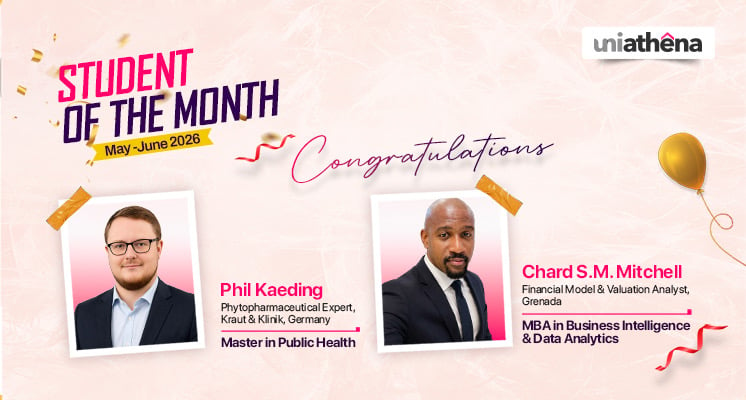
🌟 Students of the Month | May – June 2026 🌟
Read More
1
mins read






🌟 Students of the Month | May – June 2026 🌟
Read more
1
mins read
Get in Touch

It’s Time to Start
Join NowMost Popular Online Specialization
- Master of International Business Administration
- Master of Business Administration
- MBA in General Management- FastTrack
- Master in Innovation and Entrepreneurship
- MBA-Family Business Management
- Master in Procurement and Contract Management
- Extended Diploma in Business Analytics (SCQF Level 11)
- Diploma in Supply Chain and Logistics Management (SCQF Level 11)
- Strategic Human Resource Management Practitioner
- Master in Data Science
- Master in Engineering Management
Trending Online
- Integrated Doctorate of Business Administration
- Postgraduate Certificate in Finance for Next Generation Managers
- Master of Business Administration- General Management (Fast Track)
- Postgraduate Certificate in Socio-Economic and Legal Framework
- Postgraduate Certificate in Business Sustainability
- Certified Manager
- Supply Chain Management Practitioner
- MBA - AI in Business
- MBA - Accounting & Finance
- Master in Supply Chain and Logistics Management
Top Universities Online Certificates
- Postgraduate Certificate in International Marketing Management
- Postgraduate Certificate In International Human Resource Management
- Postgraduate Certificate in Strategic Management
- Postgraduate Certificate in Procurement & Contracts Management
- Postgraduate Certificate in Business Analytics
- Postgraduate Certificate in Strategic Supply Chain & Logistics Management
- Postgraduate Certificate in Human Resource and Leadership
- Project Management Practitioner
- Postgraduate Certificate in Supply Chain Design & Implementation
- Postgraduate Certificate in Management Accounting and Finance
Accredited Online Degree Program
- MBA - Digital Transformation
- MBA - Family Business Management
- MBA - Marketing Management
- MBA in Quality Management
- MBA - Business Intelligence & Data Analytics
- MBA in Operations & Project Management
- MBA in Energy Management
- MBA In Construction & Safety Management
- Master in Organisational Leadership
- Master in Public Health
- Master in Construction Management
- Bachelor of Arts in Business Administration


 Install Now


UniAthena is an Ed-Tech, offering flexible, affordable learning solutions, including Free-Learning Upskilling Courses and Academic Programs in partnerships with accredited and globally renowned universities and professional qualification bodies.


Do you have any questions ?
Feel free to send us your questions or request a free consultation
Send a message
UK
Athena Global Education
Magdalen Centre,
Robert Robinson Avenue,
Oxford, OX4 4GA, UK
Phone : 01865 784299
MIDDLE EAST
Athena Global Education FZE
Block L-03, First Floor,
P O Box 519265, Sharjah Publishing City,
Free Zone, Sharjah, UAE
Phone : +971 55 879 5492
INDIA
Uniathena Private Limited
9A,Midas Tower
Phase 1
Hinjewadi Rajiv Gandhi Infotech Park
Pune-411057
Phone: +91 9145665544
All Copyrights Reserved @ Athena Global Education 2021-2026