-

Bachelor's

-

Masters
-

MBA
-

Doctorate
-

Micro Credit
-

Explore all Courses
-
Postgraduate Certifications

-
Postgraduate Diploma
-
Undergraduate Diploma
-
Diploma



How to Get Promoted at Work

Author: maharajan p
|7
MINS READ
| 2
| 325
Created On: 02 March, 2026
Share




Table of Contents (TOC):
- Introduction
- Key Takeaways
- What a Promotion Actually Is
- How to Increase Your Chance of Getting Promoted
- Top Skills You Need to Get Promoted at Work
- Conclusion
- FAQs
Introduction
Most people misunderstand how promotion at the workplace actually works. They assume strong performance naturally leads to advancement. In reality, strong performance keeps the job running. Promotion happens only when the role itself needs to expand and the employer trusts someone to operate at that level.
This article explains how promotion decisions are actually made, what employers look for before they promote someone, and which skills increase your chances of moving into a higher role.
Key Takeaways:
- Promotion at work happens when a role requires more responsibility and trust, not simply because someone worked hard for years.
- Employee promotion becomes likely when someone reduces decision load, improves outcomes, and makes managers less involved in day-to-day execution.
- Raises reward stability in the current role, but job promotion depends on readiness for higher impact, broader decisions, and greater risk.
- Promotion-ready skills extend your influence beyond your tasks. AI fluency, communication, critical thinking, and data judgment matter because they scale impact across teams.
What a Promotion Actually Is (From the Employer’s Side)
From an employer’s perspective, a promotion means assigning someone more responsibility, greater decision-making authority, and often higher risk. A title change is secondary. What matters more is whether the person can handle a larger scope of work without constant oversight.
If you think your manager will promote you simply because you worked hard, you may be disappointed. Hard work is expected from everyone. It keeps the job running. Promotion happens when the employer believes an employee can take on a role that influences outcomes beyond their current tasks.
How to Increase Your Chance of Getting Promoted
If you received a salary hike recently and assumed you were promoted, that’s not the case. A raise and a promotion are not the same.
A raise adjusts pay for the work you are already doing. A promotion changes the role itself. Because of this difference, raises are approved more often than promotions.
Employees are more likely to receive a raise when they:
- Deliver consistent output without reminders
- Handle routine issues without escalation
- Reduce rework, errors, or delays in their area
- Keep performance stable during pressure or high workload
These signals show reliability in the current role. They justify higher pay, not a new position.
Raise vs Promotion: How Employers See It
To increase your chance of getting promoted, the evaluation changes. Employers are no longer asking whether you do your job well. They are asking whether the role itself should expand.
Promotion consideration usually begins when an employee:
- Handles decisions that affect more than their own tasks
- Takes ownership of outcomes, not just assignments
- Operates with less supervision than the role requires
- Contributes to work that sits closer to business impact
In short, raise rewards stability in the current role. Promotion depends on readiness for a different one.
Top Skills You Need to Get Promoted at Work
In some cases, strong and relevant skills expand the scope of a role. When this happens, employers may adjust the position to match the level of responsibility the employee is already handling.
When that adjustment does not happen within the company, the same skills can qualify the employee for a higher role elsewhere. This is because promotion-level skills are assessed in similar ways across most organizations.
1. AI Fluency and Tool Use
In recent times, the hype around prompt engineers and AI agents has grown rapidly. You can see companies offering six-figure salaries, along with six-month appraisal cycles.
Companies are actively looking for people who can work effectively with AI because this phase is still early. Those who know how to use these tools well help organizations move faster, reduce costs, and gain an edge. That is why employers are willing to pay more for these skills.
According to PwC’s Global AI Jobs Barometer, employees with AI-related skills earn up to a 56% wage premium compared to those without them.
- AI Task Delegation: Knowing how to offload repetitive and low-value work to AI so you can focus on higher-impact tasks.
- AI-Assisted Analysis: Using AI to summarize, compare, and reason over large volumes of information.
- Prompt Structuring for Useful Outcomes: Framing inputs clearly so AI produces reliable, usable results.
- Workflow Integration: Embedding AI tools into daily work processes instead of using them in isolation.
You don’t need to change your job or move into an AI-specific role to benefit from these skills. Most professionals learn AI while staying in their current roles and apply it directly to their daily work.
When you use AI to reduce repetitive tasks, speed up analysis, or improve output quality, you lower the load on your team. That kind of impact is visible. And visibility is often what puts someone forward for a promotion.
If you want a structured way to build this capability, you can look at courses like Master ChatGPT by UniAthena. It focuses on practical AI use for working professionals, how to use tools like ChatGPT for research, summarization, reasoning, and workflow support, rather than theory or coding.
Also Read: What Are the Top 5 AI Skills to Learn
2. Clear Communication (Impactful, Concise, Cross-Context)
Clear communication directly affects promotion decisions because it determines how well your work scales beyond you.
Employers promote people who can explain priorities, align others, and reduce confusion across teams. If your output is good but your communication is unclear, managers still carry the burden of translating your work. That limits growth. Promotion usually goes to people who remove that burden.
Clear communication shows up in simple ways:
- Explaining decisions so others can act without follow-ups
- Writing updates that surface risks early
- Adjusting language for executives, peers, and juniors
- Resolving disagreements without escalation
If you want to improve this skill in a structured way, programs like UniAthena’s Executive Diploma in Business Communication focus on practical workplace communication, business writing, stakeholder communication, and handling conversations across functions. The focus is not theory, but daily professional use.
3. Critical Thinking and Complex Problem-Solving
Critical thinking shows up when you:
- Break down vague problems into clear decisions
- Evaluate options and trade-offs logically
- Anticipate second-order effects of decisions
- Guide others through uncertainty
As responsibility increases, managers are expected to assess situations, identify root problems, and make decisions with incomplete information. Employers promote people who can think through complexity without needing constant direction.
Solving the problem is one part. Helping others understand why a decision was made is another. That combination is what higher roles demand.
That’s where a program like Basics of Training & Leadership focuses on understanding leadership styles, team dynamics, and how decisions affect people and performance. This builds the foundation for structured thinking in real workplace situations.
4. Data literacy (data fluency and judgement)
Do you know this?
About 58% of employers say data-literate employees make better decisions. They also decide faster and are more confident explaining why a decision was made.
Reports, dashboards, metrics, forecasts, or performance numbers. When someone can interpret that data and turn it into a clear decision, managers listen. Employers value this ability because it reduces guesswork. Decisions backed by data feel safer. They are easier to defend. And they scale better as responsibility increases.
This is why data literacy often becomes a leadership signal. Not because the person is a data expert, but because they can convert information into judgment. That skill aligns closely with what higher-level roles demand.
Also Read: Which Soft Skills Employers Will Value Most
Conclusion
Promotions are rarely based on effort alone. They are decisions about risk, responsibility, and future value.
Employers promote people who already operate at the next level. That usually shows up through how they think, how they communicate, how they use tools, how they work with data, and how they influence outcomes beyond their job description.
FAQs
Q1. How long does it usually take to get promoted at work?
A: Promotions typically happen when your impact consistently matches the next role, not after a fixed time period.
Q2. Is performance alone enough to get promoted?
A: No. Performance matters, but employers also assess judgment, visibility, and readiness for higher responsibility.
Q3. Can you get promoted without changing companies?
A: Yes. Internal promotions happen when your skills reduce risk and make leadership decisions easier.
Q4. Do technical skills matter more than soft skills for promotion?
A: Both matter. Technical skills show capability, while communication and judgment show readiness for leadership.
Q5. What is the fastest way to increase promotion chances?
A: Build skills that improve decisions, reduce workload, and clearly demonstrate value beyond your current role.
Explore Related Courses














COMMENTS(2)

UniAthena
Thank you for your support. Keep browsing. You can visit our page uniathena.com for more interesting articles.
Thank you for your support. Keep browsing. You can visit our page uniathena.com for more interesting articles.
Explore Related Courses
Our Popular Insights
Careers are shifting faster than ever, and staying relevant takes more than experience. Explore UniAthena’s most-read blogs for sharp insights, emerging skills, and practical pathways that help you move forward with clarity and confidence in a changing professional world.

What is Business Development?
Read More
6
mins read
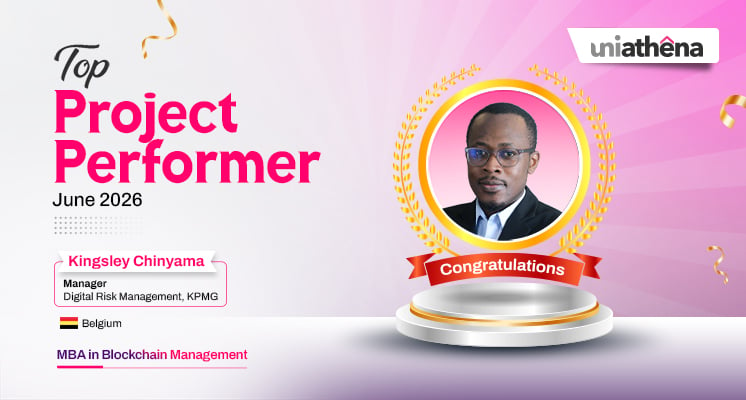
🌟 Top Project Performer – June 2026 🌟
Read More
1
mins read

What is the Role of AI in Education?
Read More
4
mins read

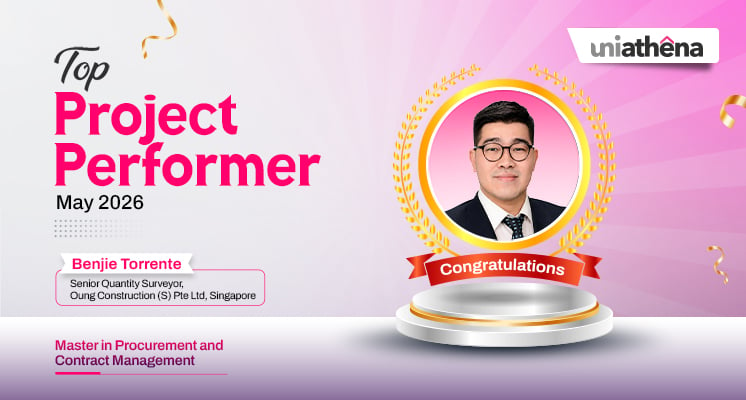
🌟 Top Project Performer – May 2026 🌟
Read More
1
mins read

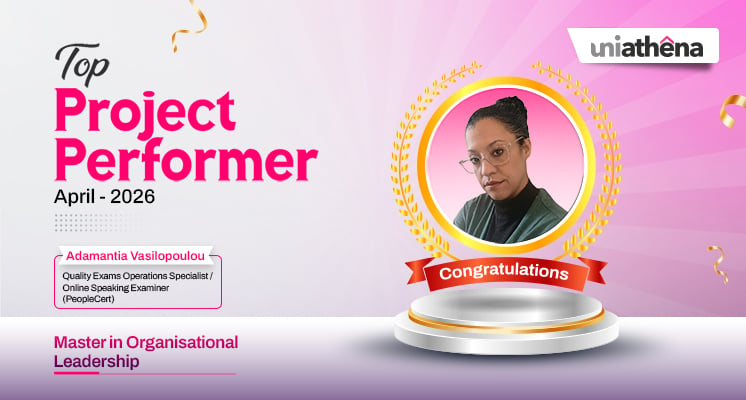
🌟 Top Project Performer – April 2026 🌟
Read More
1
mins read
What is Business Development?
Read more
6
mins read
🌟 Top Project Performer – June 2026 🌟
Read more
1
mins read
What is the Role of AI in Education?
Read more
4
mins read
🌟 Top Project Performer – May 2026 🌟
Read more
1
mins read

🌟 Top Project Performer – April 2026 🌟
Read more
1
mins read
Get in Touch

It’s Time to Start
Join NowMost Popular Online Specialization
- Master of International Business Administration
- Master of Business Administration
- MBA in General Management- FastTrack
- Master in Innovation and Entrepreneurship
- MBA-Family Business Management
- Master in Procurement and Contract Management
- Extended Diploma in Business Analytics (SCQF Level 11)
- Diploma in Supply Chain and Logistics Management (SCQF Level 11)
- Strategic Human Resource Management Practitioner
- Master in Data Science
- Master in Engineering Management
Trending Online
- Integrated Doctorate of Business Administration
- Postgraduate Certificate in Finance for Next Generation Managers
- Master of Business Administration- General Management (Fast Track)
- Postgraduate Certificate in Socio-Economic and Legal Framework
- Postgraduate Certificate in Business Sustainability
- Certified Manager
- Supply Chain Management Practitioner
- MBA - AI in Business
- MBA - Accounting & Finance
- Master in Supply Chain and Logistics Management
Top Universities Online Certificates
- Postgraduate Certificate in International Marketing Management
- Postgraduate Certificate In International Human Resource Management
- Postgraduate Certificate in Strategic Management
- Postgraduate Certificate in Procurement & Contracts Management
- Postgraduate Certificate in Business Analytics
- Postgraduate Certificate in Strategic Supply Chain & Logistics Management
- Postgraduate Certificate in Human Resource and Leadership
- Project Management Practitioner
- Postgraduate Certificate in Supply Chain Design & Implementation
- Postgraduate Certificate in Management Accounting and Finance
Accredited Online Degree Program
- MBA - Digital Transformation
- MBA - Family Business Management
- MBA - Marketing Management
- MBA in Quality Management
- MBA - Business Intelligence & Data Analytics
- MBA in Operations & Project Management
- MBA in Energy Management
- MBA In Construction & Safety Management
- Master in Organisational Leadership
- Master in Public Health
- Master in Construction Management
- Bachelor of Arts in Business Administration


 Install Now


UniAthena is an Ed-Tech, offering flexible, affordable learning solutions, including Free-Learning Upskilling Courses and Academic Programs in partnerships with accredited and globally renowned universities and professional qualification bodies.


Do you have any questions ?
Feel free to send us your questions or request a free consultation
Send a message
UK
Athena Global Education
Magdalen Centre,
Robert Robinson Avenue,
Oxford, OX4 4GA, UK
Phone : 01865 784299
MIDDLE EAST
Athena Global Education FZE
Block L-03, First Floor,
P O Box 519265, Sharjah Publishing City,
Free Zone, Sharjah, UAE
Phone : +971 55 879 5492
INDIA
Uniathena Private Limited
9A,Midas Tower
Phase 1
Hinjewadi Rajiv Gandhi Infotech Park
Pune-411057
Phone: +91 9145665544
All Copyrights Reserved @ Athena Global Education 2021-2026