-

Bachelor's

-

Masters
-

MBA
-

Doctorate
-

Micro Credit
-

Explore all Courses
-
Postgraduate Certifications

-
Postgraduate Diploma
-
Undergraduate Diploma
-
Diploma



Can AI Think Faster Than Attackers? Inside Modern Cyber Resilience
Author: priyanka chatterjee
|5
MINS READ
| 0
| 225
Created On: 18 December, 2025
Share




Cyber incidents rarely include warning indicators. Before an organization realizes unusual spikes in network traffic, unexpected privilege changes, or unknown activity operating in the background, they frequently develop silently, sometimes over weeks. Security teams face an increasing issue as environments become more dispersed and interconnected: how to react to threats fast enough when data is always flowing, attackers are constantly changing, and human analysis just cannot keep up.
Here, AI-assisted security procedures provide an alternative approach to resilience. Teams can employ generative AI technologies to expedite detection, correlate signals, summarize complicated situations, and evaluate global threat intelligence in real time rather than depending entirely on human-led investigations.
In this blog, we analyze this shift using Microsoft Security Copilot as an example, emphasizing how an AI cybersecurity solution functions, its real-world uses, and its place in contemporary resilience tactics.
Source: https://tinyurl.com/3kzh9zsx
Why Real-Time Analytics Is Now Essential for Cyber Resilience
Conventional cybersecurity models relied on regular monitoring and predictable attack patterns.
These days, organizations deal with:
- Endpoints that are widely dispersed
- Multi-cloud environments
- Constantly shifting threat actors
- A significant rise in identity-based attacks
Because of this, the ability to integrate real-time data analytics, global threat intelligence, and automated incident guidance is critical to cybersecurity resilience. It is no longer feasible to manually correlate alerts across systems. Tools that can immediately process high-volume signals and convert them into actionable activities are necessary for security teams.
This gap is filled by AI-assisted systems that continuously analyze massive datasets and produce structured insights that analysts can verify. One such example is Microsoft's Security Copilot, which integrates generative AI with enterprise-grade security telemetry.
Understanding Microsoft Security Copilot as an AI Security Assistant
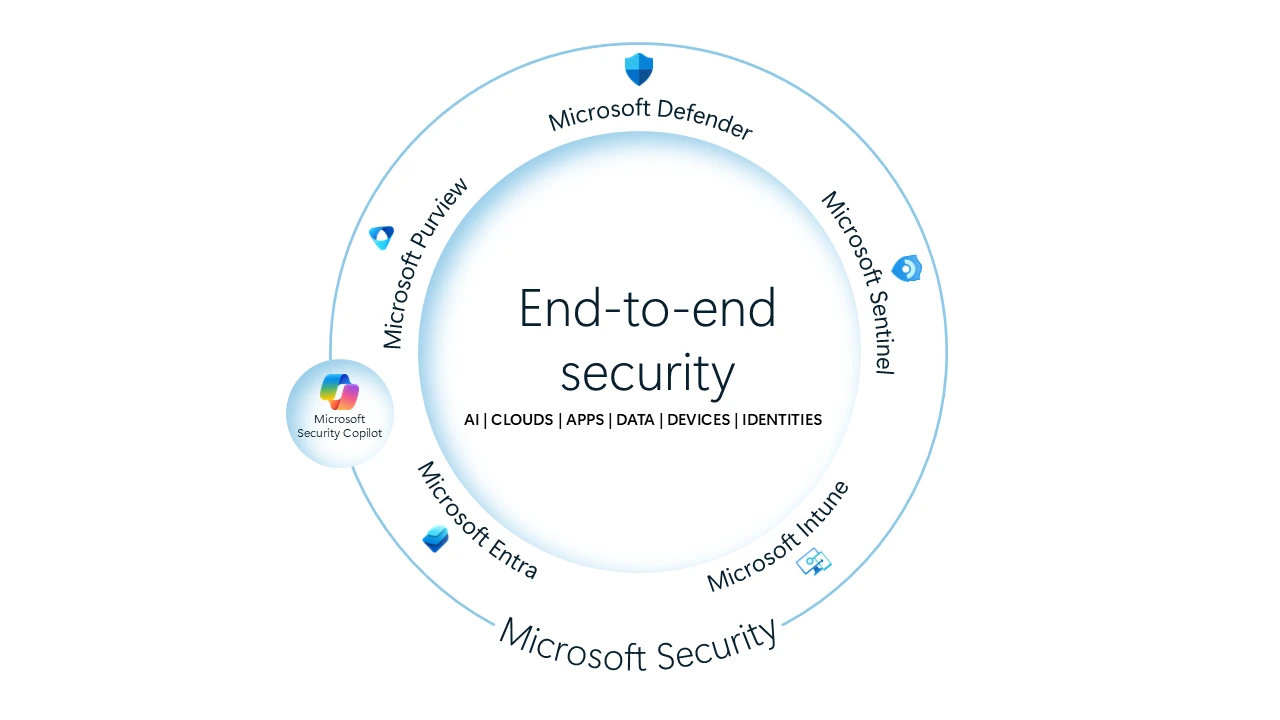
Microsoft Security Copilot is not marketed as a stand-alone security solution. Rather, it serves as an AI-powered companion in the larger Microsoft security ecosystem. It generates investigative steps, summarizes incidents, and interprets security signals using generative AI models.
Source: https://tinyurl.com/8m9xsahd
The following components make up its workflow:
1. Integration with Existing Security Data:
Security Copilot uses data from platforms like these rather than replacing current technologies.
- Microsoft Defender
- Sentinel
- Entra
- Cloud security posture tools
This makes it possible for it to extract logs, alerts, and contextual information directly from the organization's environment.
2. Real-Time Analytics and Correlation:
Security Copilot uses machine learning models in order to:
- Determine the connections between events
- Flag odd behavior patterns
- Emphasize high-priority incidents
- Make suggestions for potential attack vectors
It lessens the work required to manually examine logs from various tools by correlating multiple signals.
3. Generative AI Assistance:
Analysts can communicate with the system using natural-language prompts rather than just processing raw data. They can ask for:
- Alert summaries
- Detailed explanations of suspicious activity
- Potential approaches for remediation
- Threat indicator explanations
This facilitates investigation, particularly for teams handling massive amounts of data.
4. Structured Outcomes for Making Decisions:
Security Copilot displays findings in formats like:
- Attack timelines
- Process trees
- Threat summaries
- Recommended actions
These assist teams in setting priorities, assigning duties, and upholding a standard response process.
5. Security Workflow Integration:
The system is connected to tools that are used for:
- Incident response
- Compliance reporting
- User access reviews
- Security posture management
Organizations are able to transition from detection to action without changing environments because of this seamless integration.
Also Read: How Generative AI and Deepfakes Enable Cyber Attacks (Understanding “Vibe Hacking”)
How Security Copilot Works in a Real Scenario
The following scenario reflects a common workflow enabled by many AI-driven security tools, with Microsoft Security Copilot used here as a representative implementation.
To understand its function, examine a situation containing suspicious sign-in attempts across several places. Usually, an analyst must:
- Analyze identity logs
- Verify the risk levels of the device
- Track IP history
- Examine behaviors against known attack signatures
The steps could be as follows when using Copilot:
- Input Prompt: "Investigate unusual sign-ins for User X".
- AI Processing: The system collects relevant logs, correlates identity activity, and makes use of recent attack methods from reports on global threat intelligence.
- Output: A concise report outlining when the anomaly originates, which endpoints were implicated, potential lateral movement attempts, and recommended fixes.
This does not take the place of human judgment. Rather, it compresses hours of manual review into a single, simplified perspective.
Practical Use Cases That Promote Cyber Resilience
1. Faster Incident Response:
Teams can swiftly grasp the extent of cybersecurity issues with the aid of AI-generated summaries, particularly when numerous systems are involved.
2. Threat Hunting:
Analysts may create real-time analytics queries across security logs and use natural language to query threats.
3. Executive Reporting:
Security Copilot may produce non-technical, organized summaries for management or compliance reporting.
4. Skills Enhancement:
Prompts assist in closing skill gaps in security teams by making alarms easier for new analysts to grasp.
5. Copilot Integration for Business Processes:
Security insights may be linked to collaboration tools without interfering with workflows by teams that currently use Copilot software in various business environments.
Placing Security Copilot in the Broader Cybersecurity Landscape
To create a multi-layered defense approach, multiple organizations combine SIEM platforms, EDR solutions, and cloud security technologies. As an AI-based assistant, Security Copilot fits into this context, much like other generative AI cybersecurity solutions that are starting to appear in the market. It is intended to simplify how teams analyze and respond to the data generated by current systems rather than to replace them.
Comparable AI-based assistants from other vendors serve similar roles within their respective ecosystems, reinforcing that this capability represents an industry-wide shift.
Conclusion
Today, improving cyber resilience requires going beyond routine monitoring and manual detection. Real-time insight, ongoing analytics, and the capacity to convert complicated threat data into understandable actions are all necessary. This approach is shown by programs like Microsoft Security Copilot, which help security teams by streamlining analysis, organizing intelligence, and speeding up response.
Organizations may improve their cybersecurity resilience and respond to changing cyberthreats more quickly and clearly by incorporating these capabilities into regular operations.
References:
Explore Related Courses











COMMENTS(0)
Explore Related Courses
Our Popular Insights
Careers are shifting faster than ever, and staying relevant takes more than experience. Explore UniAthena’s most-read blogs for sharp insights, emerging skills, and practical pathways that help you move forward with clarity and confidence in a changing professional world.







Get in Touch

It’s Time to Start
Join NowMost Popular Online Specialization
- Master of International Business Administration
- Master of Business Administration
- MBA in General Management- FastTrack
- Master in Innovation and Entrepreneurship
- MBA-Family Business Management
- Master in Procurement and Contract Management
- Extended Diploma in Business Analytics (SCQF Level 11)
- Diploma in Supply Chain and Logistics Management (SCQF Level 11)
- Strategic Human Resource Management Practitioner
- Master in Data Science
- Master in Engineering Management
Trending Online
- Integrated Doctorate of Business Administration
- Postgraduate Certificate in Finance for Next Generation Managers
- Master of Business Administration- General Management (Fast Track)
- Postgraduate Certificate in Socio-Economic and Legal Framework
- Postgraduate Certificate in Business Sustainability
- Certified Manager
- Supply Chain Management Practitioner
- MBA - AI in Business
- MBA - Accounting & Finance
- Master in Supply Chain and Logistics Management
Top Universities Online Certificates
- Postgraduate Certificate in International Marketing Management
- Postgraduate Certificate In International Human Resource Management
- Postgraduate Certificate in Strategic Management
- Postgraduate Certificate in Procurement & Contracts Management
- Postgraduate Certificate in Business Analytics
- Postgraduate Certificate in Strategic Supply Chain & Logistics Management
- Postgraduate Certificate in Human Resource and Leadership
- Project Management Practitioner
- Postgraduate Certificate in Supply Chain Design & Implementation
- Postgraduate Certificate in Management Accounting and Finance
Accredited Online Degree Program
- MBA - Digital Transformation
- MBA - Family Business Management
- MBA - Marketing Management
- MBA in Quality Management
- MBA - Business Intelligence & Data Analytics
- MBA in Operations & Project Management
- MBA in Energy Management
- MBA In Construction & Safety Management
- Master in Organisational Leadership
- Master in Public Health
- Master in Construction Management
- Bachelor of Arts in Business Administration


 Install Now


UniAthena is an Ed-Tech, offering flexible, affordable learning solutions, including Free-Learning Upskilling Courses and Academic Programs in partnerships with accredited and globally renowned universities and professional qualification bodies.


Do you have any questions ?
Feel free to send us your questions or request a free consultation
Send a message
UK
Athena Global Education
Magdalen Centre,
Robert Robinson Avenue,
Oxford, OX4 4GA, UK
Phone : 01865 784299
MIDDLE EAST
Athena Global Education FZE
Block L-03, First Floor,
P O Box 519265, Sharjah Publishing City,
Free Zone, Sharjah, UAE
Phone : +971 55 879 5492
INDIA
Uniathena Private Limited
9A,Midas Tower
Phase 1
Hinjewadi Rajiv Gandhi Infotech Park
Pune-411057
Phone: +91 9145665544
All Copyrights Reserved @ Athena Global Education 2021-2026