-

Bachelor's

-

Masters
-

MBA
-

Doctorate
-

Micro Credit
-

Explore all Courses
-
Postgraduate Certifications

-
Postgraduate Diploma
-
Undergraduate Diploma
-
Diploma



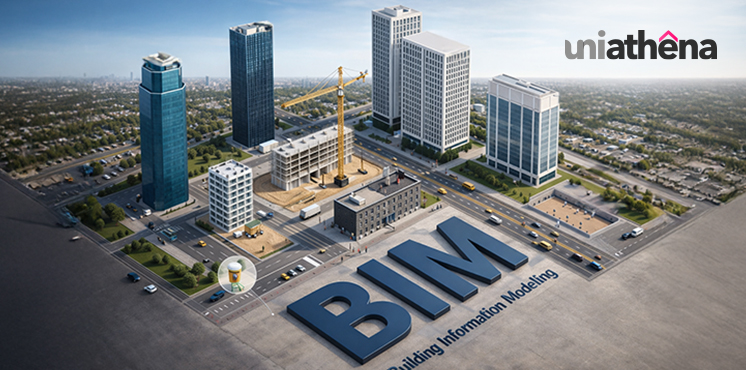
The Role of BIM in Modern Construction Management
Author: munazzah ali
|6
MINS READ
| 0
| 190
Created On: 15 April, 2026
Share




Table of Contents (TOC):
- Introduction
- Key Takeaways
- Understanding BIM
- Why BIM Is Becoming Essential in Modern Construction
- Core Capabilities That Define BIM
- Benefits of BIM in Construction Management
- Challenges of Implementing BIM in Projects
- Building BIM Capability for Future Projects
- Conclusion
- FAQs
Introduction
Walk past any major construction site today, and you will notice something interesting.
On the surface, cranes lift steel beams, engineers inspect foundations, and workers coordinate multifaceted processes on the ground. But behind this visible activity, there is a second tier of building in progress, within digital models, built-in data systems, and shared design platforms.
It is at this point that BIM in Construction Management is transforming the way of project planning and execution. BIM in Construction Project Management can enable designers, engineers, and project managers to incorporate design, material, schedules, and cost data into one intelligent model.
The shift toward digital coordination is gaining momentum worldwide. According to the market research, it is estimated that the BIM market will experience a growth of USD 15.42 billion in 2030, as compared to USD 9.03 billion in the year 2025, reflecting a CAGR of 11.3%.
The message is clear: modern construction today is no longer handled exclusively on the site of the building; it is more and more driven by planning, which is based on data.
Key Takeaways:
- BIM in Construction Management allows real-time cooperation between many stakeholders of the project.
- The role of BIM continues to grow as building projects are becoming complex and information-based.
- BIM improves the accuracy of planning, budgetary control, and sustainability during the construction life cycle.
- BIM is turning into a fundamental strength in modern construction management despite the difficulties encountered when implementing it.
Understanding BIM
Fundamentally, Building Information Modeling (BIM) is a digital representation of a building or infrastructure project that incorporates design, engineering, building construction, and operational information.
The BIM models are dynamic as opposed to the traditional blueprints. All elements, such as structural systems, mechanical systems, and materials, are all present in the same digital environment. The model automatically updates itself when a change takes place in all project layers.
This interactive system justifies the importance of BIM in contemporary construction. It transforms project management from static drawings to collaborative digital planning.
Why BIM Is Becoming Essential in Modern Construction
There are various changes in the industry that are leading to the transformation of BIM in the construction industry.
Increasing Project Complexity
Multidisciplinary collaboration is needed in urban infrastructure, smart buildings, and sustainable architecture. The BIM makes all stakeholders operate on the same database.
Cost and Time Pressure
Delay in construction can add to the costs of the project. BIM allows foresight planning and minimises expensive design clashes prior to the construction process.
Sustainability and Environmental Goals
Governments and developers are laying emphasis on green buildings. BIM enables energy performance, material use, and environmental impact to be simulated at an earlier stage in the design.
Core Capabilities That Define BIM
There are a number of characteristics that describe the increasing applications of BIM in contemporary projects.
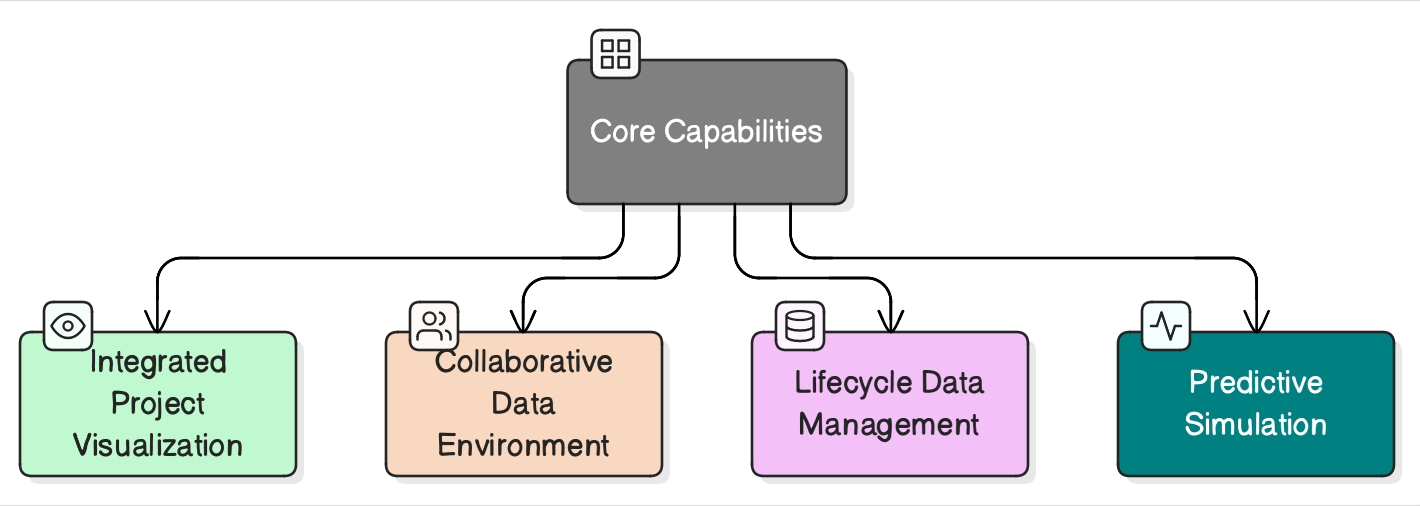
Integrated Project Visualization
BIM enables the stakeholders to have a 3D view of a building prior to construction. This enhances clarity in the design and early identification of possible structural conflicts.
Collaborative Data Environment
The same digital model can be accessed by many teams, such as the architects and the contractors. This common environment enhances coordination throughout the project life cycle.
Lifecycle Data Management
In addition to the construction, BIM models can help with facility management, future renovations, and maintenance planning.
Predictive Simulation
The decision-making can be enhanced by the advanced BIM tools simulating the project timelines, material performance, and environmental impact.
Benefits of BIM in Construction Management
The advantages of building information modeling are spread out in a number of project management dimensions.
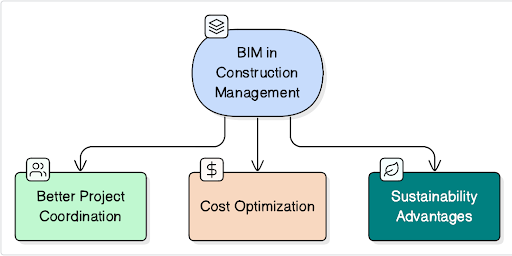
Better Project coordination
BIM minimizes communication breakdown among teams since there is only one updated model of the project.
Cost Optimization
BIM also minimizes the wastage of labor and unexpected expenses during the construction process since it removes disputes in designing at the initial phase.
Sustainability Advantages
BIM promotes environmental construction in terms of optimization of energy efficiency, materials, and planning of the building lifecycle. This shows the way that BIM results in sustainability.
Also Read: What is the BIM tool, What is BIM used for?
Challenges of Implementing BIM in Projects
Although BIM has some significant advantages, there are some practical problems in the application of BIM in construction projects.
High Initial Investment
The implementation of BIM often demands the use of professional training, improved hardware, and specialized software, and this could be a limiting factor for some organizations.
Skill Gaps in the Workforce
Effective application of BIM requires the services of experts who have been trained in digital modeling, coordination, and collaboration of projects.
Resistance to Process Changes
The transition to the digital workflow from the traditional construction method can be accompanied by internal resistance because of the adaptation of the teams to the new tools and working practices.
Data Integration and Coordination
Managing shared digital models across multiple stakeholders and integrating BIM with existing systems requires strong coordination and data management practices.
Also Read: Top Online Construction Management Programs
Building BIM Capability for Future Projects
With the growing use of BIM, professionals are increasingly seeking specialized training in digital construction management. Platforms such as UniAthena offer programs designed to strengthen practical BIM expertise:
These programs will assist in closing the knowledge gap between traditional construction management and modern digital project planning.
Also Read: What is Construction Safety and Why is It Important?
Conclusion
The construction industry is in an era of extreme digitalization, and BIM in construction management is the epicenter of the shift.
BIM helps to enhance collaboration, plan smarter, and make construction more sustainable through the integration of design, engineering, and operational data into one digital representation.
As the complexity of infrastructure projects grows, and the interest in sustainability grows, organizations that adopt BIM capabilities will have a strategic advantage in delivering the projects and operating them efficiently.
FAQ’s
Q1. How does BIM help construction teams work better together?
A: BIM enables architects, contractors, and engineers to collaborate using the same digital model. This enhances communication and allows teams to detect problems at an early stage before construction starts.
Q2. What are some common uses of BIM in construction projects?
A: BIM is applicable in the visualization of a building in the 3D format, project planning, detection of project clashes, cost estimation, and the scheduling of construction.
Q3. What are the skills required to work with BIM?
A: Professionals working with BIM must possess expertise in digital modeling and construction design. It is also important to know BIM software and project coordination.
Explore Related Courses









COMMENTS(0)
Explore Related Courses
Our Popular Insights
Careers are shifting faster than ever, and staying relevant takes more than experience. Explore UniAthena’s most-read blogs for sharp insights, emerging skills, and practical pathways that help you move forward with clarity and confidence in a changing professional world.

What is Business Development?
Read More
6
mins read

🌟 Top Project Performer – June 2026 🌟
Read More
1
mins read

What is the Role of AI in Education?
Read More
4
mins read


🌟 Top Project Performer – May 2026 🌟
Read More
1
mins read


🌟 Top Project Performer – April 2026 🌟
Read More
1
mins read
What is Business Development?
Read more
6
mins read
🌟 Top Project Performer – June 2026 🌟
Read more
1
mins read
What is the Role of AI in Education?
Read more
4
mins read
🌟 Top Project Performer – May 2026 🌟
Read more
1
mins read

🌟 Top Project Performer – April 2026 🌟
Read more
1
mins read
Get in Touch

It’s Time to Start
Join NowMost Popular Online Specialization
- Master of International Business Administration
- Master of Business Administration
- MBA in General Management- FastTrack
- Master in Innovation and Entrepreneurship
- MBA-Family Business Management
- Master in Procurement and Contract Management
- Extended Diploma in Business Analytics (SCQF Level 11)
- Diploma in Supply Chain and Logistics Management (SCQF Level 11)
- Strategic Human Resource Management Practitioner
- Master in Data Science
- Master in Engineering Management
Trending Online
- Integrated Doctorate of Business Administration
- Postgraduate Certificate in Finance for Next Generation Managers
- Master of Business Administration- General Management (Fast Track)
- Postgraduate Certificate in Socio-Economic and Legal Framework
- Postgraduate Certificate in Business Sustainability
- Certified Manager
- Supply Chain Management Practitioner
- MBA - AI in Business
- MBA - Accounting & Finance
- Master in Supply Chain and Logistics Management
Top Universities Online Certificates
- Postgraduate Certificate in International Marketing Management
- Postgraduate Certificate In International Human Resource Management
- Postgraduate Certificate in Strategic Management
- Postgraduate Certificate in Procurement & Contracts Management
- Postgraduate Certificate in Business Analytics
- Postgraduate Certificate in Strategic Supply Chain & Logistics Management
- Postgraduate Certificate in Human Resource and Leadership
- Project Management Practitioner
- Postgraduate Certificate in Supply Chain Design & Implementation
- Postgraduate Certificate in Management Accounting and Finance
Accredited Online Degree Program
- MBA - Digital Transformation
- MBA - Family Business Management
- MBA - Marketing Management
- MBA in Quality Management
- MBA - Business Intelligence & Data Analytics
- MBA in Operations & Project Management
- MBA in Energy Management
- MBA In Construction & Safety Management
- Master in Organisational Leadership
- Master in Public Health
- Master in Construction Management
- Bachelor of Arts in Business Administration


 Install Now


UniAthena is an Ed-Tech, offering flexible, affordable learning solutions, including Free-Learning Upskilling Courses and Academic Programs in partnerships with accredited and globally renowned universities and professional qualification bodies.


Do you have any questions ?
Feel free to send us your questions or request a free consultation
Send a message
UK
Athena Global Education
Magdalen Centre,
Robert Robinson Avenue,
Oxford, OX4 4GA, UK
Phone : 01865 784299
MIDDLE EAST
Athena Global Education FZE
Block L-03, First Floor,
P O Box 519265, Sharjah Publishing City,
Free Zone, Sharjah, UAE
Phone : +971 55 879 5492
INDIA
Uniathena Private Limited
9A,Midas Tower
Phase 1
Hinjewadi Rajiv Gandhi Infotech Park
Pune-411057
Phone: +91 9145665544
All Copyrights Reserved @ Athena Global Education 2021-2026