-

Bachelor's

-

Masters
-

MBA
-

Doctorate
-

Micro Credit
-

Explore all Courses
-
Postgraduate Certifications

-
Postgraduate Diploma
-
Undergraduate Diploma
-
Diploma



What is Workplace Safety?
Author: maharajan p
|5
MINS READ
| 0
| 420
Created On: 08 April, 2026
Share




Table of Contents (TOC):
- Introduction
- Key Takeaways
- What Is Workplace Safety?
- Why Workplace Safety Is Important
- Occupational Safety Regulations You Should Know
- How to Get Qualified in Workplace Safety
- Final Thoughts
- FAQs
Introduction
Every employee expects to work in an environment where risks are controlled and accidents are prevented. But safety does not happen by chance. It requires clear systems, awareness, and responsibility from both employers and workers.
Today’s workplaces are more complex than ever. Whether it’s machinery, electrical systems, or daily operations, risks exist in every setting. That’s why understanding what is workplace safety is essential.
Let’s start by defining what it really means.
Key Takeaways:
- The importance of workplace safety goes beyond compliance, it protects employees, prevents accidents, and maintains smooth operations.
- Following proper workplace safety tips like hazard assessment, training, protective equipment, and incident reporting reduces risks effectively.
- Ignoring safety has real consequences, including injuries, legal penalties, financial loss, and reputational damage.
- Completing safety courses online equips you with the skills and certification needed to start a career as a Safety Officer or HSE Coordinator.
What Is Workplace Safety?
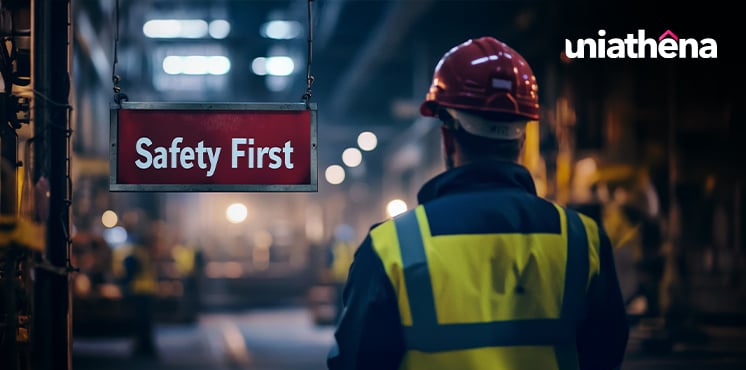
Workplace safety is all about keeping people safe while they work. It means taking steps to prevent accidents, injuries, and any harm that can happen on the job. This applies to all kinds of workplaces: offices, factories, construction sites, or even remote setups.
You might wonder if safety includes stress, burnout, or work-life balance. That actually falls under occupational health, which focuses on long-term well-being. Workplace safety, on the other hand, focuses on immediate hazards, things that can cause accidents or injuries, like slips, falls, or machinery risks.
Why Workplace Safety Is Important
Workplace safety matters because people are affected every day. When safety is ignored, accidents don’t stay as “small problems.” They become serious consequences for workers, families, and businesses.
According to the International Labour Organization, around 395 million workers suffer non-fatal injuries at work every year worldwide. That means millions of people experience preventable harm simply because safety measures are inadequate or overlooked. These numbers make one thing clear: workplace safety is essential.
A safe workplace gives:
- Protection for employees : no injuries and accidents
- Peace of mind : workers can focus on their tasks
- Better productivity : less downtime from accidents
- Stronger reputation : attracts talent and builds trust
Also Read: What is a Safety Management System? A Modern Workplace Essential
Occupational Safety Regulations You Should Know
Workplace safety focuses on preventing immediate accidents. Occupational health looks at long-term well-being. But here’s the important part; both are backed by law.
Governments do not leave safety to “good intentions.” They define clear legal duties for employers. These duties are part of occupational safety regulations.
Let’s look at the key ones you should know.
1. The General Duty to Provide a Safe Workplace
In most countries, employers are legally required to provide a workplace free from recognized hazards.
For example, in the United States, this comes under the General Duty Clause of the Occupational Safety and Health Administration (OSHA).
2. Hazard Identification and Risk Assessment
Employers must regularly identify workplace hazards.
This includes:
- Mechanical risks
- Electrical systems
- Chemical exposure
- Fire hazards
- Structural risks
In India, the Occupational Safety, Health and Working Conditions Code (2020) requires employers to assess risks and take preventive steps before accidents happen.
3. Personal Protective Equipment (PPE) Requirements
Where risks cannot be removed, employers must provide proper protective gear.
This may include:
- Helmets
- Safety gloves
- Eye protection
- Respirators
- Safety harnesses
Under OSHA standards and similar global laws, PPE must not only be provided, it must also be maintained and employees must be trained to use it correctly.
4. Mandatory Safety Training
Regulations require employers to train workers about:
- Workplace hazards
- Emergency procedures
- Equipment handling
- Chemical safety (including Safety Data Sheets)
Training is not optional. It must be documented.
5. Incident Reporting and Recordkeeping
Serious injuries, dangerous occurrences, and workplace deaths must be reported to authorities.
Employers are required to:
- Maintain safety records
- Report major incidents within defined timelines
- Cooperate during inspections
Failure to report can result in penalties.
Also Read: Fire Safety 101: How to Operate a Fire Extinguisher Correctly
How to Get Qualified in Workplace Safety
“Okay… if I want to work in this field, what should I learn?”
That’s the right question to ask.
Workplace safety is not something you pick up just by reading rules. Employers look for people who understand hazards, know regulations, and can respond properly when something goes wrong. That comes from structured training.
Here are three courses that can help you move in that direction.
1. Basics of Workplace Safety Policies: This course helps you understand how safety works in real workplaces. You will learn about common hazards, basic safety policies, and how incidents are reported and handled. It builds your foundation.
2. Diploma in Occupational Safety: This diploma focuses on risk identification, hazard control, emergency preparedness, and safety implementation. It covers different types of workplace risks, physical, chemical, ergonomic, and more. More importantly, it teaches you how to assess risks and apply control measures. That’s what employers expect from safety officers.
3. Essentials of Safety and Health Management: It helps you understand how safety systems work at an organizational level. You learn about regulations, safety planning, documentation, and preventive strategies.
These programs help you build:
- Practical hazard identification skills
- Knowledge of safety regulations
- Confidence in handling incidents
- Understanding of workplace documentation
- Career-ready safety fundamentals
They are online and flexible, which makes them accessible even if you are working or studying.
Also Read: Which Safety Course is Best for a Job?
Final Thoughts
Workplace safety is about preventing immediate harm at work. It focuses on identifying hazards, reducing risks, and following clear safety standards. Occupational health supports long-term well-being, but safety laws ensure that basic protections are never optional.
If you want to build a career in this field, understanding the fundamentals is the first step. The next step is gaining structured training that prepares you to identify risks, apply regulations, and manage safety in real workplaces.
FAQs
Q1. What is workplace safety in simple terms?
A: Workplace safety means preventing accidents and injuries at work. It focuses on identifying hazards and putting measures in place to reduce risks.
Q2. Is workplace safety the same as occupational health?
A: No. Workplace safety focuses on immediate hazards like slips, machinery, or electrical risks. Occupational health deals with long-term physical and mental well-being.
Q3. Who is responsible for workplace safety?
A: Employers are legally responsible for providing a safe workplace. Employees also have a duty to follow safety procedures and report hazards.
Q4. Can I start a career in workplace safety without experience?
A: Yes. Entry-level courses and safety certifications can help you build foundational knowledge and qualify for junior safety roles.
Sources:
Explore Related Courses







COMMENTS(0)
Explore Related Courses
Our Popular Insights
Careers are shifting faster than ever, and staying relevant takes more than experience. Explore UniAthena’s most-read blogs for sharp insights, emerging skills, and practical pathways that help you move forward with clarity and confidence in a changing professional world.


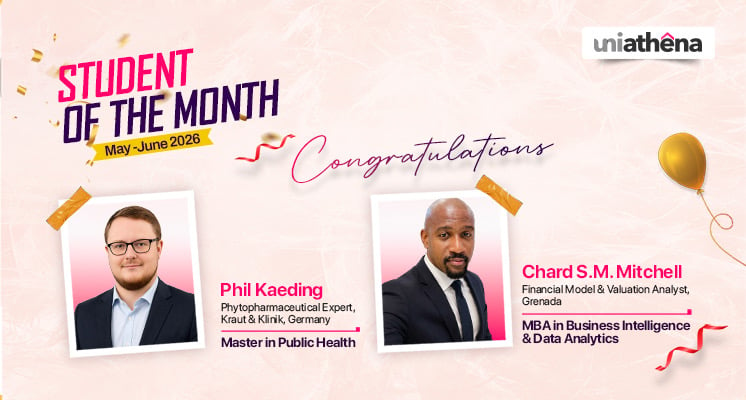
🌟 Students of the Month | May – June 2026 🌟
Read More
1
mins read






🌟 Students of the Month | May – June 2026 🌟
Read more
1
mins read
Get in Touch

It’s Time to Start
Join NowMost Popular Online Specialization
- Master of International Business Administration
- Master of Business Administration
- MBA in General Management- FastTrack
- Master in Innovation and Entrepreneurship
- MBA-Family Business Management
- Master in Procurement and Contract Management
- Extended Diploma in Business Analytics (SCQF Level 11)
- Diploma in Supply Chain and Logistics Management (SCQF Level 11)
- Strategic Human Resource Management Practitioner
- Master in Data Science
- Master in Engineering Management
Trending Online
- Integrated Doctorate of Business Administration
- Postgraduate Certificate in Finance for Next Generation Managers
- Master of Business Administration- General Management (Fast Track)
- Postgraduate Certificate in Socio-Economic and Legal Framework
- Postgraduate Certificate in Business Sustainability
- Certified Manager
- Supply Chain Management Practitioner
- MBA - AI in Business
- MBA - Accounting & Finance
- Master in Supply Chain and Logistics Management
Top Universities Online Certificates
- Postgraduate Certificate in International Marketing Management
- Postgraduate Certificate In International Human Resource Management
- Postgraduate Certificate in Strategic Management
- Postgraduate Certificate in Procurement & Contracts Management
- Postgraduate Certificate in Business Analytics
- Postgraduate Certificate in Strategic Supply Chain & Logistics Management
- Postgraduate Certificate in Human Resource and Leadership
- Project Management Practitioner
- Postgraduate Certificate in Supply Chain Design & Implementation
- Postgraduate Certificate in Management Accounting and Finance
Accredited Online Degree Program
- MBA - Digital Transformation
- MBA - Family Business Management
- MBA - Marketing Management
- MBA in Quality Management
- MBA - Business Intelligence & Data Analytics
- MBA in Operations & Project Management
- MBA in Energy Management
- MBA In Construction & Safety Management
- Master in Organisational Leadership
- Master in Public Health
- Master in Construction Management
- Bachelor of Arts in Business Administration


 Install Now


UniAthena is an Ed-Tech, offering flexible, affordable learning solutions, including Free-Learning Upskilling Courses and Academic Programs in partnerships with accredited and globally renowned universities and professional qualification bodies.


Do you have any questions ?
Feel free to send us your questions or request a free consultation
Send a message
UK
Athena Global Education
Magdalen Centre,
Robert Robinson Avenue,
Oxford, OX4 4GA, UK
Phone : 01865 784299
MIDDLE EAST
Athena Global Education FZE
Block L-03, First Floor,
P O Box 519265, Sharjah Publishing City,
Free Zone, Sharjah, UAE
Phone : +971 55 879 5492
INDIA
Uniathena Private Limited
9A,Midas Tower
Phase 1
Hinjewadi Rajiv Gandhi Infotech Park
Pune-411057
Phone: +91 9145665544
All Copyrights Reserved @ Athena Global Education 2021-2026