-

Bachelor's

-

Masters
-

MBA
-

Doctorate
-

Micro Credit
-

Explore all Courses
-
Postgraduate Certifications

-
Postgraduate Diploma
-
Undergraduate Diploma
-
Diploma



What is Predictive Analytics?
Author: munazzah ali
|6
MINS READ
| 0
| 57
Created On: 17 April, 2026
Share




Table Of Contents (TOC):
- Introduction
- Key Takeaways
- What is Predictive Analytics?
- How Predictive Analytics Works
- Key Techniques Behind Predictive Analytics
- Predictive Analytics in Action
- Building Skills in Predictive Analytics
- Conclusion
- FAQ’s
Introduction
Every day, businesses face questions that data alone cannot fully answer.
Which customers are most likely to come back? Which campaign will deliver the highest conversions? In which direction will the demand go next quarter? This is where predictive analytics enters the picture.
Predictive analytics helps organizations to predict future results with more certainty by relying on patterns hidden in historical information. The opportunity of increasing demand is demonstrated in the market itself. The global predictive analytics market was estimated to be USD 22.22 billion in 2025 and is estimated to grow to USD 116.65 billion in 2034 with a 19.80% CAGR.
This surge reflects a broader shift toward data-driven forecasting, where predictive analytics is helping organizations move from simply understanding the past to anticipating the future.
Key Takeaways:
- Predictive analytics is used to predict the future based on the past.
- It is based on statistical algorithms, predictive analytics models, and machine learning techniques.
- Predictive insights are applied to many industries to enhance decision-making and operational efficiency.
- Knowledge of predictive analytics will help professionals in comprehending data and making strategic choices.
What is Predictive Analytics?
Behind many business decisions lies a simple question about what the future might hold. Will demand increase? Will customers return? Could unexpected risks appear?
Predictive analytics helps answer these questions by examining patterns in historical data and converting them into informed predictions.
To gain insight into the basis of predictive analytics, it is important to look at how organizations are collecting huge volumes of data, such as customer behaviour and operational performance. The trends of this information start to appear while using advanced tools of analysis. These trends can be employed to formulate models that forecast behavior such as change of demand, financial risks, or customer preferences.
Today, the applications of predictive analytics span various sectors, including healthcare, finance, marketing, and manufacturing. Predictive insights are also important in businesses, not only to predict trends but also to optimize business strategies and resource allocation.
How Predictive Analytics Works
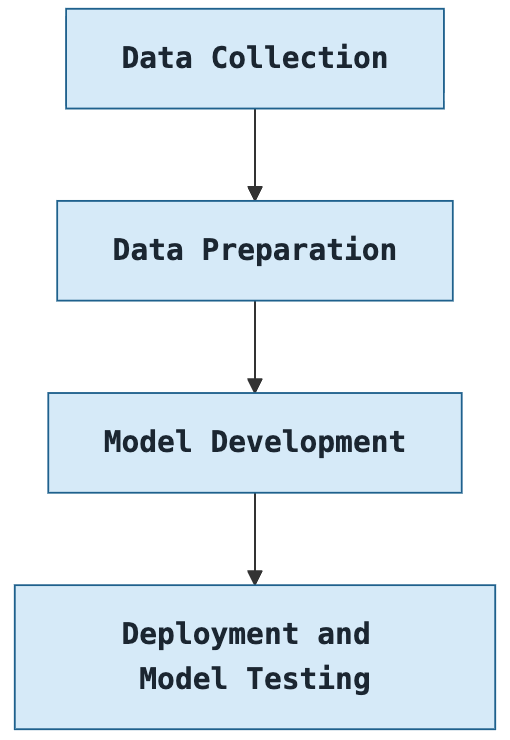
Predictive analytics proceeds in an organized way to convert raw data into actionable data. The stages are ensured to make predictions meaningful and reliable.
Data Collection
The process starts with the collection of information that includes various sources of data, which include business systems, customer transactions, operational databases, and digital interactions. This phase makes sure that the analysts possess a wide range of data to analyze. The more the data sources are varied, the more detailed the predictive insights can be.
Data Preparation
Raw data is hardly analyzable. Analysts narrow and filter data sets by eliminating duplicates, correcting mistakes, and dealing with gaps. With proper preparation, the information that is used in predictive analytics models is accurate and reliable.
Model Development
Next, analysts use machine learning and statistical algorithms to detect patterns in the data. These predictive analytics techniques are useful in the generation of models that can estimate the future based on past trends.
Deployment and Model Testing
When the model has been designed, it is tested with new data to verify the accuracy. In case the results prove to be reliable, organizations implement the model in the field to use it in real-life scenarios like demand forecasting or risk prediction.
Key Techniques Behind Predictive Analytics
Predictive Analytics in Action
It is easy to comprehend the use cases in predictive analytics by examining the way organizations use predictive analytics in practical situations.
Prediction of Customer Behavior
Retailers and online stores use the history of previous purchases to predict the next purchases made by customers. These insights help businesses in making personalized products and coming up with specific marketing campaigns.
Risk and Fraud Detection
Predictive models are used by financial institutions to determine suspicious transaction patterns. These models are able to identify possible fraud by examining behavioral indicators before the financial losses are huge.
Predictive Maintenance
Predictive analytics are implemented by manufacturing companies to track equipment performance. Early detection of mechanical failure will enable organizations to plan their maintenance beforehand and avoid expensive downtime.
Healthcare Forecasting
Hospitals are using predictive models to understand the rate of admission of patients and also identify those who are at risk of developing certain conditions. The insights help health professionals in resource allocation and enhancement of patient care outcomes.
These examples indicate how the benefits of predictive analytics extend across industries because they allow planning more intelligently and responding more quickly.
Building Skills in Predictive Analytics
This increasing trend towards data-driven approaches has driven many professionals to consider predictive analytics processes and models that guide modern decision-making. The development of the basic understanding of data interpretation, the methods of forecasting, and the tools of analysis will allow learners to be actively engaged in the analytics-driven world where knowledge can be used to guide business strategy.
UniAthena’s Basics of Predictive Analytics helps learners become acquainted with predictive models and major machine learning methods, such as supervised, unsupervised, and reinforcement learning algorithms.
The course also introduces learners to the basics of the Python programming language as they get acquainted with concepts of kernel methods and hidden Markov models. Upon completion, it also gets you a chance to earn a CIQ, UK, certification to validate your expertise.
Conclusion
Predictive analytics is changing the concept of how organizations interpret data and how they plan their future. Through the discovery of patterns in historical data and the use of complex analysis models, organizations are able to predict trends, risk occurrences, and make better decisions.
Predictive analytics will continue to occupy the central role in strategic planning and innovation because industries will continue to generate volumes of data that are too significant to analyze. Professionals and organizations can transform raw data into a useful vision by knowing its techniques, uses, and potential benefits.
FAQ’s
Q1. What types of data are used in predictive analytics?
A: The historical data that is normally used in predictive analytics includes customer transactions, operational history, market trends, and behavioural data on which predictive analytics is used to identify patterns and forecast the future.
Q2. Which tools are commonly used for predictive analytics?
A: The most popular ones include programming languages Python and R, data analysis systems, machine learning systems, and visualization systems, which help in analyzing and interpreting large volumes of data.
Q3. How is predictive analytics shaping modern business strategies?
A: It helps organizations to forecast trends, understand customer needs and plan resources more effectively. That is why predictive analytics is an essential component of contemporary data-driven business models.
Explore Related Courses












COMMENTS(0)
Explore Related Courses
Our Popular Insights
Careers are shifting faster than ever, and staying relevant takes more than experience. Explore UniAthena’s most-read blogs for sharp insights, emerging skills, and practical pathways that help you move forward with clarity and confidence in a changing professional world.


🌟 Top Project Performer – June 2026 🌟
Read More
1
mins read



🌟 Top Project Performer – May 2026 🌟
Read More
1
mins read



🌟 Top Project Performer – April 2026 🌟
Read More
1
mins read

🌟 Top Project Performer – June 2026 🌟
Read more
1
mins read
🌟 Top Project Performer – May 2026 🌟
Read more
1
mins read
🌟 Top Project Performer – April 2026 🌟
Read more
1
mins read
Get in Touch

It’s Time to Start
Join NowMost Popular Online Specialization
- Master of International Business Administration
- Master of Business Administration
- MBA in General Management- FastTrack
- Master in Innovation and Entrepreneurship
- MBA-Family Business Management
- Master in Procurement and Contract Management
- Extended Diploma in Business Analytics (SCQF Level 11)
- Diploma in Supply Chain and Logistics Management (SCQF Level 11)
- Strategic Human Resource Management Practitioner
- Master in Data Science
- Master in Engineering Management
Trending Online
- Integrated Doctorate of Business Administration
- Postgraduate Certificate in Finance for Next Generation Managers
- Master of Business Administration- General Management (Fast Track)
- Postgraduate Certificate in Socio-Economic and Legal Framework
- Postgraduate Certificate in Business Sustainability
- Certified Manager
- Supply Chain Management Practitioner
- MBA - AI in Business
- MBA - Accounting & Finance
- Master in Supply Chain and Logistics Management
Top Universities Online Certificates
- Postgraduate Certificate in International Marketing Management
- Postgraduate Certificate In International Human Resource Management
- Postgraduate Certificate in Strategic Management
- Postgraduate Certificate in Procurement & Contracts Management
- Postgraduate Certificate in Business Analytics
- Postgraduate Certificate in Strategic Supply Chain & Logistics Management
- Postgraduate Certificate in Human Resource and Leadership
- Project Management Practitioner
- Postgraduate Certificate in Supply Chain Design & Implementation
- Postgraduate Certificate in Management Accounting and Finance
Accredited Online Degree Program
- MBA - Digital Transformation
- MBA - Family Business Management
- MBA - Marketing Management
- MBA in Quality Management
- MBA - Business Intelligence & Data Analytics
- MBA in Operations & Project Management
- MBA in Energy Management
- MBA In Construction & Safety Management
- Master in Organisational Leadership
- Master in Public Health
- Master in Construction Management
- Bachelor of Arts in Business Administration


 Install Now


UniAthena is an Ed-Tech, offering flexible, affordable learning solutions, including Free-Learning Upskilling Courses and Academic Programs in partnerships with accredited and globally renowned universities and professional qualification bodies.


Do you have any questions ?
Feel free to send us your questions or request a free consultation
Send a message
UK
Athena Global Education
Magdalen Centre,
Robert Robinson Avenue,
Oxford, OX4 4GA, UK
Phone : 01865 784299
MIDDLE EAST
Athena Global Education FZE
Block L-03, First Floor,
P O Box 519265, Sharjah Publishing City,
Free Zone, Sharjah, UAE
Phone : +971 55 879 5492
INDIA
Uniathena Private Limited
9A,Midas Tower
Phase 1
Hinjewadi Rajiv Gandhi Infotech Park
Pune-411057
Phone: +91 9145665544
All Copyrights Reserved @ Athena Global Education 2021-2026