-

Bachelor's

-

Masters
-

MBA
-

Doctorate
-

Micro Credit
-

Explore all Courses
-
Postgraduate Certifications

-
Postgraduate Diploma
-
Undergraduate Diploma
-
Diploma



How Tech Innovations in EHS Are Transforming Safety and Efficiency at Work

Author: munazzah ali
|5
MINS READ
| 0
| 238
Created On: 26 June, 2025 Updated On: 16 July, 2025
Share




Table Of Contents (TOC):
- Introduction
- From Policy to Practice: Why EHS Needs a Modern Makeover
- Smart, Safe, and Scalable: The Digital Building Blocks of EHS
- IoT and Smart Sensors: Risk Detection Without Interruption
- Wearable Technology: Enhancing Worker Safety
- Machine Learning and AI: Beyond Compliance, Toward Insight
- Fatigue Detection Systems: Accident Prevention Due to Fatigue
- Digital Dashboards and Remote Audits: Easing the Monitoring
- Future-Focused Safety: The Evolving Role of Tech in EHS
- Conclusion: Rethinking EHS as a Strategic Advantage
Imagine a working environment that has the ability to anticipate the future, detect potential hazards before they occur, issue real-time warnings, and adjust safety protocols – all on its own.
In today's digital age, Environment, Health, and Safety (EHS) has evolved beyond clipboards and compliance manuals. By adopting smart systems and data-driven strategies, organisations are stepping into new heights of safety at work, efficiency, and predictive risk management.
From Policy to Practice: Why EHS Needs a Modern Makeover
Gone are the days when EHS programs were considered as a box-ticking exercise. The extent and severity of present-day industry hazards, be it Construction, Manufacturing, Logistics, or Energy, require dynamic,reactive systems.
Industries are moving over a broader geographical span with complicated supply chains and stricter regulations. Conventional methods are not able to keep up. This is why digital transformation of Health and Safety at work is now a necessity.
The systems that support modern work health and safety policies should be able to process real-time data, automate compliance reporting, and offer predictive insights. Modern EHS leaders should not only eliminate incidents, but also contribute to achieving sustainability objectives and enhancing employee engagement.
Therefore, EHS no longer plays an enforcement role but an enabling one, and technology is the enabler.
Smart, Safe, and Scalable: The Digital Building Blocks of EHS
The field of Environment, Health and Safety technological improvements is closing the data-decision gap. These are some of the important innovations transforming the field.
1. IoT and Smart Sensors: Risk Detection Without Interruption
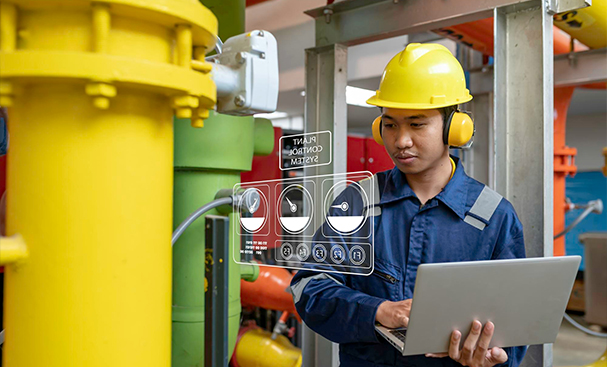
Wireless devices are making the modern workplace a self-monitoring workplace. The IoT sensors installed on equipment, machines, and in buildings detect parameters such as temperature, presence of gases, vibrations, or air quality.
Such systems provide real-time warnings, which allow for the prevention of accidents in advance. The constant monitoring significantly decreases response time, promotes predictable maintenance, and increases workplace safety.
2. Wearable Technology: Enhancing Worker Safety
Smart helmets, wristbands, and vests are becoming an essential part of personal safety. They monitor heart rates, body position, and locations, warning managers when employees are working in unsafe environments.
Wearables are a game-changer in industries such as mining and construction, where the risks are high. They improve the safety in the workplace by transforming every worker in an organisation into a portable data point within the organisation-wide safety net.
3. Machine Learning and AI: Beyond Compliance, Toward Insight
AI-based Analytics is changing how EHS professionals use data. Through trends and up-to-date information, such systems are able to foresee high-risk situations and make recommendations accordingly.
They help distribute resources more intelligently, provide specific training, and can automate EHS compliance initiatives. AI assists organisations in shifting their focus to incident prevention instead of incident reaction.
4. Fatigue Detection Systems: Accident Prevention Due to Fatigue
Traditional safety programs do not pay much attention to fatigue-related incidents. Technologies such as cameras that detect fatigue or wearable devices that check alertness levels are contributing to minimising accidents caused by exhaustion.
The tools can be particularly useful in Transportation, Manufacturing, and Healthcare, where long shifts and physical work are frequent. By catching fatigue early, organisations can minimise risks and have healthier workforces.
5. Digital Dashboards and Remote Audits: Easing the Monitoring
With the emergence of digital workplace strategy, EHS management now occurs remotely. Mobile inspections and remote audits are quicker, more efficient, and less costly to run and manage than traditional audits and inspections, yet they do not compromise the level of workplace safety.
Real-time dashboards based on the cloud, automated audit trails, and remote workgroups can enhance compliance in workplaces across the globe.
Future-Focused Safety: The Evolving Role of Tech in EHS
The future of EHS and technology is bright. Advanced tools such as AR/VR safety training will allow the simulation of emergency situations without any real risk. Drones are already being used to inspect dangerous areas like construction sites or industrial plants, keeping workers out of danger.
The still-evolving blockchain provides a possible solution to secure and transparent compliance records, and more advanced data integrations will make EHS reporting more actionable.
The new horizon of EHS technology will be automation plus human intelligence, creating a culture in which safety is preventative, individualised, and ingrained in processes.
Conclusion: Rethinking EHS as a Strategic Advantage
When safety, sustainability, and performance go hand in hand, EHS innovation goes from mere regulatory compliance to a smart business decision. Technology enhances safety and security by transforming data into action, employees into informed decision-makers and safety into a culture.
Organisations which adopt digital EHS solutions have a better chance of minimising risks, decreasing expenses, and staying afloat in a very competitive environment.
As EHS technology continues to develop, organisations are forced to change their attitude from compliance-driven to innovation-driven. The question is no longer whether you can afford to invest in EHS technology, but whether you can afford not to.
Explore Related Courses









COMMENTS(0)
Explore Related Courses
Our Popular Insights
Careers are shifting faster than ever, and staying relevant takes more than experience. Explore UniAthena’s most-read blogs for sharp insights, emerging skills, and practical pathways that help you move forward with clarity and confidence in a changing professional world.



🌟 Top Project Performer – June 2026 🌟
Read More
1
mins read


🌟 Top Project Performer – May 2026 🌟
Read More
1
mins read



🌟 Top Project Performer – April 2026 🌟
Read More
1
mins read
🌟 Top Project Performer – June 2026 🌟
Read more
1
mins read

🌟 Top Project Performer – May 2026 🌟
Read more
1
mins read
🌟 Top Project Performer – April 2026 🌟
Read more
1
mins read
Get in Touch

It’s Time to Start
Join NowMost Popular Online Specialization
- Master of International Business Administration
- Master of Business Administration
- MBA in General Management- FastTrack
- Master in Innovation and Entrepreneurship
- MBA-Family Business Management
- Master in Procurement and Contract Management
- Extended Diploma in Business Analytics (SCQF Level 11)
- Diploma in Supply Chain and Logistics Management (SCQF Level 11)
- Strategic Human Resource Management Practitioner
- Master in Data Science
- Master in Engineering Management
Trending Online
- Integrated Doctorate of Business Administration
- Postgraduate Certificate in Finance for Next Generation Managers
- Master of Business Administration- General Management (Fast Track)
- Postgraduate Certificate in Socio-Economic and Legal Framework
- Postgraduate Certificate in Business Sustainability
- Certified Manager
- Supply Chain Management Practitioner
- MBA - AI in Business
- MBA - Accounting & Finance
- Master in Supply Chain and Logistics Management
Top Universities Online Certificates
- Postgraduate Certificate in International Marketing Management
- Postgraduate Certificate In International Human Resource Management
- Postgraduate Certificate in Strategic Management
- Postgraduate Certificate in Procurement & Contracts Management
- Postgraduate Certificate in Business Analytics
- Postgraduate Certificate in Strategic Supply Chain & Logistics Management
- Postgraduate Certificate in Human Resource and Leadership
- Project Management Practitioner
- Postgraduate Certificate in Supply Chain Design & Implementation
- Postgraduate Certificate in Management Accounting and Finance
Accredited Online Degree Program
- MBA - Digital Transformation
- MBA - Family Business Management
- MBA - Marketing Management
- MBA in Quality Management
- MBA - Business Intelligence & Data Analytics
- MBA in Operations & Project Management
- MBA in Energy Management
- MBA In Construction & Safety Management
- Master in Organisational Leadership
- Master in Public Health
- Master in Construction Management
- Bachelor of Arts in Business Administration


 Install Now


UniAthena is an Ed-Tech, offering flexible, affordable learning solutions, including Free-Learning Upskilling Courses and Academic Programs in partnerships with accredited and globally renowned universities and professional qualification bodies.


Do you have any questions ?
Feel free to send us your questions or request a free consultation
Send a message
UK
Athena Global Education
Magdalen Centre,
Robert Robinson Avenue,
Oxford, OX4 4GA, UK
Phone : 01865 784299
MIDDLE EAST
Athena Global Education FZE
Block L-03, First Floor,
P O Box 519265, Sharjah Publishing City,
Free Zone, Sharjah, UAE
Phone : +971 55 879 5492
INDIA
Uniathena Private Limited
9A,Midas Tower
Phase 1
Hinjewadi Rajiv Gandhi Infotech Park
Pune-411057
Phone: +91 9145665544
All Copyrights Reserved @ Athena Global Education 2021-2026