-

Bachelor's

-

Masters
-

MBA
-

Doctorate
-

Micro Credit
-

Explore all Courses
-
Postgraduate Certifications

-
Postgraduate Diploma
-
Undergraduate Diploma
-
Diploma



Skill Transformation in Supply Chain Careers: Preparing for the Next Decade

Author: argha chakraborty
|5
MINS READ
| 0
| 137
Created On: 24 September, 2025
Share




Introduction
A decade ago, a supply chain manager’s biggest headaches were late shipments, space in the warehouse, and negotiating better rates with suppliers. Fast forward to today, and the job description looks completely different. You’re expected to juggle AI dashboards, carbon reporting, and global disruptions — sometimes all in the same week.
And the pace isn’t slowing. A World Economic Forum report estimates that over 50% of supply chain roles will transform by 2030. That doesn’t mean the jobs vanish — it means the skills behind them will shift.
The good news? Supply chain professionals are in a stronger position than most. You already sit at the crossroads of technology, operations, and people. The challenge is knowing which skills will keep you indispensable in the decade ahead.
The New Reality of Supply Chain Work
The transformation of supply chain roles isn’t theory; it’s happening on the ground today.
Amazon and Robotics:
In the past ten years, Amazon has deployed over 750,000 robots across its warehouses. Yet, instead of mass layoffs, they have created thousands of new jobs for people managing robot fleets, optimising workflows, and interpreting performance data. As Amazon’s Vice President of Robotics, Scott Anderson, explained, “Robots handle the repetitive lifting. People take on problem-solving.”
Maersk and Digital Twins:
Maersk has been building digital replicas of its global supply chain. These “mirror models” let managers simulate disruptions — from strikes to storms — before they happen. Careers have emerged around digital twin interpretation, risk modelling, and scenario planning.
Sustainability Regulations:
In Europe, the Corporate Sustainability Reporting Directive (CSRD) now requires companies to disclose emissions, including those in their logistics. In North America, California’s climate disclosure laws are pushing companies to trace carbon footprints through every link of their supply chain. Sustainability is no longer a side project — it’s becoming a core skill set.
Resilience After the Pandemic:
COVID-19 was a brutal wake-up call. Companies that built resilience into their supply chains recovered faster. Leaders like DHL’s Chief Commercial Officer, Katja Busch, have stressed that “resilience is the new efficiency” — a skillset now valued at the boardroom level.
Also Read: Green Logistics: The Net-Zero Journey Transforming Supply Chains
Timeless Skills
Despite the tech buzz, not everything changes. Some skills remain timeless — and arguably more important than ever.
Negotiation and Supplier Relationships
AI might crunch numbers, but contracts are still human-to-human. During the 2021 semiconductor shortage, companies with strong supplier relationships secured critical components while competitors stood still. Negotiation remains a career anchor.
Problem-Solving and Agility
Unexpected events — strikes, cyberattacks, hurricanes — can’t be automated away. A McKinsey study found that companies with agile supply chain leaders recovered from shocks twice as fast as their peers. The ability to design creative workarounds will always be priceless.
Risk Management
Risk now spans geopolitics, cyber threats, and climate events. Boards are elevating supply chain risk managers to strategic advisors. When the Suez Canal was blocked in 2021, professionals who could quickly re-route flows kept companies moving.
Leadership and Collaboration
Supply chains now span operations, IT, and sustainability. Leaders who bridge these silos are the ones who get noticed. As Unilever’s Chief Supply Chain Officer, Reginaldo Ecclissato puts it, “Our leaders must inspire collaboration across every function, because sustainability and digitalisation cannot happen in isolation.”
Also Read: Enhancing Consumer Trust Through Supply Chain Transparency
The Skills of the Future
What’s changing is not the importance of supply chain skills, but their scope. Careers are evolving toward hybrid capabilities — blending human judgement with digital fluency.
Data Analytics & Visualisation
Predictive analytics and machine learning are rewriting planning. Professionals who can translate data into executive-ready insights are becoming career accelerators. DHL alone has trained more than 10,000 employees in digital analytics through its “Digitalisation & Analytics” programme.
AI Collaboration
AI won’t replace supply chain managers; it will act as a co-pilot. Routing algorithms can produce thousands of scenarios, but only a human can weigh them against real-world constraints like labour strikes or customer promises. Gartner predicts that by 2026, 75% of large supply chain organisations will use AI-enabled decision support. The skill is not coding, but framing the right problems for AI to solve.
Sustainability Expertise
Companies are hiring sustainability specialists inside supply chain teams. Skills in carbon accounting, circular logistics, and green sourcing are increasingly in demand. Unilever has tied supply chain KPIs directly to environmental performance, making sustainability literacy a career must-have.
Digital Twin Modelling
Digital twins are a new frontier. Being able to read, interpret, or even help build these simulations gives professionals an edge. Instead of reacting to crises, you’ll test solutions virtually before implementing them.
Also Read: Digital Tools and Strategies for Navigating Supply Chain Disruptions in Project Management
From Skills to Action: Upskilling with UniAthena
Knowing which skills are shaping the future is the first step but the real advantage comes from actively building them. With UniAthena’s online programs, designed for: flexible, globally recognized, and tailored for professionals who want career growth alongside real-world commitments.
Here are some of the pathways you can explore:
A doctorate-level program for leaders aiming to contribute original research while tackling complex, real-world supply chain challenges.
A full master’s degree focusing on end-to-end logistics, operations strategy, and the digital tools shaping global supply networks.
A short, focused program that helps you sharpen your understanding of supply chain flows, planning, and long-term alignment with business goals.
A step deeper than the certificate, this diploma equips you with advanced knowledge across supply chain design, operations, and performance improvement.
Equivalent to master’s-level study, this diploma blends academic depth with practical insight — preparing you for senior roles in logistics and supply chain strategy.
A highly practical course for professionals who want to strengthen their grasp of logistics, supplier management, and international supply chain implementation.
Final Words
Supply chain careers aren’t disappearing — they’re transforming. The next decade belongs to professionals who combine timeless skills like negotiation and leadership with future-ready capabilities in data, AI, and sustainability.
Think of it this way: your job title might stay the same, but the skill set behind it won’t. Those who adapt will find themselves in more strategic, visible, and rewarding roles.
As DHL’s Katja Busch put it, “Supply chains used to be the back office. Today, they are the boardroom conversation.”
References:
- https://procurementmag.com/technology-and-ai/wef-report-the-impact-of-ai-driving-170m-new-jobs-by-2030
- https://supplychaindigital.com/technology/wef-report-the-impact-of-ai-driving-170m-new-jobs-by-2030
- https://www.weforum.org/stories/2025/01/future-of-jobs-report-2025-the-fastest-growing-and-declining-jobs
- https://www.dhl.com/us-en/campaign/csi/we-care/supply-chain-digitalization.html
- https://www.dhl.com/content/dam/dhl/global/csi/documents/pdf/glo-csi-supply-chain-digitaliaztion-accelerated-digitalization-final.pdf
- https://www.weforum.org/stories/2025/07/emerging-economies-global-green-logistics-development
Explore Related Courses








COMMENTS(0)
Explore Related Courses
Our Popular Insights
Careers are shifting faster than ever, and staying relevant takes more than experience. Explore UniAthena’s most-read blogs for sharp insights, emerging skills, and practical pathways that help you move forward with clarity and confidence in a changing professional world.

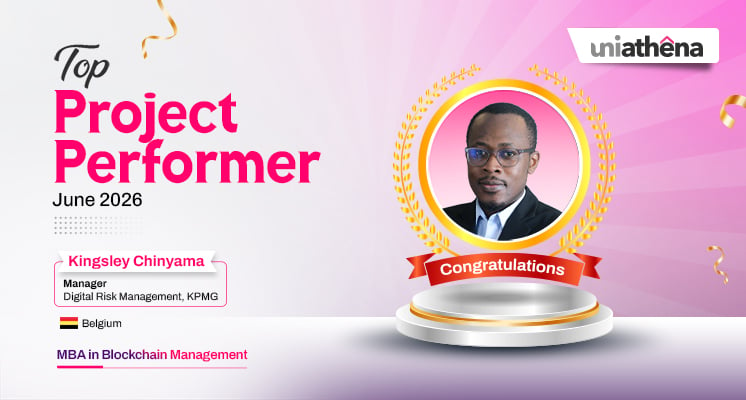
🌟 Top Project Performer – June 2026 🌟
Read More
1
mins read



🌟 Top Project Performer – May 2026 🌟
Read More
1
mins read


🌟 Top Project Performer – April 2026 🌟
Read More
1
mins read

🌟 Top Project Performer – June 2026 🌟
Read more
1
mins read
🌟 Top Project Performer – May 2026 🌟
Read more
1
mins read
🌟 Top Project Performer – April 2026 🌟
Read more
1
mins read
Get in Touch

It’s Time to Start
Join NowMost Popular Online Specialization
- Master of International Business Administration
- Master of Business Administration
- MBA in General Management- FastTrack
- Master in Innovation and Entrepreneurship
- MBA-Family Business Management
- Master in Procurement and Contract Management
- Extended Diploma in Business Analytics (SCQF Level 11)
- Diploma in Supply Chain and Logistics Management (SCQF Level 11)
- Strategic Human Resource Management Practitioner
- Master in Data Science
- Master in Engineering Management
Trending Online
- Integrated Doctorate of Business Administration
- Postgraduate Certificate in Finance for Next Generation Managers
- Master of Business Administration- General Management (Fast Track)
- Postgraduate Certificate in Socio-Economic and Legal Framework
- Postgraduate Certificate in Business Sustainability
- Certified Manager
- Supply Chain Management Practitioner
- MBA - AI in Business
- MBA - Accounting & Finance
- Master in Supply Chain and Logistics Management
Top Universities Online Certificates
- Postgraduate Certificate in International Marketing Management
- Postgraduate Certificate In International Human Resource Management
- Postgraduate Certificate in Strategic Management
- Postgraduate Certificate in Procurement & Contracts Management
- Postgraduate Certificate in Business Analytics
- Postgraduate Certificate in Strategic Supply Chain & Logistics Management
- Postgraduate Certificate in Human Resource and Leadership
- Project Management Practitioner
- Postgraduate Certificate in Supply Chain Design & Implementation
- Postgraduate Certificate in Management Accounting and Finance
Accredited Online Degree Program
- MBA - Digital Transformation
- MBA - Family Business Management
- MBA - Marketing Management
- MBA in Quality Management
- MBA - Business Intelligence & Data Analytics
- MBA in Operations & Project Management
- MBA in Energy Management
- MBA In Construction & Safety Management
- Master in Organisational Leadership
- Master in Public Health
- Master in Construction Management
- Bachelor of Arts in Business Administration


 Install Now


UniAthena is an Ed-Tech, offering flexible, affordable learning solutions, including Free-Learning Upskilling Courses and Academic Programs in partnerships with accredited and globally renowned universities and professional qualification bodies.


Do you have any questions ?
Feel free to send us your questions or request a free consultation
Send a message
UK
Athena Global Education
Magdalen Centre,
Robert Robinson Avenue,
Oxford, OX4 4GA, UK
Phone : 01865 784299
MIDDLE EAST
Athena Global Education FZE
Block L-03, First Floor,
P O Box 519265, Sharjah Publishing City,
Free Zone, Sharjah, UAE
Phone : +971 55 879 5492
INDIA
Uniathena Private Limited
9A,Midas Tower
Phase 1
Hinjewadi Rajiv Gandhi Infotech Park
Pune-411057
Phone: +91 9145665544
All Copyrights Reserved @ Athena Global Education 2021-2026