-

Bachelor's

-

Masters
-

MBA
-

Doctorate
-

Micro Credit
-

Explore all Courses
-
Postgraduate Certifications

-
Postgraduate Diploma
-
Undergraduate Diploma
-
Diploma



Recession-Proof Jobs to Build a Stable Career in 2026

Author: munazzah ali
|8
MINS READ
| 0
| 1,444
Created On: 23 January, 2026
Share




Table Of Contents (TOC):
- Key Takeaways
- What Makes a Job Truly Recession-Proof?
- The Hidden Logic Behind Jobs That Survive Economic Downturns
- Top Recession-Resistant Career Paths for 2026
- Upskilling Paths for Recession-Resilient Careers
- Conclusion
- FAQ’s
As the element of uncertainty becomes the new reality, Recession-Proof Careers have transformed into career-selection strategies and long-term security plans. With the market changing and the industries experiencing continuous upheaval, workers are increasingly looking for Recession-Proof Jobs that can survive the economic storms.
When an economic downturn occurs, people tend to find themselves asking, "What Is a Recession?" and what happens in a recession? in the initial months of the downturn. The true solution can be seen in the speed at which some industries shrink—and which ones do not. This is the reason why conscious career planning should start early in life for any individual who wants to create a strong future.
Key Takeaways:
- The steady demand for recession-proof jobs does not decline even during economic slowdowns.
- Critical industries like healthcare, technology, education, government, and finance are not that affected by downturns.
- Those skills that can support business continuity are more important than job titles.
- Career durability is a great benefit of strategic job searching, networking, and upskilling.
- Strategic job searching and targeted upskilling can guide professionals to select the most appropriate job to undertake in the case of a recession.
What Makes a Job Truly Recession-Proof?
The most common feature of recession-proof jobs is that they are the ones that society cannot do without, no matter how well the economy performs or not. When asking, "What are recession-proof jobs?" the answer begins with essential demand. Healthcare must operate. Governments cannot pause. Ecosystems of technologies have to operate. Education does not stop with or without the flourishing of markets.
These are also significant career paths, as they provide financial stability, long-term development, and reduce the possibility of layoff. These jobs are a source of stability and advancement to thousands of career seekers who aim to find jobs that are recession-resistant.
The Hidden Logic Behind Jobs That Survive Economic Downturns
Some jobs do not survive recessions by chance but because they are necessary in the structure. The reasons why some roles are not changing are mostly due to three factors:
1. Never-Ending Consumer and Social Need:
Basic needs, such as healthcare, utilities, food supply, and logistics, cannot be ignored. These sectors cannot slow down even in an economic downturn, as people continue to use them in their day-to-day lives.
2. Public Sector Stability:
The government and administration are fully functional since they deal with welfare schemes, regulation, education, and infrastructure. This is where the expansion is commonly experienced rather than the reduction in recession times.
3. Digital Evolution Accelerates in Tough Times:
Financial issues compel organisations to embrace technology at a higher rate. Technological roles are remarkably resilient because cybersecurity, automation, data management, and digital operations turn out to be essential to survival.
Top Recession-Resistant Career Paths for 2026
Below is a list of recession-proof jobs categorised into major sectors.
1. Healthcare:
Healthcare is one of the best safety nets in times of downturn. Medical professionals, allied health workers, technicians, and administrative specialists are in demand when there is an increase in economic stress. Hospital operations, patient attention, diagnostics, and health administration positions are necessary since the healthcare demands cannot be delayed, even during recessions.
2. Technology & Future-Proof Roles:
Technological work is a big contributor to the best jobs in the recession. The development of software, cloud services, data processing, automation, and virtual infrastructure is also on the increase as businesses increase their transformation to online systems.
Expanding on these classic technological occupations, certain advanced skills are also now essential for career resilience. Artificial intelligence, data analytics, and cybersecurity are all areas of expertise that are more likely to shape the future of work and bring long-term stability.
Key areas include:
Artificial Intelligence Understanding: A Core Workplace Skill
The knowledge of AI tools, machine learning algorithms, and automation workflows is no longer an option. AI experts are able to promote operational efficiency, facilitate a data-driven decision-making process, and promote innovation in the financial, healthcare, and retail sectors.
A structured learning path, such as a Diploma in Artificial Intelligence, helps professionals build clarity around these concepts and apply them responsibly in real business contexts. The knowledge of AI concepts will help employees to remain at the forefront in their ever-changing positions.
Analytics & Data Fluency
In the contemporary business, data has become its strength. Positions such as Data Analysts, Business Analysts, and Data Scientists are essential in the interpretation of complex information, identification of trends, and delivering actionable insights. Programs like a Diploma in Data Analytics or a Diploma in Power BI strengthen this capability by focusing on data interpretation, visualisation, and business reporting.
Professionals with good analytical proficiencies are able to assist organizations to maximize strategies, minimize risks, and react appropriately to market changes, and hence they are invaluable even in times of economic decline.
Cybersecurity: A Non-Negotiable Business Priority
The demand for cybersecurity skills continues to grow as digital threats get more and more widespread in various fields.
Cybersecurity Analysts, Ethical Hackers, and IT Security Managers protect the sensitive information in the organizations, avoid cyberattacks, and ensure the trust of customers. These roles are stable and future-oriented, even during economic uncertainty when companies cannot afford to compromise on the security of their digital systems.
3. Education and Learning Development:
Education continues despite economic downturns. The teachers, trainers, curriculum designers, academic coordinators, and instructional designers will remain consistently in demand as individuals and employers will invest in lifelong learning. The stability of this sector is also reinforced by the emerging culture of lifelong learning.
4. Government and Public Administration:
Government jobs are the source of workforce stability. The policy, administration, compliance, regulation, and public welfare jobs continue to be hired constantly due to the fact that these services cannot be put on hold in times of economic pressure.
Recessions tend to accelerate the demand for social programs, regulatory controls, and administrative assistance, making this sector one of the most certain.
5. Financial Planning and Risk Control:
Financial analysts, auditors, accountants, compliance officers, and business analysts assist organisations in managing uncertainty. These functions provide financial transparency, risk management, budgeting, and strategic planning—functions that are more important during economic downturns.
6. Essential Operations, Logistics & Supply Chain:
Logistics positions such as procurement, transport planning, inventory control, and warehouse coordination are still basic to both the government and the business world. Global supply chains cannot stop depending on the market conditions, and professionals in this sphere cannot be disregarded.
Upskilling Paths for Recession-Resilient Careers
Acquiring the appropriate skills can make your career stable even when the economy is not. The courses providing that advantage are listed below:
This Diploma in Financial Reporting course offers clear insight into financial reporting frameworks and contemporary reporting methods. It encompasses the conceptual and regulatory frameworks, the major financial statements, and their application in the actual business contexts.
The learners will also discuss how to read financial statements, the advantages of automation, and how data analytics can be used to enhance the accuracy and efficiency of reporting.
This is a self-paced, free-to-learn, 1-2 week course that additionally gives an opportunity to receive a Blockchain-verified certification.
The Diploma in Supply Chain Management course helps to enhance the knowledge base on the essence of the Supply Chain Management functions, its alignment with strategy and process flow, as well as the use of technology, ERP systems, logistics, and procurement.
It also brings out major challenges and real-world planning techniques employed in the practical world. It is a 1-2 week, self-paced course with successful learners having an opportunity to get certified with a Blockchain-verified certification.
The Diploma in Healthcare Management course provides the learner with a background in healthcare administration that includes strategic planning, budgeting, resource allocation, and best practices applied to enhance productivity in any healthcare environment. It also provides the necessary knowledge on health care policies, regulatory frameworks and wellness programs that promote the health of communities.
Designed as a 1-2 week, self-paced learning course, you will get a chance to earn yourself a Blockchain-verified certification.
Through this course, learners get a clear picture of how the public sector works and the administrative competencies required to handle public projects and various types of public enterprises. It also presents the framework of e-governance and its influence on the formation of public policy, as well as provides background information about the local government management and its fundamental activities.
This 1-2 week, self-paced learning course, upon completion, equips successful learners with a Blockchain-verified certification.
Conclusion
With the world markets still being influenced by uncertainty, recession-proof jobs in 2026 are not just a career selection but a long-term security selection.
The recession-proof professions provide stability, demand and space to develop, whether you are thinking of a change, enhancing your capabilities, or securing your job.
The mediums, such as UniAthena, complement this process by encouraging flexible, industry-specific programs that can make professionals adapt and survive in any economic environment.
FAQ’s
Q1. What is a Recession?
A: A recession is a temporary state of the economy characterised by a decrease in expenditure, a slowdown of employment, and broken business operations.
Q2. What is the effect of recession on jobs?
A: Recruiting is slowed down, competition is intensified, and non-essential positions can be reduced. Nonetheless, recession-resistant jobs are safe since the demand is constant.
Q3. What are some recession-proof jobs?
A: These are jobs that are going to stay in demand even in times of economic recession, such as healthcare, technology, education, and government.
Q4. What value do recession-proof jobs have?
A: They minimize the chances of job loss, offer consistent income, and long-term professional development even in the face of economic uncertainty.
Explore Related Courses














COMMENTS(0)
Explore Related Courses
Our Popular Insights
Careers are shifting faster than ever, and staying relevant takes more than experience. Explore UniAthena’s most-read blogs for sharp insights, emerging skills, and practical pathways that help you move forward with clarity and confidence in a changing professional world.

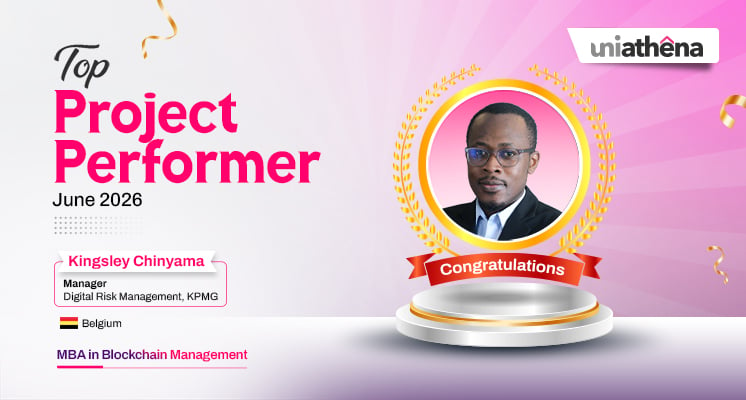
🌟 Top Project Performer – June 2026 🌟
Read More
1
mins read



🌟 Top Project Performer – May 2026 🌟
Read More
1
mins read


🌟 Top Project Performer – April 2026 🌟
Read More
1
mins read

🌟 Top Project Performer – June 2026 🌟
Read more
1
mins read
🌟 Top Project Performer – May 2026 🌟
Read more
1
mins read

🌟 Top Project Performer – April 2026 🌟
Read more
1
mins read
Get in Touch

It’s Time to Start
Join NowMost Popular Online Specialization
- Master of International Business Administration
- Master of Business Administration
- MBA in General Management- FastTrack
- Master in Innovation and Entrepreneurship
- MBA-Family Business Management
- Master in Procurement and Contract Management
- Extended Diploma in Business Analytics (SCQF Level 11)
- Diploma in Supply Chain and Logistics Management (SCQF Level 11)
- Strategic Human Resource Management Practitioner
- Master in Data Science
- Master in Engineering Management
Trending Online
- Integrated Doctorate of Business Administration
- Postgraduate Certificate in Finance for Next Generation Managers
- Master of Business Administration- General Management (Fast Track)
- Postgraduate Certificate in Socio-Economic and Legal Framework
- Postgraduate Certificate in Business Sustainability
- Certified Manager
- Supply Chain Management Practitioner
- MBA - AI in Business
- MBA - Accounting & Finance
- Master in Supply Chain and Logistics Management
Top Universities Online Certificates
- Postgraduate Certificate in International Marketing Management
- Postgraduate Certificate In International Human Resource Management
- Postgraduate Certificate in Strategic Management
- Postgraduate Certificate in Procurement & Contracts Management
- Postgraduate Certificate in Business Analytics
- Postgraduate Certificate in Strategic Supply Chain & Logistics Management
- Postgraduate Certificate in Human Resource and Leadership
- Project Management Practitioner
- Postgraduate Certificate in Supply Chain Design & Implementation
- Postgraduate Certificate in Management Accounting and Finance
Accredited Online Degree Program
- MBA - Digital Transformation
- MBA - Family Business Management
- MBA - Marketing Management
- MBA in Quality Management
- MBA - Business Intelligence & Data Analytics
- MBA in Operations & Project Management
- MBA in Energy Management
- MBA In Construction & Safety Management
- Master in Organisational Leadership
- Master in Public Health
- Master in Construction Management
- Bachelor of Arts in Business Administration


 Install Now


UniAthena is an Ed-Tech, offering flexible, affordable learning solutions, including Free-Learning Upskilling Courses and Academic Programs in partnerships with accredited and globally renowned universities and professional qualification bodies.


Do you have any questions ?
Feel free to send us your questions or request a free consultation
Send a message
UK
Athena Global Education
Magdalen Centre,
Robert Robinson Avenue,
Oxford, OX4 4GA, UK
Phone : 01865 784299
MIDDLE EAST
Athena Global Education FZE
Block L-03, First Floor,
P O Box 519265, Sharjah Publishing City,
Free Zone, Sharjah, UAE
Phone : +971 55 879 5492
INDIA
Uniathena Private Limited
9A,Midas Tower
Phase 1
Hinjewadi Rajiv Gandhi Infotech Park
Pune-411057
Phone: +91 9145665544
All Copyrights Reserved @ Athena Global Education 2021-2026