-

Bachelor's

-

Masters
-

MBA
-

Doctorate
-

Micro Credit
-

Explore all Courses
-
Postgraduate Certifications

-
Postgraduate Diploma
-
Undergraduate Diploma
-
Diploma



The Internet Never Sleeps: How Data Centers Keep the World Running 24/7

Author: maria rashid
|8
MINS READ
| 0
| 14
Created On: 20 July, 2026
Share




Table of Contents (TOC):
- Introduction
- Key Takeaways
- What is a Data Center?
- Why are Data Centers Crucial?
- The Growing Role of AI in Modern Data Centers
- Types of Data Centers
- What is Inside a Data Center?
- How Data Centers Keep the Internet Running 24/7
- How does a Data Center Work?
- The Secret Behind 24/7 Availability
- Benefits & Limitations of a Data Center Facility
- Are Data Centers Bad for the Environment?
- Final Thoughts
- FAQs
Introduction
In our day-to-day lives, we encounter many actions that leverage the power of the internet. Be it searching for a video, sending an image to a friend on a social media application, doing payments through banking applications, or streaming our favorite show or movie at midnight. It all happens within seconds and at any time of the day or night. We think of it as a normal process, but there is an invisible network of facilities working around the clock to make this happen.
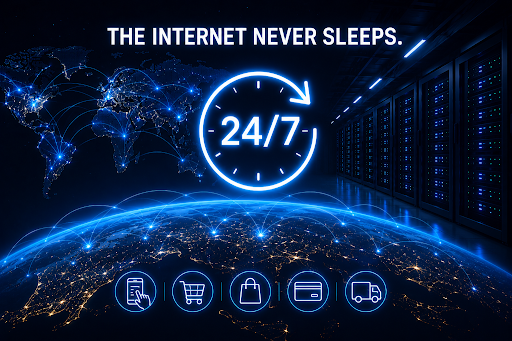
The internet never takes a break, and this is all possible due to data centers working 24 hours behind every click. Today, these facilities support far more than websites. They power cloud computing, artificial intelligence, online banking, streaming platforms, healthcare systems, enterprise software, and countless digital services that modern economies depend on every day.
A data center is a specialized facility that is responsible for storing, managing, and processing digital information or data in a way that, whether a user scrolls on social media or accesses any other application, information is available whenever a user needs it.
In this blog, we will explore the world of data centers and how they keep the internet running. We will understand why data centers have become so important in modern IT infrastructure.
Key Takeaways:
- Data centers have become one of the most important pillars of the modern IT infrastructure.
- Data centers are the invisible engines of our digital world as they store, process, and manage digital data.
- Servers, cooling systems, networking equipment, and power supplies are all important components of data centers.
- There are different types of data centers for distinct business and operational needs.
- While data centers are running the digital world, there is a growing emphasis on their environmental impact.
What is a Data Center?
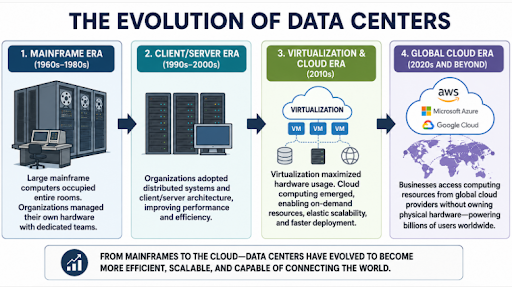
As digital services have become more integrated in our lives, data centers have become the very backbone of the interconnected world. To understand better, think of data centers as the digital equivalent of a city’s power station, but instead of generating electricity, they store, deliver, and manage information.
Every click on the internet, whether for watching a movie, shopping for an item, sending a message, or anything else, is done through a data center somewhere in the world. Without data centers, the internet would practically stop functioning.
Why are Data Centers Crucial?
Data centers help individuals and organizations in the following major ways:
- Securely store massive amounts of data and information.
- Maintain business continuity and disaster recovery.
- Increase global connectivity through strategically located centers around the world.
- Continuously run websites and applications.
- Leverage cloud computing and AI capabilities.
- Support remote work and connectivity.
The Growing Role of AI in Modern Data Centers
Artificial intelligence is significantly increasing demand for data center capacity. Training and deploying AI models require enormous computing power, high-performance processors, advanced networking, and highly efficient cooling systems. As organizations adopt AI-driven applications, data centers are evolving to support increasingly complex computational workloads while maintaining reliability, scalability, and energy efficiency.
Types of Data Centers
Data centers vary in type because organizations choose a data center based on their size, budget, operational and performance requirements, and security needs. The major types of data centers are;
What is Inside a Data Center?
A data center typically consists of racks of servers and other networking equipment in multiple rows supported by specialized infrastructure.
These essential components of a data center ensure and enable reliable operations in a facility.
How Data Centers Keep the Internet Running 24/7
After knowing about what data centers are, many people wonder how these massive energy conversion facilities work in real time and what actually happens behind every click on the internet.
Every second, thousands of people are using the internet, whether browsing websites, sending messages, or accessing applications. The reason that all of this works seamlessly is that data centers are designed in a way that they operate continuously without disruptions or interruptions.
How does a Data Center Work?
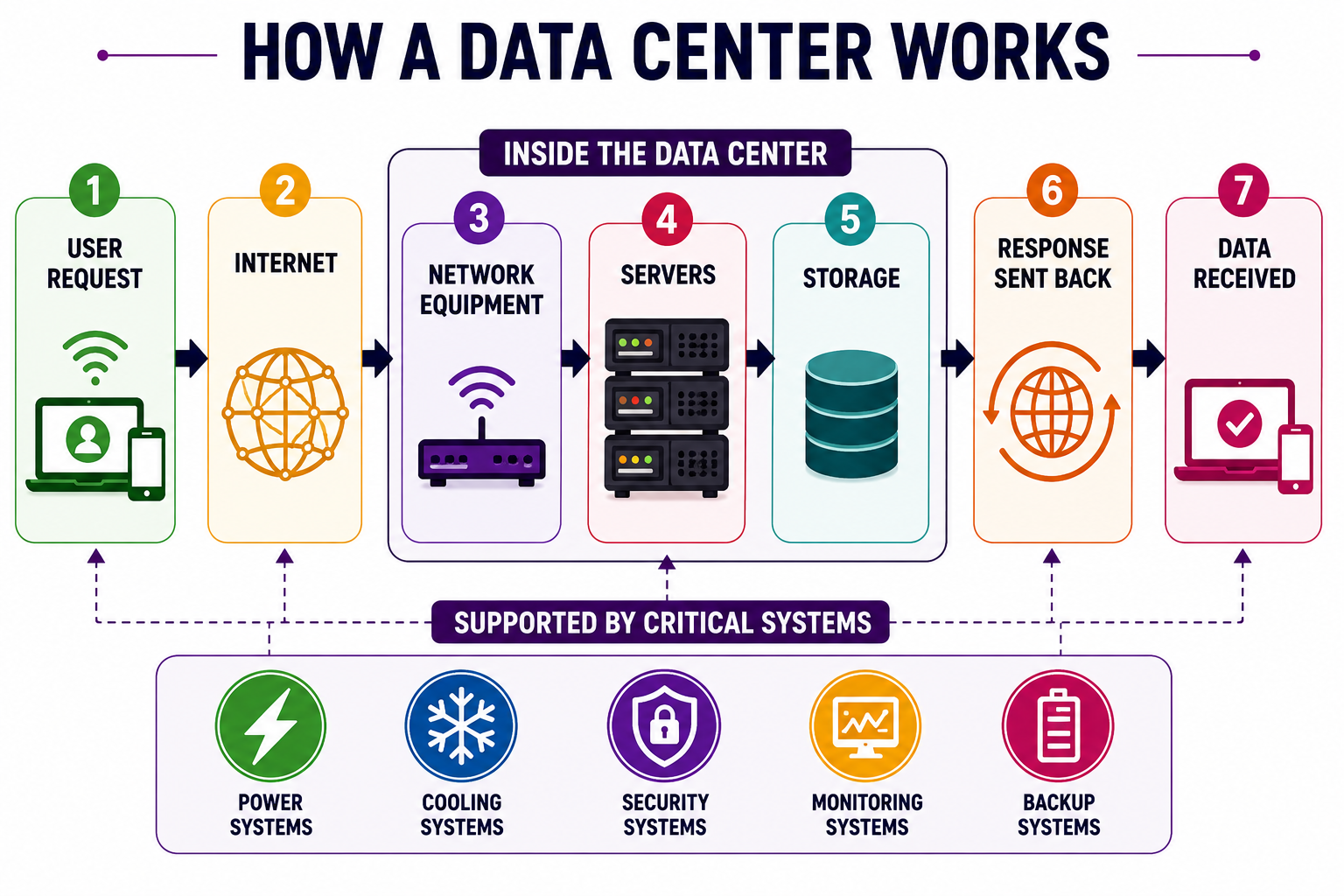
Step 1 - A request is sent by a user
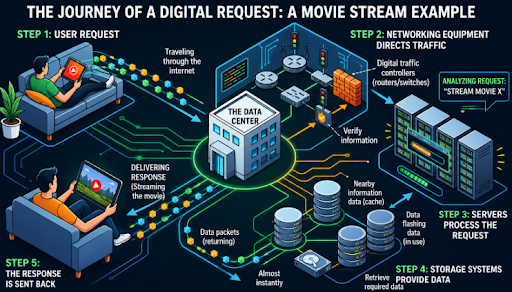
The process begins when an individual or an organization performs an online action, such as sending a message or opening a website. The request travels through the internet to a data center.
Step 2 - Traffic is directed through a networking system
Inside the facility, routers, firewalls, and switches act as networking systems and direct the traffic to an appropriate location. These networking systems determine where the request should go and make sure that it reaches the right destination.
Step 3 - The request is processed by the servers
This is where the core processing takes place. The servers are devices that process the requests within milliseconds. They analyze the requests, verify information, run the applications, and retrieve the required data, and the request made by the user is processed in no time.
Step 4 - Data is provided by the storage system
The majority of requests require data that is stored in the storage systems or arrays. The servers retrieve this information or data and prepare it for processing and delivery.
Step 5 - The response is sent
Once retrieved and processed by the servers, the data travels back through the network and reaches the user’s device instantly.
The Secret Behind 24/7 Availability
The real game player here is redundancy. Modern data centers are developed with backup power systems, advanced cooling, continuous monitoring, and duplicate servers. In case one piece of equipment fails, another takes its place immediately.
This is how a data center works and keeps the internet running around the clock. Each online request is fulfilled through thousands of interconnected systems working together every second, every day.
Benefits & Limitations of a Data Center Facility
We all agree that data centers are crucial for modern digital services, but they come with both benefits and limitations that everyone using the internet should know and consider.
Benefits:
- Data centers provide secure storage for crucial information and data.
- They keep applications, websites, and internet services available around the clock.
- Data centers support fast and instant access to information, enhancing user experience.
- These facilities make cloud services, online communications, and online services easier to access and use.
- Data centers also help businesses manage and organize their digital operations efficiently.
The same infrastructure that enables uninterrupted digital services also requires substantial investment in power, security, skilled personnel, and ongoing maintenance. Organizations must therefore balance performance, resilience, sustainability, and operational costs when designing and operating modern data centers.
Limitations:
- Building and maintaining data centers can be expensive for some organizations.
- They may have an environmental impact due to their energy consumption.
- Technical failures can disrupt functioning if backup systems are not available or up to date.
- Setting up a data center requires a huge space and specialized equipment, which might be complex.
- There is a need for regular maintenance to keep the systems running smoothly.
Also Read: AI Is Rewriting Data Centers Faster Than We Can Build Them
Are Data Centers Bad for the Environment?
One of the major and most common concerns about data centers is their impact on the environment and sustainability. Due to their continuous operations, data centers consume a large amount of electricity and need cooling systems to manage the heat. This contributes to data centers' environmental impact.
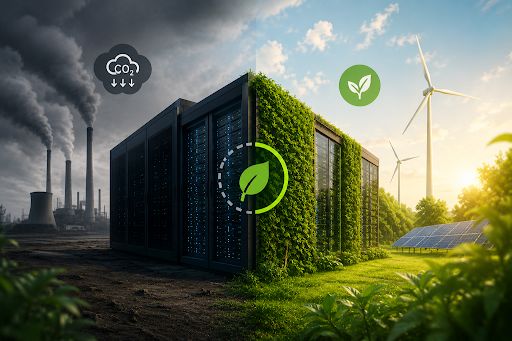
However, modern data center operators are keeping environmental interest and sustainability responsibility in mind, and most of the modern data center facilities now utilize renewable energy sources, energy-efficient hardware, and sustainable cooling systems. As a result, modern data centers are limiting their negative impact on the environment and becoming greener than the old facilities.
Although renewable energy, energy-efficient hardware, and advanced cooling technologies are helping reduce environmental impact, the rapid expansion of artificial intelligence, cloud computing, and digital services is also increasing global demand for electricity. Improving energy efficiency, therefore, remains one of the industry's biggest long-term challenges.
Also Read: How On-Device AI Is Shaping the Future of Cloud and Edge Analytics
Final Thoughts
The internet seems effortless when we use it for our daily needs, around the clock. But behind every little click, there are massive facilities called data centers working 24/7 to power the internet. As cloud computing, artificial intelligence, edge computing, and the Internet of Things continue to expand, data centers will become even more critical to the global digital economy. Their ability to process, store, and deliver information securely and reliably will continue to support the technologies that power businesses, governments, and everyday digital life.
Understanding what data centers are, how they work, and why they are crucial is very important to understand how the internet works.
FAQs
Q.1 What are data centers?
A: Data centers are enormous facilities that store, process, and manage digital information and data to ensure the smooth working of internet services around the clock.
Q2. How do data centers keep the internet running 24/7?
A: Data centers use multiple network equipment and systems to process user requests instantly. The redundant infrastructure of data centers enables them to work 24/7, processing and returning user requests, and ensures services remain continuous even if one piece of equipment fails.
Q3. Why are data centers important for modern IT infrastructure?
A: Data centers are the building blocks of modern IT infrastructure. They enable individuals, organizations, and governments to run applications, access data, store information, communicate online, and use cloud services worldwide.
Q4. Are data centers bad for the environment?
A: Data centers are highly resource-intensive, which is why they are believed to hurt the environment. But modern data centers run on renewable energy, have energy-efficient hardware, and sustainable cooling systems, which is making the impact of data centers less harmful.
References:
- https://www.fortinet.com/resources/cyberglossary/data-center
- https://www.de-cix.in/articles/how-data-centers-keep-the-world-running-24-7/
- https://www.sunbirddcim.com/glossary/data-center-components
- https://www.staxengineering.com/stax-hub/the-environmental-impact-of-data-centers/
- https://www.coresite.com/blog/6-ways-data-centers-impact-our-lives-and-communities
Our Popular Courses

$14000


Doctoral Degree in Business Administration
Universidad Catolica De Murcia (UCAM), Spain
Duration:
2 - 3 Years
$17,500*
Integrated Doctorate of Business Administration
Guglielmo Marconi University, Italy
Universidad Catolica De Murcia (UCAM), Spain
Duration:
2.5 - 3.5 Years
$5,600*
Master of Business Administration
Guglielmo Marconi University, Italy
Duration:
12 - 24 Months
$5,600*
MBA in Operations & Project Management
Guglielmo Marconi University, Italy
Duration:
12 - 24 Months
$5,600*
Master in Supply Chain and Logistics Management
Guglielmo Marconi University, Italy
Duration:
12 - 24 Months
$5,950*
Master in Data Sciences
Guglielmo Marconi University, Italy
Duration:
12 - 24 Months
$5,600*
Master in Engineering Management
Guglielmo Marconi University, Italy
Duration:
12 - 24 Months
$5,600*
Master in Procurement and Contract Management
Guglielmo Marconi University, Italy
Duration:
12 - 24 Months
$5,600*
Master in Public Health
Guglielmo Marconi University, Italy
Duration:
12 - 24 MonthsOur Popular Courses
COMMENTS(0)
Our Popular Courses
$14000
Doctoral Degree in Business Administration
Universidad Catolica De Murcia (UCAM), Spain
Duration:
2 - 3 Years
$17,500*
Integrated Doctorate of Business Administration
Guglielmo Marconi University, Italy
Universidad Catolica De Murcia (UCAM), Spain
Duration:
2.5 - 3.5 Years
$5,600*
Master of Business Administration
Guglielmo Marconi University, Italy
Duration:
12 - 24 Months
$5,600*
MBA in Operations & Project Management
Guglielmo Marconi University, Italy
Duration:
12 - 24 Months
$5,600*
Master in Supply Chain and Logistics Management
Guglielmo Marconi University, Italy
Duration:
12 - 24 Months
$5,950*
Master in Data Sciences
Guglielmo Marconi University, Italy
Duration:
12 - 24 Months
$5,600*
Master in Engineering Management
Guglielmo Marconi University, Italy
Duration:
12 - 24 Months
$5,600*
Master in Procurement and Contract Management
Guglielmo Marconi University, Italy
Duration:
12 - 24 Months
$5,600*
Master in Public Health
Guglielmo Marconi University, Italy
Duration:
12 - 24 MonthsOur Popular Courses
Our Popular Insights
Careers are shifting faster than ever, and staying relevant takes more than experience. Explore UniAthena’s most-read blogs for sharp insights, emerging skills, and practical pathways that help you move forward with clarity and confidence in a changing professional world.




🌟 Top Project Performer – June 2026 🌟
Read More
1
mins read

Best AI Tools for Content Creation
Read More
9
mins read

🌟 Top Project Performer – May 2026 🌟
Read More
1
mins read


🌟 Top Project Performer – June 2026 🌟
Read more
1
mins read
Best AI Tools for Content Creation
Read more
9
mins read
🌟 Top Project Performer – May 2026 🌟
Read more
1
mins read
Get in Touch

It’s Time to Start
Join NowMost Popular Online Specialization
- Master of International Business Administration
- Master of Business Administration
- MBA in General Management- FastTrack
- Master in Innovation and Entrepreneurship
- MBA-Family Business Management
- Master in Procurement and Contract Management
- Extended Diploma in Business Analytics (SCQF Level 11)
- Diploma in Supply Chain and Logistics Management (SCQF Level 11)
- Strategic Human Resource Management Practitioner
- Master in Data Science
- Master in Engineering Management
Trending Online
- Integrated Doctorate of Business Administration
- Postgraduate Certificate in Finance for Next Generation Managers
- Master of Business Administration- General Management (Fast Track)
- Postgraduate Certificate in Socio-Economic and Legal Framework
- Postgraduate Certificate in Business Sustainability
- Certified Manager
- Supply Chain Management Practitioner
- MBA - AI in Business
- MBA - Accounting & Finance
- Master in Supply Chain and Logistics Management
Top Universities Online Certificates
- Postgraduate Certificate in International Marketing Management
- Postgraduate Certificate In International Human Resource Management
- Postgraduate Certificate in Strategic Management
- Postgraduate Certificate in Procurement & Contracts Management
- Postgraduate Certificate in Business Analytics
- Postgraduate Certificate in Strategic Supply Chain & Logistics Management
- Postgraduate Certificate in Human Resource and Leadership
- Project Management Practitioner
- Postgraduate Certificate in Supply Chain Design & Implementation
- Postgraduate Certificate in Management Accounting and Finance
Accredited Online Degree Program
- MBA - Digital Transformation
- MBA - Family Business Management
- MBA - Marketing Management
- MBA in Quality Management
- MBA - Business Intelligence & Data Analytics
- MBA in Operations & Project Management
- MBA in Energy Management
- MBA In Construction & Safety Management
- Master in Organisational Leadership
- Master in Public Health
- Master in Construction Management
- Bachelor of Arts in Business Administration


 Install Now


UniAthena is an Ed-Tech, offering flexible, affordable learning solutions, including Free-Learning Upskilling Courses and Academic Programs in partnerships with accredited and globally renowned universities and professional qualification bodies.


Do you have any questions ?
Feel free to send us your questions or request a free consultation
Send a message
UK
Athena Global Education
Magdalen Centre,
Robert Robinson Avenue,
Oxford, OX4 4GA, UK
Phone : 01865 784299
MIDDLE EAST
Athena Global Education FZE
Block L-03, First Floor,
P O Box 519265, Sharjah Publishing City,
Free Zone, Sharjah, UAE
Phone : +971 55 879 5492
INDIA
Uniathena Private Limited
9A,Midas Tower
Phase 1
Hinjewadi Rajiv Gandhi Infotech Park
Pune-411057
Phone: +91 9145665544
All Copyrights Reserved @ Athena Global Education 2021-2026