-

Bachelor's

-

Masters
-

MBA
-

Doctorate
-

Micro Credit
-

Explore all Courses
-
Postgraduate Certifications

-
Postgraduate Diploma
-
Undergraduate Diploma
-
Diploma



YNWA – The DBA and the Liverpool Anthem: A Scholar’s Journey of Resilience

Author: aishwarya sancheti
|5
MINS READ
| 0
| 40
Created On: 08 April, 2026
Share




Table of Content (TOC):
- Introduction
- Key Takeaways
- Walking Through the Storm: What the DBA Demands
- The Scholar’s Locker Room: Community in Academia
- More Than a Degree: A Lasting Impact
- Conclusion
- Bonus Point
- FAQs
Introduction
In stadiums around the world, a single phrase echoes with power, unity, and emotion: "You'll Never Walk Alone." What began as a football anthem for Liverpool FC has evolved into a universal symbol of resilience and solidarity. But outside the pitch, this mantra resonates just as deeply in lecture halls and research libraries, particularly among those pursuing a Doctorate in Business Administration (DBA).
At first glance, football chants and doctoral research may seem worlds apart. Yet the deeper one goes into the journey of earning a DBA, the more the parallel becomes unmistakable. Like the players on the field, doctoral candidates face pressure, setbacks, moments of doubt, and yet they press on, fueled by purpose, discipline, and a collective spirit of inquiry.
Key Takeaways:
- The spirit of “You’ll Never Walk Alone” reflects the DBA journey: resilience, perseverance, and continuous progress despite challenges.
- A DBA is designed for working professionals, focusing on applied research that solves real-world business problems.
- Unlike traditional doctoral paths, a DBA bridges the gap between academic theory and industry practice.
- Success in a DBA isn’t a solo effort: peer networks, mentors, and academic communities play a crucial role.
- Programs like UniAthena’s DBA offer flexibility, global exposure, and structured mentorship, making it accessible for busy professionals.
- The outcome goes beyond a degree - DBA scholars gain thought leadership, career advancement, and industry influence.
- Persistence, much like in elite sports, is the defining factor - long-term commitment leads to meaningful impact.
Walking Through the Storm: What the DBA Demands
A DBA is not a conventional academic pursuit. It’s a commitment to bridging the gap between theory and practice, between boardroom intuition and data-driven insight. Unlike a PhD, which is rooted in theoretical advancement, the DBA is about applied research, designed for professionals seeking to solve real-world business problems with scholarly precision.
Candidates often begin their DBA journey mid-career, already armed with decades of professional experience, but ready to question, refine, and rebuild their perspectives through research. That transition is not easy. It requires unlearning, relearning, and above all, resilience. Much like the Liverpool anthem suggests, one must “walk on through the wind, walk on through the rain”- pushing forward even when clarity feels distant.
The Scholar’s Locker Room: Community in Academia
One of the most underestimated aspects of pursuing a DBA is the need for academic camaraderie. No doctoral journey is completed in isolation. Peer discussions, tutor feedback, and cohort collaborations form a strong academic support system.
Institutions that understand this are the ones that foster long-term success. The UniAthena Doctorate in Business Administration is designed around this principle, offering flexible online learning, one-on-one research mentorship, and a global learning community that ensures scholars never walk alone.
Whether it’s navigating research methodology, publishing in journals, or presenting at global conferences, UniAthena provides a structured yet empathetic learning environment for busy professionals.
The program is fully online, spans 180 ECTS credits, and culminates in a practice-based thesis awarded by top-tier European universities like Universidad Católica de Murcia (UCAM), Spain.
What will you learn in UniAthena’s DBA?
- How to design and execute impactful research projects.
- How to identify and address contemporary management challenges.
- Advanced critical thinking and reflective practitioner skills.
- Practical research methods aligned with real-world business needs.
- Academic writing, publishing, and proposal development skills.
More Than a Degree: A Lasting Impact
Like football fans singing in unison, DBA scholars worldwide are united by something bigger than themselves: a shared commitment to thought leadership, transformation, and intellectual contribution. For many, the end goal isn’t just a degree; it’s the ability to shape industries, teach the next generation, or influence public policy through evidence-based insight.
Publication opportunities, career elevation, and leadership visibility are all part of the return on investment. But more importantly, a DBA offers the rare chance to step back from the busyness of operations and step into a space of strategic, reflective, and impactful thinking.
Final Whistle: What Comes Next?
If you’ve ever asked deeper questions in your professional journey, questions that challenge business norms or seek new models for innovation, then you’re already halfway down the DBA path.
Bonus Points: What Football Teaches Research Scholars
- Liverpool’s anthem symbolizes shared purpose just like peer-supported doctoral journeys.
- UEFA reports show teams using data analytics improved match outcomes by 23%, much like how DBA scholars use research to drive real-world results.
- Top players cover 10–12 km per match; similarly, doctoral researchers go the distance intellectually- persistence defines both fields.
FAQs
Q1. What makes a DBA different from a PhD?
A: A DBA focuses on applied research for real-world business challenges, while a PhD is more theoretical and research-oriented within academia.
Q2. Who should pursue a DBA?
A: Mid- to senior-level professionals, leaders, and entrepreneurs who want to solve industry problems using research and elevate their strategic thinking.
Q3. Is it possible to pursue a DBA while working full-time?
A: Yes! Most DBA programs, including UniAthena’s, are designed with flexible, online learning formats tailored for working professionals.
Q4. How important is community in a DBA journey?
A: Extremely important. A strong network of mentors, peers, and academic support helps scholars stay motivated and navigate challenges effectively.
Q5. What skills will I gain from a DBA?
A: You’ll develop advanced research capabilities, critical thinking, problem-solving skills, and academic writing expertise, all aligned with business impact.
Q6. What are the career benefits of a DBA?
A: A DBA can lead to leadership roles, consulting opportunities, academic positions, and increased industry credibility.
Q7. How long does it typically take to complete a DBA?
A: Most programs take 2.5 - 4 years, depending on the structure and the pace chosen by the learner.
Q8. Do I need prior research experience to enroll?
A: Not necessarily. Many DBA programs provide guided research training and mentorship to help you build the required skills from scratch.
Explore Related Courses












COMMENTS(0)
Explore Related Courses
Our Popular Insights
Careers are shifting faster than ever, and staying relevant takes more than experience. Explore UniAthena’s most-read blogs for sharp insights, emerging skills, and practical pathways that help you move forward with clarity and confidence in a changing professional world.


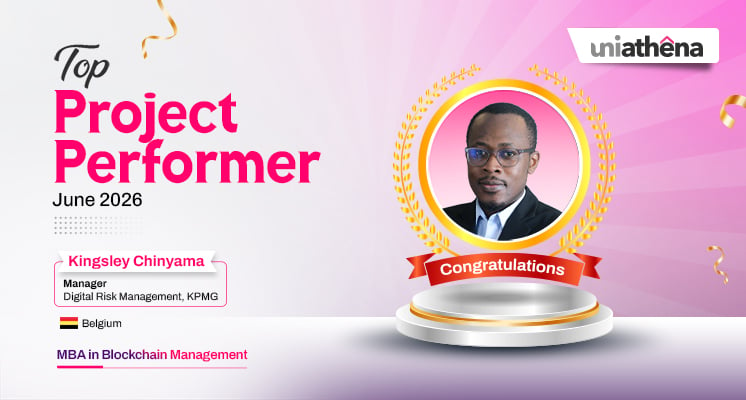
🌟 Top Project Performer – June 2026 🌟
Read More
1
mins read


🌟 Top Project Performer – May 2026 🌟
Read More
1
mins read


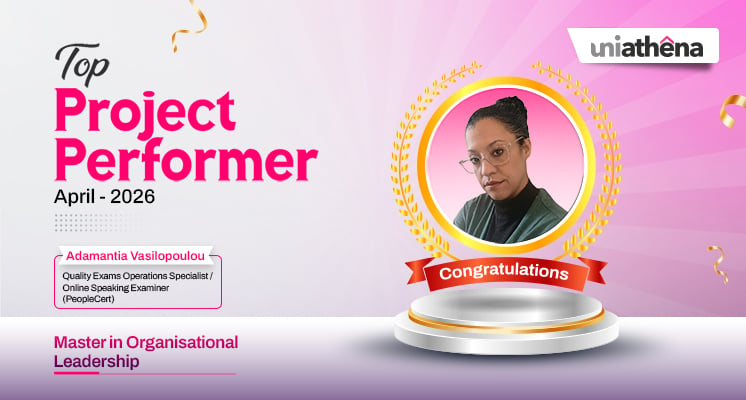
🌟 Top Project Performer – April 2026 🌟
Read More
1
mins read
🌟 Top Project Performer – June 2026 🌟
Read more
1
mins read

🌟 Top Project Performer – May 2026 🌟
Read more
1
mins read
🌟 Top Project Performer – April 2026 🌟
Read more
1
mins read
Get in Touch

It’s Time to Start
Join NowMost Popular Online Specialization
- Master of International Business Administration
- Master of Business Administration
- MBA in General Management- FastTrack
- Master in Innovation and Entrepreneurship
- MBA-Family Business Management
- Master in Procurement and Contract Management
- Extended Diploma in Business Analytics (SCQF Level 11)
- Diploma in Supply Chain and Logistics Management (SCQF Level 11)
- Strategic Human Resource Management Practitioner
- Master in Data Science
- Master in Engineering Management
Trending Online
- Integrated Doctorate of Business Administration
- Postgraduate Certificate in Finance for Next Generation Managers
- Master of Business Administration- General Management (Fast Track)
- Postgraduate Certificate in Socio-Economic and Legal Framework
- Postgraduate Certificate in Business Sustainability
- Certified Manager
- Supply Chain Management Practitioner
- MBA - AI in Business
- MBA - Accounting & Finance
- Master in Supply Chain and Logistics Management
Top Universities Online Certificates
- Postgraduate Certificate in International Marketing Management
- Postgraduate Certificate In International Human Resource Management
- Postgraduate Certificate in Strategic Management
- Postgraduate Certificate in Procurement & Contracts Management
- Postgraduate Certificate in Business Analytics
- Postgraduate Certificate in Strategic Supply Chain & Logistics Management
- Postgraduate Certificate in Human Resource and Leadership
- Project Management Practitioner
- Postgraduate Certificate in Supply Chain Design & Implementation
- Postgraduate Certificate in Management Accounting and Finance
Accredited Online Degree Program
- MBA - Digital Transformation
- MBA - Family Business Management
- MBA - Marketing Management
- MBA in Quality Management
- MBA - Business Intelligence & Data Analytics
- MBA in Operations & Project Management
- MBA in Energy Management
- MBA In Construction & Safety Management
- Master in Organisational Leadership
- Master in Public Health
- Master in Construction Management
- Bachelor of Arts in Business Administration


 Install Now


UniAthena is an Ed-Tech, offering flexible, affordable learning solutions, including Free-Learning Upskilling Courses and Academic Programs in partnerships with accredited and globally renowned universities and professional qualification bodies.


Do you have any questions ?
Feel free to send us your questions or request a free consultation
Send a message
UK
Athena Global Education
Magdalen Centre,
Robert Robinson Avenue,
Oxford, OX4 4GA, UK
Phone : 01865 784299
MIDDLE EAST
Athena Global Education FZE
Block L-03, First Floor,
P O Box 519265, Sharjah Publishing City,
Free Zone, Sharjah, UAE
Phone : +971 55 879 5492
INDIA
Uniathena Private Limited
9A,Midas Tower
Phase 1
Hinjewadi Rajiv Gandhi Infotech Park
Pune-411057
Phone: +91 9145665544
All Copyrights Reserved @ Athena Global Education 2021-2026