-

Bachelor's

-

Masters
-

MBA
-

Doctorate
-

Micro Credit
-

Explore all Courses
-
Postgraduate Certifications

-
Postgraduate Diploma
-
Undergraduate Diploma
-
Diploma



Career Scope After a DBA in Human Resource Management

Author: aishwarya sancheti
|8
MINS READ
| 0
| 51
Created On: 01 July, 2026
Share




Table of Contents (TOC):
- Introduction
- Key Takeaways
- What a DBA in HR Actually Changes And What It Doesn't
- So, What's the Actual Career Scope?
- Is the Market Actually Growing?
- Is a DBA in HR Worth It?
- What Does HR Career Progression Look Like With a Doctorate?
- A Few Honest Considerations Before You Commit
- What a Well-Structured Program Actually Looks Like
- Conclusion: Where Does This Leave You?
- FAQs
Introduction
If you’ve spent fifteen-plus years in HR leadership, you’ve probably noticed something: the further you climb, the smaller the room gets. Fewer peers. Fewer mentors who’ve done what you’re about to do. And a lot more pressure to justify decisions with data, not just instinct.
This is usually the point where senior HR professionals start asking a quieter question, not “how do I get the next promotion,” but “how do I become the kind of leader whose seat at the table is never up for debate.”
A DBA in Human Resource Management is one of the few qualifications built specifically for that question. Let’s walk through what the career scope actually looks like, high-demand skill roles and what the numbers say, and whether it’s the right move for someone already deep into their HR career.
Key Takeaways:
- A DBA in Human Resource Management is a practitioner's doctorate, built for senior HR professionals who want to convert experience into evidence-backed strategic authority.
- Career opportunities after a DBA in HR span five high-ceiling tracks: CHRO and VP-level roles, Organizational Development, HR Consulting, Academic and Executive Education, and Total Rewards Leadership.
- The Bureau of Labor Statistics projects 5% growth in HR management jobs through 2034, with HR analytics and talent strategy roles growing significantly faster than the field average.
- The global workforce analytics market is projected to grow from $2.07 billion in 2024 to $5.94 billion by 2032, directly aligned with the skillset a DBA builds.
- Advanced degree holders in HR management see median earnings around $126,000 annually, with CHRO-level compensation averaging $349,000 and rising steeply at Fortune 500 scale.
- The credential doesn't hand you a seat; it changes how convincingly you can argue for one and widens the number of doors open to you simultaneously.
What a DBA in HR Actually Changes And What It Doesn’t
A doctorate in human resource management isn’t a faster MBA or a research-only PhD. It’s a practitioner’s doctorate designed for people who are already operating at a senior level and want to formalize the strategic research and leadership capabilities they’re already half-using on the job.
What it changes:
- It gives you a research-backed framework for decisions you’re currently making on experience alone, workforce planning, organizational design, talent strategy, and compensation philosophy.
- It positions you as a thought leader. Boards, CEOs, and search committees read “DBA” differently from “MBA, 18 years of experience.”
- It opens academic and consulting doors that stay closed without a doctoral credential, guest faculty roles, executive education, and advisory boards.
What it doesn’t change overnight:
- It won’t replace a track record. If you’ve been a strong HR Director for a decade, the DBA amplifies the story; it doesn't substitute for it.
- It’s not a guaranteed CHRO ticket. It’s a credential that makes you a stronger candidate when combined with the experience you already have.
So, What’s the Actual Career Scope?
This is where most articles get vague.
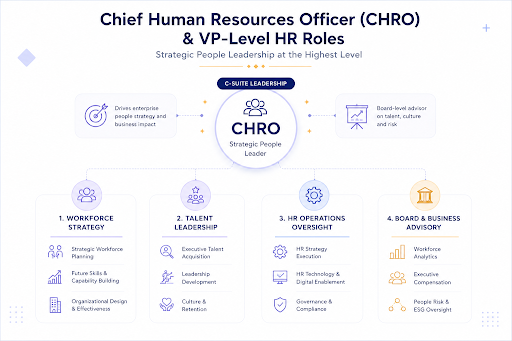
1. Chief Human Resources Officer (CHRO) and VP-Level HR Roles
The most direct destination for a DBA graduate with senior operating experience. At this level, roles typically span Strategic Workforce Planning, Executive Talent Management, HR Operations Oversight, and Board-Level People Advisory.
On compensation: mid-market organizations (500–2,000 employees) offer base salaries between $150,000–$250,000, with bonus targets at 40–60% of base. Fortune 500 CHROs see median total compensation over $1 billion, with base pay between $600,000 and $900,000. A doctorate doesn't place you here automatically, but when two VPs with near-identical track records are being compared, the one with research-backed strategic thinking rarely loses.
2. Organizational Development and HR Strategy Leadership
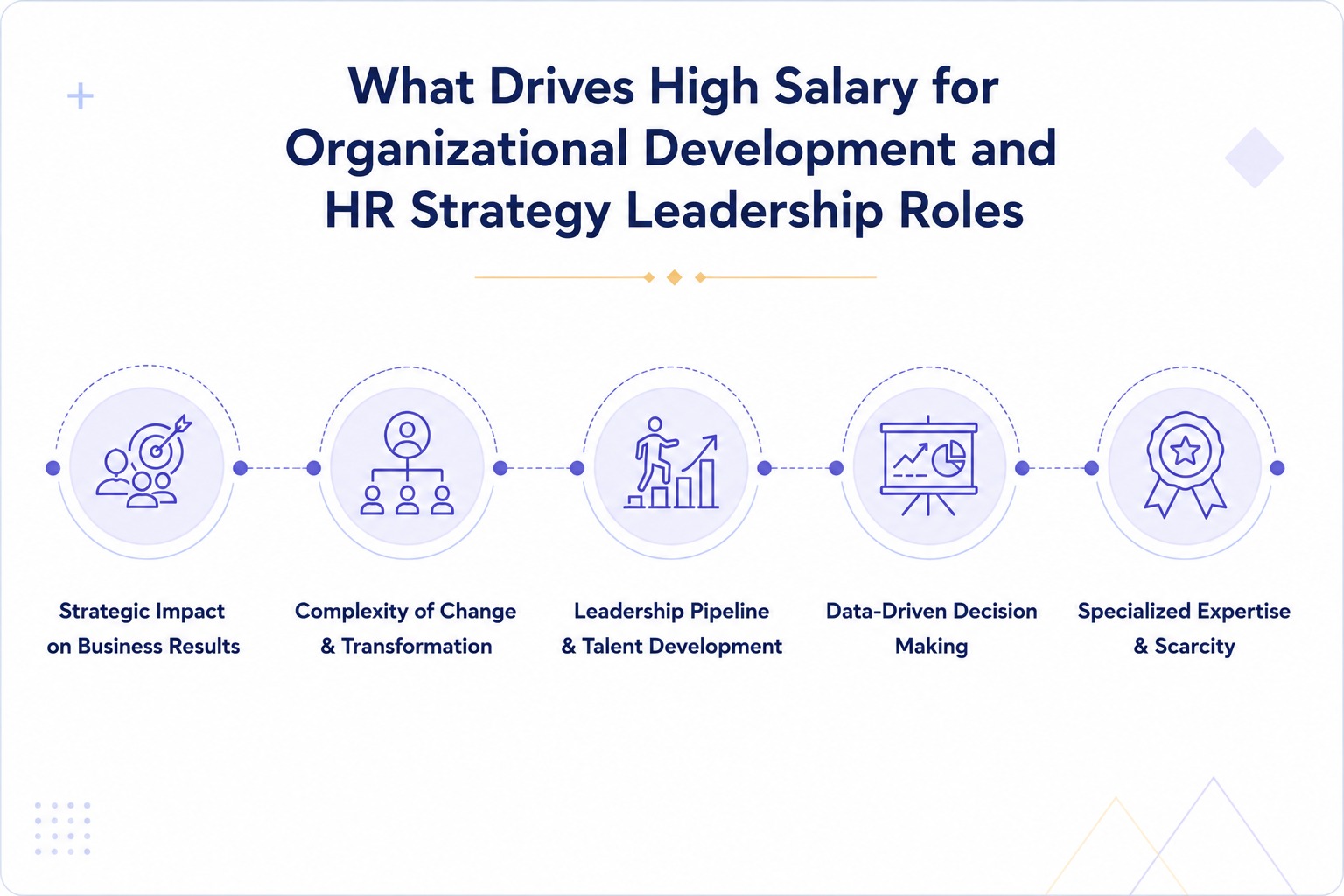
For those less interested in running HR and more interested in redesigning how the organization itself works. Core focus areas include Culture Architecture, Change Management, Leadership Pipeline Design, and Learning & Development Strategy.
Salary range: $120,000–$160,000 annually at the manager level, climbing significantly into director and VP-tier OD roles.
3. HR Consulting and Advisory Work
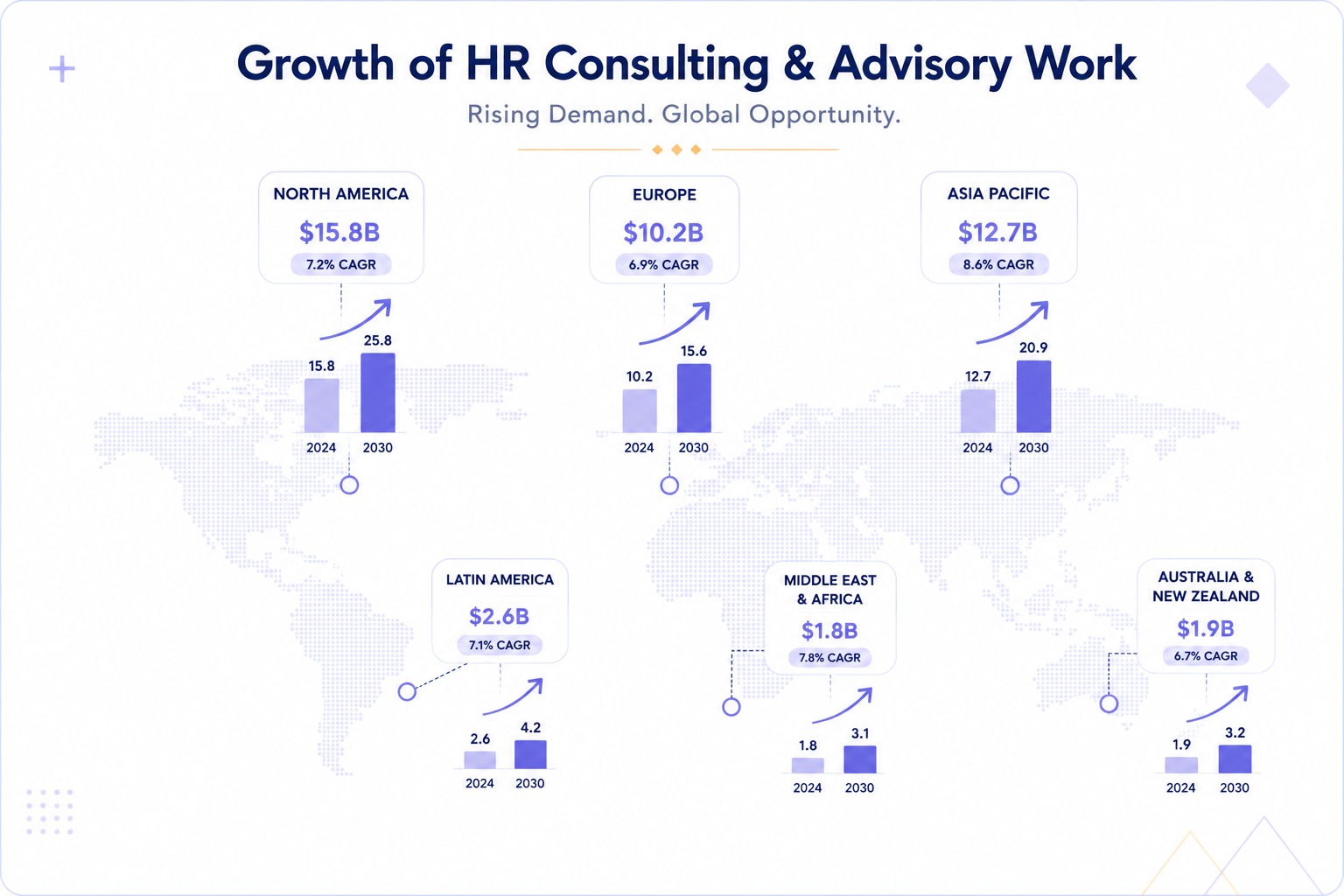
Independent consulting or boutique advisory - a path built on the credibility a doctorate signals to executive-level clients. Typical engagements cover HR Transformation, M&A People Integration, DEI Strategy, and Organizational Effectiveness.
Earnings vary widely by engagement model, but senior independent HR consultants routinely bill between $123,000 and $158,000 annually, making it one of the highest-flexibility, highest-ceiling tracks available.
4. Academic and Executive Education Roles
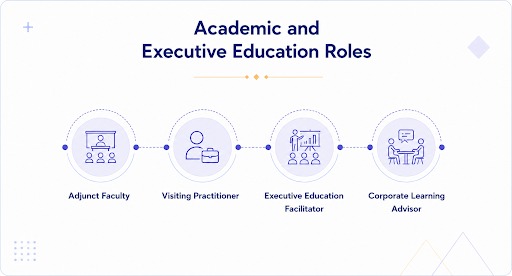
The path most overlook until they're already mid-program, and the one they tend to value most.
Most universities structure these as part-time engagements alongside a full-time role. Compensation ranges from $5,000–$10,000 per course for adjunct positions, with executive education facilitation often paying significantly more per engagement.
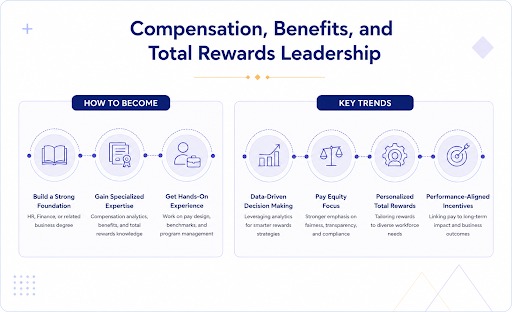
5. Compensation, Benefits, and Total Rewards Leadership
Where HR strategy meets hard numbers. Key responsibilities typically include Executive Pay Design, Benefits Architecture, Pay Equity Analysis, and Long-Term Incentive Planning.
Salary range: $120,000–$211,000 annually at the manager level and for analytically-minded HR professionals, one of the most defensibly strategic specializations in the field.
Is the Market Actually Growing?
The Bureau of Labor Statistics projects 5% growth in human resource management jobs through 2034 - steady, not explosive, but consistently above-average for the broader job market. More interestingly, the specializations that doctoral-level thinking tends to feed into are growing faster than the field overall.
The global workforce analytics market is projected to grow from $2.07 billion in 2024 to $5.94 billion by 2032, at a compound annual growth rate of over 14%, driven largely by organizations wanting evidence-based workforce decisions instead of gut-feel ones. That’s precisely the skill set a DBA builds.
And at the leadership level, Bureau of Labor Statistics data and professional surveys show that talent acquisition and HR analytics roles are seeing robust expansion, driven by growing reliance on data-driven workforce strategies. If your DBA research leans toward analytics, talent strategy, or organizational performance, you’re aligning with where the demand curve is actually pointing, not where it used to point five years ago.
Is a DBA in HR Worth It?
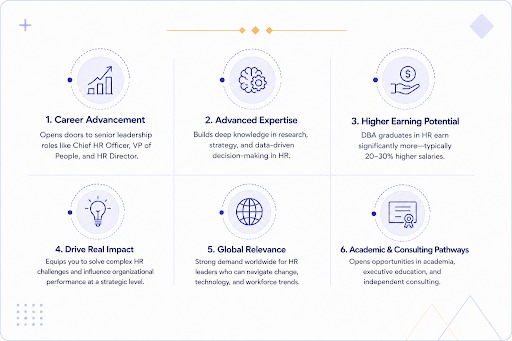
For comparison, here’s what the credential ladder generally looks like for HR salaries:
- Bachelor's degree holders in HR see median salaries around $40,000 to $60,000 per year.
- Master’s degree holders, including HR-focused MBAs, often exceed $85,000 median, opening doors to HR director and compensation manager roles.
- Advanced degree holders in HR management see median earnings of around $126,000 annually.
- At the senior executive tier, the average CHRO salary in the US is approximately $349,000 per year, though this varies widely by company size and how compensation is structured.
What Does HR Career Progression Look Like With a Doctorate?
If you’re already at the direction or VP level, the progression usually looks less like a ladder and more like a widening of options:
- Internal Track: Strengthened candidacy for CHRO, Chief People Officer, or board-advisory roles within current organization or industry.
- Lateral Track: Movement into HR strategy or organizational development leadership at a larger or more complex organization.
- Parallel Track: Consulting, speaking, or board positions that run alongside your primary role.
- Academic Track: Adjunct or visiting faculty positions, particularly in executive education programs.
The thing that changes here is not the job title but the range of doors that are open to you simultaneously.
A Few Honest Considerations Before You Commit
Time and format matter:
Online doctoral programs in human resources have made this far more accessible for working professionals; most are structured for people holding down full-time senior roles. But the workload is real. Dissertation-equivalent research projects take sustained effort over 2 - 4 years.
Specialization matters more than the letters:
“Is there a doctorate in human resources?“- yes, in multiple forms (DBA, PhD, EdD with HR focus). The DBA specifically suits people who want applied research tied to real organizational problems, not pure academic theory. Choose based on what you actually want to do with it.
Pair it with certification, not instead of it:
Some of the best HR certification courses online - SHRM-SCP, SPHR, DBA-HRM, and similar - complement a doctorate well. Certified professionals typically see a salary increase of about 5 -15% over those without certification, and certifications signal current practical competence alongside doctoral-level strategic thinking.
What a Well-Structured Program Actually Looks Like
If you're evaluating online doctoral programs in human resources, it is important to assess factors such as institutional recognition, program structure, research support, flexibility for working professionals, and subject-specific specialization.
One example is UniAthena’s DBA in Human Resource Management.
- Awarded by Guglielmo Marconi University (GMU), Italy - accredited by Italy's Ministry of Education and part of the Bologna Process, supporting international academic recognition across participating systems.
- Earn an M.Res at Year 1 and a full DBA by Year 3 - every stage of your effort formally credentialed.
- 100% online with 1:1 research supervision and flexible monthly payment plans, structured around a senior professional's schedule.
- HR-specific modules from day one - Global HRM, Applied Research in Management, and Research Feasibility, keeping your doctoral work grounded in the domain throughout.
Conclusion: Where Does This Leave You?
If you're a senior HR professional who's already built the experience, you're likely looking for a credential that matches it. One that opens doors in consulting and academic circles. And one that gives your strategic thinking a research foundation that holds up in boardrooms - which is exactly what a DBA in HRM is built for.
It’s a multiplier for the expertise you’ve already earned. And for the right person, at the right career stage, that multiplier effect is exactly what makes the difference between being in the room and shaping what happens in it.
FAQs
Q1. Is a DBA in Human Resource Management worth it for senior HR professionals?
A: Yes, if you're already at the director or VP level, a DBA strengthens your candidacy for CHRO roles, opens consulting and academic doors, and gives your strategic decisions a research foundation that experience alone can't fully provide.
Q2. What is the difference between a DBA and a PhD in Human Resources?
A: A DBA is applied - it's built for working professionals solving real organizational problems. A PhD is research-focused, typically suited for those pursuing academic or pure research careers. If you're in practice, the DBA is the more relevant credential.
Q3. Can I pursue a DBA in Human Resources while working full-time?
A: Yes. Most online doctoral programs in human resources today are structured specifically for full-time senior professionals, with flexible pacing, online delivery, and 1:1 research supervision built into the program design.
Q4. How long does a DBA in HR take to complete?
A: Typically three years - with Year 1 covering foundational doctoral coursework and HR-specific modules, and Years 2 and 3 dedicated to original applied research and thesis completion.
Explore Related Courses














COMMENTS(0)
Explore Related Courses
Our Popular Insights
Careers are shifting faster than ever, and staying relevant takes more than experience. Explore UniAthena’s most-read blogs for sharp insights, emerging skills, and practical pathways that help you move forward with clarity and confidence in a changing professional world.


How to Switch Career to Data Analytics?
Read More
6
mins read





How to Switch Career to Data Analytics?
Read more
6
mins read

Get in Touch

It’s Time to Start
Join NowMost Popular Online Specialization
- Master of International Business Administration
- Master of Business Administration
- MBA in General Management- FastTrack
- Master in Innovation and Entrepreneurship
- MBA-Family Business Management
- Master in Procurement and Contract Management
- Extended Diploma in Business Analytics (SCQF Level 11)
- Diploma in Supply Chain and Logistics Management (SCQF Level 11)
- Strategic Human Resource Management Practitioner
- Master in Data Science
- Master in Engineering Management
Trending Online
- Integrated Doctorate of Business Administration
- Postgraduate Certificate in Finance for Next Generation Managers
- Master of Business Administration- General Management (Fast Track)
- Postgraduate Certificate in Socio-Economic and Legal Framework
- Postgraduate Certificate in Business Sustainability
- Certified Manager
- Supply Chain Management Practitioner
- MBA - AI in Business
- MBA - Accounting & Finance
- Master in Supply Chain and Logistics Management
Top Universities Online Certificates
- Postgraduate Certificate in International Marketing Management
- Postgraduate Certificate In International Human Resource Management
- Postgraduate Certificate in Strategic Management
- Postgraduate Certificate in Procurement & Contracts Management
- Postgraduate Certificate in Business Analytics
- Postgraduate Certificate in Strategic Supply Chain & Logistics Management
- Postgraduate Certificate in Human Resource and Leadership
- Project Management Practitioner
- Postgraduate Certificate in Supply Chain Design & Implementation
- Postgraduate Certificate in Management Accounting and Finance
Accredited Online Degree Program
- MBA - Digital Transformation
- MBA - Family Business Management
- MBA - Marketing Management
- MBA in Quality Management
- MBA - Business Intelligence & Data Analytics
- MBA in Operations & Project Management
- MBA in Energy Management
- MBA In Construction & Safety Management
- Master in Organisational Leadership
- Master in Public Health
- Master in Construction Management
- Bachelor of Arts in Business Administration


 Install Now


UniAthena is an Ed-Tech, offering flexible, affordable learning solutions, including Free-Learning Upskilling Courses and Academic Programs in partnerships with accredited and globally renowned universities and professional qualification bodies.


Do you have any questions ?
Feel free to send us your questions or request a free consultation
Send a message
UK
Athena Global Education
Magdalen Centre,
Robert Robinson Avenue,
Oxford, OX4 4GA, UK
Phone : 01865 784299
MIDDLE EAST
Athena Global Education FZE
Block L-03, First Floor,
P O Box 519265, Sharjah Publishing City,
Free Zone, Sharjah, UAE
Phone : +971 55 879 5492
INDIA
Uniathena Private Limited
9A,Midas Tower
Phase 1
Hinjewadi Rajiv Gandhi Infotech Park
Pune-411057
Phone: +91 9145665544
All Copyrights Reserved @ Athena Global Education 2021-2026