-

Bachelor's

-

Masters
-

MBA
-

Doctorate
-

Micro Credit
-

Explore all Courses
-
Postgraduate Certifications

-
Postgraduate Diploma
-
Undergraduate Diploma
-
Diploma



Beyond the Algorithm: Building Trust in the Era of AI Marketing
Author: ruchika nangia
|6
MINS READ
| 0
| 202
Created On: 13 June, 2025 Updated On: 16 July, 2025
Share




Would it not be great to have a genie handle our daily to-do lists in today’s busy world? AI is that versatile assistant that can help prepare for anything from writing for a competition, AI monologues for your kid, to generating marketing taglines. How much we rely on the use of AI these days, and how we accept without verifying the facts, is something to be thought about.
Customers are worried about how their data is used, which comes from the fact that trust can be built upon. Many of the AI systems operate as black boxes, meaning sometimes users don't understand the responses that the AI has provided.
Let's be honest: we're in an age where machines understand us better than some of our best friends. From waking up and glancing at our phones to the midnight scroll through suggested products, AI is present, working quietly, predicting, analyzing, and personalizing.
It's amazing. It's strong. But it also raises a giant, very human question: Can we trust it?
The Problems and Perils of AI in Modern Marketing
In this age of AI-driven marketing, brands are confronted with a trust crisis. On the one hand, AI allows us to offer smarter, faster, and more personalized experiences than ever before. On the other hand, people are more suspicious about how their data is utilized, whether algorithms are unbiased, and if there's still a human behind the screen who actually gets them.
Let's take a look at how companies can break free from the algorithm and begin to build actual, sustainable trust with the humans they are trying to connect with.
The Double-Edged Sword of AI in Marketing
There's no question that AI has revolutionized the marketing space.
We can now forecast what products customers are likely to want next, personalize email campaigns down to specific tastes, and even use chatbots to respond to questions at 2 AM. It's cost-effective, scalable, and often amazingly accurate.
But here’s the thing: just because we can, doesn't always mean we should.
Consumers are intelligent. They know when they are being observed. They catch on when advertisements begin to seem just a little too flawless. And when personalization begins to cross over into invasive rather than useful, trust breaks down.
In fact, research indicates that although most people value the convenience that AI brings, they are also highly anxious about privacy, data abuse, and being manipulated by unseen algorithms.
So, how do we, as brands and marketers, tread this fine line?
The objective is not to be robotic in tone—it's to leverage AI so you can have more time to be human.
1. Begin with Radical Transparency
One of the easiest—and most effective—things to do to establish trust in the AI era is to simply be truthful.
Inform people when AI is being employed. Describe, in lay terms, how their data is gathered and how it's utilized. And let them manage it.
This isn't about merely ticking the legal boxes with a cookie pop-up. It's about showing respect for your audience to give them the chance to make informed decisions.
For instance, if you're letting AI suggest products, you might say:
"We use AI to make suggestions based on what you've been looking at recently, so we can show you things you might enjoy."
It's authentic, it's transparent—and it's proof that you're not hiding behind technology.
2. Preserve the Human Touch
AI. It can accomplish so much, yet it cannot substitute actual human contact.
That is why the most trusted brands are those employing AI to enhance their human touch, rather than replace it.
Think about customer support. Chatbots are great for answering quickly, but when a person has a complex issue or simply wants to speak with another human being, offer them the option, without making them navigate through a maze of "press 1 to get to this" menus.
The same goes for content. AI can help with drafts or performance analysis, but your brand voice, empathy, and creativity? That must stay yours.
The objective isn't to be mechanical—it's to make AI powerful so that you spend less time being technical and more time being human.
3. Design for Fairness and Inclusion
Here's the tough but true reality: AI is not necessarily neutral.
Because algorithms are trained on data, and data mirrors the biases of the world, AI systems can inadvertently reinforce stereotypes or leave out some groups.
That is a serious concern. And if your marketing AI is biased against individuals (for instance, people seeing only job postings to certain groups or paying differently by zip), it can hurt your brand reputation and trust severely.
So what can you do?
Regularly review your algorithms for bias.
Train AI models on diverse datasets.
Involve various teams in developing your AI-based campaigns.
It's not a technical issue—fairness is a moral issue. And customers know the difference.
4. Streamline and Make Consent Meaningful
Brands too often create privacy policies so convoluted that people just end up clicking "Accept All" without fully understanding what they've consented to.
But consent that is meaningful is more than a box to check.
It's about giving people actual choices—without guilt-tripping them. Want to turn off personalized ads? No issue. Don't want your location shared? Fine.
When people believe they are in control, they will tend to trust you.
One excellent example is Apple's treatment of privacy. Their tone is not lawyerly whatsoever—it's their personality. It says to customers, "We've got your back."
You can do the same, too.
5. Be Accountable—Even When it’s Uncomfortable
Sometimes things go wrong. An AI recommendation backfires. A chatbot gives a weird answer. A targeted ad crosses the line.
In those moments, don’t hide. Own it.
Apologize when necessary. Explain what went wrong. And tell your audience how you’ll do better next time.
Accountability builds trust, not perfection.
6. Lead for Purpose, Not Just for Profit
AI should be for the common good more than for clicks and conversions.
What's your mission? What's driving your marketing? How are you using AI to improve, not simplify, things for your customers?
When you are steadfast in a higher good in your use of AI, human beings can feel it. They respond to it.
Whether it's assisting consumers in making more sustainable decisions, making accessibility easier, or just making an individual feel heard and understood, those are the moments that create emotional loyalty.
The Bottom Line: Trust Is Earned, Not Engineered
In the end, trust is not created by smarter algorithms or additional data.
It is born of compassion. Of listening. Of speaking with your customers as human beings, not as pixels on a screen.
AI can do incredible things. But we're the ones—the humans behind the screens—to make use of it for good, ethically, and with empathy.
And as we move further along in the age of AI marketing, let us not forget this: people don't simply want to be understood by machines. They want to be treated with dignity by the companies that serve them.
Let us not forget to imbue our humanity into technology.
Because outside of the algorithm, that's where trust begins.
Explore Related Courses











COMMENTS(0)
Explore Related Courses
Our Popular Insights
Careers are shifting faster than ever, and staying relevant takes more than experience. Explore UniAthena’s most-read blogs for sharp insights, emerging skills, and practical pathways that help you move forward with clarity and confidence in a changing professional world.
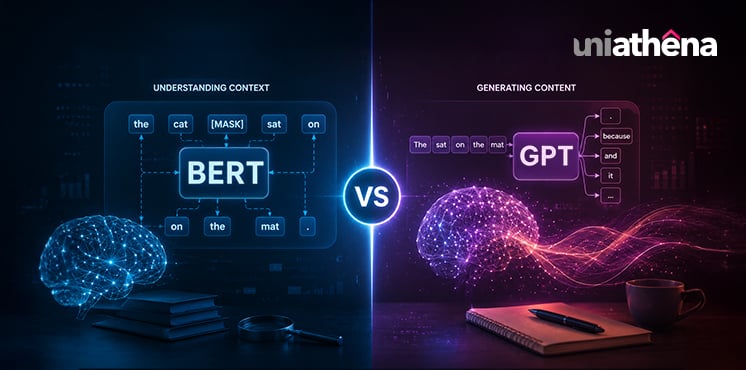

What is Business Development?
Read More
6
mins read
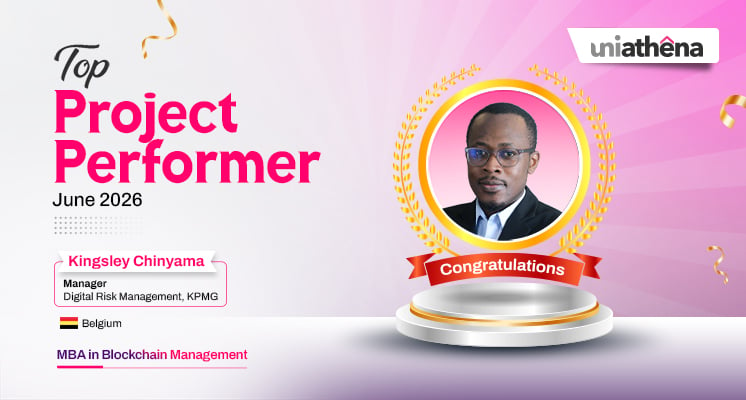
🌟 Top Project Performer – June 2026 🌟
Read More
1
mins read

What is the Role of AI in Education?
Read More
4
mins read

🌟 Top Project Performer – May 2026 🌟
Read More
1
mins read

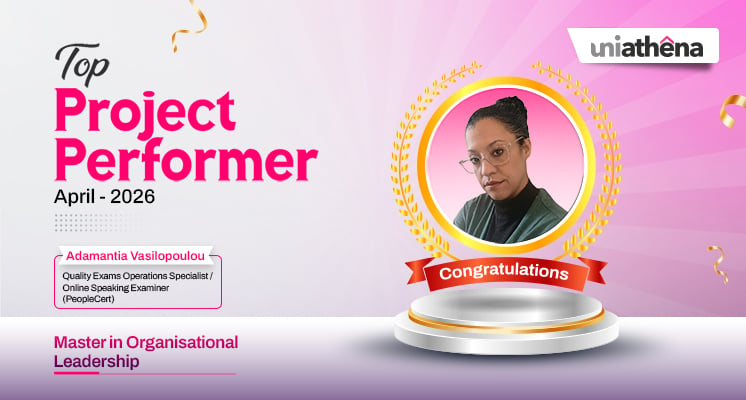
🌟 Top Project Performer – April 2026 🌟
Read More
1
mins read
What is Business Development?
Read more
6
mins read
🌟 Top Project Performer – June 2026 🌟
Read more
1
mins read
What is the Role of AI in Education?
Read more
4
mins read
🌟 Top Project Performer – May 2026 🌟
Read more
1
mins read

🌟 Top Project Performer – April 2026 🌟
Read more
1
mins read
Get in Touch

It’s Time to Start
Join NowMost Popular Online Specialization
- Master of International Business Administration
- Master of Business Administration
- MBA in General Management- FastTrack
- Master in Innovation and Entrepreneurship
- MBA-Family Business Management
- Master in Procurement and Contract Management
- Extended Diploma in Business Analytics (SCQF Level 11)
- Diploma in Supply Chain and Logistics Management (SCQF Level 11)
- Strategic Human Resource Management Practitioner
- Master in Data Science
- Master in Engineering Management
Trending Online
- Integrated Doctorate of Business Administration
- Postgraduate Certificate in Finance for Next Generation Managers
- Master of Business Administration- General Management (Fast Track)
- Postgraduate Certificate in Socio-Economic and Legal Framework
- Postgraduate Certificate in Business Sustainability
- Certified Manager
- Supply Chain Management Practitioner
- MBA - AI in Business
- MBA - Accounting & Finance
- Master in Supply Chain and Logistics Management
Top Universities Online Certificates
- Postgraduate Certificate in International Marketing Management
- Postgraduate Certificate In International Human Resource Management
- Postgraduate Certificate in Strategic Management
- Postgraduate Certificate in Procurement & Contracts Management
- Postgraduate Certificate in Business Analytics
- Postgraduate Certificate in Strategic Supply Chain & Logistics Management
- Postgraduate Certificate in Human Resource and Leadership
- Project Management Practitioner
- Postgraduate Certificate in Supply Chain Design & Implementation
- Postgraduate Certificate in Management Accounting and Finance
Accredited Online Degree Program
- MBA - Digital Transformation
- MBA - Family Business Management
- MBA - Marketing Management
- MBA in Quality Management
- MBA - Business Intelligence & Data Analytics
- MBA in Operations & Project Management
- MBA in Energy Management
- MBA In Construction & Safety Management
- Master in Organisational Leadership
- Master in Public Health
- Master in Construction Management
- Bachelor of Arts in Business Administration


 Install Now


UniAthena is an Ed-Tech, offering flexible, affordable learning solutions, including Free-Learning Upskilling Courses and Academic Programs in partnerships with accredited and globally renowned universities and professional qualification bodies.


Do you have any questions ?
Feel free to send us your questions or request a free consultation
Send a message
UK
Athena Global Education
Magdalen Centre,
Robert Robinson Avenue,
Oxford, OX4 4GA, UK
Phone : 01865 784299
MIDDLE EAST
Athena Global Education FZE
Block L-03, First Floor,
P O Box 519265, Sharjah Publishing City,
Free Zone, Sharjah, UAE
Phone : +971 55 879 5492
INDIA
Uniathena Private Limited
9A,Midas Tower
Phase 1
Hinjewadi Rajiv Gandhi Infotech Park
Pune-411057
Phone: +91 9145665544
All Copyrights Reserved @ Athena Global Education 2021-2026